Best books on stepparenting and blended families
This curriculum moves from the emotional ground floor of blended-family life — understanding why stepfamilies are structurally different from first families — through the practical skills of stepparenting and household-building, and finally into the deeper psychological terrain of loyalty conflicts, identity, and long-term unity. Each stage builds the vocabulary and empathy needed to absorb the next, so readers arrive at the advanced material already fluent in the core concepts.
Foundations: Understanding the Stepfamily Landscape
BeginnerUnderstand why blended families operate differently from biological families, shed unrealistic expectations, and gain a shared language for the journey ahead.
▸ Study plan for this stage
Pace: 8–10 weeks, ~25–30 pages/day, with 2–3 days per week for reflection and exercises
- The 'Cinderella myth' and why stepfamilies cannot replicate nuclear family dynamics or timelines
- Biological loyalty binds and how they create competing allegiances in blended families
- The stepparent role is fundamentally different from biological parenting and requires its own identity
- Unrealistic expectations (instant love, quick bonding, seamless integration) are the primary source of stepfamily conflict
- Stepfamily systems have distinct developmental stages and need 4–7 years to stabilize
- The importance of establishing clear boundaries, roles, and communication patterns early
- Shared language and frameworks help stepfamily members understand each other's experiences and reduce shame
- Why do stepfamilies fail when they try to replicate the structure and timeline of biological families, and what does Martin mean by the 'Cinderella myth'?
- How do biological loyalty binds create competing allegiances, and why is this a normal (not pathological) feature of stepfamily life?
- What is the stepparent role, and why is it distinct from biological parenting? What does it mean to 'claim' this role?
- What are the most common unrealistic expectations stepfamilies hold, and how do these expectations create conflict?
- What are the developmental stages of stepfamily formation, and why do Deal and Newman emphasize that integration takes years, not months?
- How can a stepfamily establish healthy boundaries and communication patterns that honor both the couple relationship and parent-child relationships?
- After reading 'Stepmonster': Write a 1–2 page reflection on which 'myths' about stepfamilies you or your family held before reading, and how Martin's perspective challenged them.
- Create a 'Loyalty Map' for your stepfamily: draw circles representing each family member and their biological/step relationships, then identify where loyalty conflicts might arise and discuss with your partner.
- Using Deal's framework from 'The Smart Step-Family': Identify 3–5 unrealistic expectations your stepfamily currently holds and reframe each one into a realistic, achievable goal.
- Conduct a 'Role Clarity Conversation': With your partner, discuss and write down what the stepparent role looks like in your family—what responsibilities, boundaries, and emotional involvement feel right?
- After reading 'Stepfamily Realities': Identify which developmental stage your stepfamily is in (early, middle, or later), and list 2–3 specific challenges Newman associates with that stage. Discuss how these show up in your family.
- Create a 'Shared Language Glossary': Together with your stepfamily, define 10–15 key terms (e.g., 'loyalty bind,' 'stepparent role,' 'blended,' 'yours/mine/ours') and post it where family members can reference it during conflicts.
Next up: With a clear-eyed understanding of why stepfamilies are structurally different and what realistic expectations look like, you're ready to move into the next stage: building the practical skills and strategies to navigate specific challenges like stepparent-stepchild relationships, co-parenting dynamics, and couple resilience.
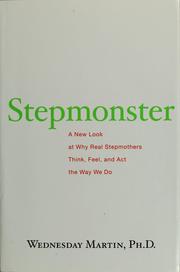
A research-grounded, candid look at the stepmothering experience that immediately normalizes the struggles newcomers feel. Reading this first dismantles the 'wicked stepmother' myth and sets honest expectations for the whole curriculum.
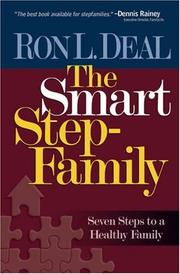
The most widely recommended beginner roadmap for blended families, covering roles, timelines, and common pitfalls in plain language. It gives readers a full structural overview before they dive into any single issue.

A practical, myth-busting guide that complements Deal by addressing the emotional realities for all members — adults and children alike — and reinforcing that slow integration is healthy and normal.
The Children's World: Loyalty Binds and Kids' Perspectives
BeginnerSee the blended family through the children's eyes, understand loyalty conflicts at their root, and learn how to protect kids from being caught in the middle.
▸ Study plan for this stage
Pace: 4–5 weeks, ~25–30 pages/day, with 2–3 reflection days per week
- Children's dual loyalty conflicts: the internal struggle when loving both parents feels like choosing sides
- The child's need for stability and predictability across two households as a foundation for emotional security
- How parental conflict directly impacts children's sense of safety, identity, and belonging in blended families
- The concept of 'being caught in the middle': recognizing when children become messengers, spies, or emotional buffers between parents
- Age-appropriate developmental needs of children in co-parenting arrangements and how to meet them across both homes
- Creating child-centered schedules and routines that honor the child's relationship with both parents without forcing false choices
- The role of the stepparent in respecting the child's loyalty to their biological parent while building a genuine relationship
- What are the core loyalty conflicts children experience in blended families, and why do they feel like they must choose between parents?
- How does instability between two households affect a child's emotional development and sense of security?
- What are concrete signs that a child is being 'caught in the middle,' and what are the long-term consequences?
- How should parenting schedules and routines be designed to prioritize the child's needs rather than parental convenience?
- What role should a stepparent play in respecting a child's biological parent relationship while building trust?
- How can parents communicate about the child in ways that protect them from loyalty conflicts and reduce anxiety?
- Create a detailed 'child's-eye view' map: Draw or write out a typical week from a child's perspective in a blended family (yours or a fictional one), noting transitions, emotional shifts, and moments of confusion or stress.
- Identify loyalty conflict scenarios: Read case studies or examples in Ricci's book and write down 3–4 real situations where a child might feel caught in the middle; for each, propose one parent-centered and one child-centered response.
- Design a child-centered schedule: Create a weekly co-parenting schedule that prioritizes the child's continuity, consistency, and relationships—then critique it against Ricci's principles.
- Interview or reflect: If possible, speak with a child in a blended family (with appropriate consent) about what makes them feel safe or anxious; if not, write a reflective piece imagining a child's unspoken concerns.
- Analyze communication patterns: Take a sample conversation between co-parents about the child and rewrite it to eliminate language that might create loyalty conflicts or put the child in the middle.
- Build a 'protective practices' checklist: List 10–15 specific behaviors and boundaries that parents can implement to shield children from being caught in the middle, grounded in Ricci's framework.
Next up: This stage anchors your understanding in the child's emotional reality and the roots of loyalty conflicts, preparing you to move forward into strategies for stepparent integration and practical co-parenting communication tools.
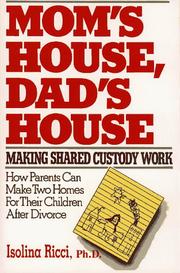
A classic, research-based guide to co-parenting across two households. Reading it here teaches the structural and communication skills that reduce the loyalty binds explored in the previous book.
Stepparenting in Practice: Roles, Relationships, and Daily Life
IntermediateDevelop concrete skills for the stepparent role — building trust with stepchildren, navigating discipline, and strengthening the couple partnership as the household's foundation.
▸ Study plan for this stage
Pace: 4–5 weeks, ~25–30 pages/day, with 2–3 reflection days per week
- The stepfamily as a unique system with distinct developmental stages and challenges compared to first-marriage families
- Building trust with stepchildren through consistency, patience, and realistic expectations about the stepparent-stepchild bond
- Establishing appropriate discipline and authority boundaries without overstepping or creating resentment
- The couple partnership as the cornerstone of stepfamily stability—prioritizing the marital relationship while honoring children's needs
- Managing loyalty conflicts and the stepchild's divided allegiances between biological and stepparents
- Practical strategies for blending household rules, finances, and daily routines across two family cultures
- Communication skills for navigating sensitive topics: ex-partners, biological parent involvement, and family identity
- What are the key developmental stages of stepfamily formation, and how does understanding these stages help you avoid common pitfalls?
- How can a stepparent build trust with stepchildren when there is initial resistance or loyalty conflicts?
- What is the difference between appropriate stepparent discipline and overstepping, and how do you know which approach fits your situation?
- Why is the couple partnership essential to stepfamily success, and what specific actions can strengthen it during high-stress periods?
- How do you navigate conversations about the biological parent's role and the stepchild's divided loyalties without creating conflict?
- What practical strategies help blend household rules, routines, and expectations when family members come from different family cultures?
- Map your stepfamily's current developmental stage using Visher's framework; identify which stage challenges are most acute for your household and plan one targeted intervention
- Conduct a 'trust audit': list 3–5 interactions with each stepchild where you could demonstrate consistency and follow-through; commit to one small, repeated action over 2 weeks and journal the results
- Role-play a discipline scenario with your partner: practice distinguishing between biological parent, stepparent, and co-parenting roles; identify where you've overstepped and reset boundaries
- Schedule a weekly 'couple check-in' (15–20 minutes) with your partner to discuss stepfamily challenges and reconnect; use Visher's communication framework to structure the conversation
- Create a household 'rules and expectations' document with input from your partner and stepchildren; compare it to your original family's rules and identify 2–3 non-negotiable values to preserve
- Write a letter to your stepchild (not to send) expressing what you've learned about their loyalty conflicts and how you plan to support them; use this to clarify your own role and intentions
Next up: This stage equips you with foundational skills and frameworks for the stepparent role; the next stage will deepen your understanding of specific high-stakes situations—such as managing conflict with ex-partners, supporting stepchildren through transitions, and healing from ruptures—to sustain and repair the stepfamily over time.

Written by the founders of the Stepfamily Association of America, this book translates decades of clinical research into actionable guidance. It is the field's foundational practical text and rewards readers who already have the conceptual grounding from Stage 1.
Deeper Psychology: Identity, Grief, and Long-Term Integration
ExpertEngage with the deeper emotional and psychological processes — grief, identity formation, and the long arc of becoming a genuinely united family — that determine whether a blended family thrives over years and decades.
▸ Study plan for this stage
Pace: 4–5 weeks, ~25–30 pages/day, with 2–3 reflection days per week
- The stepfamily cycle: predictable stages of development from fantasy through maturation, and how long-term integration requires accepting non-linear progress
- Grief as a central, often-unacknowledged force in stepfamily formation—losses of the original family structure, identity, and expectations that all members must process
- Identity formation in blended families: how children, stepparents, and biological parents each renegotiate their sense of self and role within the new system
- The concept of 'insider' and 'outsider' positions in stepfamilies, and how these shift over time as trust and belonging develop
- Strengthening couple relationships as the foundation for stepfamily stability: how the remarried couple's commitment and communication directly enables or undermines family integration
- Realistic expectations for stepparent-stepchild bonding: moving beyond the myth of instant love toward authentic, earned relationships built over years
- Practical strategies for managing loyalty conflicts, boundary-setting, and creating new family rituals that honor both continuity and change
- What are the stages of the stepfamily cycle according to Einstein, and what emotional and relational tasks characterize each stage?
- How does grief manifest in stepfamily members, and why is acknowledging grief essential to long-term family integration?
- What is the difference between 'insider' and 'outsider' positions in a stepfamily, and how do these roles evolve as the family matures?
- How can a remarried couple strengthen their relationship in ways that support rather than undermine the stepparent-stepchild bond?
- What are realistic expectations for stepparent-stepchild relationships, and how should these differ from biological parent-child relationships?
- What practical strategies does Einstein offer for managing loyalty conflicts and helping children navigate divided allegiances?
- Map your own stepfamily's position on the stepfamily cycle: identify which stage(s) you are in, what tasks remain incomplete, and what progress has been made
- Conduct a grief inventory: list losses each family member has experienced (identity shifts, family structure changes, unmet expectations) and journal about how these losses are being processed or acknowledged
- Interview each family member (separately, age-appropriately) about their insider/outsider feelings: who feels most connected, who feels peripheral, and what would help them feel more integrated?
- Analyze your couple relationship: assess communication patterns, conflict resolution, and whether the remarried couple is functioning as a united team or if stepparent-stepchild issues are creating wedges
- Create a 'new family rituals' plan: design 2–3 rituals (meals, outings, traditions) that are unique to your blended family and honor both continuity with past families and the creation of new identity
- Role-play or write out responses to a loyalty conflict scenario: practice how you would help a child navigate feeling torn between biological parent and stepparent, using Einstein's frameworks
Next up: This stage equips you with deep psychological understanding of how blended families actually mature over time, positioning you to move into practical implementation—designing specific interventions, communication protocols, and family structures tailored to your unique situation and stage of the stepfamily cycle.

Moves beyond survival mode into the psychology of long-term integration, addressing unresolved grief and identity questions for every family member. It is best absorbed after readers have practical experience and vocabulary from earlier stages.
Discussion
Keep reading
Paths that share books, cover the same subject, or open a related topic.