Two problems make this subject hard to enter. The first is that nearly every scholarly book assumes the events of the seventh century as background — the dispute over the succession, Karbala, the imamate — and readers who start with a modern political analysis end up reconstructing that history backwards from footnotes.
The second is that the succession dispute is a live theological question, not a settled historical one, and the scholarly literature reflects that. Some of the books below reach conclusions that align with the Shia account and others with the Sunni account, and their authors are arguing with each other in print. This path is a guide to a body of writing about a religious tradition; it does not adjudicate the dispute and is not theological instruction.
The narrative entry point
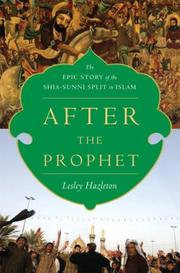
After the Prophet by Lesley Hazleton tells the succession crisis as narrative history — the death of Muhammad, the disputes over who should lead, and Karbala. It is written for general readers and is the reason to start here rather than with a textbook: you finish it knowing why the division exists and what it means emotionally to those who inherit it. It is a popular history rather than an academic one, and specialists differ on some of its readings.
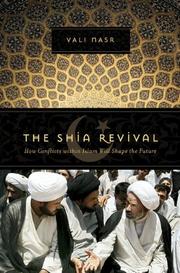
The Shia Revival by Vali Nasr is the modern counterpart, arguing that the removal of Saddam Hussein reordered the balance between Sunni and Shia power across the region. It was written in 2006 and it is a thesis, not a neutral survey; several of its predictions have been tested by events since and are worth reading against what actually happened.
The scholarly introductions
Shi'i Islam by Najam Haider is the best current academic introduction — clear on doctrine, law and the differences between Twelver, Ismaili and Zaydi branches, and honest about what the sources can and cannot establish.
An Introduction to Shi'i Islam by Moojan Momen is the older comprehensive reference, thorough on doctrine, ritual and institutional history. It dates from 1985 and shows its age on the contemporary chapters. Our catalogue stores its title with a stray apostrophe, which is a records error on our side rather than a different book.
The shiites by Heinz Halm is the compact alternative, published as a short history, and it is the fastest route to a working overview if you want one volume rather than three.
The formative period, where the arguments are
The Succession to Muhammad by Wilferd Madelung is a close reading of the earliest sources on the caliphate, and its conclusions are more sympathetic to Ali's claim than most Western scholarship had been. It is rigorous and it is contested; read it knowing that other historians dispute both its source criticism and its conclusions.
The Charismatic Community by Maria Massi Dakake examines how Shia identity actually formed as a community with its own loyalties and understanding of authority, rather than treating it as a political faction that later acquired a theology.
The formative period of Islamic thought by W. Montgomery Watt is the classic survey of the early sects and schools. It is a product of an older generation of scholarship and parts of its framework have been revised, but nothing has quite replaced its map of who believed what.
The modern political era
The Shiʻis of Iraq by Yitzhak Nakash is the standard history of how Iraq's Shia majority formed and how it related to the state, and it is essential background for everything written about Iraq since 2003. Reaching for Power, by the same author, extends the analysis across the Arab world.
Guardians of the Revolution by Ray Takeyh covers Iran's foreign policy since 1979 from the perspective of the revolutionary establishment. Hezbollah: A Short History by Augustus Richard Norton is the accessible account of the Lebanese movement; the subject is politically contested and Norton's relatively sympathetic framing has critics, which is worth knowing before you read it as settled fact.
For the wider tradition, the understanding Islam hub covers the general histories this path assumes.
Follow the full ordered path here: The Best Books on Shia Islam to Read First.