Train your dog with positive reinforcement
This curriculum builds from the "why" of positive reinforcement to the "how," then deepens into the science and finally into advanced real-world application. Each stage assumes the vocabulary and intuition of the one before it, so reading in order prevents confusion and accelerates skill — by the end, the learner will understand both the mechanics and the behavioral science well enough to train reliably and troubleshoot independently.
Foundations: Mindset & First Skills
BeginnerUnderstand why force-free training works, learn the core mechanics of reinforcement and marker training, and get a puppy or new dog started on the right foot.
▸ Study plan for this stage
Pace: 10–12 weeks total, reading all three books back-to-back in order. Week 1–4: "The Power of Positive Dog Training" (~20–25 pages/day, including the weekly lesson plans at the back). Week 5–8: "Don't Shoot the Dog!" (~15–20 pages/day — dense theory; re-read key chapters on schedules of reinforcement).
- Force-free philosophy: why punishment-based methods are unnecessary and counterproductive, as argued by Pat Miller through her own training journey from corrections-based to positive methods
- The four quadrants of operant conditioning (positive/negative reinforcement, positive/negative punishment) — introduced by Pryor in 'Don't Shoot the Dog!' — and why positive reinforcement is the most effective and humane quadrant to train from
- Marker training / clicker mechanics: the conditioned reinforcer as a precise communication bridge between the desired behavior and the reward, central to both Miller's weekly lesson plans and Pryor's shaping chapters
- Shaping by successive approximation: breaking any behavior into tiny achievable steps and reinforcing progress, the cornerstone method in 'Don't Shoot the Dog!'
- Schedules of reinforcement: continuous reinforcement for learning new behaviors vs. variable/intermittent schedules for maintaining fluent behaviors (Pryor, Chapter 3)
- Management and prevention over correction: using leashes, crates, baby gates, and supervision to set the dog up to succeed before a cue is even given — a practical theme running through both Miller and Zak George
- The 'Least Intrusive, Minimally Aversive' (LIMA) mindset: always trying the gentlest effective approach first, woven throughout Miller's ethical framework
- Building a reinforcement history and relationship: Zak George's emphasis on bonding, play, and real-life rewards as the foundation for a dog that WANTS to work with you
- In your own words, explain why positive reinforcement accelerates learning faster than punishment — drawing on Pryor's explanation of what punishment actually teaches the animal.
- What is a conditioned reinforcer (marker), how do you 'charge' one, and why does its timing matter more than the treat itself? (Miller's clicker introduction + Pryor Chapter 1)
- Describe the eight methods Pryor lists in 'Don't Shoot the Dog!' for getting rid of unwanted behavior — which ones are force-free, and which does she recommend most?
- What is shaping, and how would you use successive approximation (as Pryor describes) to teach a dog to go to a mat and lie down from scratch?
- How does Zak George suggest handling a dog that is 'too distracted' to respond to a known cue, and how does this connect to Pryor's concept of the reinforcement environment?
- What management tools and environmental changes does Pat Miller recommend in her first-week lesson plan, and why does she prioritize them before teaching any formal cues?
- Charge the marker: Spend five minutes a day for one week clicking (or saying 'Yes!') and immediately delivering a high-value treat with no behavior required — per Miller's Week 1 lesson plan. Test that the marker is 'charged' by clicking when the dog is mildly distracted and watching for an immediate head-turn.
- Four-quadrant journaling: After reading Pryor's operant-conditioning chapters, observe your dog (or a video of any dog) for 15 minutes and write down one real example of each of the four quadrants you notice. Reflect on which quadrant the human was intentionally using vs. accidentally using.
- Shape a novel behavior in 5-minute sessions: Following Pryor's shaping rules, pick a behavior your dog has never been formally taught (e.g., nose-touch to a sticky note on the wall). Write a shaping plan with at least six successive approximation steps before you begin, then run the sessions and note where you had to split steps further.
- Run Miller's 6-week lesson sequence: Work through the structured weekly lesson plans at the back of 'The Power of Positive Dog Training' in real time with your dog — one week per week. Keep a training log noting which behaviors clicked quickly and which needed more shaping.
- Reinforcement rate drill: Set a one-minute timer and deliver as many successful repetitions of a simple behavior (sit or hand-touch) as possible, aiming for 15–20 reinforcements per minute as Zak George recommends for early learning. Count your rate and identify what slowed you down.
- Real-life rewards inventory: Following Zak George's philosophy, list every reward your dog finds motivating beyond food (tug, sniff, chase, door opening, leash going on). Practice using three non-food rewards as reinforcers in a single training session this week.
Next up: ">Mastering why and how reinforcement works — the theory from Pryor, the ethical framework from Miller, and the practical relationship-building from Zak George — gives you the conceptual vocabulary and mechanical skills needed to tackle the next stage, where you'll apply these foundations to solving specific real-world behavior challenges and building a more complete training toolkit.

The ideal first book: it explains the philosophy of force-free training in plain language and immediately pairs it with a practical six-week training program, giving beginners both motivation and a concrete starting point.

Pryor's classic introduces the universal laws of reinforcement and shaping in an accessible, eye-opening way — reading it second cements the 'why it works' before moving to more detailed how-to guides.

A friendly, modern companion that walks through puppy basics (housetraining, socialization, foundational cues) with an explicitly positive approach, bridging theory from the first two books into everyday beginner situations.
Building Blocks: Clicker Mechanics & Everyday Manners
BeginnerMaster clicker/marker timing, understand how to shape and capture behaviors, and build a reliable set of real-life manners behaviors.
▸ Study plan for this stage
Pace: 6–8 weeks total. Week 1–3: "Clicking With Your Dog" (~20–25 pages/day, including re-reading any exercise chapters before practicing). Week 4–8: "Train Your Dog Like a Pro" (~15–20 pages/day, pausing after each behavior chapter to complete a real training session before moving on).
- Clicker/marker mechanics & timing: The click must land at the exact moment the desired behavior occurs — Tillman's step-by-step lessons make this the non-negotiable foundation of everything else.
- The 'charge the clicker' (classical conditioning) phase: Teaching the dog that click = treat before any behavior is asked for, as introduced in 'Clicking With Your Dog'.
- Capturing vs. shaping: Capturing means clicking a behavior the dog offers naturally; shaping means clicking successive approximations toward a goal behavior — both methods are demonstrated through Tillman's picture-based lessons.
- Rate of reinforcement (ROR): Keeping the reward rate high enough to maintain motivation and momentum, a principle Donaldson emphasizes throughout 'Train Your Dog Like a Pro'.
- Criteria-setting and splitting vs. lumping: Breaking behaviors into tiny, achievable steps (splitting) rather than jumping ahead too fast (lumping) — a core Donaldson concept that prevents frustration for both dog and handler.
- The 'three Ds' — Duration, Distance, Distraction: Donaldson's framework for systematically proofing a behavior by raising only one D at a time before combining them.
- Real-life manners behaviors: Sit, down, stay, loose-leash walking, come (recall), leave it, and polite greetings — the practical repertoire built across both books.
- Jackpots and variable reinforcement schedules: Understanding when and why to use big rewards or unpredictable reward timing to strengthen a behavior once it is fluent, as covered in Donaldson's training progressions.
- Can you explain, in your own words, why clicker timing matters so much — and what happens to learning if the click is even one second late? (Tillman, foundational chapters)
- What is the difference between 'charging the clicker' and actually training a behavior, and why must charging come first? (Tillman)
- Walk through a shaping plan for teaching 'down' from scratch: what are the approximation steps, and when do you click at each step? (Tillman's shaping exercises)
- According to Donaldson, what does it mean to 'split' a behavior, and can you give an example of a handler 'lumping' and how you would fix it? ('Train Your Dog Like a Pro')
- How would you use the three Ds to proof a solid 'stay' — what order do you introduce them in, and why is raising two Ds at once a mistake? (Donaldson)
- What is rate of reinforcement, why does Donaldson treat it as a diagnostic tool, and what should you do if your dog's ROR drops during a session? ('Train Your Dog Like a Pro')
- Clicker timing drill (Week 1): Without your dog, bounce a ball and click the exact moment it hits the floor. Aim for 9/10 accuracy before your first real session — this isolates the mechanical skill Tillman prioritizes above all else.
- Charge the clicker (Week 1–2): 10 repetitions per session, 2–3 sessions per day: click → treat, no behavior required. Record whether your dog begins to look at you or salivate at the sound of the click within 2–3 sessions.
- Shape a novel 'trick' behavior using only shaping (Week 2–3): Choose something your dog doesn't already know (e.g., nose-touch a Post-it note). Write out your approximation steps in advance using Tillman's lesson format, then run the session and note where you had to split further.
- Capture a natural behavior (Week 2–3): Identify one thing your dog does on their own (e.g., a stretch, a yawn, lying on their side). Click and treat it every time it happens naturally for one week. Track how quickly the dog begins to offer it deliberately.
- Three-Ds proofing log (Week 5–7, during Donaldson): Pick one solid behavior (sit or down). Spend one week adding Duration only, one week adding Distance only, then one week adding mild Distraction — logging your success rate (aim for ≥80%) before moving to the next D, exactly as Donaldson prescribes.
- Real-life manners checklist (Week 6–8): Using Donaldson's criteria-setting approach, train and log daily 5-minute sessions for each of the core manners behaviors (sit, down, stay, recall, loose-leash walking, leave it, polite greeting). Mark each behavior as 'in progress,' 'fluent at home,' or 'proofed with distractions' to make progress visible.
Next up: Mastering clicker mechanics and the three Ds gives the reader a precise, systematic training language — the perfect launchpad for tackling more complex behavior chains, problem-solving, and the learning-theory depth required at the intermediate stage.
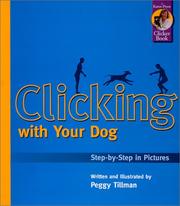
A step-by-step visual workbook devoted entirely to clicker training; its lesson-by-lesson format lets beginners practice precise timing and shaping mechanics with immediate feedback before tackling more complex behavior work.

Donaldson's clear, no-nonsense style translates clicker mechanics into a full suite of practical cues and real-life manners, reinforcing the timing skills built in the previous book with structured, progressive exercises.
Going Deeper: Behavior Science & Problem Solving
IntermediateUnderstand the behavioral science underpinning training, learn to read dog body language accurately, and apply systematic protocols to common behavior problems.
▸ Study plan for this stage
Pace: 10–13 weeks total. Week 1–4: "The Culture Clash" (~25–30 pages/day, reading in focused sittings of 45–60 min). Week 5–8: "Canine Body Language" (~15–20 pages/day — slower pace to study photos and diagrams carefully; revisit sections repeatedly). Week 9–13: "Behavior Adjustment Training 2.0" (~20–25
- The 'culture clash' itself: dogs are amoral, asocial-to-humans-by-default opportunists shaped by reinforcement history, not spite or dominance — reframing all behavior through this lens (Donaldson)
- The four quadrants of operant conditioning (positive/negative reinforcement and punishment) and why positive reinforcement is both the most effective and most humane default (Donaldson)
- Classical vs. operant conditioning and how both are always operating simultaneously during any training interaction (Donaldson)
- How to read the full spectrum of canine stress signals, appeasement gestures, and calming signals — from subtle (lip lick, look-away, ear position) to overt (freeze, snap, bite) — as a continuous ladder of communication (Aloff)
- Distinguishing offensive vs. defensive body language and understanding how context, environment, and trigger stacking compound a dog's emotional state (Aloff)
- The BAT 2.0 framework: using functional rewards (the dog's own natural behavior — sniffing, moving away) rather than food alone to reduce reactivity and build genuine confidence (Stewart)
- Setting up 'set-ups' and 'real life' BAT scenarios: threshold management, leash mechanics, and the importance of giving the dog agency and choice throughout the process (Stewart)
- The concept of emotional counter-conditioning working in tandem with BAT: changing the underlying emotional response, not just suppressing the behavioral symptom (Stewart)
- According to Donaldson, why is attributing a dog's 'bad' behavior to dominance, spite, or guilt both scientifically inaccurate and practically counterproductive — and what is the correct explanatory framework?
- Describe the four quadrants of operant conditioning with a concrete dog-training example for each. Why does Donaldson argue that positive punishment carries hidden costs even when it 'works'?
- Using Aloff's framework, walk through at least five body language signals a dog might display in escalating order when it is uncomfortable. At what point should a handler intervene, and why?
- What is the difference between offensive and defensive aggression in Aloff's model, and why does misreading one for the other lead to dangerous handling decisions?
- What is a 'functional reward' in Stewart's BAT 2.0, and how does it differ from using food as a reinforcer? Why does Stewart argue that functional rewards produce more durable behavior change in reactive dogs?
- How does Stewart define 'threshold,' and what specific leash handling and environmental management strategies does BAT 2.0 prescribe to keep a dog working below threshold during a set-up?
- 'Reframe Journal' (during The Culture Clash): Each day, write down one dog behavior you observed (your own dog, a video, or a dog at a park) that is commonly mislabeled (e.g., 'guilty look,' 'dominant behavior'). Rewrite it using Donaldson's reinforcement-history and antecedent-behavior-consequence (ABC) framework.
- Quadrant Mapping Drill (during The Culture Clash): Watch 10 short dog-training clips online and classify every trainer action into one of the four operant quadrants. Note any quadrant combinations happening simultaneously and identify the likely emotional fallout of each.
- Body Language Photo Study (during Canine Body Language): Work through Aloff's photo sequences with a notepad. Cover the captions, write your own interpretation of each image, then reveal the caption. Track your accuracy over time and flag the signal types you most frequently misread.
- Live Observation Log (during Canine Body Language): Spend 15 minutes, three times per week, watching a dog (yours, a neighbor's, or dogs at a park) and logging every body language signal you observe in real time. At the end of each session, reconstruct the dog's emotional arc across the observation period.
- BAT Set-Up Design (during BAT 2.0): Before beginning a real session, write a written set-up plan: identify the trigger, the working distance (threshold), the environment layout, your leash mechanics role, and what functional reward you expect the dog to take. Debrief in writing after each session against your plan.
- Video Review Loop (during BAT 2.0): Film your BAT practice sessions. Watch the footage muting the audio and focus exclusively on the dog's body language using Aloff's vocabulary. Then re-watch focusing on your own handling. Identify one body language signal you missed in real time and one handling adjustment for the next session.
Next up: Mastering the behavioral science, body language literacy, and systematic problem-solving protocols in this stage gives the reader the diagnostic fluency and mechanistic understanding needed to advance into more specialized or advanced topics — such as sport dog training, complex behavior modification cases, or professional instruction — where nuanced judgment and the ability to design individualiz

A paradigm-shifting book that explains dog cognition and learning theory rigorously — reading it here reframes everything learned so far through a scientific lens and prevents common anthropomorphic training mistakes.
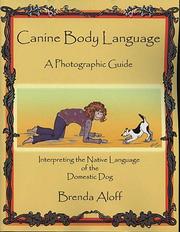
Reliable training requires reading the dog; this heavily illustrated reference teaches precise body-language interpretation, which is essential before tackling behavior modification in the next stage.

Introduces BAT, a science-based protocol for reactivity and fear — one of the most common intermediate challenges — and builds directly on the body-language literacy developed in the previous book.
Advanced Application: Reliability, Reactivity & Complex Behavior
ExpertAchieve fluent, reliable behaviors under real-world distractions, handle serious behavior challenges (aggression, anxiety), and understand how to design and proof training plans systematically.
▸ Study plan for this stage
Pace: 10–13 weeks total: "Control Unleashed" (~4 weeks, ~20–25 pages/day — it is dense with protocols; re-read key games sections); "Mine!" (~3 weeks, ~15–20 pages/day — short but demands slow, deliberate reading alongside active practice); "Plenty in Life Is Free" (~3–4 weeks, ~10–15 pages/day — philosop
- Threshold management and working 'under threshold' as the non-negotiable foundation for behavior modification with reactive or anxious dogs (Control Unleashed)
- The Control Unleashed game system: Look at That (LAT), Offered Relaxation Protocol, Mat work, and the 'Give Me a Break' game as tools for building focus, calmness, and handler orientation in high-distraction environments
- Systematic proofing and the concept of 'stimulus control' — ensuring behaviors are reliable across varied contexts, distances, durations, and distractions (3 D's + handler position)
- Resource guarding as a normal, ethologically grounded canine behavior — understanding its spectrum from mild (freeze/stiffening) to severe (bite), and why punishment escalates rather than resolves it (Mine!)
- Jean Donaldson's Assess-a-Pet / behavior modification framework for resource guarding: desensitization and counter-conditioning (DS/CC) protocols, trading games, and 'Treat-Retreat' approaches structured by severity tier
- Safety planning and ethical responsibility: recognizing when a behavior challenge requires management, behavior modification, veterinary/pharmacological support, or professional referral
- Kathy Sdao's SMART x50 (See, Mark, And Reward Training) as a mindset shift — moving from rule-based 'Nothing in Life is Free' (NILF) hierarchies to an abundance-based, relationship-centered reinforcement philosophy
- Critical evaluation of dominance theory and NILF protocols: understanding their historical roots, why the science does not support them, and how to replace them with empowerment-based training structures
- After reading Control Unleashed, can you define 'threshold' precisely, describe at least three behavioral signs that a dog is over threshold, and explain how you would adjust your training environment or criteria to bring the dog back under threshold?
- Can you walk through the Look at That (LAT) game step-by-step — including how to introduce it, how to raise criteria, and how it functionally changes a dog's emotional response to triggers — and explain why it works from a classical and operant conditioning perspective?
- Using Donaldson's framework from Mine!, how would you assess the severity of a dog's resource guarding, design a week-by-week DS/CC protocol for a dog that guards food bowls from humans, and identify the safety and management steps that must be in place before behavior modification begins?
- What is Sdao's core critique of 'Nothing in Life is Free' programs, and how does the SMART x50 approach differ in its assumptions about the dog-human relationship, control, and how reinforcement should be distributed?
- How would you design a complete 'proofing plan' for a trained behavior (e.g., a reliable recall) that systematically introduces the 3 D's, uses the games from Control Unleashed to maintain focus, and incorporates the reinforcement philosophy from Plenty in Life Is Free?
- How do all three books converge on the idea that the dog's emotional state — not just its behavior — is the primary target of intervention, and what practical implications does this have for how you structure a training session?
- Control Unleashed LAT Game Field Practice: Identify one mild trigger for your dog (a person, a dog, a bicycle). Set up at a distance where the dog notices but is not reactive. Run 5-minute LAT sessions three times per week for two weeks, logging: distance to trigger, latency to orient back to handler, and any signs of stress. Track whether the dog begins to auto-check in without a cue.
- Relaxation Protocol on a Mat: Teach and run the full McDevitt Offered Relaxation Protocol on a mat in progressively more distracting environments — first at home, then in a quiet outdoor space, then near mild distractions. Record your dog's body language (soft eyes, loose body, slow breathing) as your success metric, not just 'staying on the mat.'
- Resource Guarding Severity Assessment (Mine!): Using Donaldson's criteria, conduct a structured, safe assessment of your own dog's guarding behavior across at least three resources (food bowl, high-value chew, toy). Write a one-page report: severity tier, triggers identified, safe management steps implemented, and a proposed 4-week DS/CC protocol. Do NOT attempt modification on a dog with a bite h
- Trading Game Practice: Following Mine!'s trading protocol, practice 'approach → toss treat → retreat' around a low-value resource your dog is comfortable with. Over two weeks, build to approaching, pausing, and the dog voluntarily looking up at you. Journal each session: what resource, dog's body language, your distance, and any regression.
- SMART x50 Two-Week Challenge (Plenty in Life Is Free): Commit to Sdao's SMART x50 practice for 14 consecutive days — carry 50 small treats daily and mark/reward naturally occurring good behaviors throughout the day without formal sessions. At the end of 14 days, write a reflection: Which behaviors increased in frequency? How did the practice change your own observation habits and your relationship
- Integrated Proofing Plan Design: Choose one behavior your dog knows well (sit, down, recall, or mat). Write a written proofing plan that maps out 12 progressive training scenarios using the 3 D's. Incorporate at least two Control Unleashed games as 'reset' tools between reps, and specify your reinforcement rate and reward hierarchy (from Sdao's abundance philosophy). Execute the plan over 3 weeks
Next up: This stage equips the reader with the protocols, philosophical grounding, and real-world problem-solving skills to handle complex cases confidently, setting the stage for any next-level study in applied animal behavior, ethology, or professional training practice — where the focus shifts from implementing others' protocols to designing, evaluating, and teaching them independently.

McDevitt's program teaches dogs to think and offer calm, focused behavior in high-distraction environments — a critical step toward true reliability that builds on all prior reinforcement and body-language skills.
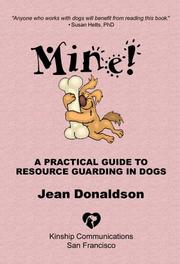
Resource guarding is among the most mishandled behavior problems; Donaldson provides a rigorous, force-free assessment and modification protocol that exemplifies how to apply behavioral science to a serious real-world challenge.

A thought-provoking capstone that challenges dogmatic training rules and encourages the learner to think flexibly and scientifically about reinforcement — ideal for consolidating an advanced, nuanced understanding of positive training.
Discussion
Keep reading
Paths that share books, cover the same subject, or open a related topic.