Best Books on Running a Political Campaign, in Reading Order
A campaign is a temporary organisation that has to raise money, find its voters, persuade some of them and turn them out on one specific day, and the literature divides cleanly along those lines. This path starts with the practitioner manuals for local races, because that is where most people actually begin and where the mechanics are visible. It then moves to field operations and the experimental research that overturned decades of consultant folklore, then to message and framing — where the books are openly partisan and are deliberately read in pairs from both sides — and closes with narrative accounts of what campaigning does to the people inside it.
The mechanics of a campaign
BeginnerKnow what a campaign plan contains — budget, timeline, targets, vote goal, filing deadlines — and be able to sketch a credible plan for a real local race
▸ Study plan for this stage
Pace: 3 weeks for ~590 pages, but read these two as reference manuals rather than cover to cover — Shaw's chapters are checklists and are meant to be worked, not skimmed. Have one real, specific local race in mind before you open The Campaign Manager; every exercise here depends on it.
- The vote goal: working backwards from registration, expected turnout and the winning number to how many identified supporters you must actually produce — Shaw's foundational calculation
- The campaign plan as a document — budget, timeline, targeting, staffing, deadlines — and what makes one credible rather than aspirational
- Filing requirements, petition signatures and ballot access, which Grey treats as the first place amateur campaigns die
- Volunteer management as the real constraint: recruiting, tasking, retaining, and Shaw's insistence that unmanaged volunteers cost more than they contribute
- The budget structure of a local race — what actually consumes money, and Shaw's argument about the low return on yard signs relative to their emotional appeal
- Local party structures, endorsements and the informal gatekeepers Grey describes, none of which appear on any checklist
- The campaign calendar working backwards from election day, with absentee and early voting shifting the real deadline forward
- For a specific local district, compute the vote goal from registration and expected turnout, and state every assumption you made.
- What does Shaw say the money in a small campaign actually buys, and which line items does she argue are usually waste?
- Grey describes several ways local campaigns lose before the campaign begins. Name three, and say which applies to the race you have in mind.
- How does early and absentee voting change the campaign calendar, and what does that do to the timing of the mail and the field push?
- What does a credible volunteer plan contain, and how would you tell it apart from a list of hopeful names?
- Pick a real local race in your area and write a complete campaign plan of five to eight pages using Shaw's chapter structure: vote goal, budget, timeline, targeting, staffing and deadlines. Every later stage of this path gets applied back to this document.
- Look up the actual filing requirements for that office — deadline, fee, signature count, form — and write out the petition timeline. Grey's point is that this is where the amateurs lose, and doing it makes that concrete.
- Build a real budget spreadsheet for the race at three funding levels, and mark which activities you would cut first at each. Cutting is the whole exercise.
- Draw the campaign calendar backwards from election day on one page, marking the filing deadline, the first mail drop, the start of early voting and the final weekend.
- Write out a one-page volunteer job description for a canvass captain, using Shaw's guidance, specific enough that someone could actually do the job from it.
Next up: With a plan on paper, the next stage asks which of the activities in it actually move votes and at what cost each.

The standard practical handbook for local elections: vote goals, budgets, volunteer management, yard signs, canvassing, and the endless small logistics. Start here because it is the only book on the list that assumes you are actually going to run one.

A judge and campaign veteran's blunt account of the unglamorous parts — filing, petitions, local party structures and how races are really lost. Read it alongside Shaw for the political realities her checklists assume.
The field operation
IntermediateUnderstand voter contact as a measurable operation — which tactics move turnout, at what cost per vote, and how a field program is actually staffed and run
▸ Study plan for this stage
Pace: 5 weeks for ~755 pages. Read Get Out the Vote first — it is short, the results are quantitative, and it reframes everything else. Nielsen's ethnography and Shea and Burton's textbook can then be read in parallel, the first for texture and the second for the general framework.
- The randomised field experiment as the method: a treatment group, a control group and a measured turnout difference, which is what makes Green and Gerber's numbers different in kind from consultant claims
- Cost per additional vote as the comparison metric, and the resulting ranking — in-person canvassing at the top, volunteer phone banks in the middle, robocalls and most direct mail at or near zero effect
- Why personal contact works: the social pressure and interpersonal mechanisms Green and Gerber identify, not the information conveyed
- The difference between mobilisation (turning out an existing supporter) and persuasion (changing a vote), and why the experimental evidence is much stronger for the first
- Nielsen's finding that the field program is an assembled sociotechnical thing — databases, paid organisers, episodic volunteers — and that the data quality is far worse in practice than in the design
- The organiser's real job as Nielsen observes it: recruiting and holding volunteers, not knocking doors personally
- Shea and Burton's strategic framework — targeting, opposition and self research, communications, organisation — as the general case behind the two specific books
- Rank door-knocking, live volunteer calls, paid phone banks, direct mail and robocalls by cost per additional vote from Green and Gerber's results, and state the approximate figures.
- Why does the experimental design matter? Explain what goes wrong when a campaign judges a tactic by comparing contacted and uncontacted voters after the fact.
- What is the evidential difference between the mobilisation findings and the persuasion findings, and how should that change how a campaign allocates money?
- Nielsen's field programs did not run the way the strategy documents said. Give two concrete gaps he documents, and say what each implies about trusting your own voter file.
- Using Shea and Burton's framework, which strategic function does the field operation belong to, and which functions does a small campaign most often neglect entirely?
- Take the budget you built in stage one and reallocate it using Green and Gerber's cost-per-vote figures. Write a paragraph defending the reallocation to a candidate who wants yard signs and television.
- Design a randomised experiment for one tactic in your race: define the treatment, the control, the randomisation unit, the outcome measure and the sample size you would need for the effect to be detectable. Green and Gerber's appendix is the model.
- Read Nielsen's account of one field office and write 300 words on the single point where the plan and the practice diverged most, then check whether your stage-one plan makes the same assumption.
- Build the canvass math for your district: doors per hour, contact rate, volunteers needed per weekend, weekends available, and the identified-supporter number you calculated in stage one. If the arithmetic does not close, that is the finding.
- Write a one-page targeting memo using Shea and Burton's categories, naming the precincts you would work and the data you would use to choose them.
Next up: Field work runs on a voter file, so the next stage is about what that file actually contains and how much of the microtargeting story is true.

The single most useful book here: randomized field experiments comparing door-knocking, phone banks, mail and robocalls, reported as cost per additional vote. It replaces opinion with evidence, and it is short.

An ethnography of two congressional field programs, showing how the databases, volunteers and paid staff really interact on the ground. Read it after Green: it is what implementing the experimental findings actually looks like, mess included.
The standard academic-practitioner text on campaign strategy, covering targeting, research, communications and organisation in one framework. It is the textbook of the path, and the place to go when you need the general case rather than one race.
Data and the science of persuasion
IntermediateUnderstand microtargeting, the voter file, and what campaigns can and cannot actually learn about individuals — including the limits the vendors do not advertise
▸ Study plan for this stage
Pace: 4 weeks for ~686 pages. Issenberg reads like narrative journalism at ~30 pages/day; Hersh is more academic and needs slower attention to the chapters on data sources. Read them strictly in this order — Issenberg builds the impression that Hersh then corrects.
- Issenberg's history: how a small group of academics and consultants moved campaigning from folklore toward measurement, and the resistance they met from the consultant industry
- The individual-level model — assigning each voter a support score and a turnout score — and how those scores get used to build contact lists
- Hersh's central correction: campaigns overwhelmingly know what the public record tells them, and the record's richness varies by state
- The 'perceived voter' concept — campaigns act on a constructed picture of a voter, which may diverge substantially from the real person
- Why states that record party registration and race produce far better models than states that do not, making American microtargeting wildly uneven rather than uniformly powerful
- The gap between commercial consumer data and political usefulness: knowing what someone buys predicts vote choice far worse than the vendors imply
- How to read a vendor claim about targeting — what would have to be true about the underlying data for the claim to hold
- What specific data does a campaign in a party-registration state have that a campaign in a non-registration state does not, and how much does Hersh say that changes model quality?
- Explain the 'perceived voter'. Give an example from Hersh where the perceived and actual voter diverge in a way that costs the campaign.
- Issenberg tells the story as a revolution. After reading Hersh, which parts of that revolution actually happened and which parts were sold?
- Why is commercial consumer data less useful for political targeting than for retail, despite being far richer in volume?
- If microtargeting is cruder than advertised, what follows for the field plan you built in stage two — does it change the targeting or only the confidence?
- Look up what your own state's public voter file actually contains — fields, cost, who may obtain it — and write it out. Then place your state on Hersh's spectrum of data-rich to data-poor.
- Write a 250-word summary of Issenberg's account of the experimental turn, then annotate it with every point Hersh qualifies or contradicts. The annotations are the deliverable.
- Take one microtargeting claim from a real vendor's marketing page and write out what the underlying data would have to contain for it to be true. Then check that against Hersh's inventory of what campaigns actually have.
- Sketch how you would build a support score for the race in your stage-one plan, listing every input variable and marking which are public record, which are campaign-collected and which are purchased.
- Revisit your stage-two targeting memo and mark every place where you assumed the data knows more than Hersh says it does.
Next up: Having established who you can find and contact, the remaining question is what to say to them — which is where the literature stops being empirical and becomes openly partisan.

The story of how experimentalists dragged campaigning from folklore toward measurement, told through the consultants and academics who did it. The most entertaining book on the path and the best history of how modern campaign data came to be.

The rigorous corrective: campaigns mostly know what public records tell them, and microtargeting is far cruder than either its boosters or its critics claim. Read it immediately after Issenberg to avoid overestimating what the data can do.
Message and framing
IntermediateUnderstand how language, framing and emotion shape political persuasion — and read the leading strategists from opposing parties against each other rather than one alone
▸ Study plan for this stage
Pace: 5 weeks for ~874 pages. Read Luntz and Lakoff back to back and close together — Don't Think of an Elephant! is only 124 pages, so the pairing can be done in a single week. Give Westen's 477 pages more time and read with a sceptical pen; the argument is strong, the evidence base is contested.
- Luntz's craft claim: it is not what you say but what people hear — language tested by dial groups and focus groups rather than chosen by intuition
- Luntz's specific technique of word substitution ('death tax' for estate tax, 'energy exploration' for drilling) and what it reveals about how much of an argument sits in the noun
- Lakoff's frames: political positions organised by deep conceptual metaphors, so that negating a frame activates it — the elephant of the title
- Lakoff's strategic conclusion that adopting an opponent's vocabulary concedes the argument before it starts, and why he thinks the left has repeatedly done so
- Westen's thesis that voters reason emotionally, that campaigns leading with policy detail lose, and his reading of specific presidential debates as evidence
- The contested status of Westen's evidence base — the neuroimaging inference in particular — and why it should be treated as a strong hypothesis under test
- What all three share and what none of them provides: a persuasive account of mechanism, without the experimental discipline of stage two
- Take one of Luntz's word substitutions and state exactly which part of the argument the substitution smuggles in.
- Explain why, on Lakoff's account, saying 'there is no death tax' strengthens the death tax frame. What is the alternative move?
- Luntz and Lakoff describe the same phenomenon from opposite sides. Where do they actually disagree, as opposed to using different vocabulary for the same claim?
- What is Westen's evidence that emotion drives vote choice, and how would a critic attack it? Answer both parts.
- None of these three books reports a randomised experiment. Compare their standard of evidence to Green and Gerber's and say what you should therefore do with their advice.
- Take the central issue in the race from your stage-one plan and write the same position twice: once in Luntz's tested-language style and once in Lakoff's reframing style. Then write a paragraph on which you would actually use and why.
- Collect ten phrases from one week of real political coverage and, for each, identify the frame it presupposes and who benefits from it. Lakoff's chapter on frames is the method.
- Find the passage where Westen analyses a specific debate answer and rewrite that answer as he recommends. Then write two sentences on whether you believe the rewrite would have changed a single vote.
- Write a 200-word summary of Luntz's argument that a reader on the left would accept as fair, and a 200-word summary of Lakoff's that a reader on the right would accept as fair. Failing at this is the usual reason people read only one of them.
- Draft the actual message box for your race — your message, their message, your attack, their attack — on a single page, and test each cell against both Luntz's word-level and Lakoff's frame-level criteria.
Next up: The last stage sets the plans, the data and the messaging aside to look at what a campaign is like for the people living inside it.

The best-known Republican pollster on testing language and choosing words that land. Read it as a partisan practitioner's craft book: the techniques are general, the examples are not, and both are instructive.
The mirror-image argument from the left: political positions are organised by deep frames, and adopting an opponent's language concedes the argument. Read it directly after Luntz — the two are describing the same phenomenon from opposite sides, and the pairing is the point.
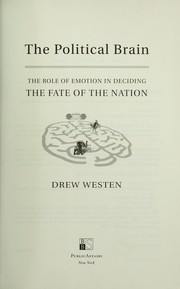
A psychologist's case that voters reason emotionally and that campaigns which lead with policy detail lose. Written as advice to Democrats, and its evidence base has been challenged, so read it as a strong hypothesis rather than a finding.
What it is actually like
IntermediateSee campaigning from inside, over a full cycle, and understand what the work does to candidates, staff and the coverage of both
▸ Study plan for this stage
Pace: 3 months. Selling of the President is a fast 253 pages and can be finished in a week. What It Takes is 1,049 pages of long, digressive, immersive prose — plan ~25 pages/day over ten to twelve weeks and read it as a book rather than as a source. This stage is deliberately paced slowly; there is nothi
- McGinniss's revelation: a candidate presented as a television product, with the media operation as the strategic centre of the campaign rather than a service function
- The professionalisation McGinniss documented in 1968 — advertising specialists, staged town halls, controlled access — as the origin of everything the earlier stages take for granted
- The tension between the packaged candidate and the reporter's access, and how the modern press management operation grew directly out of what McGinniss was allowed to see once and never again
- Cramer's six candidates and his method: immersive reporting on the person rather than the horse race, told largely from inside each candidate's own frame of reference
- Cramer's central question — what kind of person does this, and what does the wanting cost them — and his refusal to answer it with cynicism
- The staff experience: the loyalty, the exhaustion, the collapse of ordinary life, and why campaigns generate the intensity they do
- How campaign coverage itself shapes the campaign, in Cramer through the treatment of Biden and Hart in 1988 and in McGinniss through the manufactured television event
- What in McGinniss's account was genuinely new in 1968, and what is now so standard that a modern reader has to be told it was ever remarkable?
- How did the Nixon operation manage the boundary between the candidate and the public, and what is the direct descendant of that practice today?
- Cramer writes about six people who all wanted the same thing. What does he suggest they had in common, and does he treat that as admirable?
- Take one of Cramer's candidates and describe the moment the campaign cost them something that could not be recovered.
- Having read all five stages: which of the earlier books now looks naive about what a campaign does to the people in it, and why?
- Write 300 words comparing McGinniss's description of a staged television event with a campaign event you have personally attended or watched in full. Name what has changed and what has not.
- Pick one Cramer candidate and write a two-page profile in your own words covering their origin, their motivation and their failure. Doing this for one person is worth more than skimming all six.
- Keep a reading log for What It Takes — one paragraph per hundred pages — noting where Cramer's portrait contradicts the strategic picture built in the earlier stages. Over a thousand pages the log is what you will keep.
- Go back to the campaign plan you wrote in stage one and add a section that does not appear in Shaw or Grey: what this campaign will demand of the candidate and the staff, and what you will do about it.
- Write a final one-page answer to Cramer's question, in your own case: whether you would do this, and what you think it would cost.
Next up: This closes the path: you have a plan, a field method grounded in evidence, a realistic view of the data, a message discipline, and an honest picture of the human cost.
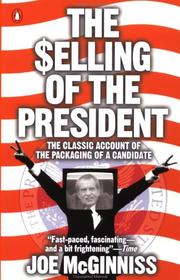
The book that exposed the modern packaging of a candidate for television, written from inside the Nixon media operation. Read it for the origin of the professionalised campaign everything since has elaborated.

Cramer's enormous portrait of six candidates in the 1988 presidential race, and the best answer ever written to why anyone would put themselves through this. A long finish, and the one book here that stays with people for years.
Discussion
Keep reading
Paths that share books, cover the same subject, or open a related topic.