There are two literatures here wearing the same cover. One is a genre of short business books complaining that meetings are terrible, which is enjoyable and takes about ninety minutes to read. The other is a professional craft literature written by people who facilitate for a living, full of specific moves for what to do when a group deadlocks. The complaint books outsell the craft books by an enormous margin, which is why so many people have read three of them and still cannot run a decision-making session.
The order below uses the first group as motivation and then leaves it behind quickly. If you already believe meetings are broken, skip straight to the third section.
The short case for change
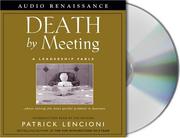
Death by Meeting is Patrick Lencioni's business fable, and its useful contribution is the argument that meetings fail because we hold one undifferentiated kind instead of several distinct kinds. Read this before our next meeting makes an overlapping argument in far fewer pages. These two cover much the same ground — read whichever you can borrow and do not buy both.
The Surprising Science of Meetings is the one to prioritise in this section, because Steven Rogelberg is an organisational psychologist summarising actual studies rather than asserting from experience. Worth knowing that much of the underlying evidence is survey-based and correlational, so treat the effect sizes as directional. The Art of Gathering widens the subject beyond work entirely, to dinners, funerals and conferences, and is the best book here on the question most facilitators skip: what is this gathering actually for.
The practitioner core
This is where the path earns its keep. How to Make Meetings Work is from 1976 and remains the foundational text on the interaction method — the separation of content, process and recording, and the invention of the neutral facilitator role. Almost everything after it is a refinement.
Facilitator's guide to participatory decision-making is the single most useful book on this list. Sam Kaner's diamond of participation and his account of the groan zone — the uncomfortable middle stage where a group has heard every view and cannot yet converge — give you a diagnosis for the exact moment most meetings fall apart. The skilled facilitator is more theoretical and more demanding, built on ground rules and a model of unilateral versus mutual-learning behaviour; it is the book for someone who wants a coherent framework rather than a toolkit. Facilitating with ease! is the opposite: checklists, agendas, templates, the practical companion for a first workshop.
The toolkits
Sprint is a specific five-day design process from Google Ventures, and it is worth reading even if you never run one, because it is an unusually complete worked example of structured group decision-making. Gamestorming and Visual Meetings overlap substantially — both are catalogues of visual and game-structured exercises — and one of the two is enough for most people. Take Gamestorming if you want exercises indexed by purpose, and Visual Meetings if drawing in front of a room is the skill you want to build.
The Surprising Power of Liberating Structures closes the path with thirty-three microstructures designed to distribute participation, and it is the best answer to the most common failure mode of all: three people talking while nine wait.
One honest limit. Facilitation is a performed skill and reading about the groan zone is not the same as standing in it. Every book here recommends the same next step, which is to run something small and get feedback. If your interest is running sessions inside a campaign or a political organisation, our campaign hub covers that adjacent shelf.
Follow the full path in order and you will finish with a framework, a toolkit and a diagnosis for the moment things stall.
Follow the full ordered path here: How to Learn Facilitation and Run Better Meetings, from Books in Order.