Running for beginners: the best books to start and stick with it
This curriculum takes a brand-new runner from their very first steps all the way to smart, sustainable training — building confidence, body awareness, and lifelong habits along the way. Each stage unlocks the next: you'll start with motivation and simple walk-run plans, then refine your form and fueling, and finally learn to train intelligently and prevent injury for the long haul.
Lace Up: Getting Off the Couch
BeginnerUnderstand why running is accessible to everyone, adopt a beginner-friendly walk-run approach, and build the mental confidence to start and stick with it.
▸ Study plan for this stage
Pace: 4–5 weeks, ~25–30 pages/day, with 2–3 rest days per week for reflection and practice
- Running is for everyone, not just elite athletes—Bingham's philosophy that 'the miracle isn't that I finished, it's that I had the courage to start'
- The walk-run method as a sustainable entry point that prevents injury and builds aerobic base without overwhelming beginners
- Mental toughness and self-talk strategies for overcoming the psychological barriers to starting and maintaining a running habit
- Proper pacing and effort management—learning to run slowly enough that you can hold a conversation
- Building a structured training plan with gradual progression that respects the beginner's body and timeline
- The importance of consistency and patience over speed; celebrating small wins and incremental progress
- Practical logistics: choosing shoes, understanding basic nutrition, and establishing a sustainable routine
- What is Bingham's core argument about who can become a runner, and how does it challenge common misconceptions about running?
- How does the walk-run method work, and why is it more effective for beginners than jumping straight into continuous running?
- What mental strategies does Bingham recommend for overcoming self-doubt and building confidence as a new runner?
- According to Whitsett's program, what is the appropriate pace and effort level for a beginner runner, and how do you know if you're running too fast?
- What does a typical week of training look like in the early stages of Whitsett's non-runner's marathon trainer program?
- How should a beginner approach progression—what does gradual, sustainable improvement look like over 4–5 weeks?
- Complete your first walk-run session using Whitsett's prescribed intervals (e.g., 1 minute running, 2 minutes walking); record how you felt mentally and physically
- Establish a baseline fitness assessment: time yourself on a 20-minute walk-run and note your heart rate, perceived effort, and mood afterward
- Write down 3–5 personal reasons why you want to run, then identify the mental barriers Bingham discusses that apply to you; create a counter-statement for each
- Go shoe shopping at a specialty running store for a gait analysis and proper fitting; document the experience and how the right shoes feel
- Complete 2–3 consecutive weeks of Whitsett's beginner walk-run schedule, logging each session with distance, time, walk-to-run ratios, and how you felt
- Practice the 'conversation test' during a run: verify you can speak in short sentences but not sing; adjust pace if needed and reflect on what 'easy' feels like
- Create a weekly running schedule that fits your life (days, times, location); identify potential obstacles and write one solution for each
Next up: This stage establishes the psychological foundation and practical fundamentals—the belief that you *can* run and the safe, sustainable method to begin—preparing you to progress into more structured training, increased mileage, and the mental resilience required for longer distances.
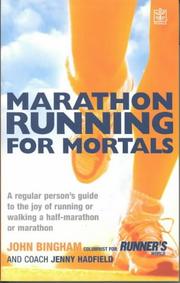
Written specifically for people who don't think of themselves as runners, this book dismantles intimidation and introduces the walk-run method — the perfect first read before any plan or technique.
Bridges the gap between total beginner and goal-setter by pairing a gentle training plan with the psychological tools needed to stay consistent — ideal right after you've decided to commit.
Build the Base: Training Plans & Daily Habits
BeginnerFollow a structured, proven training plan, understand how to progress mileage safely, and establish a sustainable running routine.
▸ Study plan for this stage
Pace: 4–5 weeks, ~20–25 pages/day (approximately 140–175 pages total)
- Understanding periodization: how training plans structure weeks and phases (base building, speed work, taper) to peak for race day
- The 80/20 rule: running 80% of weekly mileage at easy pace and 20% at harder intensities to build aerobic capacity safely
- Progressive overload: how to increase weekly mileage by no more than 10% per week to avoid injury while building endurance
- The role of cross-training and rest days: why recovery is as important as running for adaptation and injury prevention
- Reading and adapting training plans to your fitness level: how to choose between beginner, intermediate, and advanced plans based on current fitness
- Pacing strategy: understanding goal pace, easy pace, and tempo pace to execute workouts correctly and build fitness efficiently
- Nutrition, hydration, and sleep as pillars of training success: how fueling and recovery support consistent running performance
- What is the 80/20 training principle, and why does Higdon emphasize running most of your weekly mileage at an easy pace?
- How does a periodized training plan structure your preparation, and what are the key phases you'll move through leading up to race day?
- What is the 10% rule for increasing mileage, and why is it critical for injury prevention?
- How do you determine which Higdon training plan (beginner, intermediate, advanced) is right for your current fitness level?
- What role do cross-training and rest days play in a half-marathon training plan, and what activities does Higdon recommend?
- How should you adjust your training plan if you miss a week due to illness or injury?
- Select your target half-marathon race date and choose the appropriate Higdon plan (beginner, intermediate, or advanced) based on your current weekly mileage and recent running experience; print or digitally bookmark it
- Map out your 12–16 week training cycle on a calendar, marking key milestones: base-building weeks, speed-work phases, the taper period, and race day
- Calculate your easy pace, tempo pace, and goal race pace using Higdon's guidance or online calculators; write these down and post them where you train
- Complete the first 2 weeks of your chosen Higdon plan, logging each run with distance, pace, and how you felt; reflect on whether the paces feel sustainable
- Identify 2–3 cross-training activities (cycling, swimming, elliptical, strength work) that appeal to you and schedule them into your plan's designated cross-training days
- Create a simple nutrition and hydration checklist for training days (pre-run fuel, during-run hydration for long runs, post-run recovery meal) and test it during a long run
Next up: This stage equips you with a proven, structured framework and daily habits to build fitness safely; the next stage will likely deepen your understanding of race-day execution, mental resilience, and how to troubleshoot common training challenges as you move toward the finish line.

Higdon's plans are among the most trusted and beginner-tested in the world; reading this gives you a concrete, week-by-week roadmap and explains the 'why' behind every workout.
Move Better: Form, Efficiency & Fueling
IntermediateUnderstand proper running mechanics, improve efficiency, and learn how nutrition and hydration support performance and recovery.
▸ Study plan for this stage
Pace: 4–5 weeks, ~25–30 pages/day. Start with "The Runner's Body" (weeks 1–3, ~250 pages), then transition to "Racing Weight" (weeks 3–5, ~200 pages). Allow 2–3 days for review and integration between books.
- Biomechanics of efficient running: stride, cadence, ground contact time, and how proper form reduces injury risk and energy waste
- The role of key muscle groups (glutes, core, calves, hip stabilizers) in generating power and maintaining stability throughout the gait cycle
- Energy systems in running: aerobic metabolism, lactate threshold, and how training adaptations improve efficiency
- Nutrition timing and macronutrient balance (carbohydrates, proteins, fats) for fueling workouts and supporting recovery
- Hydration strategies and electrolyte management during training and racing to maintain performance
- Body composition and weight management for runners: how Racing Weight principles optimize power-to-weight ratio without sacrificing health
- Individual variation in running mechanics and the importance of assessing your own form rather than copying others
- What are the key biomechanical markers of efficient running form, and how do they differ from common inefficient patterns?
- How do the glutes and core contribute to running efficiency, and what happens when these muscles are weak or underactive?
- Explain the relationship between cadence, stride length, and injury prevention. Why is cadence often a better lever to adjust than stride length?
- What is the difference between fueling for training versus fueling for racing, and how should macronutrient timing change based on workout intensity?
- How does body weight affect running economy, and what does Racing Weight recommend as the appropriate approach to weight management for endurance runners?
- What are the signs of inadequate hydration during running, and how should hydration strategy vary based on climate, duration, and individual sweat rate?
- Video yourself running from multiple angles (front, side, rear) and compare your form against the biomechanical cues in The Runner's Body. Identify 2–3 specific form issues to address.
- Perform a 2-week running form experiment: focus on one mechanical change (e.g., increasing cadence by 5–10 steps/min) and track perceived effort, pace, and any changes in pain or discomfort.
- Complete a strength assessment: test single-leg glute bridges, single-leg hops, and core planks. Use these as a baseline and retest after 4 weeks of targeted strengthening.
- Track your nutrition and hydration for 3 typical training days. Compare your intake against Racing Weight guidelines and identify gaps (e.g., carb timing, protein distribution, hydration volume).
- Design a personalized fueling plan for a 60-minute run and a 90-minute run using Racing Weight principles. Calculate carbohydrate needs, hydration volume, and post-run recovery nutrition.
- Conduct a body composition self-assessment using Racing Weight's framework (e.g., how you feel, performance metrics, energy levels) rather than relying solely on the scale. Set a realistic target based on performance, not aesthetics.
Next up: This stage equips you with the physiological and nutritional foundation to train smarter and recover better, preparing you to apply these principles to structured training plans and race-specific strategies in the next stage.
Explains the science of what happens inside your body when you run, covering energy systems, muscle adaptation, and fueling — giving you the vocabulary to understand training at a deeper level.

Addresses nutrition and body composition specifically for endurance athletes; best read after you have a few months of running under your belt and want to optimize your fueling strategy.
Stay Healthy: Injury Prevention & Recovery
IntermediateIdentify the most common running injuries, understand their root causes, and build a proactive routine of strength, mobility, and recovery to stay on the road.
▸ Study plan for this stage
Pace: 4–5 weeks, ~25–30 pages/day (Anatomy for Runners: 2–3 weeks; Ready to Run: 2 weeks)
- Biomechanical efficiency and how postural deviations (anterior pelvic tilt, knee valgus, excessive pronation) lead to injury
- The kinetic chain concept: how dysfunction in the hips, ankles, and core transmits force inefficiently up and down the body
- Common running injuries (IT band syndrome, runner's knee, plantar fasciitis, shin splints) and their root causes in movement patterns rather than just overuse
- Mobility assessment and self-diagnosis: identifying your own movement restrictions and asymmetries using simple tests
- Strength and stability protocols targeting the glutes, hip stabilizers, and core as injury prevention
- The importance of movement preparation (dynamic warm-up) and recovery (mobility work, sleep, nutrition) as non-negotiable parts of training
- The relationship between footwear, running surface, and injury risk
- Building a sustainable pre-run and post-run routine that addresses individual movement deficits
- What is the kinetic chain, and how does dysfunction in one joint (e.g., ankle) contribute to injury in another (e.g., knee)?
- Describe three common postural or movement deviations that increase injury risk in runners, and explain the injuries they typically cause.
- How do you assess your own mobility and movement restrictions, and what do these assessments tell you about your injury risk?
- What are the primary roles of glute strength and hip stability in preventing running injuries?
- How should a pre-run warm-up and post-run recovery routine be structured to address your specific movement deficits?
- Why is footwear and running surface selection important for injury prevention, and how do you choose appropriately?
- Complete a full movement assessment (from Ready to Run) to identify your personal mobility restrictions and asymmetries; document baseline findings
- Perform the glute activation and hip stability exercises from Ready to Run daily for 2 weeks; track consistency and note improvements in running feel
- Design a personalized 10–15 minute pre-run mobility and activation routine based on your assessment findings; practice it before 3–4 runs
- Implement a post-run recovery protocol (foam rolling, stretching, mobility work) for 2 weeks; journal how it affects soreness and performance
- Analyze your running gait using video (slow-motion phone video or treadmill mirror) and identify one postural deviation from Anatomy for Runners; develop a corrective exercise plan
- Build a weekly strength routine (20–30 minutes, 2–3x/week) targeting weak links identified in your assessment; include exercises from Ready to Run
- Audit your current footwear and running surfaces against the criteria in both books; make one change (new shoes, different route) and observe the effect over 2 weeks
Next up: This stage equips you with the knowledge and personalized tools to run injury-free by understanding your body's movement patterns and building preventive habits, setting the foundation for the next stage where you'll apply these principles to structured, progressive training plans.

A biomechanics expert breaks down exactly why runners get hurt and provides self-assessments and corrective exercises — the most practical injury-prevention book available for self-coached runners.

Focuses on mobility, posture, and movement standards that keep runners durable; pairs perfectly with Dicharry's book by adding a daily maintenance and recovery framework.
Train Smart: The Long Game
ExpertUnderstand the deeper principles of endurance training — periodization, aerobic development, and the mental side of long-term progress — so you can design and adapt your own training for years to come.
▸ Study plan for this stage
Pace: 6–7 weeks, ~40–50 pages/day (mix of dense training science and narrative; allow extra time for reflection and note-taking)
- The 80/20 principle: why 80% of your training should be easy/aerobic and 20% hard/intense, and how this prevents injury and burnout
- Periodization and macrocycles: structuring training in phases (base, build, peak, recovery) to peak for specific goals rather than training hard year-round
- Aerobic development as the foundation: how building aerobic capacity through easy runs creates the engine for all faster running
- The critical role of intensity distribution: why most runners do their hard runs too easy and easy runs too hard, and how to fix it
- Mental resilience and the ultramarathon mindset: drawing from Born to Run's exploration of how humans are built for endurance and how mindset shapes performance over years
- Running economy and efficiency: how proper form, pacing strategy, and smart training improve performance without just adding volume
- The long-term athlete development model: viewing your running career as a multi-year progression rather than chasing quick fixes
- What is the 80/20 training principle, and why do most runners struggle to follow it in practice?
- How does periodization work, and what are the main phases of a training macrocycle?
- Why is aerobic development considered the foundation of endurance running, and how do you build it effectively?
- What does Born to Run teach about human endurance capacity and the mental/cultural dimensions of running long distances?
- How should you structure your own training week and training year based on the principles in these books?
- What role does running economy play in performance, and how can you improve it without just running more miles?
- Create a personal training macrocycle: map out a full year of training with base, build, peak, and recovery phases aligned to a goal race or event
- Analyze your current training log (or a sample week): calculate the percentage of easy vs. hard running and identify where you're violating the 80/20 principle
- Design a training week using 80/20 principles: plan 4–5 runs with one hard workout (tempo, intervals, or long run) and the rest easy, with proper pacing targets
- Read and annotate key chapters on aerobic development and intensity distribution; create a one-page summary of how to apply these to your running
- Conduct a 2–3 week 'easy run experiment': run all easy runs at conversational pace (using the talk test) and track how you feel, recover, and perform on hard days
- Write a reflective essay (500–750 words) connecting Born to Run's themes about human endurance capacity and cultural attitudes toward running to your own running goals and mindset
- Interview or survey 2–3 experienced runners about how they structure their training and periodization; compare their approaches to the 80/20 and periodization frameworks from the books
Next up: This stage equips you with the science and philosophy to train intentionally for years, setting you up to apply these principles to specific race distances, recovery strategies, and injury prevention in the next stage.

Introduces the research-backed principle of running mostly easy and occasionally hard — a paradigm shift that prevents burnout and accelerates improvement for runners ready to train more deliberately.
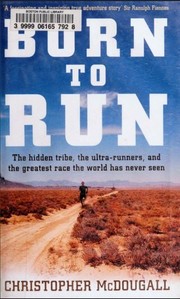
Saved for last as an inspirational capstone: this narrative masterpiece reignites your love of running and weaves in lessons about form, barefoot movement, and the joy of the sport that will keep you running for life.
Discussion
Keep reading
Paths that share books, cover the same subject, or open a related topic.