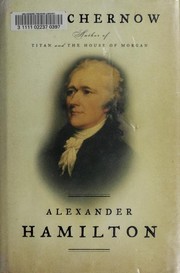
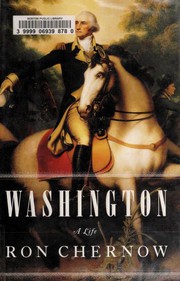
Start with Alexander Hamilton. Ron Chernow's books are independent biographies with no reading order imposed by plot, so the sequence here is about difficulty, momentum and what each book assumes you already know.
Hamilton wins the opening slot on momentum. It is a genuinely dramatic life with a duel at the end, and it moves faster than any other volume on the shelf. The obvious alternative is Washington, which is the more important book and the wrong first one: it is longer, more deliberate, and its middle section on the presidency is the slowest stretch Chernow has written. Read Hamilton first and Washington appears in it as a supporting figure you will finish wanting explained, which is the best possible reason to pick up 928 more pages.
Set expectations before you start
Every book on this path except one runs past 800 pages. Grant is 1,104. Mark Twain is 1,220. The two entry points together are longer than most people's annual reading.
Thirty to forty pages a sitting is the sustainable rate and finishes a volume in six to eight weeks. The books read faster than their length implies, because Chernow's method is archival exhaustiveness rendered as narrative rather than as apparatus — but the length is real and pretending otherwise helps nobody.
The two entry points
Alexander Hamilton, then Washington.
Hamilton is Chernow's clearest statement of his own subject: not what a man felt but what he constructed and what it cost. The immigrant outsider — illegitimate, self-made, permanently insecure — is offered as the explanation for both the achievement and the self-destruction, and the design of American public finance gets the space it deserves. The conflict with Jefferson is treated as a real argument about what kind of country to build rather than a personality clash.
Washington has a harder technical problem at its centre, which is that Washington is opaque. Chernow's solution is accumulation: thousands of small documented actions in place of introspection. His relationship to slavery is handled at length and without evasion, and it is the hardest material in the book.
One aside worth making consciously: the musical drew on the Hamilton biography, and separating Chernow's Hamilton from the stage version takes deliberate effort.
The business books
Titan, then The House of Morgan. This is where the financial fluency the later biographies assume actually gets built.
Titan is a single-life biography of Rockefeller and reads at roughly Hamilton's rate. Its achievement is holding ruthlessness and piety in the same person without treating either as a mask. The House of Morgan is materially harder: four generations, two continents, a hundred years of banking, and an institution rather than a person as protagonist. Budget more time and expect to consult the family tree.
The late doorstops
Grant, then Mark Twain, and together this is a serious multi-month project. If you take a break anywhere on this path, take it between these two.
Grant argues against a century of Lost Cause historiography, handles Grant's alcoholism as a lifelong fact rather than a scandal, and makes Reconstruction the centre of its presidential case. Mark Twain is his first literary subject, which changes the method noticeably — a career made of performance, lecturing, debt and self-invention rather than of institutions. Both are revisionist in tone, which is worth reading alongside an awareness that the older consensus had its own reasons.
The deeper cuts
The Warburgs and The death of the banker. The first is the least read of his major works and the darkest, following a German-Jewish banking dynasty through the rise of Nazism and after; it presumes the fluency The House of Morgan built and does not slow down to re-explain. Its hardest material is the period when assimilated, patriotic German bankers could not believe what was happening to them, and Chernow refuses hindsight's comfort.
The death of the banker is 130 pages and can be read in a single sitting. It compresses his argument about how financial power moved from banks to institutional investors, and it is effectively the thesis underlying two of the big books — which is why finishing with it means hearing the argument stated plainly after roughly 6,000 pages of evidence.
Where to stop
Most readers should stop after Grant. Alexander Hamilton, Washington, Titan and Grant are the four the reputation rests on. For narrative history at a third of the length, David Grann is the adjacent shelf.
Follow the full ordered path here: Ron Chernow Reading Order: Where to Start.