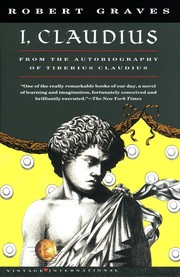
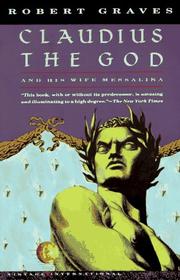
Start with I, Claudius, the 1934 novel that invented the modern historical-fiction voice: a stammering emperor's secret autobiography, dry, gossipy and merciless about his own family. Then read Claudius the god and his wife Messalina, published as Claudius the God and His Wife Messalina, immediately afterwards. Graves wrote the two as a single work; the second half is where the tragedy lands, and stopping after the first is like stopping a novel at the midpoint.
The obvious alternative is to begin with the poetry, which is what Graves himself would have wanted — he regarded the prose as work done to fund it. Ignore him. The Claudius novels are the reason anyone arrives at Graves, and the poems are more rewarding once you know the mind behind them.
The war memoir behind everything
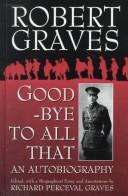
Read Good-Bye to All That third, directly after the Claudius pair. It is the 1929 memoir of a Charterhouse childhood, the trenches at Loos and the Somme, and the deliberate severing of every English tie afterwards. Put it here rather than at the start because the disgust with institutional authority that drives the Roman novels is stated in the first person in this one, and the connection is unmistakable when they are adjacent. Our record uses the hyphenated form of the title.
The other historical novels
Count Belisarius (1938) narrates Justinian's general through a household slave, and is the nearest thing to a third Claudius novel. The golden fleece retells the voyage of the Argonauts with Graves's matriarchal-religion thesis running underneath it; it was published in the United States as Hercules, My Shipmate, and two records exist for the one book, so buy once. King Jesus (1946) presents Jesus as a legitimate royal claimant, built on the same mythographic reading as the goddess book, and is still genuinely startling. Homer's daughter reimagines the Odyssey as the work of a Sicilian princess and is short, playful and the most approachable of the later novels. Sergeant Lamb of the Ninth follows an Irish sergeant through the American Revolution, researched from real memoirs, and is Graves working entirely outside myth.
Graves the mythographer, and what these books are
The Greek myths is a retelling of the entire corpus with source citations and interpretive commentary. Two things to know before buying. It is a two-volume work, and the record we hold at 416 pages is one volume of the set, not the complete thing — the combined edition runs to well over 700 pages. And its standing is genuinely contested: as a reference for who did what to whom it is indispensable and still in print, but the commentary advances Graves's own theory of a suppressed matriarchal religion, which classicists do not accept as scholarship. Read it knowing which parts are retelling and which are argument.
The white goddess is that theory in full: a single lunar goddess behind all true poetry, argued through Welsh and Irish material. It is not a book of evidence, and it is one of the strangest important books of the century. Our record carries an impossible 1920 date; the book is from 1948.
The Twelve Caesars is his translation of Suetonius, and the source he mined for the Claudius novels. Reading it afterwards shows precisely how much of I, Claudius is invention — which is more than most readers assume, and less than the scandal implies.
The poet, and the social historian
Complete poems is the poetry Graves revised and pruned for sixty years, gathered at 944 pages. Start with the love poems of the 1950s and 1960s; they are why poets still read him. The long week-end; a social history of Great Britain, 1918-1939 is a journalistic history of Britain between the wars written with Alan Hodge, funny and a useful corrective to the mythographer. Its record is messy: it carries an Amazon EAN rather than a real ISBN, and the two authors are listed four separate times over in the credits. Seven days in New Crete is a satirical novel about a future matriarchal society, effectively the goddess thesis as fiction, and minor.
What is left out
Graves published well over a hundred books, and fourteen are here. Wife to Mr Milton and Lawrence and the Arabs are among the notable absences, and the criticism, translations and Majorca essays are out of scope entirely. Nothing in the order depends on them.
The ordered list with lengths is at the Robert Graves path.