The single most common misunderstanding about American residential segregation is that it happened. It was made — by federal mortgage underwriting rules, local zoning, restrictive covenants and organised violence — and then it was turned into a business. Read the sociology before the policy history and the pattern looks like an unfortunate outcome. Read the policy history first and everything after it reads as consequence.
That is why this order starts with the legal and statistical case, then follows the postwar suburb and the postwar ghetto as two halves of one process, then asks who profited, then leaves the big-city frame, and only at the end arrives at the housing crisis as it stands now.
Establish the policy case
The Color of Law is the clearest single statement that segregation was imposed by law: FHA underwriting manuals, public housing siting, covenant enforcement. Rothstein is arguing toward a constitutional remedy, which sharpens the book and is worth holding in view as you read — the legal destination shapes which evidence gets foregrounded.
American apartheid supplies the measurement underneath. Massey and Denton demonstrate that Black residential segregation differs in degree and persistence from any immigrant group's experience, and that it concentrates poverty structurally rather than incidentally.
The suburb and the ghetto were built together
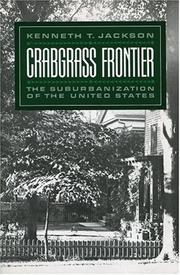
Crabgrass Frontier remains the standard history of American suburbanisation, including the chapter on federal mortgage insurance and the appraisal maps that gave redlining its name. Everything since has been written on top of it or against it.
Making the second ghetto shows the other half. Hirsch's postwar Chicago is a ghetto being deliberately reconstructed after 1940 through urban renewal, public housing placement and organised white violence — a new creation rather than an inheritance.
The origins of the urban crisis fuses the two. Sugrue's Detroit has housing segregation and the collapse of industrial employment reinforcing each other for two decades before the 1967 uprising, which is why it belongs third rather than first.
Follow the money
Family Properties is the most concrete demonstration anywhere of how exclusion was converted into profit. Satter reconstructs Chicago contract selling — Black buyers locked out of mortgages bought on terms that let the seller repossess after a single missed payment — partly through her own father's legal work against it.
Race for Profit is the necessary sequel and complicates the obvious moral. After 1968, Black buyers were finally offered federally backed mortgages, and Taylor shows the real estate and lending industries converting that inclusion into a new form of extraction. Access alone turns out not to be the remedy.
Root Shock measures a cost the economic histories cannot. A psychiatrist examines what urban renewal did to the people whose neighbourhoods were demolished, arguing that losing a community's physical fabric produces lasting collective damage.
Outside the big city
Sundown Towns documents thousands of American towns that excluded Black residents outright, mostly outside the South and mostly absent from local histories. Loewen's county-by-county methodology has been debated by other historians; the phenomenon he identified is now widely accepted, and it is worth reading with both of those facts in hand.
Segregation by Design moves to the mechanism still operating. Trounstine shows how local land-use and zoning decisions — the least visible layer of American government — do the ongoing work, driven by property values and municipal service provision.
The crisis now
Evicted reframed the policy debate around tenants rather than owners, showing that losing housing causes poverty rather than merely indicating it. It is the consequence of everything in the earlier stages, reported at street level in Milwaukee.
Golden Gates ends on an unresolved argument rather than a settled history: the Bay Area housing fight, reported through activists, developers and homeowners on each side. The supply and zoning question it covers has become central since 2015, and the participants in it disagree sharply about how much of the historical apparatus above is still doing the damage. This path deliberately does not adjudicate that.
Work through it stage by stage on the full path, or see the redlining and housing segregation hub.
Follow the full ordered path here: Redlining and Housing Segregation: The Best Books to Read First.