The Best Books to Learn C programming language, In Order
This curriculum takes a complete beginner from zero C knowledge all the way to confident systems-level programming. Each stage builds directly on the last: you first learn to read and write correct C, then master the language's most dangerous and powerful features (pointers and memory), and finally apply everything to real-world systems programming — the domain where C truly shines.
Foundations — Learning to Read and Write C
BeginnerUnderstand C syntax, control flow, functions, arrays, and basic I/O well enough to write and compile small programs confidently.
▸ Study plan for this stage
Pace: 8–10 weeks, ~25–30 pages/day (mix of reading and hands-on coding)
- C syntax fundamentals: variables, data types, operators, and declarations
- Control flow structures: if/else, loops (for, while, do-while), and switch statements
- Functions: definition, parameters, return values, scope, and the call stack
- Arrays and strings: declaration, indexing, iteration, and basic string manipulation
- Input/output: printf, scanf, and file I/O basics
- Memory concepts: addresses, pointers introduction, and stack vs. heap awareness
- Compilation process: understanding how C code becomes executable programs
- Debugging and testing: writing code that compiles cleanly and runs correctly
- What are the primitive data types in C, and how do you declare and initialize variables?
- How do if/else statements, loops, and switch statements control program flow, and when should you use each?
- How do you define a function, pass arguments by value, and return results?
- What is the difference between arrays and strings, and how do you iterate through them?
- How do printf and scanf work, and what format specifiers do you need for different data types?
- What is a pointer, how do you declare one, and what do the & and * operators do?
- How does the C compilation process work, and what are common compiler errors?
- Write 5–10 small programs using variables, operators, and basic arithmetic (e.g., temperature converter, loan calculator)
- Create programs that use all three loop types (for, while, do-while) to solve problems like summing numbers or printing patterns
- Write at least 3 functions with different parameter and return types; call them from main with various inputs
- Build a program that reads an array of integers from user input, processes it (sum, average, max), and prints results
- Write a program that reads a string and performs basic operations (length, reverse, character count)
- Create a program that uses both printf and scanf to build a simple interactive calculator or quiz
- Write a program that demonstrates pointer usage: declare pointers, use & to get addresses, and use * to dereference
- Compile programs with warnings enabled (gcc -Wall) and fix all warnings until code compiles cleanly
Next up: This stage equips you with the syntax and control structures needed to write standalone programs; the next stage will build on these foundations by introducing more complex data structures (structs, linked lists), file handling, and memory management techniques that enable you to write larger, more sophisticated applications.
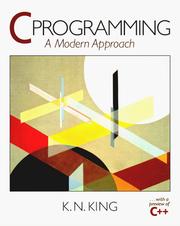
The single best introductory C textbook: clear, thorough, and modern. It builds vocabulary and habits (proper types, clean style) that every later book assumes you have.

A visually engaging complement to King that reinforces the same concepts through puzzles and exercises — ideal for cementing intuition before moving to harder material.
The Core Language — Pointers, Memory, and the Standard Library
IntermediateDeeply understand pointers, pointer arithmetic, dynamic memory allocation, strings, structs, and the C standard library.
▸ Study plan for this stage
Pace: 12–14 weeks, ~40–50 pages/day (with coding practice sessions 4–5 days/week)
- Pointer fundamentals: declaration, dereferencing, the address-of and dereference operators, and pointer-to-pointer relationships
- Pointer arithmetic: array indexing via pointers, pointer increments/decrements, and bounds considerations
- Dynamic memory allocation: malloc, calloc, realloc, free, and heap vs. stack memory management
- Strings in C: character arrays, null termination, string literals, and standard library string functions (strcpy, strlen, strcat, etc.)
- Structs and composite types: defining structs, accessing members, pointers to structs, and nested structures
- Function pointers and callbacks: declaring, using, and passing function pointers as arguments
- The C Standard Library: file I/O (stdio.h), memory functions (stdlib.h, string.h), and practical utility functions
- Interface design and abstraction: using opaque pointers, header files, and modular code organization to build reusable components
- What is the difference between a pointer and the value it points to, and how do the & and * operators work in different contexts?
- How does pointer arithmetic work with arrays, and what are the pitfalls of incrementing pointers beyond allocated memory?
- Explain the difference between stack and heap allocation, and when should you use malloc/calloc vs. local variables?
- What does null termination mean for strings in C, and why is it critical for string safety?
- How do you declare and use a pointer to a struct, and what is the -> operator used for?
- What is a function pointer, and how would you use one to implement a callback mechanism?
- How do you design a C interface (header file) that hides implementation details and promotes code reuse?
- What are common memory errors (buffer overflows, use-after-free, memory leaks) and how do you avoid them?
- Work through K&R Chapter 5 (Pointers and Arrays): implement pointer-based array traversal, write functions that modify arrays via pointers, and trace pointer arithmetic step-by-step on paper
- Build a simple dynamic string library: implement functions like my_strlen, my_strcpy, my_strcat using malloc/free, test with various inputs, and use valgrind to verify no memory leaks
- Create a linked list from scratch: define a node struct with a data field and next pointer, implement insert/delete/search operations, and practice manual memory management
- Implement a dynamic array (vector-like) data structure: allocate memory for N elements, implement realloc-based resizing when capacity is exceeded, and add push/pop operations
- Study and rewrite examples from Reese's "Understanding and Using C Pointers" (Chapters 3–5): focus on pointer-to-pointer usage, pointer chains, and common pitfalls; annotate code with diagrams
- Design a simple interface for a stack or queue using opaque pointers (following Hanson's patterns in C Interfaces and Implementations): create a header file with an opaque struct, implement the module in a .c file, and write a test program that uses only the public interface
- Write a file I/O program: read a text file line-by-line using fgets or getline, parse structured data (e.g., CSV), and dynamically allocate memory for each record
- Debug a program with intentional memory errors: introduce buffer overflows, use-after-free, and memory leaks; use valgrind and gdb to identify and fix them
Next up: This stage equips you with the low-level memory and abstraction skills needed to move into advanced topics like file formats, networking protocols, and systems programming, where precise pointer manipulation and modular interface design are essential.
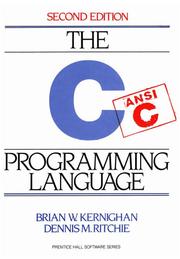
Written by C's creators, this is the canonical reference every C programmer must read. After King's foundations, you now have the vocabulary to absorb its dense, precise style.

A dedicated, book-length treatment of pointers — the single hardest concept in C. Covers pointer arithmetic, function pointers, and memory models with exceptional clarity.

Shows how to build reusable, well-structured C libraries using real data structures. Bridges the gap between knowing the language and writing professional-quality C code.
Mastery — Systems Programming and Low-Level Thinking
ExpertApply C to operating-system concepts, processes, files, sockets, and hardware-level programming; understand how C maps to the machine.
▸ Study plan for this stage
Pace: 12–16 weeks, ~40–50 pages/day (mix of dense technical material and code examples; allow 2–3 days per major chapter for deep practice)
- Machine representation: bits, bytes, integers, floating-point, and how C maps directly to hardware (CS:APP Part I)
- Memory hierarchy: caches, virtual memory, and physical memory management; how malloc/free interact with the OS (CS:APP Part II)
- Process creation, forking, and process state management using fork(), exec(), and wait() (TLPI & APUE)
- File I/O and file descriptors: open, read, write, lseek, and buffering; understanding the kernel's role (TLPI & APUE)
- Signals and asynchronous event handling: signal handlers, signal masks, and safe signal handling practices (TLPI & APUE)
- Sockets and network programming: TCP/UDP, client-server architecture, and socket system calls (TLPI & APUE)
- Concurrency models: multithreading with pthreads, synchronization primitives (mutexes, condition variables), and race conditions (TLPI & APUE)
- System call error handling, errno, and defensive programming patterns in C (TLPI & APUE)
- How does C's memory model (pointers, arrays, structs) map to actual hardware memory layout and virtual memory?
- What is the difference between a process and a thread, and when should you use fork() versus pthread_create()?
- How do file descriptors work at the kernel level, and why is understanding buffering important for correct I/O?
- What are the pitfalls of signal handling, and how do you write signal-safe code?
- How do you design and implement a multi-client TCP server using sockets, and what concurrency model is appropriate?
- What is the relationship between the C standard library (libc), system calls, and the kernel?
- Implement a simple shell that forks child processes, handles pipes, and manages process state (fork, exec, wait, signal handling)
- Write a multi-threaded TCP echo server with proper mutex protection and condition variables; test with concurrent clients
- Create a file I/O utility that demonstrates buffering behavior, lseek, and proper error handling across different file types
- Build a signal-safe program that handles SIGCHLD to reap zombie processes and SIGTERM for graceful shutdown
- Implement a producer-consumer queue using pthreads with synchronization; measure contention and optimize locking strategy
- Write a low-level memory allocator (mini-malloc) that uses brk()/sbrk() and demonstrates fragmentation and coalescing
- Create a UDP-based client-server application with timeout handling and packet loss recovery
- Analyze a provided C program with objdump and gdb to trace system calls, memory layout, and register usage
Next up: This stage grounds you in how C actually executes on real systems, preparing you to either specialize in systems programming (kernel development, embedded systems, performance optimization) or transition to higher-level language design and implementation with deep understanding of the runtime beneath.

Explains exactly how C programs execute at the hardware level — assembly, the stack, the heap, caching, and the OS interface. Essential for understanding why C behaves the way it does.
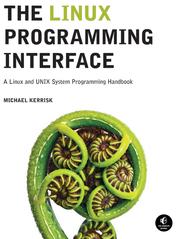
The definitive guide to systems programming on Linux/Unix in C: processes, signals, files, threads, and sockets. This is where C's power as a systems language becomes fully tangible.
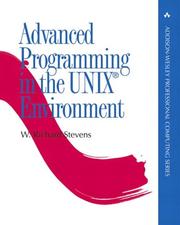
A classic companion to Kerrisk that goes deep on UNIX APIs and real-world patterns. Reading both solidifies professional-grade systems programming expertise.
Discussion
Keep reading
Paths that share books, cover the same subject, or open a related topic.