Best Books to Build an Online Community (in Order)
This curriculum takes an intermediate learner from the psychology of belonging through the mechanics of engagement and moderation, and finally to the art of turning loyal members into passionate advocates. Each stage builds on the last — you must feel why communities matter before you can design them, manage them, and ultimately scale them through the people inside them.
The Psychology of Belonging
IntermediateUnderstand the deep human need for belonging and the emotional architecture that makes people feel genuinely part of something — the essential foundation before designing any community.
▸ Study plan for this stage
Pace: 4–5 weeks, ~25–30 pages/day. Start with "The Art of Community" (weeks 1–3, ~200 pages), then move to "Tribes" (weeks 3–5, ~150 pages). Allow 2–3 days between books for reflection and integration.
- The five elements of community (Vogl): purpose, rituals, symbols, stories, and interactions—and how each addresses the belonging need
- Belonging as a fundamental human psychological need that precedes community function and engagement
- The role of shared identity and tribal instinct in creating emotional connection (Godin's framework of 'tribes' as groups organized around a shared interest and leader)
- How rituals and symbols create belonging by making membership tangible and emotionally resonant
- The distinction between transactional communities and communities built on genuine belonging and shared purpose
- Leadership's role in cultivating belonging: the leader as connector and meaning-maker, not just organizer
- How stories and narratives bind people together by creating shared meaning and collective identity
- What are the five elements Vogl identifies as essential to community, and how does each one address the human need for belonging?
- According to Godin, what makes a tribe different from a mere group, and why does the leader's role matter in creating belonging?
- How do rituals and symbols function psychologically to deepen a sense of membership and emotional attachment?
- What is the difference between a community built on transactional value versus one built on genuine belonging, and why does this distinction matter?
- How do shared stories and narratives create a sense of collective identity and belonging within a community?
- What role does purpose play in fostering belonging, and how can a community leader articulate and reinforce it?
- Map the five elements (Vogl) onto a community you currently belong to (work team, hobby group, faith community, etc.). Which elements are strong? Which are missing? Write a 1-page analysis of how this explains your sense of belonging or disconnection.
- Identify a 'tribe' you're part of (Godin). Document: What is the shared interest? Who is the leader? What belief or identity binds members together? How does this compare to Vogl's framework?
- Design a ritual for a hypothetical community you'd like to build. Describe what it is, when it happens, who participates, and specifically how it reinforces belonging and shared identity.
- Collect 2–3 stories or narratives from a real community (interview members, read community newsletters, etc.). Analyze how these stories communicate the community's values and reinforce member identity.
- Create a 'belonging audit' for a community project or organization you're involved with. Rate each of Vogl's five elements on a scale of 1–5, then propose one concrete change to strengthen the weakest element.
- Write a personal reflection: Describe a moment when you felt a profound sense of belonging. Using both Vogl and Godin's frameworks, identify which elements were present and why they mattered to you emotionally.
Next up: This stage establishes that belonging is the emotional bedrock of community—understanding *why* people need to feel part of something prepares you to move into the next stage, which will focus on the practical structures and systems for building and sustaining communities at scale.

Vogl's seven principles of belonging give you a timeless, human-centered vocabulary for what makes a community real versus a mere audience. Read this first to anchor everything that follows in proven social science.
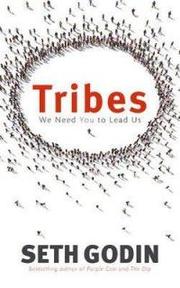
A concise, energizing read that reframes leadership as community catalysis. It builds on Vogl by showing how a shared idea and a leader's conviction are the spark that turns strangers into a tribe.
Designing for Engagement
IntermediateLearn how to deliberately design rituals, structures, and experiences that pull members in, keep them active, and create the habit loops that sustain a thriving community over time.
▸ Study plan for this stage
Pace: 6–7 weeks, ~40–50 pages/day (alternating between both books to build conceptual depth)
- Rituals and traditions as the backbone of community identity and member retention—how small repeated behaviors compound into belonging
- The role of founding members and early culture-setting in determining long-term community health and engagement patterns
- Designing for habit formation: understanding how to structure community experiences so participation becomes automatic rather than effortful
- Purposeful onboarding and member journeys—moving people from awareness to active participation to leadership
- Community structure and governance: balancing openness with intentional design to prevent chaos while maintaining inclusivity
- Creating meaningful roles and contribution pathways so members feel agency and ownership, not passive consumption
- The psychology of belonging: how to design experiences that trigger emotional investment and reduce friction to participation
- Measuring and iterating on engagement: identifying which rituals, structures, and experiences actually drive sustained activity
- What are three concrete rituals or traditions you could introduce to your community, and how would each one reinforce the identity or values you want to cultivate?
- How would you design an onboarding experience that moves a new member from passive observer to active contributor within their first month?
- What structural barriers or friction points currently prevent members from participating, and how could you redesign the experience to lower them?
- Describe the 'habit loop' you want to create in your community: what is the cue, the routine, and the reward that would make participation feel automatic?
- How would you identify and develop potential leaders or core members early, and what role would they play in sustaining engagement?
- What metrics or signals would tell you that your engagement design is working, and how would you iterate if engagement stalls?
- Map your community's current member journey from discovery to active participation. Identify at least three friction points and design a specific intervention for each (e.g., clearer onboarding, a welcome ritual, a low-barrier first contribution opportunity).
- Design and document three rituals or recurring experiences for your community (e.g., weekly office hours, monthly challenges, seasonal celebrations). For each, specify the cue, the activity, and the emotional reward you expect members to experience.
- Audit your community's current structure and roles. Create a 'contribution ladder' that shows how members can progress from lurker → participant → contributor → leader, with concrete examples of what each level looks like.
- Conduct interviews or surveys with 5–10 active members asking: 'What made you start participating?' and 'What keeps you coming back?' Synthesize patterns and identify which engagement drivers align with your intentional design.
- Draft a 30-day onboarding sequence for new members, including welcome messaging, first activity, peer connection, and a milestone celebration. Test it with at least one new member and iterate based on feedback.
- Identify one habit loop currently working in your community (or a competitor community) and reverse-engineer it: What is the cue? The routine? The reward? Then design a new habit loop you want to introduce and plan how to seed it with early adopters.
Next up: This stage equips you with the tactical tools to make engagement sticky and habitual; the next stage will likely focus on scaling these systems, managing community culture as you grow, and handling the inevitable conflicts and challenges that emerge when a community becomes larger and more diverse.

A practical, story-driven guide to building communities of people — not just audiences. It introduces the core loop of sparking participation and handing ownership to members, which is the engine of engagement.
Spinks operationalizes engagement with frameworks for community strategy, programming, and metrics. Read after Get Together to translate human instincts into repeatable, measurable community design.

The most tactically detailed book on online community management, covering member lifecycle, content strategy, and engagement programs. It deepens Spinks with granular, actionable playbooks.
Moderation, Trust & Safety
IntermediateMaster the principles and practices of community moderation — setting norms, handling conflict, protecting psychological safety, and building the governance structures that let communities scale without toxicity.
▸ Study plan for this stage
Pace: 6–8 weeks, ~25–30 pages/day, with 1–2 week breaks between books for integration and reflection
- Civic trust as the foundation for community resilience and participation
- Designing moderation systems that scale: rules, roles, and escalation pathways
- Psychological safety and belonging as prerequisites for healthy discourse
- Conflict resolution frameworks that preserve community cohesion rather than fracture it
- Governance structures that distribute power and accountability across community members
- The relationship between physical/digital infrastructure and social norms
- Identifying and mitigating toxicity, harassment, and bad-faith actors without over-moderation
- Building feedback loops and accountability mechanisms into moderation practices
- What does Harrell mean by 'civic trust' and why is it essential for community building at scale?
- How do moderation rules and enforcement mechanisms need to evolve as a community grows from 100 to 10,000 members?
- What are the key differences between reactive moderation (responding to violations) and proactive moderation (shaping norms)?
- How does Rose connect the physical design of cities to social trust and community behavior, and what lessons apply to digital communities?
- What governance structures does Harrell propose for distributing moderation responsibility, and what are their trade-offs?
- How can community managers balance psychological safety with free expression, and what frameworks help navigate this tension?
- Design a moderation policy for a hypothetical online community of 500 members: define 3–5 core norms, specify what violations look like, and outline escalation steps from warning to removal
- Map your own community's (or a community you're familiar with) current moderation practices against Harrell's framework—identify gaps and propose one concrete improvement
- Conduct a 'trust audit' of a community you participate in: identify moments where trust was built or eroded, and trace them back to specific actions or policies
- Create a conflict resolution playbook for a specific recurring tension in your community (e.g., disagreement over scope, tone policing, resource allocation)
- Interview 3–5 community members about what makes them feel psychologically safe (or unsafe) in the community, then map their responses to Harrell's and Rose's principles
- Redesign one aspect of your community's 'infrastructure' (digital or physical)—whether a discussion channel, meeting format, or decision-making process—to better support trust and belonging
Next up: This stage equips you with the defensive and structural tools to keep communities healthy as they grow; the next stage will focus on how to actively cultivate engagement, participation, and shared purpose so that communities don't just survive moderation challenges but thrive through member investment and co-creation.

Harrell's work on participatory, human-centered governance translates directly to community moderation — understanding power, voice, and accountability in group spaces before writing a single rule.

A broader lens on how healthy human systems self-regulate and build resilience. Reading this after Harrell gives moderators a mental model for designing community norms that are adaptive, not just punitive.
Turning Members into Advocates
ExpertLearn how to identify, nurture, and empower your most passionate members so they become the community's ambassadors, co-creators, and growth engine — transforming a managed community into a self-sustaining movement.
▸ Study plan for this stage
Pace: 6–7 weeks, ~40–50 pages/day (approximately 280–350 pages total across both books)
- Identifying superfans: recognizing the passionate, engaged members who already embody your community's values and have high influence potential
- The psychology of advocacy: understanding what motivates members to voluntarily promote and defend your community to others
- Nurturing deep relationships: creating meaningful touchpoints, personalized communication, and exclusive experiences that deepen member investment
- Co-creation and empowerment: shifting from top-down management to enabling members to shape content, decisions, and direction
- Community-driven growth: leveraging advocates to attract, onboard, and retain new members through authentic peer recommendations
- Building brand loyalty through community: how shared identity, values, and belonging transform transactional relationships into lifelong advocacy
- Scaling through decentralization: creating structures and systems that allow advocates to lead initiatives independently without constant oversight
- Measuring advocacy impact: tracking which members drive the most value, engagement, and growth for the community
- What are the defining characteristics of a superfan, and how do they differ from regular engaged members?
- What are the primary psychological drivers that motivate community members to become advocates and ambassadors?
- How can you systematically identify and segment your most passionate members before attempting to nurture them?
- What are the key strategies for creating exclusive experiences and personalized engagement that deepen member commitment?
- How do you empower advocates to co-create content and lead initiatives while maintaining community coherence and values?
- What role does brand community identity play in converting members into long-term advocates, and how do you cultivate it?
- How can you design systems and structures that allow your community to grow organically through member referrals and advocacy?
- Conduct a superfan audit: identify your top 10–15 most engaged members using engagement metrics (posts, comments, event attendance, tenure). Document what makes them stand out and what they have in common.
- Create an advocacy journey map: outline the touchpoints and milestones that convert a new member into a casual member, then into an engaged member, and finally into an advocate. Identify gaps in your current process.
- Design a co-creation initiative: propose one specific way your advocates could help shape community content, events, or decisions (e.g., member-led workshops, advisory council, content curation). Draft the structure and invitation strategy.
- Develop a superfan recognition and nurturing plan: for 3–5 identified advocates, create a personalized engagement strategy that includes exclusive access, direct communication, and opportunities to lead.
- Interview 3–5 of your most passionate members: ask them why they stay engaged, what would make them more likely to invite others, and what barriers prevent them from advocating. Synthesize insights.
- Build a brand community values statement: articulate the core identity, shared beliefs, and sense of belonging that unite your community. Test it with advocates to ensure it resonates.
Next up: This stage equips you to transform your community from a managed platform into a self-sustaining movement powered by advocates; the next stage will focus on scaling these systems, building sustainable governance structures, and measuring long-term community health and impact.

Flynn maps the journey from casual member to passionate superfan with concrete strategies for deepening relationships at every stage. Start here to understand the emotional arc of advocacy.

Jones bridges community management and brand strategy, showing how to co-create with members and give them ownership that fuels organic advocacy. The perfect capstone — it synthesizes belonging, engagement, and empowerment into a unified growth model.
Discussion
Keep reading
Paths that share books, cover the same subject, or open a related topic.