Best Books on Pop Art, in Reading Order
This curriculum takes a beginner from the cultural soil that grew Pop art — postwar consumerism and mass media — through its British origins and American explosion, into the fierce critical debates it ignited, and finally to its lasting legacy in contemporary art and visual culture. Each stage builds the vocabulary and historical context needed to appreciate the deeper arguments in the next, so the books should be read strictly in order within each stage.
Foundations: What Is Pop Art?
BeginnerUnderstand the cultural moment that made Pop art possible — mass media, consumerism, advertising — and get a clear, accessible overview of the movement's key figures, works, and timeline.
▸ Study plan for this stage
Pace: 4–5 weeks, ~25–30 pages/day. Start with Lippard's concise overview (approximately 80–100 pages), then move to Livingstone's more detailed exploration (approximately 120–150 pages). Allow 2–3 days between books for reflection and note consolidation.
- The post-war cultural and economic conditions that enabled Pop art: mass production, advertising saturation, and consumer culture in 1950s–60s America and Britain
- Pop art's relationship to fine art tradition: how it challenged Abstract Expressionism and redefined what 'high art' could depict
- Key figures and their distinct approaches: Warhol's mechanical reproduction, Lichtenstein's comic-strip imagery, Oldenburg's soft sculptures, Hamilton's collage, and British Pop's different sensibility
- The movement's visual vocabulary: appropriation of commercial imagery, bold colors, repetition, mass-production techniques, and the blurring of art/advertising boundaries
- Pop art's timeline and geographic spread: emergence in Britain (mid-1950s), American dominance (early 1960s), and international variations
- The critical debate: how Pop art was received as either celebration or critique of consumer culture, and why this ambiguity is central to the movement
- Materials and methods: silkscreen printing, commercial art techniques, found objects, and how these choices reflected Pop's subject matter
- Pop art's legacy and influence: how it shifted the art world's relationship to popular culture and mass media
- What historical and cultural conditions in the 1950s–60s made Pop art possible, and how did mass media and consumerism shape the movement's imagery?
- How did Pop art challenge or respond to Abstract Expressionism, and what did this shift represent for the art world?
- Who were the major Pop artists (American and British), and what were their distinctive visual strategies and concerns?
- What techniques and materials did Pop artists use, and why were commercial or mass-production methods significant to their work?
- Is Pop art a celebration of consumer culture, a critique of it, or something more ambiguous? What evidence from the works themselves supports your interpretation?
- How did Pop art differ between Britain and America, and what does this tell us about the movement's relationship to local contexts?
- Create a visual timeline (digital or paper) mapping Pop art's emergence in Britain (mid-1950s) and rise in America (early 1960s), marking key artists, exhibitions, and works as you encounter them in Lippard and Livingstone.
- Select three major Pop artists from the books (e.g., Warhol, Lichtenstein, Hamilton) and create a comparison chart noting their subject matter, techniques, and artistic philosophy—use specific works mentioned in the texts as examples.
- Collect 5–10 contemporary advertisements or consumer product images, then sketch or collage your own Pop-inspired artwork using the visual strategies you've learned (repetition, bold color, appropriation). Reflect on whether your work feels celebratory or critical.
- Write a 500-word analysis of a single work discussed in either Lippard or Livingstone (e.g., Warhol's Campbell's Soup Cans or Lichtenstein's Whaam!), addressing: What commercial or mass-media source does it reference? What technique is used? What does the work suggest about consumer culture?
- Create a two-column chart: 'How Pop Art Challenged Abstract Expressionism' vs. 'How Pop Art Continued Modernist Concerns.' Use specific examples from the books to support each point.
- Interview a peer or friend about their first impression of a Pop artwork (show them an image from the books). Record their response, then write a reflection on how their interpretation aligns with or diverges from the critical perspectives in Lippard and Livingstone.
Next up: This stage establishes the cultural DNA of Pop art—its origins, key players, and visual language—preparing you to dive deeper into individual artists' philosophies, specific movements within Pop (British vs. American), and how Pop's strategies evolved and influenced contemporary art.
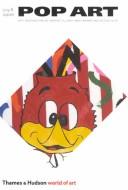
The classic introductory survey by one of Pop's most important early critics. It maps the whole movement — British and American — in plain language, giving beginners a reliable map before diving into specifics.
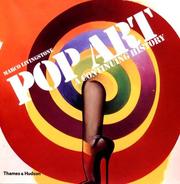
Livingstone's richly illustrated history extends Lippard's overview with deeper attention to individual artists and national differences, cementing the foundational picture before the curriculum goes deeper.
The British Beginning: Where Pop Was Born
BeginnerDiscover how the Independent Group in London invented the intellectual and visual language of Pop art in the early 1950s, years before Warhol or Lichtenstein appeared.
▸ Study plan for this stage
Pace: 4–5 weeks, ~25–30 pages/day. Start with "As found" (weeks 1–2), then move to "Richard Hamilton" (weeks 3–5). Allocate 2–3 days per week for reflection and exercises.
- The Independent Group as the intellectual crucible for Pop art: its members, meetings, and collaborative spirit in 1950s London
- The concept of 'as found' and the embrace of mass culture, vernacular design, and everyday objects as legitimate artistic subjects
- Richard Hamilton's role as a theorist and artist in synthesizing fine art with popular imagery, advertising, and consumer culture
- The visual and conceptual language of Pop art: collage, appropriation, and the blurring of high and low art boundaries
- How British Pop emerged from post-war consumer culture and American cultural imports before American Pop art movements
- The relationship between the Independent Group's intellectual framework and the actual artworks produced by Hamilton and his contemporaries
- Collage and assemblage as foundational techniques for translating mass-culture imagery into fine art
- Who were the key members of the Independent Group, and what was their shared vision for art in the early 1950s?
- What does 'as found' mean in the context of the Independent Group's artistic practice, and how did it challenge traditional art values?
- How did Richard Hamilton synthesize fine art traditions with popular culture, advertising, and consumer imagery?
- What role did American mass culture and consumer goods play in inspiring British Pop art?
- How did the Independent Group's intellectual framework precede and influence the later American Pop art movements?
- What are the key visual and conceptual techniques (collage, appropriation, etc.) that Hamilton and the Independent Group used to bridge high and low art?
- Create a visual timeline of the Independent Group's key exhibitions and members (1950–1956) based on 'As found,' noting how the group's ideas evolved.
- Analyze one of Richard Hamilton's works (referenced in his monograph) by identifying the sources of mass-culture imagery he appropriated and explaining how he transformed them.
- Collect 5–10 images of contemporary advertising, product packaging, or consumer goods, then create a collage in the style of Hamilton that combines these 'found' elements with hand-drawn or painted marks.
- Write a 500-word essay comparing the Independent Group's approach to mass culture with traditional fine art values of the pre-1950s era.
- Map the intellectual connections between the Independent Group's ideas (from 'As found') and specific artworks by Hamilton shown in his monograph.
- Conduct a close reading of one key text or manifesto excerpt from the Independent Group (if included in 'As found') and explain how it shaped Hamilton's artistic practice.
Next up: This stage establishes the intellectual and visual foundations of Pop art in Britain, preparing you to understand how American artists like Warhol and Lichtenstein adapted and transformed these ideas into a distinctly American idiom in the late 1950s and 1960s.

Focuses on the Independent Group's foundational ideas — found objects, mass culture, American imagery — that seeded British Pop. Reading this first establishes why London, not New York, was Pop's true birthplace.
Hamilton's own collected writings and interviews reveal the intellectual seriousness behind British Pop from its chief architect, giving the learner direct access to the movement's original thinking.
The American Icons: Warhol, Lichtenstein, and the New York Scene
IntermediateEngage deeply with the two towering figures of American Pop — Warhol and Lichtenstein — understanding their methods, sources, and why their work became the global face of the movement.
▸ Study plan for this stage
Pace: 8–10 weeks total: ~2 weeks on "The Philosophy of Andy Warhol" (~20–25 pages/day, reading reflectively and journaling); ~3 weeks on "Popism: The Warhol Sixties" (~25–30 pages/day, treating it as both memoir and cultural document); ~2–3 weeks on "Roy Lichtenstein" by Hendrickson (~15–20 pages/day, pau
- Warhol's philosophy of flatness and surface — his deliberate embrace of superficiality as a radical artistic and philosophical stance
- The Factory as a social and creative ecosystem: how Warhol's studio became a site of cultural production, celebrity, and collaborative experimentation
- Mechanical reproduction and seriality: Warhol's use of silkscreen, repetition, and mass-media imagery to interrogate authenticity and originality (echoing but personalizing Benjamin's ideas)
- Celebrity, consumerism, and the commodity image: Campbell's Soup cans, Marilyn Monroe, and Mao as explorations of American consumer culture and the spectacle of fame
- Lichtenstein's appropriation of comic-strip and commercial art: the Benday dot technique, bold outlines, and the transformation of 'low' visual culture into high art
- The tension between irony and sincerity in Pop Art: whether Warhol and Lichtenstein were critiquing consumer culture or celebrating it — and why that ambiguity is central to the movement
- The New York Scene of the 1960s: the social, economic, and countercultural forces (the art market, the avant-garde, the media explosion) that made New York the epicenter of Pop
- Authorship and the artist's persona: how both Warhol (the blank, enigmatic celebrity) and Lichtenstein (the methodical appropriator) constructed public identities inseparable from their art
- According to 'The Philosophy of Andy Warhol,' what does Warhol mean when he valorizes being a 'machine' or embracing boredom — and how does this philosophy manifest visibly in his actual artworks?
- Based on 'Popism,' how did the social world of the Factory — its 'superstars,' collaborators, and hangers-on — shape the content and character of Warhol's output in the 1960s, and what does this suggest about the boundary between life and art?
- How does Hendrickson's account of Lichtenstein's process — his selection of source images, his use of Benday dots, his compositional adjustments — distinguish his work from mere copying, and what artistic decisions reveal his authorial hand?
- Both Warhol and Lichtenstein appropriated existing images from mass culture. Using evidence from all three books, how do their motivations, methods, and artistic results differ from one another?
- How do 'The Philosophy of Andy Warhol' and 'Popism' together construct two different but complementary portraits of Warhol — the thinker and the scene-maker — and what does each book reveal that the other cannot?
- In what ways did the specific context of New York in the 1960s — as described in 'Popism' — function as a necessary condition for the rise of American Pop Art, rather than merely a backdrop to it?
- Warhol's Seriality Exercise: Choose a single everyday object or face (a food label, a coin, a friend's photo) and reproduce it 9–16 times in a grid, deliberately varying color or tone across repetitions. Reflect in writing on what changes — and what is lost or gained — through repetition, connecting your experience to Warhol's arguments in 'The Philosophy of Andy Warhol.'
- Factory Mapping: After finishing 'Popism,' create a visual 'social map' of the Factory — a diagram or annotated list of the key figures Warhol describes (Edie Sedgwick, Lou Reed, Viva, Paul Morrissey, etc.), their roles, and how they influenced specific works or projects. Use only evidence from the book.
- Lichtenstein Source Comparison: Using Hendrickson's reproductions as a guide, find an original comic-strip panel that Lichtenstein adapted. Place the two images side by side and write a 300–400 word close analysis identifying every deliberate change Lichtenstein made — cropping, color, line weight, text — and arguing what those changes accomplish artistically.
- Philosophical Dialogue: Write a one-page imagined conversation between Warhol (drawing on his voice in 'The Philosophy of Andy Warhol') and Lichtenstein (drawing on Hendrickson's account of his stated intentions) debating the question: 'Is Pop Art a critique of consumer culture or a surrender to it?'
- Irony Audit: Select three works each by Warhol and Lichtenstein (using images from the books). For each, write two short paragraphs — one reading the work as sincere celebration of popular culture, one reading it as critical commentary — then conclude with your own verdict on which reading the work supports more strongly.
- Personal Pop Manifesto: Drawing on all three books, draft a 200–300 word 'manifesto' in Warhol's aphoristic style (as modeled in 'The Philosophy of Andy Warhol') that articulates what Pop Art stands for, what it rejects, and what it demands of its audience.
Next up: By mastering the American epicenter of Pop through Warhol's own words and Lichtenstein's visual logic, the reader is now equipped to recognize Pop's defining gestures — appropriation, seriality, irony, and the elevation of the everyday — and can meaningfully compare them against how British, European, and global artists adapted, challenged, or subverted those same ideas in their own cultural conte
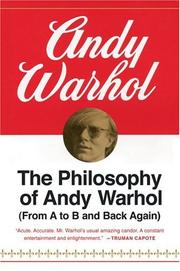
Warhol in his own voice: deadpan, funny, and deeply revealing about celebrity, money, and repetition. Reading his own words first makes subsequent critical analysis of his work far richer.

A memoir of the Factory years that places Warhol inside the full social and artistic ecosystem of 1960s New York — essential context for understanding how American Pop actually lived and breathed.

A focused, accessible monograph on Lichtenstein's comic-strip paintings and sculptures, providing the visual and conceptual grounding needed before tackling the critical arguments about appropriation and originality.
The Critical Fights: What Pop Art Meant and Who Got to Decide
IntermediateUnderstand the fierce aesthetic and ideological battles Pop ignited — against Abstract Expressionism, about kitsch and high/low culture, about gender and race — and how critics shaped (and distorted) the movement's reception.
▸ Study plan for this stage
Pace: 6–7 weeks, ~25–30 pages/day. Greenberg's essays are dense and demand close reading (2–3 weeks for ~150 pages); Lippard's chronological documentation is more accessible but requires active annotation (3–4 weeks for ~300+ pages).
- Greenberg's formalist doctrine: the autonomy of art, medium-specificity, and the hierarchy of taste that positioned Abstract Expressionism as the pinnacle of modernism
- The high/low culture divide: how Greenberg's critical framework dismissed commercial imagery and kitsch as antithetical to serious art, and how Pop artists deliberately violated this boundary
- Dematerialization thesis: Lippard's argument that conceptual and post-studio practices (1966–1972) rejected the commodity status of art objects, marking a radical departure from Pop's engagement with mass production
- Gender and institutional blindness: how both Greenberg and early Pop criticism marginalized or erased women artists, and how Lippard's documentation begins to recover these absences
- The Pop/Abstract Expressionism conflict: the generational and aesthetic battle over whether art should engage the visual language of advertising, comics, and consumer culture or remain 'pure' and self-referential
- Kitsch as a critical weapon: how Pop reclaimed and celebrated the 'bad taste' that modernist criticism condemned, forcing a reckoning with what counts as art
- Documentation as historiography: Lippard's method of archival accumulation as an alternative to critical judgment, challenging the authority of the single critic (Greenberg) to define movements
- What is Greenberg's argument for medium-specificity, and how does his formalist framework position Abstract Expressionism as the logical endpoint of modernism?
- How did Pop artists deliberately violate Greenberg's high/low culture hierarchy, and what did they gain aesthetically and conceptually by embracing commercial imagery?
- What does Lippard mean by the 'dematerialization' of the art object, and how does this concept represent a critique of both Pop's commodity status and Greenberg's object-focused formalism?
- How do Greenberg's critical writings reflect gender and racial biases in modernist discourse, and what gaps does Lippard's documentary approach begin to expose?
- Why was the Pop/Abstract Expressionism conflict not merely aesthetic but ideological—what was at stake in the battle over what art should represent and address?
- How does Lippard's chronological, archive-based method differ from Greenberg's authoritative critical voice, and what are the strengths and limitations of each approach to writing art history?
- Close-read 2–3 key Greenberg essays (e.g., 'Avant-Garde and Kitsch,' 'Modernist Painting') and annotate his core arguments about medium, taste, and the hierarchy of art; then write a 1-page summary of his formalist doctrine.
- Create a visual comparison chart: list Greenberg's criteria for 'serious' art alongside Pop artists' deliberate violations of those criteria (e.g., use of commercial imagery, flatness, repetition, irony). Include 3–4 artworks per column.
- Select one artist mentioned in both texts (or one Greenberg dismisses and Lippard documents) and trace how their work challenges Greenberg's framework; write a 2-page analysis.
- Annotate Lippard's chronology (1966–1972) by marking moments where she documents women artists, artists of color, or non-object-based practices; write a brief reflection on what Greenberg's framework would have missed.
- Debate exercise: prepare arguments for both Greenberg's position (art's autonomy, medium-specificity) and Pop's counter-position (art as engaged with mass culture, irony, accessibility). Write a 3-page dialogue or position paper.
- Create a timeline comparing Greenberg's critical pronouncements with the emergence of Pop and dematerialization movements; identify moments of direct conflict or response.
Next up: This stage establishes the ideological stakes and critical battles that shaped how Pop was received and misunderstood, preparing you to examine Pop's actual formal strategies, key artists, and works in the next stage with a clear sense of what critics were defending against and what artists were deliberately challenging.
Greenberg's essays are the establishment that Pop deliberately attacked. Reading his defence of Abstract Expressionism and his theory of kitsch makes the critical stakes of Pop's arrival viscerally clear.
Lippard documents how the critical conversation moved on from Pop into Conceptual art, showing exactly what Pop had unleashed and what its opponents and successors argued it had failed to do.
Pop's Legacy: From Postmodernism to Today
ExpertTrace how Pop art's ideas — appropriation, the commodity, the celebrity image, the blurring of high and low — flowed into postmodern art, Neo-Pop, and contemporary visual culture.
▸ Study plan for this stage
Pace: 6–8 weeks, ~25–30 pages/day (Krauss: 3–4 weeks; Baudrillard: 3–4 weeks). Allocate extra time for Baudrillard's dense theoretical passages; consider weekly review sessions to synthesize across both texts.
- Originality as a modernist myth: how Krauss deconstructs the notion of artistic originality and its collapse in postmodern practice
- The grid and the index: Krauss's formal analysis of how these structures underpin modernist versus postmodern art
- Simulation and the hyperreal: Baudrillard's concept of simulacra as copies without originals, replacing reality itself
- The death of the author and the collapse of high/low distinction: how both texts theorize the end of modernist hierarchies that Pop art initiated
- Commodity fetishism and the image: how Pop's embrace of mass-produced imagery prefigures postmodern and contemporary visual culture
- The sign detached from meaning: Baudrillard's theory of how signs circulate independently of referents, extending Pop's appropriation strategies
- Postmodernism as the cultural logic of late capitalism: understanding how Pop art's strategies become the dominant mode of representation
- Repetition and difference: how copying, appropriation, and serialization function as creative strategies rather than failures of originality
- How does Krauss argue that modernism's concept of originality is a myth, and what does this mean for understanding Pop art's appropriation strategies?
- What are the grid and the index in Krauss's framework, and how do they help explain the shift from modernism to postmodernism?
- According to Baudrillard, what is the difference between a copy, a simulacrum, and the hyperreal, and how does this apply to Pop art's use of mass-media imagery?
- How do both Krauss and Baudrillard theorize the collapse of the distinction between high art and low/mass culture, and what role did Pop art play in this collapse?
- What does Baudrillard mean by 'the death of the real,' and how does this concept extend Pop art's engagement with commodities and celebrity images?
- How do the concepts of repetition and serialization function differently in modernism versus postmodernism, according to these texts?
- Create a visual chart mapping Krauss's critique of originality: list modernist assumptions about originality on one side, then annotate with postmodern counter-examples from Pop art (e.g., Warhol's Marilyn series, Lichtenstein's comic panels).
- Write a 2–3 page analytical response: Select one Pop artwork (Warhol, Lichtenstein, or Rosenquist) and analyze it using Krauss's concepts of the grid and index. How does the work embody postmodern rather than modernist logic?
- Diagram Baudrillard's orders of simulacra (counterfeit, production, simulation) and assign contemporary visual examples to each order—include at least one from Pop art and one from contemporary culture.
- Close reading exercise: Annotate a dense passage from Baudrillard (e.g., on the hyperreal or the precession of simulacra) and translate it into plain language. Identify how his argument extends or complicates Pop art's strategies.
- Comparative analysis: Write a 3–4 page essay comparing how Krauss and Baudrillard each theorize the relationship between originality, copying, and meaning-making. Use specific examples from the texts.
- Create a timeline or conceptual genealogy showing how Pop art's ideas (appropriation, commodity fetishism, celebrity) flow into the postmodern and hyperreal conditions Krauss and Baudrillard describe.
Next up: This stage establishes the theoretical foundations for understanding how Pop art's formal and conceptual strategies became the dominant logic of postmodern and contemporary visual culture, positioning you to examine specific movements (Neo-Pop, appropriation art, digital culture) that directly inherit and transform these ideas.
Krauss's landmark essays theorise originality, repetition, and the grid — the exact concepts Pop exploded — making this the essential bridge between Pop's provocations and postmodern theory.

Baudrillard's theory of the simulacrum is the philosophical endpoint of everything Pop began: the image detached from reality. Placed last, it rewards the reader who has traced the full arc from Hamilton's collages to Warhol's Marilyns.
Discussion
Keep reading
Paths that share books, cover the same subject, or open a related topic.