Pop art is the movement most likely to be misunderstood as simply cheerful. Soup cans and comic panels look like an affirmation of consumer culture, and half the critical literature exists to argue about whether that is celebration, deadpan neutrality, or critique. You cannot settle that question from the paintings alone, which is why the reading here matters more than in most art movements.
The other thing worth knowing early is that Pop did not begin in New York. The Independent Group in London was making collages and writing about mass media in the mid-1950s, several years before the American work that made the movement famous. Read in the standard American-first order and you inherit a distorted chronology.
Two surveys, deliberately different
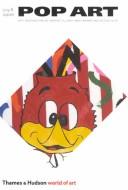
Start with Pop art by Lucy Lippard, first published in 1966 while the movement was still current. Its value is that it is a document as much as a history: a critic sorting out a live phenomenon, with British, New York, and West Coast chapters, before the canon hardened.
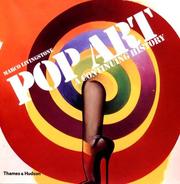
Then Pop art by Marco Livingstone, the later and more comprehensive survey, which has the benefit of hindsight, better reproductions, and a fuller account of how the movement spread internationally. The two share a title and cover the same movement, but they are not redundant — Lippard gives you the temperature of 1966, Livingstone gives you the settled account. If you want only one, take Livingstone.
The British origins
As found documents the Independent Group and the postwar British aesthetic of found material, advertising imagery, and the everyday, which is the actual soil Pop grew in. It is the book that explains why the movement's first questions were about mass media rather than about painting.
Then Richard Hamilton, on the artist who made the 1956 collage usually named as the first Pop work and who defined Pop in a letter as popular, transient, expendable, low cost, mass produced, young, witty, sexy, gimmicky, glamorous, and big business. That list is the movement's clearest self-definition, and Hamilton's own writing is drier and more analytical than the American work suggests.
Warhol and Lichtenstein
The Philosophy of Andy Warhol is Warhol's aphoristic self-presentation — on money, beauty, boredom, and the appeal of surfaces. It is not a reliable memoir and is not trying to be; the flatness is the argument. Read it as a primary source about a persona.
Popism. The Warhol sixties is the more useful companion: the Factory decade told as anecdote and chronology, with the parties, the films, the shooting, and the exact social machinery that made the work possible. Together they give you Warhol as theory and Warhol as scene.
Then Roy Lichtenstein by Janis Hendrickson, a compact monograph on the artist who took the comic panel, enlarged it, and hand-painted the Ben-Day dots — a process far more deliberate and formally severe than the appropriation charge usually allows.
The critics who objected, and the theory after
Art and culture by Clement Greenberg is the necessary opposition. Greenberg's modernist criticism — medium specificity, the flat picture plane, kitsch as the enemy — was the dominant position Pop violated, and reading him tells you exactly what was at stake in painting a soup can. He is a formidable critic even when you disagree.
Six Years: The Dematerialization of the Art Object from 1966 to 1972 is Lippard again, chronicling what came next as conceptual art pushed past objects entirely. It shows Pop as a hinge rather than an endpoint.
Finish with two theory books. The originality of the avant-garde and other modernist myths by Rosalind Krauss attacks the cult of originality and takes repetition and the copy seriously, which is precisely Pop's territory. Simulacra and Simulation by Jean Baudrillard pushes further, to a world of copies without originals — the strongest philosophical frame for what Warhol was doing, and one many readers find overstated. Both are demanding; read them last or not at all.
The punk rock path picks up the same argument about mass culture two decades later. Follow the full reading path to take these in order.
Follow the full ordered path here: Best Books on Pop Art, in Reading Order.