Venture capital explained: an ordered reading list for investors
This curriculum builds from the structural mechanics of venture capital up through the nuanced craft of deal-making, portfolio construction, and return modeling. Because the learner starts at an intermediate level, the path skips pure introductions and moves quickly into how VC funds actually work, then deepens into term sheets and legal mechanics, and finally reaches the advanced mental models used by top investors to price risk and generate outlier returns.
How VC Funds Actually Work
IntermediateUnderstand the full lifecycle of a venture fund — how GPs raise from LPs, how capital is deployed, how carry and fees work, and how the industry is structured from the inside.
▸ Study plan for this stage
Pace: 6–8 weeks, ~40–50 pages/day (mix of dense material and practical examples)
- The full LP-to-GP-to-startup capital flow: how LPs commit capital, GPs raise funds, and how that capital reaches portfolio companies
- Term sheet anatomy and key deal mechanics: liquidation preferences, anti-dilution, board rights, and how these protect different stakeholders
- Carry and fee structures: how GPs are compensated (2% management fee, 20% carry), why these incentives matter, and how they align or misalign with LP interests
- Fund lifecycle stages: fundraising, deployment (investment period), management, and exit/distribution phases, and typical timelines for each
- The VC fund as a legal and financial entity: fund structure, governance, LP agreements, and how risk and returns are distributed
- Portfolio construction and risk management: how GPs select investments, manage concentration, and think about diversification across a fund
- The economics of venture returns: power law distribution, J-curve dynamics, and why most returns come from a small number of exits
- Industry structure and incentive alignment: conflicts between LPs and GPs, between early and late-stage investors, and how these shape deal-making
- Walk through the complete lifecycle of a venture fund from LP commitment to final distribution. What happens at each stage, and how long does it typically take?
- Explain the key terms in a term sheet (liquidation preference, anti-dilution, board seats) and why each one matters to both founders and investors.
- How do the 2% management fee and 20% carry work, and what incentive problems can arise from this structure? How do LPs try to address these?
- What is the J-curve, and why does it matter for understanding VC fund performance and LP patience?
- Describe the power law distribution in venture returns. Why do most returns come from a small number of companies, and how should a GP think about portfolio construction given this reality?
- What are the main conflicts of interest between LPs and GPs, and between early-stage and late-stage VCs? How do these conflicts shape deal-making and fund strategy?
- Dissect a real term sheet (find examples online or use ones discussed in Feld's book): identify each key clause, explain what it does, and map out how it affects founder dilution and investor protection.
- Model a fund's economics: assume a $100M fund with 2% management fees and 20% carry, a 10-year life, and a portfolio of 20 companies. Calculate the GP's total compensation under different exit scenarios (e.g., 3x MOIC, 5x MOIC, 10x MOIC).
- Trace the J-curve: plot a hypothetical fund's value over time, showing how it dips in years 2–3 (deployment and early losses) before recovering. Explain why LPs must be patient and what this means for GP behavior.
- Create a fund investment thesis document: define target stage, sector, geography, check size, and portfolio size. Justify each choice using concepts from Ramsinghani's book (e.g., power law, diversification, risk management).
- Analyze a real VC fund's performance (use public data from PitchBook, Preqin, or fund websites): calculate MOIC, IRR, and distribution schedule. Identify which exits drove returns and which investments underperformed.
- Write a memo from an LP's perspective: identify 3 potential conflicts with your GP and propose governance mechanisms to address them (e.g., board observation rights, fee clawbacks, follow-on fund approval).
Next up: This stage gives you the structural and financial foundation to understand how VC decisions are made; the next stage will show you how GPs actually evaluate and select companies, and how they add value beyond capital.

The single most-cited primer on how VC financings are structured; establishes the vocabulary (pre-money, dilution, pro-rata rights) that every subsequent book assumes you already know.

Goes one layer deeper into fund mechanics — LP/GP dynamics, fund economics, portfolio construction math, and the operational reality of running a fund. Read this second to see the full institutional picture.
Term Sheets & Deal Mechanics
IntermediateBe able to read, negotiate, and model a term sheet; understand the legal and economic levers (liquidation preferences, anti-dilution, protective provisions) that determine who actually makes money at exit.
▸ Study plan for this stage
Pace: 6–7 weeks, ~25–30 pages/day (alternating between both books; ~2 weeks per book with overlap for integration)
- Term sheet structure and anatomy: what each section means and why it matters economically
- Liquidation preferences (non-participating, participating, tiered) and how they determine who gets paid first at exit
- Anti-dilution protection (weighted-average, full-ratchet) and its impact on founder dilution and economics
- Protective provisions and board control: how investors use veto rights to protect their stake
- Valuation mechanics: pre-money vs. post-money, price per share, and how they cascade through the cap table
- The negotiation playbook: which terms are market-standard, which are negotiable, and where founders have leverage
- Modeling exit scenarios: how to build a cap table and project returns under different liquidation outcomes
- The investor mindset: understanding Sand Hill Road incentives, fund economics, and how they shape term sheet demands
- What is the difference between participating and non-participating liquidation preferences, and how does each affect founder returns at a $50M exit?
- How do weighted-average and full-ratchet anti-dilution provisions work, and when would a founder prefer one over the other?
- What are protective provisions, which ones are market-standard, and how do they shift control dynamics between founders and investors?
- Given a term sheet with a pre-money valuation, price per share, and investment amount, can you calculate post-money valuation and founder dilution?
- How would you model a cap table and project returns for founders, early investors, and late-stage investors under a successful exit scenario?
- What are the key economic and legal levers in a term sheet, and which ones should a founder prioritize negotiating?
- Read and annotate a real Series A term sheet (or template), labeling each section and explaining its economic impact in 1–2 sentences per clause
- Build a cap table from scratch using a spreadsheet: start with founder equity, add a Series A round with given terms, then model a Series B round and calculate dilution at each stage
- Create a liquidation waterfall for a hypothetical company: given a cap table and exit price, calculate returns for each investor class and founders under both participating and non-participating preferences
- Compare two term sheets side-by-side (e.g., founder-friendly vs. investor-friendly versions): identify 5–7 key differences and explain the economic consequences of each
- Model an anti-dilution scenario: assume a Series B down-round and recalculate the cap table under both weighted-average and full-ratchet provisions; quantify the impact on founder ownership
- Write a 1-page negotiation memo for a founder: given a term sheet, identify 3 clauses to push back on, explain why, and propose alternative language with reasoning
Next up: Mastering term sheets and deal mechanics gives you the foundation to evaluate investment opportunities, model long-term wealth creation, and understand how capital structures evolve—skills essential for the next stage, which will likely dive into later-stage financing, exit strategy, and portfolio management.

A concise, annotated walkthrough of a real term sheet clause by clause — the best companion to Venture Deals for understanding the legal language in practice.

Andreessen Horowitz's managing partner explains how VCs evaluate deals, structure terms, and think about founder-investor alignment — bridges legal mechanics to strategic decision-making.
Deal Flow, Selection & the Investor Mindset
IntermediateDevelop the pattern-recognition and sourcing instincts that drive deal flow; understand how top investors evaluate founders, markets, and timing before a term sheet is ever written.
▸ Study plan for this stage
Pace: 8–10 weeks, ~40–50 pages/day. Read "Zero to One" (first 3–4 weeks), then "The Power Law" (remaining 5–6 weeks). Allocate 1–2 days per week for reflection and exercises.
- Contrarian thinking and the power of secrets: how to identify non-obvious truths about markets and founders that others miss
- The importance of vertical integration and monopoly-building: why sustainable competitive advantages matter more than incremental improvements
- Founder-market fit and founder psychology: recognizing the vision, conviction, and execution capacity that separate exceptional founders from the rest
- Pattern recognition in deal evaluation: how top investors like Sequoia and Accel developed repeatable frameworks for spotting winners early
- The role of timing, luck, and skill in venture outcomes: understanding when market conditions align with founder capability and investor conviction
- Deal sourcing and network effects: how investor reputation and founder networks create concentrated deal flow to the best opportunities
- The narrative arc of venture investing: how investors construct and test theses about where the next 10x returns will come from
- What does Thiel mean by 'secrets' and how should an investor use contrarian thinking to identify them in founders and markets?
- How do the case studies in 'The Power Law' illustrate the difference between investors who got timing right versus those who missed it, and what patterns can you extract?
- What founder characteristics and behaviors does Thiel emphasize as predictive of success, and how do Mallaby's profiles of founders reinforce or challenge this?
- Describe the deal sourcing and pattern-recognition process used by a top-tier firm profiled in 'The Power Law'—what made their instincts reliable?
- How does the concept of 'vertical integration' and building monopolies (from 'Zero to One') relate to the venture outcomes and founder strategies described in 'The Power Law'?
- What role does founder conviction and willingness to pursue an unconventional path play in both Thiel's framework and Mallaby's case studies?
- Contrarian thesis development: Identify 3 contrarian beliefs about an emerging market or technology (e.g., AI, biotech, climate). For each, write a 1-page argument for why it's true and why most investors currently disagree. Compare against actual founder pitches or market trends.
- Founder pattern-matching: Select 5 founders profiled in 'The Power Law' (e.g., Steve Jobs, Airbnb founders, Stripe founders). For each, extract 3–4 founder traits Mallaby highlights. Create a rubric and score a current founder you know or a recent pitch against these traits.
- Deal sourcing simulation: Map the network that led to one major investment in 'The Power Law' (e.g., how Sequoia found a company). Trace the chain of relationships, reputation, and luck. Then identify a founder in your own network and map how you'd source a deal with them.
- Timing and market analysis: Pick a company from 'The Power Law' that succeeded and one that failed. For each, analyze: (1) founder capability, (2) market timing, (3) investor conviction. Write a 2-page assessment of which factor was most decisive.
- Monopoly audit: Choose a company from 'Zero to One' or 'The Power Law'. Assess whether it built a true monopoly (Thiel's definition) or competed in a commoditized market. Identify the specific decisions that created or failed to create defensibility.
- Investor mindset journal: As you read, keep a 1-page weekly reflection on a decision or pattern you encountered. Ask: 'If I were investing, what would I have missed? What would I have seen?' Compare your instincts to what actually happened.
Next up: This stage equips you with the mental models and sourcing instincts to recognize exceptional founders and markets; the next stage will teach you how to structure, negotiate, and close deals once you've identified the right opportunity.
Teaches the contrarian, monopoly-seeking framework that elite VCs use to filter which markets and companies are worth backing — essential mental model before studying portfolio strategy.

A deeply reported history of venture capital that reveals how the industry's greatest deals were actually sourced, evaluated, and won — provides real-world context for every abstract framework covered so far.
Portfolio Strategy & Return Math
ExpertModel a venture portfolio from first principles; understand power-law return distributions, reserve strategy, ownership targets, and how fund size constrains investment strategy.
▸ Study plan for this stage
Pace: 4–5 weeks, ~40–50 pages/day (approximately 280–350 pages total across both books)
- Power-law distribution in venture returns: why a small number of outlier exits generate the majority of fund returns, and how this shapes portfolio construction
- Reserve strategy and capital allocation: how to reserve capital for follow-on investments in winners, and the trade-offs between initial deployment and reserves
- Ownership targets and dilution modeling: calculating required ownership percentages at entry to achieve target ownership at exit, accounting for future funding rounds
- Fund size constraints on investment strategy: how total fund size determines check size, portfolio size, and the types of companies a fund can profitably back
- Portfolio construction from first principles: building a coherent thesis on how many companies to fund, at what stages, with what ownership, to hit fund-level return targets
- The role of follow-on investing: why doubling down on winners is critical to VC returns, and how to identify and reserve capital for these opportunities
- Deal flow quality and selection: understanding how to source and filter opportunities to maximize the probability of backing power-law winners
- Fund economics and carry: how management fees, carry, and fund size interact to determine the financial incentives facing GPs and the constraints on strategy
- Why do venture returns follow a power-law distribution, and what does this imply for how you should construct and manage a portfolio?
- How do you calculate the ownership percentage you need at entry to achieve your target ownership at exit, given expected dilution from future funding rounds?
- What is reserve strategy, why is it critical to VC returns, and how do you balance initial deployment against reserves given a fixed fund size?
- How does fund size constrain investment strategy—specifically, how does it affect check size, portfolio size, and the stage/type of companies you can profitably back?
- Walk through a simple portfolio model: given a fund size, target ownership, and expected exit values, how many companies should you fund and at what initial check size?
- What are the key differences between a fund that relies on initial selection skill versus one that relies on follow-on investing skill, and what does this mean for your operational strategy?
- Build a simple power-law return distribution model: assume 10 investments, assign exit values following a power-law curve (e.g., 1 unicorn at $1B, 2 at $500M, 3 at $100M, 4 at $10M), and calculate what ownership percentage in the unicorn is needed to return a 3x fund. Repeat with different ownership scenarios.
- Model a reserve strategy: given a $100M fund with a target of 20 investments, calculate how much capital to deploy in initial checks versus reserves. Then model what happens if you need to follow-on in 5 winners at 2x the initial check size—does your reserve hold?
- Create a dilution-adjusted ownership model: pick a real Series A company, assume it will raise Series B, C, and D at 2x the previous round valuation. Calculate what ownership you need at Series A to own 10% at Series D.
- Analyze fund size constraints: compare a $50M fund and a $500M fund investing in the same market. For each, calculate the average check size, portfolio size, and what stage/company size each can profitably back. What strategic differences emerge?
- Read a case study from Bussgang or Draper (e.g., a specific investment they describe) and reverse-engineer the portfolio math: what ownership did they need, what was their reserve strategy, how did follow-on investing shape the outcome?
- Build a simplified fund model: assume a $200M fund, 15% management fee, 20% carry, target 3x MOIC. Work backward to determine: how many investments, what average check size, what ownership targets, and what reserve strategy would achieve this?
Next up: This stage equips you with the quantitative and strategic foundations of portfolio construction, preparing you to move into operational execution—how to actually source, diligence, negotiate, and manage the companies in your portfolio to realize these return targets.
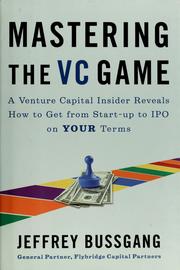
A General Catalyst partner explains portfolio construction and the VC decision process from both sides of the table, with frank discussion of how ownership and follow-on reserves are managed.

A multigenerational view of portfolio strategy from one of Silicon Valley's founding families — illustrates how long-horizon thinking and network effects compound returns across fund cycles.
Pricing Risk & Generating Outlier Returns
ExpertInternalize how the best investors think probabilistically about uncertainty, price early-stage risk, and build conviction in non-consensus bets that produce fund-returning outcomes.
▸ Study plan for this stage
Pace: 6–7 weeks, ~40–50 pages/day. Start with Metrick's technical foundations (weeks 1–3, ~25 pages/day), then shift to Komisar's philosophy-driven narrative (weeks 4–6, ~35 pages/day), with week 7 reserved for synthesis and reflection exercises.
- Probabilistic thinking: modeling venture returns as a distribution of outcomes rather than point estimates, and understanding power laws in VC returns
- Risk pricing in early-stage investing: how to quantify and discount for technical, market, and team risk when valuations lack historical comparables
- Conviction building on non-consensus bets: recognizing when contrarian theses are defensible vs. reckless, and how to maintain conviction under uncertainty
- The founder-investor alignment problem: how incentive structures, option pools, and liquidation preferences shape behavior and outcomes
- Narrative and pattern recognition: using storytelling and analogical reasoning (Komisar's 'riddle') to identify companies with outlier potential before markets recognize it
- Real options and optionality: understanding how early-stage companies preserve strategic flexibility and how investors should value that flexibility
- The psychology of uncertainty: recognizing cognitive biases (anchoring, overconfidence, recency) that distort risk assessment and conviction
- Fund-returning outcomes: what venture returns actually look like, why most deals fail, and how a few winners must compensate for many losses
- How do power law distributions in venture returns change the way you should think about portfolio construction and individual deal evaluation compared to traditional finance?
- Walk through Metrick's framework for pricing risk in an early-stage company with no revenue. What are the key risk factors you'd adjust for, and how would you translate those into a valuation?
- Komisar argues that the 'riddle' is about finding companies solving problems that matter deeply to founders. Why does founder passion and skin-in-the-game matter for predicting outlier returns, and what are the failure modes?
- How would you distinguish between a non-consensus bet that's defensible (and could generate fund-returning returns) versus one that's simply wrong? What evidence would change your conviction?
- Explain the relationship between optionality, uncertainty, and valuation. Why do early-stage companies have more strategic optionality than later-stage ones, and how should that affect your pricing?
- What does Komisar mean by 'the monk and the riddle,' and how does this metaphor apply to the investor's role in identifying and supporting companies with outlier potential?
- Build a simple Monte Carlo model for a Series A company: estimate a base case, downside, and upside scenario with probabilities. Calculate the expected value and compare it to the proposed valuation. Reflect on which assumptions feel most uncertain.
- Take a real early-stage company (or a historical case study from Metrick). Map out the key risks (technical, market, team, execution). For each, estimate a probability and impact, then calculate an implied risk-adjusted valuation discount.
- Write a one-page 'riddle' for a company you believe has outlier potential (real or hypothetical). Articulate the contrarian thesis, the founder's motivation, and the market problem. Then stress-test it: what would have to be true for this to fail?
- Analyze a failed venture investment (or one that underperformed). Using Metrick's framework, identify where the risk pricing was wrong. Was it overconfidence in the team, mispricing of market risk, or something else?
- Create a 'conviction journal' for a non-consensus bet you're tracking. Document your initial thesis, the evidence that increases/decreases conviction, and how your probability estimate changes over time. Revisit after 4 weeks.
- Compare two companies at the same stage with different founder backgrounds and motivations (use Komisar's lens). How would you expect their trajectories to differ, and how would that affect your pricing and follow-on investment decisions?
Next up: This stage equips you with both the quantitative tools (Metrick) and the intuitive pattern-recognition skills (Komisar) to identify and price non-consensus bets; the next stage will likely deepen your operational and governance capabilities—how to actually support those outlier companies once you've backed them.

The graduate-level textbook used at Yale and Wharton; covers VC valuation methods, option pricing for startups, and quantitative risk modeling — the most rigorous treatment of how VCs actually price deals.

Closes the curriculum by exploring the qualitative, judgment-driven side of risk assessment — how experienced investors evaluate passion, resilience, and mission to identify founders who can survive the unexpected.
Discussion
Keep reading
Paths that share books, cover the same subject, or open a related topic.