Patrick Melrose Reading Order and Guide
Edward St Aubyn's Patrick Melrose sequence is five short novels written across nearly twenty years, following one man from a childhood in Provence through heroin addiction to a difficult middle age. They are frequently sold bound together as one volume, but they were written and are best read as five separate books, in publication order, because the gaps between them are part of the design. After the sequence, a short tail of his other novels shows what he does when he is not writing about himself.
The First Three
IntermediateRead the original trilogy — one day in 1967, one weekend in New York, one dinner party in England — and see how St Aubyn compresses a life into three confined settings.
▸ Study plan for this stage
Pace: 2–3 weeks for Never Mind (154 pages), Bad News (216) and Some Hope (167). They are very short and very fast — each is readable in two or three sittings — but they are not light, and reading all three in a weekend is a real mistake. Leave a day between books. Before you begin, know what you are readi
- Never Mind takes place across one day in 1967 at a house in Provence, and the abuse is at the centre of it — brief on the page, and the origin of everything in the remaining four books
- David Melrose is drawn as a wit and a sadist at once, and the novels never separate the two; his cruelty is inseparable from the social performance that protects it
- Bad News is one weekend in New York collecting his father's ashes, told from inside a body being kept upright by drugs, with the narration itself distorted accordingly
- St Aubyn's sentences are the reason to read him: epigrammatic, comic, and pointed at exactly the moment the material is least bearable
- The comedy is not relief and is not distance — it is a class dialect, and the novels are arguing that this particular English upper class produced both the wit and the violence
- Each of the first three books observes a tight unity of time and place — one day, one weekend, one dinner party — which is what lets 150 pages carry a life
- Some Hope, the third, moves to an English country dinner party and is where the sequence first admits the possibility of survival
- How many pages does Never Mind actually spend on the assault, and what does the restraint accomplish that a longer treatment would not?
- Why is David Melrose given such good lines? What would the book lose if he were merely brutish?
- How does the prose in Bad News change to reproduce being high, and where does it slip deliberately?
- What do the adults at the Provence house understand, and how does the novel indict them without stating it?
- What has changed by the end of Some Hope, and is the title ironic?
- Read Never Mind's opening pages twice — the social comedy and the threat are already fully braided there.
- Mark the sentences you find funniest, then check what each is about. The discomfort of that list is the sequence's method in miniature.
- In Bad News, track the drugs taken against the hours elapsed. The chronology is exact and it is doing structural work.
- Note the point at which you stopped expecting a rescue for the child. It usually happens much earlier than the plot requires.
- Take a break of at least a day before Mother's Milk. The later two books are different in temperature and benefit from being met fresh.
Next up: The original trilogy ends with survival established; the later two books, written a decade afterwards, ask what a survivor does with a family and an inheritance.

A single day at a French house when Patrick is five. Short, exact and containing the event the other four books orbit; be warned that it depicts child sexual abuse directly, and nothing later is harder to read than this.
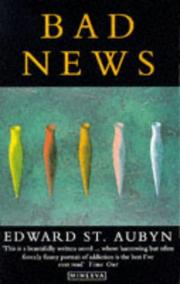
Forty-eight hours in New York collecting his father's ashes, on every drug available. The funniest and most technically dazzling of the five, and unreadable in the right way without Never Mind behind it.
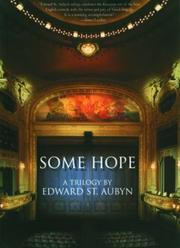
A country-house party, eight years clean. Note that Some Hope is also the title used for editions collecting the first three novels together, so check what you are buying if you want the single book.
The Later Two
IntermediateFollow the sequence into parenthood and inheritance, written a decade after the trilogy and noticeably different in temperature.
▸ Study plan for this stage
Pace: 2–3 weeks for Mother's Milk (291 pages) and At Last (266). Both are longer and slower than the trilogy, and Mother's Milk in particular is structurally more diffuse — allow 25 pages a day. Read them in order; At Last takes place at the mother's funeral and depends on Mother's Milk for its grievance.
- Mother's Milk was written a decade after the trilogy and shifts the point of view around the family, including into the mind of a small child, which changes the sequence's basic technique
- Patrick is now a father, and the book's real subject is whether damage is transmitted — the question the first three books left open
- Eleanor Melrose, largely a victim in the trilogy, becomes the antagonist here: her giving away of the family house to a New Age foundation is the plot's engine
- The addiction has moved from heroin to alcohol and to a general late-thirties despair, which the book treats as less dramatic and more corrosive
- At Last unfolds over a single funeral, returning to the trilogy's unity of time and place, and is the most formally controlled book in the sequence
- The final book's argument is about forgiveness as a practical rather than moral operation — what has to be given up in order to stop
- St Aubyn's material is autobiographical, and these two books are where the writing stops being an account of childhood and becomes an account of what an adult does with it
- What does Mother's Milk gain and lose by leaving Patrick's point of view?
- Is Eleanor treated fairly? What would her version of the inheritance dispute be?
- Does the sequence argue that damage is transmitted to Patrick's sons, or that it is not?
- At Last is set at one funeral. What does that constraint let St Aubyn do that Mother's Milk could not?
- What exactly does Patrick give up at the end, and is the book convinced it is enough?
- List the ways Patrick is different from his father, and the ways he is not. The book keeps score and expects you to.
- In At Last, note who speaks at the funeral and what each speaker wants. It is a courtroom disguised as a social occasion.
- Compare the last page of Some Hope with the last page of At Last. The sequence is answering itself.
- Write two sentences on whether five books were needed, or whether the trilogy was complete on its own.
Next up: With the Melrose sequence closed, the final stage shows the same sentences aimed at targets outside the author's own life.
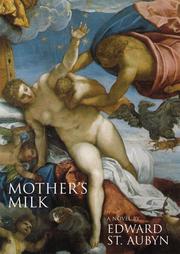
Patrick as a father, losing the family house to his mother's chosen charity. Booker-shortlisted, and the volume where the comedy turns domestic; the shift only registers if the trilogy is fresh.

His mother's funeral, and the whole sequence arriving at something like release. The intended ending and genuinely earned; do not read it out of order under any circumstances.
After Melrose
IntermediateSee St Aubyn outside the autobiographical sequence, where the same sentences are pointed at literary prizes, King Lear and neuroscience.
▸ Study plan for this stage
Pace: 3 weeks for Lost for Words (261 pages), Dunbar (234) and Double Blind (256). All three are short and none is essential; treat this stage as optional and read whichever premise appeals. Roughly a book a week.
- Lost for Words is a satire of a literary prize, written by someone who had been on the receiving end of one, and it is the lightest thing he has published
- Dunbar is King Lear relocated to a media empire, written for the Hogarth Shakespeare series — a commissioned book, and it reads like one
- Double Blind is a novel of ideas about neuroscience, genetics, ecology and psychoanalysis, and is the most ambitious of the three
- Read together, these test whether the Melrose style works without the autobiographical pressure behind it — the sentences survive, the urgency mostly does not
- The recurring St Aubyn subjects persist anyway: inheritance, addiction, therapy, and the English class that produced all of it
- This stage is a coda. Nobody should read these before the five novels, and a reader who stops after At Last has not missed the work
- Does the St Aubyn sentence work on material he has no personal stake in? Point to a passage that proves it either way.
- What does Lost for Words satirise beyond prize culture, and is the satire earned?
- Which Lear elements does Dunbar keep, and does the transposition add anything to either text?
- Double Blind takes on science directly. Is it a novel of ideas or a novel with ideas in it?
- Having read all eight books, what is St Aubyn's actual subject when the autobiography is removed?
- Pick one paragraph from Never Mind and one from Double Blind and compare them at sentence level. The style is remarkably stable.
- Read Lost for Words alongside any real prize longlist. The satire is much closer to reportage than it looks.
- Rank all eight books and write one line on why the top of the list is the top.
Next up: This closes the path; readers who want more autobiographical fiction that refuses to protect its author should go next to Karl Ove Knausgaard's My Struggle.

A satire of a literary prize, written after his own Booker near-miss. Slight next to Melrose but a fast, malicious pleasure, and the easiest of the non-Melrose novels to enjoy.

King Lear as a media mogul, written for the Hogarth Shakespeare series. Read it for the family-cruelty theme he clearly could not leave alone.
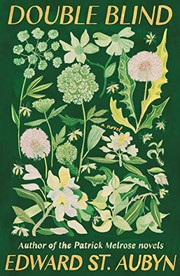
Ecology, epigenetics, psychoanalysis and inherited money, in his most idea-driven novel. Placed last because it is the furthest from Melrose and rewards readers who already like the prose for its own sake.
Discussion
Keep reading
Paths that share books, cover the same subject, or open a related topic.