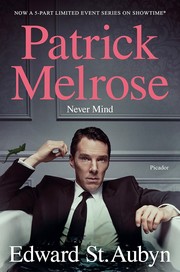
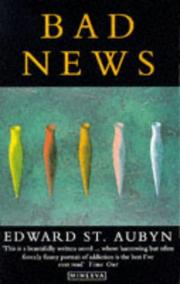
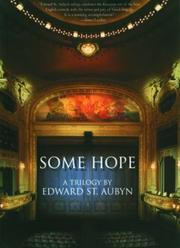
Before any reading order, the content, because it is the actual decision a new reader is making and it should not be buried three paragraphs down.
The first Patrick Melrose novel contains the rape of a five-year-old boy by his father, described directly rather than in implication. The second is a sustained account of heroin, cocaine and alcohol use across a single weekend, written from inside the addiction. Edward St Aubyn has said in interviews that the sequence draws on his own childhood and his own years of addiction. If either subject is one you cannot read, the place to stop is here, before book one — not at book two, having already read the worst of it.
With that said: start with Never Mind. There is no alternative. The five Melrose novels are one continuous story about one man across roughly forty years, published over two decades, and they are read in publication order, which is also chronological order. There is no controversy to resolve.
The first three
Never Mind, Bad News and Some hope — 154, 216 and 167 pages, two to three weeks for all three. They are very short and very fast, each readable in two or three sittings, and reading all three in a weekend is a genuine mistake. Leave a day between books. The prose is comic, precise and extremely funny, which is exactly what makes the subject matter land the way it does; taken in bulk the effect flattens into something merely bleak.
Never Mind covers a single day in the south of France in 1967. Bad News covers a single weekend in New York. Some hope covers a single party. The compression is the technique.
The later two
Mother's Milk and At last, 291 and 266 pages, two to three weeks. Both are longer and slower than the trilogy, and Mother's Milk in particular is structurally more diffuse — it shifts among four points of view including two children, and it is the volume readers most often find loose. Allow 25 pages a day. Read them in order: At last takes place at the mother's funeral and depends entirely on Mother's Milk for its grievance.
At last is the best book of the five and does not work without the other four. That is the answer to whether you can just read the good one.
A note on editions and the adaptation
The five novels are frequently sold as a single omnibus, which is the cheapest way to buy them and the worst way to read them — a 900-page block invites exactly the marathon that ruins the effect. If you buy the omnibus, impose the gaps yourself. The 2018 television adaptation compresses all five into five episodes and inevitably loses the prose, which is where most of the comedy lives; it is not a substitute, though it sent a lot of readers to the books.
Where to stop
After At last. The sequence ends and it ends properly.
Three later St Aubyn novels sit in this path and none of them is essential: Lost for Words, a satire of a literary prize, Dunbar, a King Lear retelling written to commission, and Double Blind, a novel of ideas about ecology and neuroscience. All three are short, all three are decently reviewed, and none of them is the reason anyone reads St Aubyn. Treat this stage as optional and read whichever premise appeals, about a book a week.
If the appeal is compressed European prose about memory and family damage, Patrick Modiano does something related at similar lengths and considerably lower intensity.
Follow the full ordered path here: Patrick Melrose Reading Order and Guide.