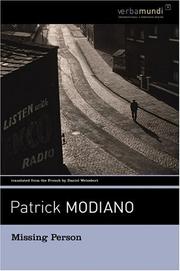
Start with Missing person. It won the Prix Goncourt in 1978, it is 168 pages, and it is the most complete version of the thing Patrick Modiano does — a detective with amnesia investigating his own identity through Paris addresses and old photographs, arriving at something less than an answer.
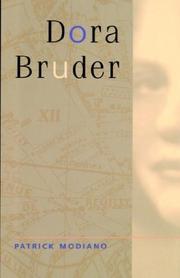
The obvious alternative is Dora Bruder, which is the more important book and the one most often taught. Do not start there. It is documentary rather than fictional, it is about a real Jewish girl who disappeared from occupied Paris in 1941, and it is by some distance the heaviest thing he wrote. It lands far harder once you know the fictional machinery it is stripping away.
The thing to understand before you start
Modiano has written more than thirty short novels and they are, by any ordinary standard, the same book. A narrator half-remembers a period in Paris, usually the Occupation or the early 1960s. There is a woman who vanished, a street address, a café that has closed, a name that may be false. Nothing is resolved.
This is not a criticism and it is not laziness — it is the design. Each novel is a slightly different attempt at a memory that will not come clear, and the cumulative effect across several books is something no single one of them achieves. Which means the reading strategy matters more than the reading order: read one, then leave two or three days before the next. Reading two in a weekend flattens the difference between them and turns design into repetition.
There is also no continuity to preserve. The novels share no characters and no plot, so the order below is about ramp rather than sequence.
Stage one: the entry point
Missing person and In the café of lost youth, about a week. The second is 118 pages and is told by four narrators about one woman, and it is the most beautiful of the short late novels.
Stage two: the Occupation and the archive
Dora Bruder, Suspended sentences and Honeymoon, roughly two weeks. Dora Bruder should be read alone and slowly — it is the shortest book here at 145 pages and the heaviest, and it is where the obsession running under all the fiction is stated plainly. Suspended sentences collects three novellas and is the best single volume for seeing the method repeat within one cover.
Stage three: the wider shelf
Villa triste, Young once, Little Jewel and Paris Nocturne, three to four weeks. Four short novels spanning 1975 to the 2000s. One a week, or two in a week if the rhythm suits you, but do not read them consecutively without a pause.
Stage four: late Modiano
So You Don't Get Lost in the Neighborhood and Invisible Ink, one to two weeks. Both short, both quieter than anything earlier, and the effect depends on not rushing. Read them in that order.
Where to stop
Almost anywhere, which is unusual and worth saying. Three books gives you the whole writer: Missing person, Dora Bruder and In the café of lost youth. If those three do not hold you, the remaining twenty-odd will not either, because they are not different. If they do hold you, the shelf is effectively endless and you can pick up any one at random for an evening.
Modiano won the Nobel Prize in 2014, which brought most of these translations into print. That is the reason a writer with thirty books had four in English until quite recently.
More short-novel reading paths are on Discover.
Follow the full ordered path here: Patrick Modiano Reading Order: Where to Start.