Get strong with kettlebells
This four-stage curriculum takes a complete beginner from safe first reps all the way to a lifelong, self-coached kettlebell practice. Each stage builds on the last: you first learn to move well and understand the tool, then master the three target lifts with expert coaching-in-print, then learn how to program intelligently, and finally zoom out to the longevity and resilience mindset that keeps training sustainable for decades.
Foundations — Understanding the Tool & Your Body
BeginnerUnderstand what kettlebell training is, why it works, and build the basic movement literacy (hip hinge, bracing, breathing) needed to learn the swing, get-up, and press safely.
▸ Study plan for this stage
Pace: 6–8 weeks total. Week 1–3: Read "Enter The Kettlebell!" (~20–25 pages/day, including re-reading the technique chapters on the swing and get-up at least twice). Week 4–8: Read "Kettlebell Simple & Sinister" (~15–20 pages/day, but spend extra sessions re-reading the technique breakdowns and program ch
- The kettlebell as a 'cannonball with a handle' — how its offset center of mass creates unique ballistic and grind demands compared to dumbbells or barbells (Enter The Kettlebell!)
- The RKC philosophy: strength as a skill, practice over workout, and the idea that technique mastery must precede loading (Enter The Kettlebell!)
- The hip hinge as the engine of all kettlebell ballistics — distinguishing a hinge from a squat, and why the posterior chain (glutes, hamstrings, lats) drives the swing (Enter The Kettlebell! & Simple & Sinister)
- Intra-abdominal pressure and 'power breathing': the hardstyle exhale on exertion, the Valsalva brace, and how bracing protects the spine under load (Enter The Kettlebell! & Simple & Sinister)
- The two foundational movement patterns introduced in these books: the two-hand swing (ballistic, hinge-dominant) and the Turkish get-up (grind, full-body integration and shoulder stability) (Enter The Kettlebell! & Simple & Sinister)
- The Simple & Sinister program structure: daily practice of 10 sets of 10 one-hand swings + 5 get-ups per side, the minimalist philosophy, and the Simple and Sinister performance standards as long-term targets (Simple & Sinister)
- Tension and relaxation cycling — the ability to generate maximal tension at the top of the swing and then instantly relax during the float, a hallmark of hardstyle efficiency (Enter The Kettlebell! & Simple & Sinister)
- Kettlebell selection and progression: how to choose a starting weight by gender and training background, and Pavel's guidance on when and how to move up in weight (Enter The Kettlebell! & Simple & Sinister)
- In your own words, why does Pavel argue that strength is a 'skill' rather than simply a fitness quality, and how does that philosophy shape the way the S&S program is structured?
- Describe the difference between a hip hinge and a squat. What cues from 'Enter The Kettlebell!' help you feel the hinge pattern correctly before touching a kettlebell?
- What is 'power breathing' (hardstyle breathing), and why does Pavel say it is non-negotiable for safe and powerful kettlebell training in both books?
- Walk through the five key positional checkpoints of the Turkish get-up as described in 'Kettlebell Simple & Sinister'. Why does Pavel call the get-up a 'moving plank'?
- What are the 'Simple' performance standards in 'Kettlebell Simple & Sinister', and what weight does Pavel recommend a beginner male/female start with for swings and get-ups?
- How does 'Enter The Kettlebell!' use the concept of 'greasing the groove' (frequent, sub-maximal practice) to explain why the S&S daily-practice format works better than a traditional sets-and-reps workout split?
- Hip-hinge wall drill (no kettlebell): Stand a fist's width from a wall, push hips back to touch it, keeping shins vertical and spine neutral — do 10 reps daily for the first two weeks until the pattern is automatic, exactly as coached in 'Enter The Kettlebell!'
- Dead-stop two-hand swing practice: Using a light kettlebell (or even a water jug), perform sets of 5 dead-stop swings, placing the bell back on the floor between each rep to reset your hinge and brace — this matches Pavel's 'hike-and-park' teaching progression in 'Enter The Kettlebell!'
- Hardstyle breathing drill: Lie on your back, place a hand on your belly, take a 360-degree breath into your abdomen, then practice the sharp 'tss' exhale on exertion. Do 10 breaths before every training session as described in 'Simple & Sinister'
- Turkish get-up segmented practice: Break the get-up into its individual stages (roll to elbow, post to hand, hip bridge, sweep, lunge, stand) and practice each stage separately with a shoe balanced on your fist before adding any weight — mirroring Pavel's step-by-step teaching in 'Simple & Sinister'
- Reading log / technique journal: After each reading session, write 3–5 sentences summarizing the key technique point covered and one way you will test it in your next practice session — this reinforces Pavel's 'practice with intention' mindset from both books
- Video self-check: Film yourself performing 5 two-hand swings and one full get-up per side at the end of Week 4 and again at the end of Week 8. Compare against the technique descriptions in 'Simple & Sinister' and note one specific correction to prioritize before moving to the next stage
Next up: ">Mastering the hip hinge, hardstyle brace, and the foundational swing and get-up patterns from these two books gives you the movement vocabulary and safe loading habits required to confidently tackle more complex kettlebell skills — such as the clean, press, and snatch — in the next stage of the curriculum.

The canonical starting point for kettlebell training worldwide. Pavel introduces the swing and the press with clear technique cues and a beginner-friendly 'Program Minimum' — exactly the safe, simple on-ramp this learner needs before anything else.

Read second because it refines and deepens the swing and get-up specifically — the two lifts that form the backbone of this learner's goal — and provides the clearest, most up-to-date technique descriptions Pavel has published, building directly on Enter the Kettlebell's vocabulary.
Technique Mastery — The Swing, Get-Up & Press
BeginnerDevelop safe, solid, well-coached technique on all three target lifts through detailed movement breakdowns, common-fault corrections, and drills that a home trainee can self-coach.
▸ Study plan for this stage
Pace: 2–3 weeks, ~20–25 pages/day; read each chapter once for comprehension, then re-read the technique cues immediately before a practice session
- The hip hinge as the biomechanical foundation of the swing — distinguishing a hinge from a squat and why the difference matters for safety and power
- The two-hand swing progression: dead-swing start, hike pass, and the explosive hip snap that drives the bell
- The 'triangle of power' — foot position, lat engagement, and a packed neck creating full-body tension at the top of the swing
- Breathing and intra-abdominal pressure: the sharp exhale at the top (hissing/bracing) to protect the spine and generate power
- Common swing faults Tracy identifies — squatting the swing, early arm pull, loose glutes at lockout, and rounded lower back — and their self-coaching corrections
- Swing variations and progressions (two-hand → one-hand → hand-to-hand) and how to know when you are ready to advance
- Program design principles embedded in the book: work-to-rest ratios, density training, and building volume before intensity
- Self-coaching and feedback loops: using video, mirrors, and tactile cues (e.g., wall hinge drill) to train alone safely
- Can you explain, in your own words, why the kettlebell swing is a hip hinge and not a squat, and demonstrate the difference with a bodyweight drill?
- What are the four most common swing faults Tracy Reifkind describes, and what is the specific correction or drill she prescribes for each?
- How should you breathe during the swing — when do you inhale, when do you exhale, and what physical sensation tells you the brace is correct?
- What checkpoints define a 'perfect rep' at the top of the swing according to the book (hips, glutes, lats, arms, neck)?
- How does Tracy structure a beginner swing workout in terms of sets, reps, and rest — and what is her rationale for that structure?
- When and why would you progress from the two-hand swing to the one-hand swing, and what new technique demands does the one-hand variation introduce?
- Wall hinge drill (daily, 2 min before every session): stand a foot from a wall, push hips back to touch it, keeping shins vertical and spine neutral — repeat until the hinge pattern is automatic
- Dead-swing start practice: place the bell 12–15 inches in front of you, hinge to the handle, 'hike' it back between the legs, and stand to lockout — do 5 perfect single reps with a full stop and reset between each, focusing on the hike-pass angle and lat tension
- Video self-audit: film yourself from the side performing 10 swings, then pause at the top and bottom of each rep to compare your position against Tracy's coaching photos/cues in the book — write down one fault and its correction
- Breathing drill without the bell: stand in the top-of-swing position (tall, glutes squeezed, lats engaged), practice the sharp 'hiss' exhale at the imaginary top, then a quick nasal inhale on the way 'down' — 20 reps until the breath pattern feels automatic
- Structured beginner workout from the book's programming section: 10 sets of 10 two-hand swings with a 1:1 work-to-rest ratio, logging time, perceived exertion, and any form notes after each set
- One-hand swing transition drill: perform a set of 10 two-hand swings, then on rep 11 release one hand at the top and complete 5 reps per side — note any new balance or rotation demands and cross-reference Tracy's one-hand cues in the book
Next up: Mastering the hip hinge and full-body tension demanded by the swing builds the posterior-chain strength, breath control, and self-coaching habits that are direct prerequisites for learning the Turkish Get-Up and the Kettlebell Press — the two remaining target lifts of this stage.

Tracy Reifkind is one of the world's foremost swing specialists; this book dissects the swing in far greater detail than any general text, giving the learner the cues and progressions to truly own the movement before adding load or volume.
Strength & Programming — Building the Plan
IntermediateLearn how to structure kettlebell sessions into a coherent weekly program, understand progressive overload, and add pressing strength — so training produces consistent results rather than random effort.
▸ Study plan for this stage
Pace: 6–8 weeks total: Weeks 1–4 on "Easy Strength" (~20–25 pages/day, including re-reading key program chapters); Weeks 5–8 on "Never Let Go" (~15–20 pages/day, reading essays in thematic clusters rather than straight through)
- Easy Strength's core premise: lift near-daily at sub-maximal intensity (no more than 80% effort) to accumulate quality volume without fatigue debt — 'do less than you can'
- The 40-day program structure from Easy Strength: same 5 lifts, every day, for 40 days, auto-regulating load by feel — consistency and frequency trump intensity
- Progressive overload as a patient process: Pavel's insistence that strength is a skill, and that small, frequent doses of practice outperform sporadic hard sessions
- Dan John's 'Quadrant' model from Never Let Go: understanding which quadrant of athlete you are (general vs. specialist, few vs. many qualities) to design an appropriate program rather than copying someone else's
- Dan John's concept of 'the goal is to keep the goal the goal' — program clarity, focus, and ruthless elimination of distractions from the main lift or objective
- Park bench vs. bus bench workouts (Dan John): distinguishing sessions that are pleasant and accumulative from sessions that must produce a specific result — and knowing when each is appropriate
- Weekly program architecture: balancing push, pull, hinge, squat, and carry patterns across a week so nothing is neglected and nothing is overdone
- The role of the press as a strength indicator and upper-body pillar: why both authors treat pressing strength as a reliable proxy for overall training quality
- After 40 days on the Easy Strength program, what should change — and what should deliberately stay the same — and why does Pavel design it that way?
- How does the 'do less than you can' principle from Easy Strength resolve the common intermediate mistake of training to failure or chronic overreaching?
- Using Dan John's Quadrant model, which quadrant does a recreational kettlebell trainee occupy, and how should that change their exercise selection and volume compared to a competitive athlete?
- What does Dan John mean by 'the goal is to keep the goal the goal,' and can you give a concrete example of how a weekly kettlebell program could violate this principle?
- How would you construct a 3-day-per-week kettlebell program that satisfies both Pavel's sub-maximal frequency logic and Dan John's insistence on covering all fundamental movement patterns?
- What is the difference between a 'park bench' and a 'bus bench' training block, and how would you use each phase within a 12-week kettlebell macrocycle?
- Run the Easy Strength 40-day experiment yourself: pick 5 kettlebell movements (e.g., press, swing, goblet squat, row, Turkish get-up), perform them daily at 80% or less of your best effort, log every session in a notebook, and write a one-paragraph reflection at day 20 and day 40 on how fatigue and strength feel compared to your previous training
- Quadrant audit: draw Dan John's four quadrants on paper, place yourself honestly within one, then list every exercise currently in your routine — cross out any that don't serve your quadrant and write down what you would add instead
- Program design drill: write out a full 4-week kettlebell block (3 days/week) that includes a press, a hinge, a squat, a pull, and a carry each week — annotate each session with which Dan John pattern it covers and which Easy Strength principle governs the load choice
- Progressive overload mapping: take one lift (e.g., the kettlebell press) and map a 12-week progression using only bell-size jumps and rep/set manipulation — write the rationale for each change in one sentence, referencing Pavel's 'strength is a skill' framing
- Essay response: after finishing Never Let Go, choose one of Dan John's standalone essays and write a 300-word response connecting its central idea to a specific programming decision you will make in your own training
- Weekly review ritual: at the end of each training week during this stage, score the week on two criteria borrowed from the books — (1) Did I stay sub-maximal? (2) Did I keep the goal the goal? — and adjust the next week's plan accordingly in writing
Next up: Mastering program structure and progressive overload here gives you the stable, repeatable training base needed to safely layer in the higher-skill, higher-intensity kettlebell techniques — such as the snatch, advanced barbell integration, or competition-style programming — that the next stage will demand.

Dan John's central thesis — that strength training should be practiced, not tested, and built over years — is the perfect programming philosophy for a home trainee aiming for decades of results. It reframes how to think about load, frequency, and recovery.

A collection of Dan John's best essays on training, mindset, and longevity — read here to consolidate programming principles with the broader philosophy of consistent, joyful training before moving into the longevity stage.
Longevity & Resilience — Training for Decades
ExpertDevelop the movement quality, joint resilience, and anti-fragile mindset that allow kettlebell training to remain productive and injury-free across a lifetime.
▸ Study plan for this stage
Pace: 8–10 weeks total: ~5 weeks on "Becoming a Supple Leopard" (~25–30 pages/day, including time to pause and perform mobility drills as described) and ~3–4 weeks on "Convict Conditioning" (~20–25 pages/day, with dedicated practice sessions for each progression step).
- Mobility vs. Flexibility: Starrett's distinction between passive flexibility and active, load-bearing mobility — and why only the latter protects joints under kettlebell load.
- The Hierarchy of Movement: Starrett's principle that stable position always precedes force production; bracing sequence (belly, glutes, torso) as the foundation for every kettlebell rep.
- Upstream/Downstream Fault Diagnosis: Using Starrett's fault-mapping system to trace a pain site (e.g., knee) to its true source (e.g., hip or ankle), preventing misguided 'local' fixes.
- Tissue Maintenance as Training: Starrett's prescription of daily soft-tissue work (smashing, flossing, mobilizing) as non-negotiable training — not optional recovery.
- The 10 Progressions of Convict Conditioning: Wade's calisthenics ladder (push-ups, squats, pull-ups, leg raises, bridges, handstand push-ups) as a systematic framework for building bulletproof tendons and connective tissue from the ground up.
- Connective Tissue Adaptation & the Slow-Gain Principle: Wade's argument that tendons and ligaments adapt far more slowly than muscle — and that rushing progressions is the primary cause of chronic injury in strength athletes.
- Anti-Fragile Mindset & Ego Management: Wade's philosophy that mastering 'easy' steps is not regression but the highest form of intelligent training, directly applicable to returning from kettlebell overuse.
- Integration of Mobility and Strength: Synthesizing Starrett's positional standards with Wade's progressive overload to create a self-correcting, decades-long training practice.
- According to Starrett, what is the correct bracing sequence before initiating a heavy kettlebell swing or press, and what faults does skipping it create downstream?
- How does Starrett's upstream/downstream fault model change the way you would diagnose and address lower-back discomfort that appears after kettlebell deadlifts?
- Wade argues that most lifters injure themselves not from lack of strength but from a specific structural imbalance — what is it, and how do his 10 progressions systematically correct it?
- What is Starrett's '2-minute rule' for mobilization, and how would you apply it to the hip flexors and thoracic spine as direct prerequisites for a pain-free kettlebell overhead press?
- How would you design a weekly maintenance protocol that combines Starrett's daily tissue work with Wade's progressive calisthenics to support — rather than compete with — a kettlebell program?
- Wade insists on strict progression criteria before advancing a step. What are those criteria, and why does meeting them matter more for a 40+ year-old kettlebell athlete than for a 20-year-old?
- Positional Audit (Starrett): Videorecord yourself performing a kettlebell swing, goblet squat, and overhead press. Use Starrett's fault-detection checklists to identify at least one positional fault per movement, then prescribe yourself the corresponding mobilization from the book.
- Daily 10-Minute Mobility Routine (Starrett): For 4 consecutive weeks, perform Starrett's hip-flexor couch stretch, thoracic spine smash, and ankle mobilization every day before your kettlebell session. Log changes in range of motion and movement quality weekly.
- Convict Conditioning Baseline Test (Wade): Perform the entry-level test for all six movement chains (wall push-ups, shoulder-stand squats, vertical pulls, knee tucks, flat bridges, wall headstands). Record your rep counts and honestly assign yourself a starting step — resist the urge to skip ahead.
- Parallel Programming Block (Both Books): Run a 4-week block where every kettlebell training day is preceded by 10 minutes of Starrett mobility work and followed by one Convict Conditioning progression set. Journal how the calisthenics work affects your kettlebell movement quality.
- Fault-to-Fix Mapping Exercise (Starrett): Choose one chronic 'nagging' area from your own training history. Use Starrett's upstream/downstream model to write a one-page diagnosis: the likely root cause, the mobilizations prescribed, and a 30-day retest plan.
- Slow-Gain Patience Drill (Wade): Deliberately spend three full weeks on a Convict Conditioning step you can already perform well. Focus on perfect tension, breathing, and control rather than reps. Write a reflection on what you notice about joint comfort and movement confidence — connecting Wade's slow-gain philosophy to your kettlebell longevity goals.
Next up: By internalizing Starrett's positional standards and Wade's connective-tissue-first progression logic, the reader now has the structural resilience and self-diagnostic tools needed to safely absorb higher training volumes and more complex program design in subsequent stages.
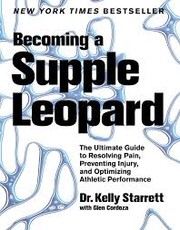
The definitive manual on mobility, joint mechanics, and soft-tissue maintenance; after years of swinging and pressing, this book gives the learner the self-care toolkit to resolve restrictions, prevent overuse injuries, and keep training into old age.
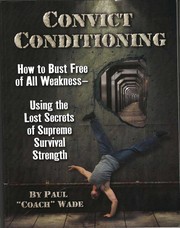
Introduces bodyweight progressions that complement kettlebell work, filling gaps in pulling and structural strength that kettlebells alone don't fully address — ensuring a balanced, resilient body capable of training for the long haul.
Discussion
Keep reading
Paths that share books, cover the same subject, or open a related topic.