Parkour is one of the few pursuits where reading order maps almost exactly onto injury risk. The discipline looks like jumping between rooftops, but the actual training is landings, precisions, quadrupedal movement, and a lot of repetition at knee height. People who skip the base and go straight to the vault they saw online collect ankle and wrist injuries, then quit and call it a young person's sport.
The second thing the books get right that videos get wrong is that parkour is mostly a strength and joint-durability problem. Your tendons adapt far more slowly than your confidence does. So the sequence below is technique, then conditioning, then mobility, then the endurance and mindset material that determines whether you are still training in five years.
Start with the technique itself
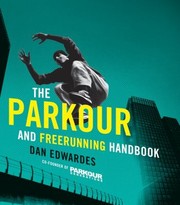
Begin with The Parkour And Freerunning Handbook by Dan Edwardes, written by a coach rather than a stunt performer. It covers the vocabulary and progressions in the order a coached beginner would actually meet them: landings and rolls before vaults, precisions at ground level before anything with a gap, and the reasoning behind conditioning drills that look pointless until your first bad landing. Treat it as a syllabus, not a book to finish in a weekend.
Build the body the discipline needs
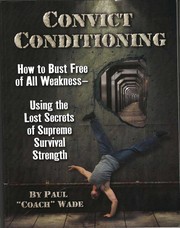
Then Convict conditioning, Paul Wade's bodyweight progression system. The framing is theatrical, but the underlying method — ten-step progressions for pushups, squats, pullups, bridges, and handstands, with strict rep standards before advancing — suits parkour well because it develops joint-tolerant strength without a gym. Use the progressions, ignore the mythology around the book's origin story.
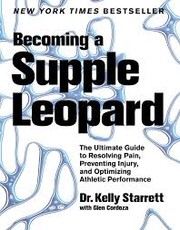
Pair it with Becoming a Supple Leopard by Kelly Starrett, which is the mobility and position reference. Its value here is diagnostic: it gives you a way to look at your own squat, landing, and overhead position and identify which restriction is causing the compensation. It is a lookup manual, so read the framework chapters and then consult the rest as problems appear.
Endurance, and the part between your ears
Born to Run by Christopher McDougall belongs on the list for the running mechanics and the argument about how modern footwear changes how we land. Parkour is full of running approaches and repeated impact, and the book's central claims about barefoot and minimalist running are genuinely contested in the sports science literature, so read it as a provocation and a great story rather than as settled evidence.
The last three are about persistence. Meditations is Marcus Aurelius writing notes to himself about discomfort, fear, and doing the next thing anyway, which is closer to the daily experience of training than most modern sports psychology. The Obstacle is the Way by Ryan Holiday is the modern repackaging of the same tradition, applied to setbacks, and is the easier entry point if the classical text feels dry. If you want one, take Meditations and skip the retelling.
Finish with Flow, the psychology of optimal experience, Csikszentmihalyi's account of what happens when challenge and skill are matched. Parkour practitioners describe this state constantly without a name for it. The practical payoff is that the theory tells you how to structure a session: pick a challenge just past your current ceiling, not five levels beyond it, which is also the safest way to progress.
A plain caution, since this is a physical discipline with real injury risk: books cannot watch your landing. Find a coached class or an experienced local group for the first months, progress at height only after the movement is boring at ground level, and treat any persistent joint pain as a reason to see a clinician rather than to train through it.
Browse related movement and sport paths if you want a second discipline to cross-train with. Follow the full reading path to take these in sequence.
Follow the full ordered path here: Parkour Books Worth Reading, in the Right Order.