Overcoming depression: an ordered reading list to feel better
This curriculum moves from understanding and accepting depression, to actively retraining thought patterns with CBT, to building lasting behavioral habits and self-compassion. Each stage deepens the reader's toolkit — starting with accessible, validating reads and ending with the most rigorous evidence-based workbooks and practices. All books complement, not replace, professional mental-health care.
Understanding Depression
BeginnerRecognize what depression is, how it works in the mind and body, and feel less alone — building the emotional safety and vocabulary needed for active work ahead.
▸ Study plan for this stage
Pace: 8–10 weeks, ~40–50 pages/day. Start with "The Noonday Demon" (approximately 4–5 weeks, 560 pages), then move to "Feeling Good" (approximately 4–5 weeks, 540 pages). This pace allows time for reflection and note-taking without overwhelming the beginner reader.
- Depression as a multifaceted condition affecting mood, cognition, body, and behavior—not a personal failure or weakness
- The biological, psychological, and social dimensions of depression (Solomon's integrated framework)
- How depression distorts thinking patterns and creates a self-reinforcing cycle of negative thoughts (Burns' cognitive model)
- The distinction between sadness and clinical depression, and why naming the experience reduces isolation
- Cognitive distortions (all-or-nothing thinking, catastrophizing, overgeneralization) as learned patterns that can be identified and challenged
- The role of automatic negative thoughts (ANTs) in maintaining depression and how to recognize them
- Depression as treatable and manageable—building hope through understanding its mechanisms
- The importance of self-compassion and acceptance as the foundation for change
- What are the main biological, psychological, and social factors that contribute to depression according to Solomon, and how do they interact?
- How does depression differ from ordinary sadness, and why is this distinction important for someone experiencing it?
- What are cognitive distortions, and can you identify at least three types described by Burns with examples from your own thinking?
- How do automatic negative thoughts (ANTs) create and maintain depressive cycles, and what is the first step in breaking this cycle?
- Why does understanding depression's mechanisms help reduce shame and isolation, and what did you learn about yourself from these books?
- What is the relationship between thoughts, feelings, and behavior in depression, and how does this understanding prepare you for active intervention?
- While reading 'The Noonday Demon,' keep a 'Depression Vocabulary Journal'—write down terms, metaphors, and descriptions that resonate with your experience. Reflect on how naming these experiences affects your sense of isolation.
- Create a personal 'Depression Profile' documenting your own biological, psychological, and social factors (sleep, stress, relationships, medical history, etc.) based on Solomon's framework. This becomes a reference for understanding your unique depression.
- Practice the 'Thought Record' exercise from 'Feeling Good': for one week, write down three automatic negative thoughts daily, identify the cognitive distortion type, and write a rational response. Track how this awareness shifts your mood.
- Draw or diagram the 'depressive cycle' as described in both books—showing how thoughts, feelings, and behaviors reinforce each other. Use this visual to identify where you might intervene.
- Write a letter to yourself from the perspective of someone who has read both books and understands depression. What would they want you to know about your experience? Read it aloud.
- Identify one cognitive distortion you use most frequently (from Burns' list). For three days, tally how often it appears in your thinking. Notice patterns without judgment.
Next up: This stage equips you with the language, compassion, and conceptual framework to understand depression as a treatable condition rather than a character flaw, preparing you to move into the next stage where you'll learn specific, actionable techniques to challenge depressive thoughts and rebuild behavioral patterns.

A deeply humane, award-winning exploration of depression from personal, cultural, and scientific angles — it validates the experience and builds a rich vocabulary before any therapeutic technique is introduced.

The most widely read introduction to CBT for depression; its clear explanation of cognitive distortions gives beginners an immediate, accessible framework for understanding how thoughts drive mood.
Core CBT Skills
BeginnerLearn and practice the foundational Cognitive Behavioral Therapy techniques — identifying distorted thoughts, challenging them, and beginning to shift mood through structured exercises.
▸ Study plan for this stage
Pace: 6–8 weeks, ~25–30 pages/day (alternating between books; start with "Mind over Mood" for 3–4 weeks, then "The Feeling Good Handbook" for 3–4 weeks)
- The cognitive triangle: how thoughts, feelings, and behaviors are interconnected and influence each other
- Identifying automatic thoughts and cognitive distortions (all-or-nothing thinking, catastrophizing, overgeneralization, etc.)
- The thought record technique: systematically capturing situations, thoughts, emotions, and evidence to challenge distorted thinking
- Behavioral activation: using structured activity scheduling and behavioral experiments to improve mood and test negative predictions
- The relationship between core beliefs and surface thoughts, and how changing thoughts can shift emotional responses
- Mood monitoring and measurement: tracking emotions daily to establish baselines and recognize patterns
- Decatastrophizing and realistic thinking: replacing extreme predictions with balanced, evidence-based alternatives
- How are thoughts, feelings, and behaviors connected in the cognitive triangle, and how can changing one element shift the others?
- What are five common cognitive distortions, and how would you identify them in your own automatic thoughts?
- How do you complete a thought record, and what is the purpose of examining evidence for and against a distorted thought?
- What is behavioral activation, and how does scheduling pleasant or meaningful activities help improve depression?
- How do core beliefs differ from automatic thoughts, and why is understanding this distinction important for lasting change?
- How would you design a behavioral experiment to test a negative prediction you're making about a situation?
- Daily thought record practice: For 4 weeks, complete at least 3–5 thought records per week, capturing a situation, automatic thought, emotion, evidence for/against the thought, and an alternative thought
- Cognitive distortion identification: Review your own thoughts over 1 week and categorize them by distortion type (all-or-nothing, catastrophizing, etc.); write out corrected versions
- Mood monitoring: Track your mood on a 0–10 scale each morning and evening for 6 weeks; note what activities, thoughts, or events correlate with mood shifts
- Behavioral activation scheduling: Plan and complete 2–3 small, meaningful activities per week for 4 weeks (e.g., a 15-minute walk, calling a friend, a hobby); record mood before and after
- Behavioral experiment: Design one experiment to test a negative prediction (e.g., 'If I go to the coffee shop, everyone will judge me'); predict the outcome, carry it out, and record what actually happened
- Decatastrophizing worksheet: Take one catastrophic thought and work through it using the downward arrow technique or worst-case scenario analysis; develop a realistic, balanced response
Next up: Mastering these foundational CBT skills—thought records, behavioral activation, and distortion identification—prepares you to tackle deeper work in the next stage, such as addressing core beliefs, managing relapse, and applying CBT to specific life domains (relationships, work, self-esteem).
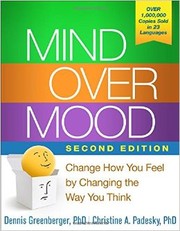
The gold-standard CBT workbook used in clinics worldwide; it translates the concepts from Feeling Good into hands-on thought records and worksheets, making the skills concrete and personal.
Burns expands his CBT toolkit with communication techniques and deeper exercises, bridging individual thought-work with relationships — a natural next step after the core workbook.
Behavioral Activation & Lifestyle
IntermediateUnderstand why action — not just thinking differently — is essential to recovery, and build concrete behavioral strategies around activity, sleep, and routine.
▸ Study plan for this stage
Pace: 4–5 weeks, ~40–50 pages/day (approximately 280–350 pages total across both books)
- Behavioral activation as a direct intervention: taking action to change mood and break the avoidance cycle, rather than waiting to feel motivated
- The relationship between avoidance and depression: how withdrawal from activities maintains and deepens depressive symptoms
- Activity scheduling and values-based goal setting: identifying meaningful activities aligned with personal values and building structured routines
- The role of sleep, exercise, and social connection in neurobiological recovery from depression
- Environmental design and habit formation: how to structure daily life to support consistent behavioral change
- Overcoming inertia and initial resistance: practical strategies for starting and sustaining action when motivation is low
- Monitoring mood and activity patterns: tracking the relationship between behavior and emotional state to reinforce progress
- What is behavioral activation, and why is it more effective than waiting to feel motivated before taking action?
- How does the avoidance cycle maintain depression, and what role does behavioral activation play in breaking it?
- What are the key lifestyle factors (sleep, exercise, social engagement) that Ilardi identifies as essential to depression recovery, and what is the neurobiological basis for each?
- How do you create an activity schedule that is both realistic and aligned with your personal values?
- What practical strategies can you use to overcome inertia and resistance when beginning behavioral activation?
- How can you monitor and track the relationship between your activities and mood changes to sustain motivation?
- Complete a behavioral activation assessment: map your current activities, avoidance patterns, and mood correlations over one week using a simple log
- Identify 5–10 values-aligned activities (from Martell's framework) and schedule them into your weekly calendar with specific times and realistic duration
- Design a sleep hygiene protocol based on Ilardi's recommendations and track sleep quality and daytime mood for two weeks
- Establish a baseline exercise routine (even 10–15 minutes daily) and record mood and energy levels before and after activity for 3 weeks
- Create a daily routine template that includes anchor activities (meals, sleep, exercise) and plan how to add one new meaningful activity each week
- Practice the 'behavioral experiment' approach: predict your mood before an activity, complete the activity, and record actual mood afterward to test avoidance assumptions
Next up: This stage equips you with concrete, evidence-based tools to act your way out of depression; the next stage will deepen your ability to sustain these changes by addressing the cognitive patterns and emotional regulation skills that support long-term resilience.

The definitive evidence-based guide to behavioral activation, the approach that shows how avoidance maintains depression and how re-engaging with life breaks the cycle — a critical complement to pure cognitive work.

Translates research on lifestyle factors (exercise, sleep, social connection, omega-3s) into a practical program, reinforcing that behavioral change is biological medicine — accessible and motivating at this stage.
Self-Compassion & Acceptance
IntermediateMove beyond fighting thoughts to accepting difficult emotions with kindness, reducing self-criticism — one of depression's most damaging engines — through mindfulness and self-compassion practices.
▸ Study plan for this stage
Pace: 6–8 weeks, ~25–30 pages/day (approximately 3–4 days per book with reflection time)
- Self-compassion as a three-part practice: self-kindness, common humanity, and mindfulness—distinct from self-esteem or self-indulgence
- How self-criticism and rumination fuel depressive cycles, and why fighting or suppressing difficult thoughts intensifies them
- Mindfulness as non-judgmental awareness: observing thoughts and emotions without trying to change or eliminate them
- The role of acceptance and defusion in breaking the grip of negative self-talk and depressive narratives
- Decentering from thoughts: recognizing that thoughts are mental events, not facts or commands that require action
- Cultivating a compassionate inner voice as an antidote to the inner critic that depression amplifies
- The neurobiology of self-compassion: how kindness activates the parasympathetic nervous system and counteracts threat-based thinking
- Informal and formal mindfulness practices as tools for building awareness and creating space between stimulus and response
- What are the three core components of self-compassion according to Kristin Neff, and how do they differ from self-esteem?
- How does self-criticism contribute to depression, and why does fighting or suppressing negative thoughts often backfire?
- What is the difference between mindfulness and rumination, and how can mindfulness help interrupt depressive thought patterns?
- How can you practice decentering from thoughts, and what does it mean to observe a thought without believing it or acting on it?
- What is the relationship between self-compassion and acceptance in reducing suffering, according to these texts?
- How can you develop a compassionate inner voice, and what specific phrases or practices help activate it in moments of difficulty?
- Daily 10-minute body scan meditation (from The Mindful Way Through Depression) to build foundational mindfulness and awareness of physical sensations tied to emotion
- Self-compassion break practice: When facing a difficult moment, pause and say to yourself: 'This is a moment of suffering. Suffering is part of life. May I be kind to myself.' Repeat 3–5 times daily for two weeks
- Thought labeling exercise: For one week, notice and label depressive or self-critical thoughts as 'thinking' (e.g., 'I'm having the thought that I'm worthless' rather than 'I am worthless')
- Write a letter to yourself from the perspective of a compassionate friend or mentor, addressing a current struggle or self-criticism, then read it aloud when shame or self-doubt arises
- Loving-kindness meditation (5–10 minutes, 3–4 times per week): Begin with yourself, then extend to loved ones, neutral people, and eventually difficult people, using phrases like 'May I be safe, may I be healthy, may I be at ease'
- Journaling reflection: After each book section, write about a moment when you noticed self-criticism or rumination, then rewrite the internal dialogue using the three components of self-compassion (self-kindness, common humanity, mindfulness)
Next up: This stage establishes the internal foundation—accepting and befriending your emotional landscape—which enables the next stage to focus on behavioral activation and meaning-making, since you can now act without being paralyzed by self-judgment or the need to eliminate difficult feelings first.

The foundational text on self-compassion by its leading researcher; it directly targets the harsh self-judgment that sustains depression and provides guided practices to cultivate a kinder inner voice.

Developed by the creators of Mindfulness-Based Cognitive Therapy (MBCT), this book teaches readers to observe depressive thoughts without being swept away — a powerful capstone that integrates CBT and mindfulness.
Long-Term Resilience & Relapse Prevention
ExpertConsolidate all prior learning into a sustainable, personalized plan for preventing relapse, building psychological flexibility, and living a values-driven life beyond depression.
▸ Study plan for this stage
Pace: 4–5 weeks, ~25–30 pages/day, with 2–3 days per week dedicated to workbook exercises and reflection
- Acceptance and Commitment Therapy (ACT) as a framework for living with depression rather than fighting it
- Cognitive defusion: detaching from depressive thoughts rather than believing or arguing with them
- Values clarification: identifying what truly matters and using values as a compass for behavior
- Psychological flexibility: the ability to be present with difficult emotions while moving toward meaningful action
- Relapse prevention through early warning signs, coping strategies, and self-compassion
- Mindfulness as a tool for observing thoughts and emotions without judgment
- Building a personalized, sustainable plan that integrates all prior learning into daily life
- What is the difference between acceptance and resignation, and how does ACT use acceptance to reduce depression?
- How can you use cognitive defusion techniques when depressive thoughts arise, and what is the goal of defusion?
- What are your core values, and how can you align your daily actions with them even when depression is present?
- What are your personal early warning signs of relapse, and what coping strategies will you use when you notice them?
- How can mindfulness and psychological flexibility help you maintain long-term resilience without relying solely on mood improvement?
- What does a sustainable, personalized relapse prevention plan look like for you, and how will you maintain it over time?
- Complete the values clarification exercises in the workbook; write out your top 5–7 core values and identify one concrete action per value you can take this week
- Practice cognitive defusion daily: when a depressive thought arises, use the 'thanking your mind' or 'naming the thought' technique and observe it without acting on it
- Develop a personal relapse prevention plan: list your early warning signs, identify 3–5 coping strategies for each, and share it with a trusted person
- Create a 'values-based action plan' for the next 3 months: identify 2–3 meaningful goals aligned with your values and break them into weekly steps
- Practice the mindfulness exercises in the workbook (body scans, mindful breathing, observing thoughts) for 10–15 minutes daily, 5 days per week
- Conduct a 'depression inventory': track your mood, thoughts, and behaviors for one week to identify patterns and establish a baseline for monitoring progress
Next up: This stage consolidates all prior learning into a concrete, personalized framework for long-term resilience, positioning you to move forward with confidence in maintaining mental health and continuing to deepen your practice through ongoing self-directed work or professional support.

Grounded in Acceptance and Commitment Therapy (ACT), this workbook shifts the goal from eliminating depression to building a meaningful life alongside difficult feelings — the most advanced and integrative step in the curriculum.
Discussion
Keep reading
Paths that share books, cover the same subject, or open a related topic.