Perfectionism: an ordered reading list to ease the pressure
This curriculum moves from gentle self-awareness to rigorous science to practical mastery, giving the reader both the emotional permission and the cognitive tools to loosen perfectionism's grip. Each stage builds on the last: you first name what perfectionism is and costs you, then learn the research behind self-compassion and "good enough," and finally develop concrete strategies to sustain high standards without self-punishment.
Foundations: Naming the Problem
BeginnerRecognize perfectionism as a learned pattern — not a virtue — and understand the emotional and psychological toll it takes on daily life.
▸ Study plan for this stage
Pace: 4–5 weeks, ~25–30 pages/day. Week 1–2: "The Gifts of Imperfection" (240 pages); Week 3–4: "Self-Compassion" (304 pages); Week 5: Review and integration exercises.
- Perfectionism as a learned behavior rooted in shame and fear of judgment, not an inherent virtue or strength
- The distinction between healthy striving and destructive perfectionism: perfectionism is about external approval, striving is about personal values
- Wholehearted living requires embracing vulnerability and imperfection as essential to connection and authenticity
- The three components of self-compassion (self-kindness, common humanity, mindfulness) as an antidote to perfectionist self-criticism
- How perfectionism disconnects us from our emotions and creates chronic stress, anxiety, and shame cycles
- The role of shame resilience in recognizing perfectionism's emotional toll and breaking its grip
- Self-compassion as a more sustainable and psychologically healthy alternative to perfectionist self-judgment
- What is the core difference between perfectionism and healthy striving, and why does Brown argue perfectionism is a form of self-protection rather than self-improvement?
- How does perfectionism relate to shame, and what role does vulnerability play in breaking the perfectionism cycle?
- What are the three elements of self-compassion according to Neff, and how does each one directly counter perfectionist thinking?
- What emotional and physical costs does perfectionism extract in daily life, and how does chronic perfectionism affect relationships and well-being?
- How can you recognize when you are operating from a place of perfectionism versus healthy striving in a specific area of your life?
- What does it mean to practice self-compassion when you fail or fall short, and why is this more effective than perfectionist self-criticism?
- Shame resilience mapping: Identify one recent moment when perfectionism triggered shame. Map the trigger, the shame story you told yourself, and how you could have responded with self-compassion instead.
- Vulnerability practice: Choose one small area where you typically hide imperfection (work, parenting, appearance, a hobby). Share a genuine struggle or mistake with one trusted person and notice what happens.
- Perfectionism audit: Track your perfectionist thoughts for 3 days. Write down when perfectionism shows up, what you're afraid will happen if you're not perfect, and what you're actually risking.
- Self-compassion phrase creation: Develop 2–3 personalized self-compassion phrases you can use when perfectionism strikes (e.g., 'This is hard right now, and I'm not alone in struggling').
- Values vs. perfectionism reflection: List 3 areas where perfectionism dominates your life. For each, identify your core value underneath and write how you'd approach that area if you were guided by the value instead.
- Common humanity exercise: When perfectionism tells you that you're the only one who struggles, write down 3 people you respect who have publicly shared their imperfections or failures. Reflect on how their humanity made them more relatable, not less.
Next up: This stage establishes that perfectionism is a learned, shame-based pattern with real psychological costs—preparing you to explore the deeper roots of perfectionism (family origins, cultural conditioning, trauma) and develop concrete strategies to dismantle it in the next stage.
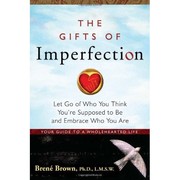
The ideal entry point: Brown uses accessible storytelling and research to reframe imperfection as a source of courage and connection, directly dismantling the perfectionist myth that worth is earned through flawlessness.

Read second to build the foundational vocabulary of self-compassion (mindfulness, common humanity, self-kindness) — the core antidote to perfectionism — before the curriculum goes deeper into science or practice.
The Science: Why Perfectionism Backfires
BeginnerUnderstand the psychological and neurological research showing how perfectionism fuels anxiety, procrastination, and burnout — and why high standards and self-criticism are not the same thing.
▸ Study plan for this stage
Pace: 4–5 weeks, ~25–30 pages/day. Start with "Mindset" (2 weeks, ~20 pages/day), then "The Perfectionism Workbook" (2–3 weeks, ~30 pages/day with active workbook exercises).
- Fixed vs. growth mindset: how believing abilities are unchangeable fuels perfectionism and fear of failure
- The neuroscience of self-criticism: how harsh internal dialogue activates threat responses and impairs performance
- Perfectionism as anxiety amplifier: the feedback loop between perfectionist standards, rumination, and worry
- The procrastination connection: how perfectionism's all-or-nothing thinking delays action and increases stress
- Burnout mechanics: why relentless self-imposed standards deplete emotional and physical resources
- Standards vs. self-criticism distinction: high goals can coexist with self-compassion and flexibility
- Neuroplasticity and change: evidence that perfectionist patterns are learned and can be rewired through deliberate practice
- What is the difference between a fixed mindset and a growth mindset, and how does each relate to perfectionism?
- How does self-criticism activate the brain's threat system, and what are the performance consequences?
- Explain the cycle connecting perfectionism, anxiety, procrastination, and burnout using research from the books.
- What is the key distinction between holding high standards and engaging in destructive self-criticism?
- How does neuroplasticity support the idea that perfectionist patterns can be changed?
- What role does all-or-nothing thinking play in procrastination, according to the workbook?
- Mindset audit: Identify 3 areas of your life where you operate from a fixed mindset. Write evidence of this, then reframe each as a growth mindset challenge.
- Self-criticism log: For one week, record moments when you criticize yourself harshly. Note the trigger, the criticism, and how your body felt. Identify patterns.
- Threat vs. challenge reframe: Take a perfectionist fear (e.g., 'I must get this perfect or I'm a failure'). Rewrite it as a growth-oriented challenge using Dweck's framework.
- Procrastination trace-back: Identify a current procrastination pattern. Using the workbook's model, trace it back through perfectionism → anxiety → avoidance. Write the chain.
- Standards vs. self-criticism worksheet: List 3 high standards you hold. For each, write a self-compassionate version that maintains the standard without harsh self-judgment.
- Neuroplasticity practice: Choose one perfectionist thought pattern. Design a 2-week micro-practice to catch and reframe it daily. Track changes in anxiety or avoidance.
Next up: This stage equips you with the *why* behind perfectionism—the psychological and neurological evidence that it's a learned pattern, not a character flaw—preparing you to move into practical strategies for rewiring these patterns and building resilience in the next stage.
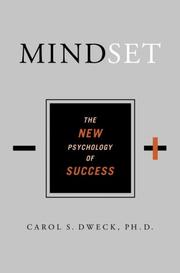
Dweck's landmark research on fixed vs. growth mindsets explains exactly why perfectionists fear failure and avoid challenge — providing a scientific framework that recontextualizes everything from the previous stage.

A CBT-grounded, evidence-based workbook that translates the science of perfectionism into clear psychoeducation and self-assessments, bridging theory and practice at an accessible level.
Going Deeper: Anxiety, Control, and the Inner Critic
IntermediateExplore the deeper emotional roots of perfectionism — including anxiety, shame, and the inner critic — and begin developing a more compassionate internal dialogue.
▸ Study plan for this stage
Pace: 6–8 weeks, ~25–30 pages/day (alternating between both books; ~3 weeks per book with overlap for integration)
- Vulnerability as strength: how perfectionism masks fear of shame and disconnection (Daring Greatly)
- The shame-perfectionism cycle: perfectionism as a protective strategy against unworthiness (Daring Greatly)
- Cognitive distortions: identifying automatic negative thoughts and thought patterns that fuel anxiety (Feeling Good)
- The inner critic and self-talk: recognizing and challenging the voice of self-judgment (both books)
- Cognitive therapy techniques: thought records, decatastrophizing, and behavioral activation to interrupt perfectionist spirals (Feeling Good)
- Wholehearted living: embracing imperfection and vulnerability as pathways to authenticity and resilience (Daring Greatly)
- The role of shame in perfectionism: understanding how shame drives the need for control and flawlessness (Daring Greatly)
- Emotional reasoning and depression: how perfectionist thinking patterns maintain anxiety and low mood (Feeling Good)
- How does Brené Brown define the relationship between perfectionism and shame? What role does vulnerability play in breaking this cycle?
- What are cognitive distortions, and how do they relate to perfectionism and anxiety? Give examples from Feeling Good.
- Describe your own inner critic voice. What messages does it send, and what fears or shame does it protect you from?
- What is the thought record technique from Feeling Good, and how can you use it to challenge perfectionist thoughts?
- How does Brown's concept of 'wholehearted living' differ from perfectionism? What does it require emotionally?
- What is emotional reasoning, and why is it particularly dangerous for perfectionists according to Burns?
- Shame inventory: Write down 3–5 moments when you felt shame or unworthiness. What perfectionist behaviors did you adopt afterward? How does this connect to Brown's shame-perfectionism cycle?
- Thought record practice: Over 1 week, use Burns' thought record technique to log 5 perfectionist thoughts. For each, identify the cognitive distortion, challenge the thought, and write a more balanced response.
- Inner critic dialogue: Write a conversation between your inner critic and a compassionate inner voice. Let both speak. What does each say? What does the critic fear?
- Vulnerability experiment: Choose one small area where you can show imperfection (e.g., admit a mistake at work, share a struggle with a friend). Document what happened and what you feared vs. what actually occurred.
- Behavioral activation: Identify one activity you've avoided due to perfectionism (e.g., starting a project, exercising, creating). Do it imperfectly this week. Reflect on the anxiety before, during, and after.
- Rewrite a shame story: Take one story from your life where shame drove perfectionism. Rewrite it through the lens of Brown's wholehearted living—what would self-compassion and vulnerability look like in that moment?
Next up: This stage equips you with emotional awareness and cognitive tools to recognize and interrupt perfectionist patterns; the next stage will build on this foundation by teaching you practical strategies for setting boundaries, managing expectations, and sustaining change in real-world contexts.
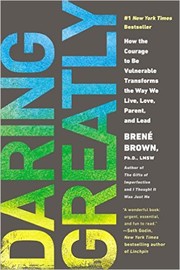
Brown goes deeper than The Gifts of Imperfection, examining how shame and vulnerability drive perfectionist armor — essential reading now that the reader has the foundational language to engage with these ideas.

The classic CBT text for identifying and restructuring the cognitive distortions (all-or-nothing thinking, catastrophizing) that are the engine of perfectionist anxiety — practical and deeply evidence-based.
Mastery: Practical Tools for a Kinder, High-Performing Life
IntermediateSynthesize everything into a sustainable personal philosophy — maintaining genuine excellence and ambition while releasing the self-punishment, rigidity, and anxiety that perfectionism brings.
▸ Study plan for this stage
Pace: 8–10 weeks, ~40–50 pages/day (Courage to Be Disliked Duology: 4–5 weeks, ~30 pages/day; Atomic Habits: 3–4 weeks, ~50 pages/day)
- Adlerian psychology's separation of tasks: distinguishing what you can control (your effort, values, response) from what you cannot (others' approval, outcomes), reducing anxiety-driven perfectionism
- The courage to be disliked: releasing the need for universal approval and building self-worth on your own terms rather than external validation
- Systems over goals: designing sustainable habits and environments that support excellence without perfectionist rigidity or self-punishment
- The power of small, compound improvements: how 1% daily progress through tiny habits creates lasting change without the burnout of all-or-nothing thinking
- Identity-based habits: anchoring excellence to who you are (your values and character) rather than what you achieve, creating intrinsic motivation
- Acceptance and commitment: choosing your values deliberately, then building habits aligned with them while accepting imperfection in execution
- Breaking the perfectionism cycle: using habit stacking and environmental design to reduce friction for good behaviors and increase friction for self-critical patterns
- How does the Adlerian concept of task separation help you distinguish between perfectionism (self-punishment for uncontrollable outcomes) and genuine excellence (effort on what you control)?
- What does it mean to have 'the courage to be disliked,' and how does releasing the need for approval change your relationship with ambition and high performance?
- How can you design a personal philosophy that pursues excellence through systems and small habits rather than rigid goals and all-or-nothing thinking?
- What is the difference between outcome-based goals and identity-based habits, and why does the latter create more sustainable, less perfectionist motivation?
- How can you use habit stacking and environmental design to support your values without creating new sources of anxiety or self-judgment?
- What would a 'kinder, high-performing life' look like for you personally—one that maintains ambition while releasing self-punishment and rigidity?
- Task Separation Audit: List 10 areas where you currently feel perfectionist pressure. For each, identify what is within your control (effort, values, preparation) and what isn't (others' opinions, specific outcomes). Write how you would reframe each to focus only on controllable tasks.
- Approval Inventory: Identify 3–5 people or groups whose approval you unconsciously pursue. For each, ask: 'What would I do differently if I didn't need their approval?' Then choose one small action this week that demonstrates the courage to be disliked.
- Current Habits Audit: Map your existing daily habits (good and bad) using the habit loop (cue, routine, reward). Identify which ones are driven by perfectionism or fear of disapproval, and which serve your actual values.
- Identity Statement Crafting: Write 3–5 identity statements (e.g., 'I am someone who values growth over perfection,' 'I am resilient in the face of failure'). For each, design one small daily habit that reinforces it, using habit stacking to make it automatic.
- 1% Improvement Challenge: Choose one area of your life (work, health, relationships, creativity). Design a tiny habit (2–5 minutes) that moves you 1% closer to your ideal. Track it daily for 2 weeks and reflect on how small, consistent progress feels different from perfectionist striving.
- Environmental Design Experiment: Identify one perfectionist trigger in your environment (e.g., a to-do list that's too ambitious, social media that invites comparison). Redesign that space or system to reduce friction for aligned behavior and increase friction for self-criticism.
Next up: This stage equips you with both the philosophical foundation (Adlerian courage and task separation) and the practical toolkit (habit systems and identity-based change) to live a high-performing life without perfectionism, preparing you to deepen your understanding of how to sustain this philosophy through relational and emotional resilience in the next stage.

This Socratic dialogue on Adlerian psychology challenges the perfectionist's need for external approval and introduces the liberating idea of separating your tasks from others' judgments — a powerful philosophical capstone.

Read last as a practical integration: Clear's system of small, identity-based habits gives the recovering perfectionist a concrete, forgiving framework for pursuing high standards through consistent process rather than flawless outcomes.
Discussion
Keep reading
Paths that share books, cover the same subject, or open a related topic.