OCD explained: books to understand and manage intrusive thoughts
This curriculum moves from compassionate self-understanding to clinical science to active skill-building, giving the reader a complete, evidence-based picture of OCD. Each stage builds the vocabulary and conceptual foundation needed for the next, so that by the end the reader can engage meaningfully with their treatment team and understand the "why" behind every therapeutic tool. All books support — but do not replace — professional mental-health care.
Foundations: What OCD Actually Is
BeginnerUnderstand the core cycle of obsessions and compulsions, dispel common myths, and recognize OCD's many forms — building a shared language for everything that follows.
▸ Study plan for this stage
Pace: 4–5 weeks, ~25–30 pages/day. Start with "Overcoming Unwanted Intrusive Thoughts" (approximately 2–3 weeks), then move to "The Imp of the Mind" (approximately 2 weeks). Build in 2–3 days for review and integration between books.
- The OCD cycle: how intrusive thoughts trigger anxiety, which drives compulsions, which temporarily relieve anxiety but strengthen the cycle
- Intrusive thoughts are normal and universal—what makes them 'OCD' is the response to them, not their content or frequency
- Common myths about OCD: that it's about being neat/organized, that sufferers want their obsessions, that willpower alone can stop them
- OCD's many forms: contamination, harm, sexual, religious, relationship, perfectionism, and less-recognized variants
- The role of avoidance and reassurance-seeking as hidden compulsions that maintain OCD
- How misunderstanding OCD leads to ineffective coping strategies that paradoxically strengthen the disorder
- The distinction between OCD and normal worry, perfectionism, or personality traits
- Why 'just stop thinking about it' fails: the ironic effect of thought suppression and the impossibility of controlling thoughts through willpower alone
- Describe the OCD cycle in your own words, using a specific example from the books. Where does anxiety fit in, and why do compulsions feel necessary?
- Why are intrusive thoughts considered normal, and what separates someone with OCD from someone without it?
- Name at least five different forms of OCD and give a brief example of how obsessions and compulsions manifest in each.
- What are three common myths about OCD, and why is each one misleading or harmful?
- Explain why avoidance and reassurance-seeking are compulsions, even though they don't look like traditional compulsions (like hand-washing).
- Why does trying to suppress or control intrusive thoughts often backfire, according to the books?
- Map your own intrusive thoughts (or a hypothetical case): Identify the obsession, the anxiety it triggers, the compulsions performed, and the temporary relief—then predict how the cycle repeats.
- Myth-busting worksheet: For each common OCD myth, write down why it's false and what the truth is, using specific examples from the books.
- OCD form identification: Read case studies or descriptions in the books and classify each as a specific OCD form (contamination, harm, sexual, religious, etc.). Explain the obsession and compulsion in each.
- Thought suppression experiment: Try to suppress a neutral thought for 5 minutes and journal what happens. Reflect on how this relates to the books' explanation of why willpower fails against intrusive thoughts.
- Compulsion audit: List behaviors or mental acts you (or a case study) engage in that feel like 'safety' or 'reassurance.' Determine whether each is a compulsion by asking: 'Does this reduce anxiety temporarily? Does it strengthen the OCD cycle?'
- Create a glossary: Define key terms from both books (obsession, compulsion, intrusive thought, avoidance, reassurance-seeking, anxiety, the OCD cycle) in your own words with examples.
Next up: With a clear understanding of what OCD actually is—its cycle, its myths, and its many forms—you're ready to move into the next stage, which will likely focus on evidence-based treatment approaches (such as ERP and CBT) and how to interrupt the cycle through behavioral and cognitive techniques.

A gentle, jargon-free first read that normalizes intrusive thoughts and explains why fighting them backfires — essential groundwork before tackling treatment concepts.
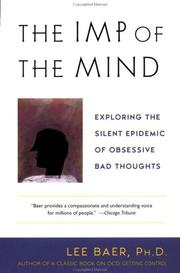
Written by a leading OCD researcher, this book maps the full landscape of disturbing intrusive thoughts and shows how OCD hijacks normal mental processes, deepening the conceptual picture built in the first book.
The Mechanics: How OCD Traps the Brain
BeginnerUnderstand the neurological and psychological feedback loops that maintain OCD, and begin to see compulsions — including mental rituals — as the engine that keeps the disorder running.
▸ Study plan for this stage
Pace: 4–5 weeks, ~25–30 pages/day. Start with "Brain Lock" (3 weeks), then move to "Tormenting Thoughts and Secret Rituals" (1–2 weeks). This allows time to absorb Schwartz's neuroscience framework before deepening with Osborn's clinical examples.
- The four-step model (Relabel, Reattribute, Refocus, Revalue) as a framework for understanding how OCD loops work and how to interrupt them
- The role of the orbitofrontal cortex and anterior cingulate cortex in generating false alarms and intrusive thoughts
- How compulsions and mental rituals reinforce OCD by providing temporary relief, which paradoxically strengthens the cycle
- The distinction between the 'true self' and the OCD-driven self, and why recognizing this gap is essential to breaking free
- How both overt compulsions (checking, washing) and covert rituals (mental counting, reassurance-seeking) maintain the disorder equally
- The concept of 'deactivating' the OCD circuit through mindful awareness rather than fighting or accommodating intrusive thoughts
- Why understanding the mechanical nature of OCD—that it's a brain malfunction, not a character flaw—is the foundation for recovery
- Explain the four-step model from 'Brain Lock' and describe how each step interrupts the OCD cycle
- What brain structures are involved in OCD, and what happens in these structures when an intrusive thought triggers the OCD loop?
- Why does performing a compulsion or mental ritual actually strengthen OCD over time, even though it provides temporary relief?
- What is the difference between a true obsession and a normal worry, according to these books? How does understanding this distinction help someone with OCD?
- Describe at least three examples of hidden or mental compulsions from 'Tormenting Thoughts and Secret Rituals' and explain why they are as problematic as visible compulsions
- How does recognizing OCD as a 'brain lock' or mechanical malfunction change the way someone might approach their own intrusive thoughts?
- Map your own OCD loop: Identify a specific intrusive thought, the anxiety it triggers, and the compulsion (overt or mental) you perform. Write out how this cycle reinforces itself, using the language from 'Brain Lock'
- Practice the four-step model on a minor intrusive thought: Relabel it as an OCD thought, Reattribute it to a brain malfunction, Refocus on a neutral activity for 15 minutes, and Revalue it as unimportant. Journal what you notice
- Identify three mental rituals you perform that you hadn't previously recognized as compulsions (e.g., reassurance-seeking, mental reviewing, rumination). For each, explain how it provides false relief and strengthens the OCD circuit
- Create a visual diagram of the OCD feedback loop using Schwartz's neuroscience framework: show the intrusive thought → anxiety spike → compulsion → temporary relief → stronger circuit. Add your own example in the center
- Read a clinical case from 'Tormenting Thoughts and Secret Rituals' and annotate it, identifying: the obsession, the anxiety, the compulsion, and the false relief. Then explain what would happen if the person resisted the compulsion
- Write a letter to yourself from the perspective of your 'true self' (not the OCD self), acknowledging that intrusive thoughts are a brain malfunction, not a reflection of who you are
Next up: By understanding OCD as a mechanical brain trap driven by compulsions, you are now ready to learn concrete, evidence-based techniques to resist compulsions and rewire the circuit—setting the stage for exposure and response prevention (ERP) and cognitive strategies in the next stage.
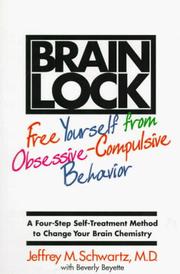
A classic that explains the brain circuitry underlying OCD in plain language, introducing the four-step self-directed approach and giving readers a mental model of why urges feel so compelling.

Combines clinical science with vivid case histories to show how OCD manifests across subtypes, reinforcing the mechanics learned in Brain Lock with real-world context.
The Gold-Standard Treatment: ERP Explained
IntermediateUnderstand Exposure and Response Prevention (ERP) — why it works, what it feels like, and how to engage with it productively alongside a therapist.
▸ Study plan for this stage
Pace: 4–5 weeks, ~25–30 pages/day. Start with Grayson's "Freedom From Obsessive-Compulsive Disorder" (weeks 1–2, ~150 pages), then move to Hyman's "The OCD Workbook" (weeks 3–5, ~200+ pages). Allow extra time for workbook exercises.
- The habituation mechanism: how repeated, prolonged exposure to feared stimuli naturally reduces anxiety over time without performing compulsions
- Response prevention as the critical active ingredient: why resisting compulsions (not just exposure) is essential to breaking the OCD cycle
- The difference between avoidance-based coping and exposure-based recovery: why avoidance strengthens OCD while ERP weakens it
- Anxiety tolerance and discomfort as skills: learning to sit with distress rather than eliminate it, and why this mindset shift is foundational
- Hierarchy construction and graded exposure: how to systematically target fears from least to most challenging with a therapist
- The role of the therapeutic relationship in ERP: why a skilled therapist's guidance, validation, and presence is crucial during exposures
- Cognitive fusion vs. defusion: recognizing that intrusive thoughts don't require action, and that ERP works without needing to 'believe' thoughts are harmless
- Relapse prevention and long-term maintenance: how to sustain gains and manage setbacks after initial ERP success
- What is habituation, and why does it occur when someone stays in contact with a feared stimulus without performing a compulsion?
- How does response prevention differ from simple exposure, and why is the combination of both essential to ERP's effectiveness?
- What is the relationship between avoidance and OCD maintenance, and how does ERP directly counter this cycle?
- How would you construct a fear hierarchy, and what role does a therapist play in guiding this process?
- What does it mean to tolerate discomfort in ERP, and how is this different from trying to eliminate anxiety before taking action?
- How can someone distinguish between an intrusive thought and a compulsion, and what is the goal of ERP regarding each?
- Map your own OCD cycle (trigger → thought/image → anxiety → compulsion → temporary relief → reinforcement) using examples from Grayson's framework; identify where ERP would intervene
- Create a personal fear hierarchy with 8–12 items ranging from SUDS 20 to SUDS 90, using Hyman's hierarchy-building guidelines and worksheets
- Practice a low-intensity exposure exercise (e.g., sitting with an intrusive thought for 10 minutes without reassurance-seeking or mental rituals) and journal the anxiety curve and habituation process
- Identify 3–5 of your own compulsions and write out the short-term relief vs. long-term cost of each, using Grayson's cost-benefit analysis approach
- Role-play or write out a dialogue between yourself and a therapist during an ERP session, using Hyman's examples of therapist language and validation techniques
- Complete Hyman's worksheets on cognitive fusion (e.g., 'Thoughts Are Not Facts' exercises) and practice defusion techniques when intrusive thoughts arise during daily life
Next up: This stage equips you with the theoretical foundation and practical toolkit for ERP, preparing you to move into the next stage—likely on implementing ERP in real-world contexts, managing setbacks, and integrating ERP with other therapeutic modalities (such as cognitive work or acceptance-based approaches).

One of the most thorough patient-facing guides to ERP, written by a clinician who specializes in OCD; it explains the rationale for exposures in depth and prepares the reader to be an active participant in therapy.
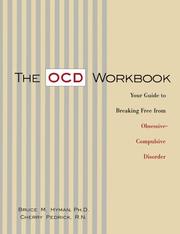
A structured, exercise-driven companion that translates ERP theory into concrete self-assessment tools and hierarchies — best used alongside professional guidance after understanding the theory.
Deeper Skills: ACT and the Relationship with Uncertainty
IntermediateLearn how Acceptance and Commitment Therapy (ACT) complements ERP by targeting the intolerance of uncertainty and psychological inflexibility that fuel OCD long-term.
▸ Study plan for this stage
Pace: 4–5 weeks, ~25–30 pages/day, with 2–3 days per week dedicated to mindfulness practice and reflection
- Psychological flexibility: the ability to be present with unwanted thoughts and feelings while pursuing valued actions, rather than struggling against them
- Defusion techniques: creating distance from obsessive thoughts by observing them as mental events rather than truths or commands
- Acceptance as an active stance: willingly experiencing discomfort (uncertainty, anxiety, intrusive thoughts) without avoidance or compulsions
- Values-based living: identifying what truly matters to you and using that as an anchor when OCD creates doubt and uncertainty
- Mindfulness as a foundational skill: non-judgmental awareness of the present moment, including uncomfortable sensations and thoughts, without trying to change them
- The role of uncertainty tolerance: recognizing that certainty-seeking and reassurance-seeking perpetuate OCD cycles, and building comfort with 'not knowing'
- Metacognitive awareness: observing your own thinking patterns and reactions to intrusive thoughts rather than being fused with them
- Integration of ACT with ERP: using acceptance and mindfulness to reduce the emotional struggle during and after exposure, making ERP more sustainable
- What is psychological flexibility, and how does it differ from trying to eliminate or control unwanted thoughts?
- How do defusion techniques help you relate differently to obsessive thoughts, and what are 3–4 specific defusion strategies from the workbooks?
- What is the difference between acceptance and resignation, and why is acceptance an active process in ACT?
- How does identifying your values help you tolerate uncertainty and resist compulsions?
- What role does mindfulness play in reducing the struggle with OCD, and how can you practice it in daily life?
- Why does certainty-seeking actually strengthen OCD, and how can you practice tolerating uncertainty instead?
- Daily mindfulness practice (10–15 minutes): use guided meditations from the workbooks or apps; focus on observing thoughts without judgment
- Thought defusion exercise: write down 3 current obsessive thoughts, then practice saying them in a silly voice, singing them, or repeating them until they lose emotional charge
- Values clarification worksheet: identify 3–5 core values (e.g., relationships, creativity, health) and write how OCD interferes with living them
- Uncertainty tolerance practice: deliberately sit with a small uncertainty for 5–10 minutes (e.g., not checking your phone, not seeking reassurance) and observe the anxiety without acting on it
- Mindful exposure: during a mild trigger or moment of doubt, pause and practice 2–3 minutes of grounded breathing while observing the thought/feeling as a passing mental event
- Weekly reflection journal: after each reading session, write one insight about how you fused with a thought this week and one way you could have responded with defusion or acceptance instead
Next up: This stage equips you with the psychological flexibility and mindfulness skills to tolerate uncertainty and reduce the emotional struggle of OCD, preparing you to apply these tools alongside more advanced exposure techniques or to deepen your understanding of how acceptance-based approaches prevent relapse long-term.

Bridges ERP and ACT/mindfulness in an accessible format, teaching the reader to observe thoughts without fusing with them — a skill that supercharges formal exposure work.

Extends mindfulness principles into daily life habits, consolidating everything learned so far into sustainable, long-term strategies for living well with OCD.
Advanced Understanding: Clinical and Research Perspectives
ExpertEngage with the clinical science and research base behind OCD treatment, enabling richer conversations with mental-health professionals and a nuanced understanding of ongoing debates in the field.
▸ Study plan for this stage
Pace: 4–5 weeks, ~40–50 pages/day, with 2–3 days per week for reflection and note-taking
- The neurobiology of OCD: how hyperactive error-detection systems and threat-sensitivity circuits drive obsessions and compulsions
- Wilson's acceptance-based approach: distinguishing between changing thoughts (ineffective) and changing your relationship to thoughts (effective)
- The role of uncertainty intolerance and how it perpetuates the OCD cycle
- Evidence-based treatment mechanisms: exposure and response prevention (ERP) versus cognitive interventions, and why ERP is the gold standard
- Rompella's clinical framework: diagnostic criteria, subtypes, and comorbidity patterns in real-world OCD presentations
- The neurotransmitter hypothesis (serotonin, glutamate) and why pharmacological interventions work—and their limitations
- How metacognitive processes (thinking about thoughts) can either help or harm OCD sufferers
- The research-to-practice gap: why treatments that work in RCTs sometimes fail in clinical settings
- What is the core mechanism Wilson identifies as driving the OCD cycle, and how does his acceptance-based approach differ from traditional cognitive restructuring?
- Explain the neurobiology of OCD: what brain systems are implicated, and how do they explain both obsessions and compulsions?
- How does uncertainty intolerance maintain OCD, and what role does it play in treatment resistance?
- What does the research evidence say about the relative effectiveness of ERP versus cognitive therapy, and why does this matter clinically?
- According to Rompella, what are the major diagnostic subtypes or presentations of OCD, and how do comorbidities complicate treatment planning?
- How do pharmacological treatments (SSRIs, augmentation strategies) work at the neurochemical level, and what are their realistic limitations?
- Create a detailed case formulation worksheet: take a real or hypothetical OCD presentation and map the obsessions, compulsions, and underlying uncertainty intolerance using Wilson's framework
- Diagram the OCD cycle: illustrate how threat-detection, intrusive thoughts, anxiety, and compulsions reinforce each other; annotate with relevant neurobiology from Rompella
- Comparative analysis: read a published ERP protocol and a cognitive therapy protocol for OCD; document the mechanisms each targets and predict which would be more effective for different presentations
- Neurotransmitter mapping exercise: for a given OCD subtype, explain how serotonin and glutamate dysregulation could contribute, and predict how SSRIs and augmentation strategies would address it
- Debate preparation: outline arguments for and against the 'serotonin hypothesis' of OCD using evidence from both books; practice articulating nuanced positions
- Clinical conversation simulation: write a dialogue between a patient and clinician where the clinician explains OCD neurobiology and treatment rationale in accessible terms, grounding it in Wilson and Rompella's concepts
Next up: This stage equips you with the scientific and clinical vocabulary to engage critically with treatment debates and research literature, preparing you to either specialize in OCD treatment delivery or to advocate effectively for evidence-based care in your own mental-health journey.

A sophisticated reframe of anxiety and OCD that draws on cutting-edge research to argue for moving toward fear rather than away from it — deepening the theoretical understanding of why ERP works at a motivational level.

Though aimed at teens, this book is recommended here as a clear synthesis of the full clinical picture — useful as a capstone review that consolidates all prior learning in plain, precise language before engaging more deeply with a treatment team.
Discussion
Keep reading
Paths that share books, cover the same subject, or open a related topic.