Octavia Butler Reading Order: Where to Start
This curriculum is a deep dive into Octavia Butler's major works, organized to follow the learner's preferred order: starting with the standalone masterpiece Kindred, moving through the Patternist series (read in internal chronological order), then the Xenogenesis/Lilith's Brood trilogy, and finally the Parable duology. Each stage builds thematic and stylistic familiarity with Butler's core obsessions — power, survival, transformation, and community — so that later, more complex works land with full force.
The Entry Point: Kindred
BeginnerExperience Butler's most accessible and emotionally immediate novel; establish her core themes of power, race, trauma, and survival that echo through all her later work.
▸ Study plan for this stage
Pace: 2–3 weeks; read roughly 40–50 pages per sitting, 4–5 sittings per week — Kindred's eight parts map naturally to weekly chunks (Parts 1–3 in Week 1, Parts 4–6 in Week 2, Parts 7–8 plus re-reading key scenes in Week 3)
- Time as trauma: Butler uses Dana's involuntary time travel not as fantasy escapism but as a visceral mechanism for forcing a modern Black woman to *embody* antebellum slavery rather than observe it from a safe historical distance.
- Power and complicity: The relationship between Dana and Rufus dramatizes how power corrupts gradually — Rufus is neither a cartoon villain nor innocent, and Dana's survival depends on managing him, implicating her in the very system she abhors.
- Race and the body: Kindred insists that race is not abstract ideology but something lived in and through the body — Dana's physical injuries (culminating in the loss of her arm) literalize the permanent damage slavery inflicts.
- The master-slave bond as a distorted intimacy: Butler examines how enslavement manufactured psychological dependency, affection, and loyalty alongside brutality, making resistance complicated and morally ambiguous.
- Gender and double jeopardy: Dana navigates both racial and gendered oppression; enslaved women face sexual violence as a specific instrument of control, and Butler refuses to let the reader look away from this.
- Historical memory and willful forgetting: The novel interrogates why Americans — Black and white — struggle to confront slavery honestly, using Dana's 20th-century husband Kevin as a lens on white liberal blind spots.
- Survival vs. resistance: Butler distinguishes between surviving (doing what is necessary to live) and resisting (actively opposing the system), and asks whether survival itself can be a form of resistance.
- Authorial craft — the neo-slave narrative: Kindred revitalized and redefined the slave narrative genre by fusing it with speculative fiction, establishing Butler's signature method of using genre conventions to explore social and political realities.
- How does Butler use the mechanics of time travel — specifically that Dana is pulled to Rufus whenever his life is in danger — to comment on the psychological and material bonds that tied enslaved people to their enslavers?
- Trace the arc of Dana's relationship with Rufus from childhood to his death. At what moments does Dana's power over him seem greatest, and what ultimately limits that power? What does this reveal about the nature of the master-slave dynamic?
- Kevin spends years in the antebellum South while Dana is back in 1976. How does his experience change him, and what does Butler suggest about the way proximity to a system of oppression can subtly reshape even well-meaning people?
- Dana loses her arm at the novel's end — an injury that cannot be healed or explained away. Why does Butler choose this as the novel's final image, and what does it argue about the lasting physical and psychological legacy of slavery?
- Several enslaved characters — Alice, Sarah, Nigel — make different choices about how to survive or resist. Compare two of them: what does Butler suggest about the range of responses available to people trapped in systems of total domination?
- Kindred is written in first-person, past tense, with Dana narrating from safety after the fact — yet the novel feels relentlessly immediate and dangerous. How does Butler's narrative craft create tension and intimacy, and why might she have chosen this particular point of view?
- **Part-by-part reaction journal:** After finishing each of Kindred's eight titled parts, write a half-page gut-reaction entry — no analysis required yet. At the end of the book, read all entries in sequence and write one page on how your emotional and intellectual responses shifted. This trains close attention to Butler's pacing and escalation.
- **Character power-mapping:** Draw a simple diagram placing all major characters (Dana, Rufus, Alice, Kevin, Tom Weylin, Sarah, Nigel) on a spectrum from 'most institutional power' to 'least.' Then draw arrows showing where characters exert informal or hidden power over each other. Annotate with specific scenes. This makes the novel's power dynamics visible and concrete.
- **Historical grounding exercise:** Choose one scene depicting a specific practice of slavery (a whipping, a sale, a pass system, sexual coercion). Spend 30 minutes reading a primary source account — a WPA slave narrative from the Library of Congress's free online archive — that describes something similar. Write a paragraph on what Butler fictionalizes, what she preserves, and why the comparison m
- **The 'what would I do?' stress-test:** Pick three moments where Dana makes a morally difficult survival decision. For each, write two short paragraphs: first, argue that her choice was justified; second, argue that it was a form of complicity. Avoid resolving the tension — the goal is to inhabit Butler's moral complexity, not escape it.
- **Close-reading the frame:** Re-read the novel's opening two pages and its final two pages back-to-back. Write a one-page analysis of how Butler uses the frame narrative (Dana in 1976, already injured) to shape everything the reader experiences in between. Consider: what does knowing the ending in advance do to the reading experience?
- **Letter across time:** Write a one-page letter from Dana to a contemporary friend explaining — without using the word 'slavery' — what she has learned about power, survival, and complicity. This forces you to translate Butler's themes into your own language and tests genuine comprehension over surface summary.
Next up: Kindred establishes Butler's thematic DNA — power, survival, bodily vulnerability, and moral ambiguity — in a single, self-contained story, giving the reader the emotional and conceptual vocabulary needed to follow Butler as she scales these same ideas into multi-generational, multi-species, and cosmological frameworks in her more complex later works.
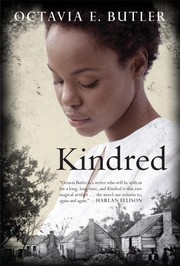
Butler's most widely read novel and the perfect entry point — a time-travel story grounded in the brutal reality of American slavery. It introduces her unflinching examination of power and complicity without the dense world-building of her series work.
The Patternist Series: Origins of Power
BeginnerTrace the millennia-spanning history of a hidden race of telepaths and the immortal being who shapes humanity, reading in internal chronological order to see Butler's universe unfold logically.
▸ Study plan for this stage
Pace: 10–12 weeks total, reading in internal chronological order: Wild Seed (~3 weeks, ~20–25 pages/day), Mind of My Mind (~2.5 weeks, ~20 pages/day), Clay's Ark (~2.5 weeks, ~18 pages/day), Patternmaster (~2 weeks, ~20 pages/day). Allow 2–3 buffer days between books for reflection and journaling.
- Doro's immortality and predatory symbiosis: how Doro survives by 'jumping' into new bodies and selectively breeding humans over millennia, establishing the series' central power dynamic
- Anyanwu/Emma as moral counterweight: her shapeshifting, healing, and fierce protectiveness of community contrast with Doro's instrumentalization of people, introducing Butler's recurring tension between coercion and consent
- Selective breeding as a form of power and violence: Butler uses Doro's centuries-long eugenics project to critique real-world histories of slavery, colonialism, and bodily autonomy
- The emergence of the Pattern: Mary's creation of a psychic web in Mind of My Mind marks the shift from isolated 'actives' to a collective consciousness, exploring how power scales from individual to network
- Clayarks and biological contamination: the alien microorganism in Clay's Ark introduces a new axis of transformation — involuntary, viral, non-human — complicating the series' earlier focus on hereditary psi powers
- The Patternist hierarchy and its costs: Patternmaster depicts a fully stratified society of Patternists, mutes, and Clayarks, showing the dystopian endpoint of Doro's breeding program and the Pattern's dominance
- Survival vs. community: across all four books Butler interrogates whether power structures that ensure group survival can ever avoid reproducing oppression
- Internal chronological reading as world-building strategy: reading Wild Seed → Patternmaster reveals how Butler seeds causes whose effects only become visible books later, rewarding attentive continuity tracking
- How does Doro's method of reproduction and survival in Wild Seed function as an allegory for the transatlantic slave trade, and what specific scenes or relationships support that reading?
- In Mind of My Mind, how does Mary's Pattern differ from Doro's breeding network in terms of consent, interdependence, and the distribution of power among its members?
- What does the Clayark disease in Clay's Ark represent thematically, and how does the Maslin family's struggle dramatize the conflict between individual will and biological compulsion?
- Tracing the arc from Wild Seed to Patternmaster, how has the relationship between 'ordinary' humans (mutes) and psi-gifted humans changed, and what does Butler seem to be saying about the long-term consequences of building society around hierarchy?
- How does Butler use Anyanwu's shapeshifting in Wild Seed and the Patternists' mental powers in Patternmaster to explore bodily autonomy — and who controls whose body in each book?
- By the end of Patternmaster, has Doro's original project 'succeeded'? What has been gained and what has been lost across the millennia depicted in the four books?
- Chronology map: After finishing each book, add a timeline entry noting the approximate era, key power players, and the dominant form of control (physical, psychic, biological). By Patternmaster you should have a single visual spanning thousands of years that makes cause-and-effect relationships visible.
- Character power-audit journal: For each book, write a one-page entry answering: Who has power? How did they get it? Who is harmed by it? Who resists? Track how your answers shift across all four books to see Butler's evolving argument.
- Close-reading annotation: Choose one scene per book in which a character's body is controlled, altered, or weaponized by another (e.g., Doro taking a body in Wild Seed, Mary linking an active in Mind of My Mind, a Clayark transformation in Clay's Ark, a Patternist battle in Patternmaster). Annotate for language, imagery, and what Butler seems to endorse or condemn.
- Comparative essay (500–700 words): Compare Doro's breeding network in Wild Seed with Mary's Pattern in Mind of My Mind. Argue which system Butler presents as more ethical, using textual evidence from both novels.
- 'What if' counterfactual discussion or written reflection: Pick one pivotal decision — Anyanwu choosing to stay with Doro, Mary defeating Doro, the Ark crew landing on Earth — and write 300 words on how the entire series timeline might have changed. This sharpens your grasp of Butler's plot architecture.
- Vocabulary and concept glossary: Build a running glossary of Butler's invented or specialized terms (active, mute, Patternist, Clayark, transition, the Pattern). For each term, note the book where it first appears and how its meaning or connotation evolves by the series' end.
Next up: Completing the Patternist Series establishes Butler's foundational themes — coercive power, bodily transformation, and the ethics of survival — which her Kindred and Parable series then transplant into contemporary and near-future Earth settings, demanding the reader apply the same critical lens to race, capitalism, and climate collapse.

The chronological beginning of the Patternist saga, introducing the immortal Doro and the shapeshifter Anyanwu — Butler's most richly drawn power dynamic. Start here to understand the 'seed' from which the entire series grows.
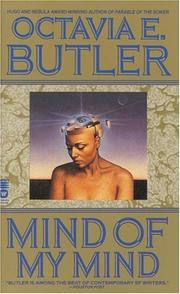
Picks up Doro's story centuries later as the first true Patternist emerges; the themes of psychic dominance and rebellion deepen and the stakes become civilizational.
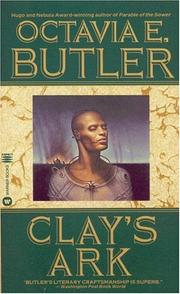
A tense, near-future thriller about an alien microorganism reshaping humanity — bridges the Patternist past to its dystopian future and introduces the biological transformation theme central to Xenogenesis.
The chronological end of the Patternist saga, set in a far-future world of warring telepaths. Reading it last gives the series a satisfying, if bleak, conclusion and rewards everything learned in the earlier books.
Xenogenesis / Lilith's Brood: Transformation and Survival
IntermediateEngage with Butler's most ambitious and philosophically rich trilogy, exploring what it means to be human when faced with an alien species that offers survival at the cost of identity and autonomy.
▸ Study plan for this stage
Pace: 8–10 weeks total; roughly 2–3 weeks per book at ~20–25 pages/day. Suggested breakdown: Dawn (weeks 1–3), Adulthood Rites (weeks 4–6), Imago (weeks 7–9), with week 10 reserved for reflection, re-reading key passages, and completing synthesis exercises.
- The Oankali 'trade' as a central metaphor — survival exchanged for genetic and cultural transformation, raising questions about consent, colonialism, and the nature of exchange
- Hierarchies of difference: how Butler uses the Oankali's three sexes (male, female, ooloi) to interrogate human binaries of gender, race, and species
- The 'Human Contradiction' — the Oankali belief that humans are fatally defined by a combination of intelligence and hierarchical behavior, and how each book tests or complicates this thesis
- Lilith Iyapo as a liminal figure — neither fully human nor Oankali-aligned, exploring how Butler uses her to dramatize the costs of survival and the ambiguity of collaboration vs. complicity
- Akin's perspective in Adulthood Rites as the first human-born construct, shifting the trilogy's lens to questions of belonging, advocacy, and what it means to fight for a people not entirely your own
- Jodahs in Imago as the first ooloi construct, whose body literally reshapes itself and others, pushing Butler's themes of transformation to their biological and philosophical extreme
- Voluntary vs. coerced change — the trilogy consistently asks whether transformation chosen under duress can ever be truly free, and what resistance looks like when refusal means extinction
- Posthumanism and the critique of 'humanity' — Butler uses the trilogy to question whether 'being human' is a biological fact, a set of values, or a story people tell themselves
- By the end of Dawn, Lilith has been given information, some choices, and a degree of power — yet many readers and characters see her as a traitor. Using specific scenes (e.g., her Awakening of the humans, her relationship with Nikanj), argue whether Lilith is a collaborator, a survivor, or something more complicated.
- The Oankali diagnose humanity with a 'fatal contradiction.' How does each of the three books either support or challenge this diagnosis through its central protagonist — Lilith, Akin, and Jodahs respectively?
- Akin in Adulthood Rites fights for the right of resisters to have a Mars colony — a purely human future. What does this advocacy cost him personally, and what does Butler suggest about the ethics of fighting for a group's self-determination even when you believe their choices are self-destructive?
- Jodahs's body in Imago is dangerously unstable without human partners, yet it also becomes a source of healing and connection. How does Butler use Jodahs's physical transformation to reframe the trilogy's earlier anxieties about loss of identity?
- How does Butler's treatment of consent evolve across the three books? Consider the Oankali's chemical/sensory manipulation, the construct children's hybrid natures, and the resisters' choice to remain unchanged.
- The trilogy ends not with a restored humanity but with a transformed one departing into space. Is Butler's conclusion optimistic, pessimistic, or deliberately unresolved — and what textual evidence from all three books supports your reading?
- **Character Journal (all three books):** Keep a running journal from the perspective of one human resister who appears across multiple books. After each reading session, write a short entry capturing how their view of the Oankali and the constructs shifts — or hardens. This forces close attention to Butler's secondary characters and how she distributes sympathy.
- **The Trade Ledger (Dawn):** After finishing Dawn, draw up a two-column 'ledger' of what humanity gives up and what it receives in the Oankali trade. Then write a one-paragraph verdict: is this a fair exchange? Revisit and revise this ledger after each subsequent book as new information changes the calculus.
- **Close Reading — The Contradiction Speech:** Find the passage(s) in Dawn where the Oankali explain the 'human contradiction.' Annotate it line by line: What assumptions does the argument rest on? Where is it persuasive? Where does it feel like rationalization or self-serving logic? Compare your annotations to how Akin and Jodahs each implicitly respond to this claim in their own books.
- **Comparative Protagonist Essay (Adulthood Rites + Imago):** Write a 500–700 word comparative essay on Akin and Jodahs as protagonists. Focus on one key difference in what each character's perspective allows Butler to explore that the other's could not. Use at least two specific scenes from each book.
- **Resistance Map:** Create a visual or written map of the different forms of resistance that appear across all three books — from outright violence against the Oankali, to the Mars colony movement, to quieter acts of cultural preservation. For each, note whether Butler frames it as futile, dignified, tragic, or something else, and what that framing implies about her politics.
- **Synthesis Discussion or Essay — 'What Is Human?':** After completing all three books, write or discuss: Butler never gives a clean answer to what makes someone human. Using one moment from each of the three books, construct your own answer to the question as Butler's trilogy has shaped it — and honestly assess whether the trilogy has changed how you think about identity, autonomy, or survival.
Next up: Completing Lilith's Brood equips the reader with Butler's most fully developed philosophical framework — transformation, consent, and the instability of identity — which provides essential grounding for engaging with her other standalone works and shorter fiction, where these same tensions appear in compressed, varied, and often even more personal forms.
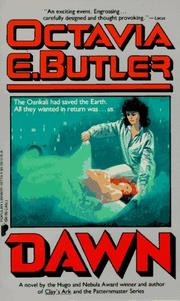
Opens the Xenogenesis trilogy with Lilith Iyapo awakening on an alien ship after humanity's near-extinction — a masterclass in slow-burn dread, consent, and compromise. The world-building here is essential before the later volumes.

Shifts perspective to Lilith's construct son Akin, deepening the trilogy's exploration of hybrid identity and what humanity is worth preserving. The moral complexity escalates significantly.

The trilogy's stunning conclusion, narrated by Jodahs — the first human-Oankali ooloi — pushing Butler's themes of transformation and otherness to their furthest, most radical point.
The Parable Series: Building Community in Collapse
IntermediateRead Butler's most prophetic and politically urgent work — a near-future America in collapse, and one young woman's vision for a new way of living together.
▸ Study plan for this stage
Pace: 6–8 weeks total: Weeks 1–3 for Parable of the Sower (~25–30 pages/day), Weeks 4–7 for Parable of the Talents (~25–30 pages/day), with Week 8 reserved for reflection, re-reading key passages, and completing exercises. Both novels reward slow, annotated reading — resist the urge to rush.
- Earthseed: Butler's invented philosophy/religion centered on the principle 'God is Change' — understand it as both a survival toolkit and a utopian vision
- Lauren Olamina as a community architect: how a teenage Black woman becomes a prophet, leader, and founder in the face of systemic collapse
- Hyperempathy Syndrome: Lauren's 'sharing' of others' pain as a literal embodiment of radical empathy, and its double-edged role in survival and leadership
- Near-future collapse as social critique: Butler's extrapolation of 1990s American inequalities (income gap, climate crisis, corporate power, drug epidemics) into a recognizable dystopia
- The tension between survival and ethics: how the Acorn community in Parable of the Talents negotiates violence, compromise, and moral integrity under existential threat
- Christian America and authoritarian theocracy: the rise of President Jarret in Parable of the Talents as a critique of religious nationalism and fascism
- Intergenerational conflict and legacy: the fractured relationship between Lauren and her daughter Asha Vere, and what it reveals about the costs of visionary leadership
- The journal as resistance: Lauren's act of writing as world-building, testimony, and the preservation of marginalized knowledge
- How does Butler use Lauren's Hyperempathy Syndrome to complicate the idea of empathy as a straightforward moral virtue — and what does it suggest about the cost of feeling others' pain in a violent world?
- Trace the development of Earthseed from Lauren's private notebook in Parable of the Sower to an organized community and eventually a space-faring movement in Parable of the Talents. What does this arc say about how ideas survive — and get distorted — over time?
- In Parable of the Talents, the Christian America movement dismantles Acorn and re-educates its members. How does Butler frame the relationship between religious extremism, state power, and the erasure of alternative communities?
- Parable of the Talents is narrated partly through Asha Vere's hostile framing of her mother's journals. How does this structural choice force the reader to question Lauren's heroism and the sacrifices demanded by her vision?
- Both novels are set in a collapsing America that closely mirrors real social trends. Which specific elements of Butler's imagined near-future feel most prophetic today, and how does she use speculative fiction to make political critique more visceral than journalism could?
- What does the founding and destruction of Acorn teach about the fragility of intentional communities, and what conditions does Butler suggest are necessary — and perhaps never sufficient — for collective survival?
- Keep a parallel journal: As you read, write brief entries from Lauren's perspective in your own voice — responding to events in the novel as if you are recording them for Earthseed. This mimics Lauren's act of writing as resistance and deepens your engagement with her interiority.
- Map the collapse: Create a timeline or annotated map tracing the deterioration of society from Robledo to the road to Acorn across both novels. Mark the specific policy failures, climate events, and social breakdowns Butler names — then research their real-world 1990s–2000s counterparts to feel the weight of her extrapolation.
- Write your own Earthseed verse: Butler embeds short Earthseed aphorisms as chapter epigraphs throughout both books. Draft 3–5 of your own verses in Butler's style, beginning with 'God is Change' as your premise. This forces you to internalize the philosophy's internal logic.
- Debate the daughter: After finishing Parable of the Talents, write a 1–2 page dialogue between Lauren and Asha Vere in which they confront each other directly about the costs of Lauren's mission. Use evidence from the text to give each character a fair, grounded argument.
- Identify the Jarret parallels: Compile a list of at least 8–10 specific details about Andrew Steele Jarret and the Christian America movement from Parable of the Talents, then research real historical or contemporary political figures and movements they echo. Write a short reflection on what Butler's fictional distance allows her to say that direct political commentary might not.
- Reread the opening and closing pages of both novels back-to-back: Note how each book begins and ends — what has Lauren gained, lost, and left unresolved? Write a paragraph on what Butler refuses to resolve, and why that refusal might itself be a political statement.
Next up: Mastering the Parable series — Butler's most explicitly political and community-focused work — equips the reader to engage with her earlier and more genre-rooted fiction, where the same themes of power, embodiment, and survival are explored through the lenses of slavery, biology, and alien contact rather than near-future realism.
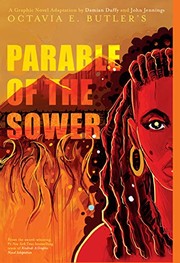
Introduces Lauren Olamina and her philosophy of Earthseed in a frighteningly plausible collapsed California. By this point in the curriculum, Butler's themes of survival and community leadership will resonate with full depth.
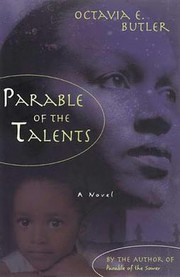
The sequel and conclusion to the Parable series, chronicling Lauren's community facing a theocratic authoritarian movement. It is Butler's most overtly political novel and rewards readers who have followed her entire thematic arc.
Discussion
Keep reading
Paths that share books, cover the same subject, or open a related topic.