Department Q Reading Order and Guide
Jussi Adler-Olsen's Department Q novels follow a Copenhagen cold-case unit staffed by a burnt-out detective, a Syrian immigrant with an unexplained past, and a chaotic secretary, and they must be read in publication order for one specific reason: the cases close but the backstories do not. Each book opens a little more of Assad's history and of the shooting that put Carl Mørck in the basement, and those threads run all the way to the final volume. Confusingly, the British and American editions use different titles for the first four books, so this path uses the US titles and names the UK equivalents where they differ.
Start Here: The First Two Cases
BeginnerMeet the unit, learn the series' structure — a present-day investigation cut against a victim's ongoing captivity — and decide whether the tone is for you.
▸ Study plan for this stage
Pace: 2–3 weeks. The Keeper of Lost Causes is 396 pages and The Absent One 432 — these are the two shortest books in the series and the only ones that read like standard Nordic crime novels. A week each at 60 pages a sitting. If the alternating-captivity structure of the first book does not grip you, stop
- The English editions are titled differently on either side of the Atlantic: The Keeper of Lost Causes was published in Britain as Mercy, and The Absent One as Disgrace. Check the cover before buying, or you will buy the same book twice
- The series structure, established in book one and never abandoned: a present-day cold-case investigation cut against chapters following a victim who is still alive and still captive
- That device is what makes the books tense rather than puzzling — you know something the detectives do not, and the clock is the victim's
- The unit is three people: Carl Mørck, sidelined to a basement after a shooting that killed one colleague and paralysed another; Assad, hired as a cleaner and unaccountably good at everything; and Rose, the chaotic assistant who arrives shortly after
- The cases close but the backstories do not — Assad's history and the nail-gun shooting are opened a little in each book and not settled for nine more
- Department Q exists as political cover: it is funded to look like the police care about cold cases, and Carl's budget is being quietly spent elsewhere. That running joke is also the series' view of institutions
- Book one involves prolonged captivity and book two a violent gang of privileged alumni; the series is consistently dark and does not soften
- What does the parallel captivity narrative do to the reading experience that a conventional whodunnit structure could not?
- Carl is obstructive, lazy and rude for most of book one. Why does the series need him to be, and when does that start to change?
- What are you told about Assad in these two books, and what have you merely assumed? Write both lists down now.
- The Absent One's suspects are protected by class rather than by evidence. How does Adler-Olsen make that protection concrete?
- Having read two, is the humour in the basement scenes relief or dissonance against the subject matter?
- Start an Assad file: every fact stated about his past, with the book and roughly where. The series expects you to have been keeping it, and Victim 2117 pays it off directly.
- Note the exact date of the nail-gun shooting and who was involved. It is referenced in every book and finally resolved in the last.
- Check which edition titles you own before continuing — the first four are the affected ones.
- Decide after The Absent One whether the tone suits you. The next stage is 1,773 pages and the darkest material in the run.
Next up: The unit is established and its jokes are running; the core sequence is where the formula clicks and the series produces its best book.
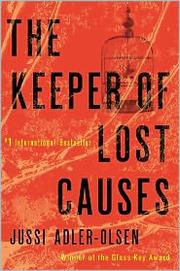
Published in Britain as Mercy. A missing politician, presumed dead for five years, and the basement office invented to keep Carl Mørck out of the way. The only possible starting point: it sets up the unit, the shooting, and Assad's arrival.

Published in Britain as Disgrace. A double murder pinned on the wrong man, and a group of boarding-school alumni who became untouchable. Read second because it is where the running joke about Assad's competence starts to look like a warning.
The Core Sequence
BeginnerSettle into the series at its most consistent, and start tracking the personal threads the cases are hiding.
▸ Study plan for this stage
Pace: 6–7 weeks. A Conspiracy of Faith is 643 pages, The Purity of Vengeance 500 and The Marco Effect 630 — the books have roughly doubled in length. Read A Conspiracy of Faith without interruption if you can; its dual clock is the tensest thing in the series. Then take a break before The Purity of Vengea
- A Conspiracy of Faith is where the series peaks — a message in a bottle written in blood by an abducted child, and a killer who hunts inside closed religious communities that will not report anything to the police
- Its plot engine is the closed community: victims whose families choose not to involve the state, which is why the case is cold at all
- The Purity of Vengeance is built on real Danish history — the Sprogø institution and the forced sterilisation of women judged morally deficient — and it is the darkest book in the run
- It is also the book that reaches furthest into Carl's own case, which is why its placement matters
- The Marco Effect deliberately breaks the formula: a boy on the run from the clan that raised him to beg and steal, told as a straightforward chase rather than a cold case
- That change of pace is structural, not accidental — it sits after two very heavy books and before the arc that takes the series somewhere else
- Across these three the balance shifts: the cases stay strong, but the amount of page time given to the basement, Rose's instability and Assad's evasions grows steadily
- Why does A Conspiracy of Faith work better than the first two books — is it the case, the structure, or the fact that you now know the unit?
- What does the religious-community setting let Adler-Olsen say about why some crimes are never reported?
- The Sprogø material is historical fact used as thriller fuel. Does The Purity of Vengeance handle it responsibly, and where would you argue it does not?
- The Marco Effect drops the cold-case format entirely. Does it still feel like a Department Q novel, and what is left when the format goes?
- Which threads about Rose and Assad have visibly advanced across these three books, and which have only been teased?
- Read the first chapter of A Conspiracy of Faith twice — once before the book and once after. It is the series' best-constructed opening and reads completely differently in hindsight.
- Look up the Sprogø institution briefly after finishing The Purity of Vengeance. Knowing which parts are documented changes how the novel lands.
- Add to the Assad file. This stage adds several small inconsistencies that are meant to be noticed.
- If you are stopping short of the full ten books, this is the natural exit: A Conspiracy of Faith is the high point and the first four cases stand alone.
Next up: The cases have been the point so far; from here the running mystery about who Assad is stops being background and becomes the plot.

Published in Britain as Redemption. A message in a bottle written in blood, and a killer working inside closed religious communities. Widely regarded as the best in the series and the point at which the formula fully clicks.

Published in Britain as Guilt. Denmark's forced-sterilisation programme on the island of Sprogø, and a woman who has been settling accounts for decades. The darkest of the early books and the one that most connects to Carl's own case.

A boy on the run from the clan that raised him to steal. The most conventional thriller of the run, and a deliberate change of pace after two very heavy books.
The Assad Arc
IntermediateFollow the sequence where the series' long-running mystery — who Assad actually is — stops being a joke and becomes the plot.
▸ Study plan for this stage
Pace: 6–7 weeks. The Hanging Girl is 596 pages, The Scarred Woman 480 and Victim 2117 536. Read them in this order with no substitutions — Victim 2117 detonates material planted in the two before it, and reading it early spoils both. The Scarred Woman is the fastest of the three; The Hanging Girl is the s
- The Hanging Girl is a hit-and-run on Bornholm and a sun-worshipping cult, and its real function is to plant the Assad material the next two books detonate
- The Scarred Woman finally gives Rose her own book: her breakdown, her father, and why she has behaved as she has since her first appearance. Later volumes assume you have read it
- It also braids the police case with the lives of three women on benefits, which is the series at its most socially argumentative
- Victim 2117 is the turning point — a photograph of a drowned refugee on a Mediterranean beach, and Assad's history finally laid out
- The reveal recontextualises every joke made about Assad since book one, which is precisely why the series spent nine years setting it up
- It is also the book where the series leaves Denmark, and the geopolitics is handled more bluntly than the domestic material
- By this point the cases have become the frame and the unit's own histories the substance — a reader who came for procedural cold cases will feel the shift
- What is planted in The Hanging Girl that Victim 2117 pays off, and would you have noticed it without being told to look?
- Does The Scarred Woman make Rose's earlier behaviour retroactively coherent, or does it retrofit an explanation?
- How does Victim 2117 change your reading of the running joke about Assad's competence?
- The refugee material is real and current. Does the thriller machinery do it justice, or does it use it?
- After nine years of hints, was the Assad reveal worth the wait — and what would have been lost by giving it earlier?
- Before Victim 2117, reread your Assad file. The book is written for readers who have one.
- Note every instance in The Hanging Girl where Assad deflects a direct question. There are more than you remember.
- After The Scarred Woman, write a short biography of Rose using only what the ten books have stated. It is the fullest character sketch the series allows.
- Track how much of Victim 2117 is set outside Denmark, and ask what the series gains and loses by leaving home.
Next up: Every long-running thread is now open at once, which is exactly the position the final two books need you in.

A hit-and-run on Bornholm and a sun-worshipping cult. Read in place because it plants the material about Assad's past that the next three books detonate.

An unsolved park killing braided with the story of three women on benefits. Notable for finally giving Rose, the department's third member, her own book — which the following volumes assume you have read.
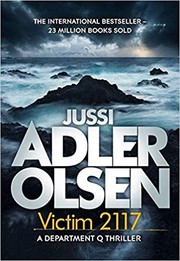
A photograph of a drowned refugee, and Assad's history laid out at last. The series' turning point; reading it before The Hanging Girl and The Scarred Woman would spoil both.
The Endgame
IntermediateClose out the series, where the shooting that opened book one is finally accounted for.
▸ Study plan for this stage
Pace: 5–6 weeks. The Shadow Murders is 742 pages — the longest in the series — and Locked In is 512. The Shadow Murders is slow for its first third and then accelerates hard; do not abandon it early. Read Locked In immediately afterwards, since it opens on the situation The Shadow Murders leaves behind.
- The Shadow Murders is built on a pattern: deaths recorded every other year on the same date, dismissed individually as accidents, only visible when laid side by side
- It is the book where the case starts closing in on Carl himself, which the series has been preparing since the nail-gun shooting in book one
- Locked In is the final Department Q novel, with Carl in custody and the unit working to clear him — the inversion the whole series was built toward
- Every thread the previous nine books left open is closed here: the shooting, the department's real purpose, Assad, Rose, and Carl's own culpability
- This is the payoff for reading in order, and it is also the strongest possible argument for having done so — almost nothing in Locked In is legible cold
- The books are at their longest and least tightly plotted here; the pleasure is resolution rather than construction, and it is fair to say the series peaked earlier
- Ten books, roughly 5,500 pages: a reader who stopped after Victim 2117 got the best of the series, and a reader who finishes gets the ending it earned
- The Shadow Murders' pattern is invisible until someone lines the cases up. What is the series arguing about how police work actually fails?
- How does Locked In use Carl's absence from the investigation, and does the unit function without him?
- Is the resolution of the nail-gun shooting satisfying after ten books, or was the mystery better than any answer could be?
- Which of the three — Carl, Assad, Rose — did the series ultimately belong to, and when did that become clear?
- Where does the quality peak for you, and would you tell a friend to read all ten or to stop somewhere?
- Before Locked In, reread the opening pages of The Keeper of Lost Causes describing the shooting. The last book answers them directly.
- Write out the full chronology of the shooting as the series has revealed it, book by book. The staged disclosure is the series' longest structural device.
- List the questions you still had going into Locked In and check them off as it answers them. Note which it does not.
- Write a one-paragraph verdict on where a new reader should stop. You are now one of very few people qualified to give it.
Next up: The series is complete and every thread is closed — from here the only reading is Adler-Olsen's non-Department Q novels, which share the tone but none of the continuity.

A pattern of deaths recorded every other year on the same date, and a case that starts closing in on Carl himself. Only works if you have followed the nail-gun shooting since the first volume.

The final Department Q novel, with Carl in custody and the unit working to clear him. Read absolutely last: it is the payoff for every thread the previous nine books left open.
Discussion
Keep reading
Paths that share books, cover the same subject, or open a related topic.