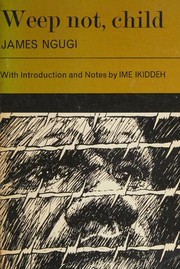
Start with Weep not, child. It is short, it is his first published novel, and it puts you inside the Mau Mau emergency through a boy who wants an education while his family is being pulled apart by it. Nothing later is harder to follow if you have read it, and much later work is harder if you have not.
The obvious alternative is Decolonising the Mind, which is the book most people have heard of. Do not begin there. It is an argument about the language his fiction is written in, and the argument only carries weight once you have read the fiction on both sides of the break it describes.
The early novels
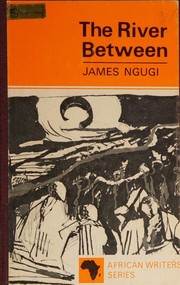
Weep not, child, then The river between, then A grain of wheat. A small order question exists here: The river between was written first but published second, and some readers prefer to take it first for that reason. Publication order is the better choice — Weep not, child is the more welcoming book, and The river between, with its schism between Christian converts and traditionalists over female circumcision, is more demanding than its length suggests.
A grain of wheat is the early masterpiece and the one to read if you read only one. Set in the four days before Kenyan independence, it moves between several villagers whose accounts of who betrayed whom during the emergency do not agree. It is where he stops writing a single protagonist and starts writing a community.
The turn
Petals of blood is the last novel he wrote in English and the most ambitious of the early books: four suspects held after a murder, a village destroyed by a new road and new money, and a structure that moves through time without warning. It is long and genuinely difficult, and it is normal to need a second run at the first hundred pages.
After it he was detained without trial for a year, following a Gikuyu-language play staged with villagers. Devil on the Cross was written during that detention, on prison toilet paper, and was the first of his novels written in Gikuyu rather than English. It is a satirical allegory — a competition to crown the greatest thief — and it reads nothing like A grain of wheat.
Decolonising the Mind, and the argument against it
Now read Decolonising the Mind. Its position is that a writer who works in the coloniser's language accepts the coloniser's framing, that African literature in English is finally a branch of English literature, and that the only way out is to write in an African language and be translated outward.
The serious counter-position, argued most famously by Chinua Achebe, is that English in Africa is no longer only the coloniser's possession: that it has been remade by its users, can be bent to carry an African sensibility, and is the practical instrument by which writers reach readers across dozens of mutually unintelligible languages and are read at all outside their own region. Both cases are held by writers who lived the situation, and this guide does not pretend to settle it. Read the book, then read one of the replies, and notice that Ngugi kept translating his own work into English — a fact both sides claim.
Later fiction and the memoirs
Matigari is short, fable-like, and follows a man who comes down from the mountains looking for truth and justice. Wizard of the Crow is the enormous late satire — a fictional dictatorship, a tower to heaven, queues that last years. It is over seven hundred pages and much funnier than anything else here.
The memoirs are best read last and strictly in order: Dreams in a Time of War (childhood), In the house of the interpreter (secondary school during the emergency), Birth of a dream weaver (university in Uganda, and the writing of the first novels). They send you back to the fiction with the biography attached.
A reader interested in what it means to change languages by choice will find a strange mirror in Samuel Beckett, who moved from English to French for entirely different reasons.
Where to stop
Two books, if that is all: A grain of wheat and Decolonising the Mind. The novel and the argument.
Follow the full ordered path here: Ngugi wa Thiong'o Reading Order: Where to Start.