Best Books on Neuroplasticity and the Changing Brain
This curriculum takes you from the vivid, story-driven world of popular neuroscience all the way to rigorous scientific critique and primary-level thinking about how the brain really changes. Each stage builds on the last: you first absorb the core concepts and vocabulary through compelling narratives, then examine the cellular and systems-level mechanisms, then stress-test the popular claims against the actual evidence — emerging with both genuine enthusiasm for the field and healthy scientific skepticism.
Foundations: The Brain That Changes
BeginnerGrasp the core idea that the brain is not fixed — synapses, circuits, and even cortical maps can reorganize throughout life — and build the vocabulary (synapse, cortex, plasticity, myelin) needed for everything that follows.
▸ Study plan for this stage
Pace: 6–7 weeks, ~40–50 pages/day (approximately 3–4 hours of focused reading per week, with breaks between books)
- Neuroplasticity: the brain's ability to physically rewire itself by forming new neural connections throughout life, not just in childhood
- Synapses and synaptic pruning: how connections between neurons strengthen with use and weaken with disuse, enabling learning and unlearning
- Cortical maps and remapping: how the brain's sensory and motor regions can reorganize and reassign functions when needed (e.g., after injury or intensive practice)
- Myelin and myelination: the insulating sheath around axons that speeds up neural signals, and how it increases with deliberate practice
- Critical periods vs. lifelong plasticity: understanding that while some windows are more sensitive, the adult brain retains significant capacity for change
- Constraint-induced therapy and forced use: how intensive, focused practice on a specific function can drive dramatic neural reorganization
- Mental practice and imagination: how rehearsing actions mentally activates similar neural circuits as physical practice, enabling learning without movement
- The role of attention and intention: plasticity requires active, focused engagement—passive exposure alone does not rewire the brain
- What is neuroplasticity, and why does Doidge argue it overturns the traditional view of the brain as fixed?
- How do synapses change with experience, and what is the relationship between synaptic strength and learning?
- Describe a specific case study from 'The Brain That Changes Itself' (e.g., Paul Bach-y-Rita's vision restoration work, or the stroke patient) and explain how it demonstrates cortical remapping.
- What is myelin, and how does intensive practice lead to myelination? Why does this matter for skill development?
- How do constraint-induced therapy and forced use leverage neuroplasticity to help patients recover function after brain injury?
- According to Eagleman in 'Livewired,' how does the developing brain differ from the adult brain in terms of plasticity, and what does this reveal about lifelong learning?
- Explain the concept of mental practice: how can imagining an action change the brain, and what does this suggest about the nature of neural circuits?
- Case study analysis: Choose one detailed case from 'The Brain That Changes Itself' (e.g., the woman who regained balance, or the man who recovered from a stroke). Write a 1–2 page summary explaining: the initial problem, the intervention used, the neural mechanism at work, and the outcome. Identify which key concepts apply.
- Vocabulary mapping: Create a visual diagram (mind map or concept map) connecting the eight key concepts above. Show how synapses relate to myelin, how cortical remapping depends on attention, and how these enable neuroplasticity. Use examples from both books.
- Mental practice experiment: Choose a simple motor skill you want to improve (e.g., a golf swing, piano passage, or basketball free throw). Spend 10 minutes daily for one week doing mental practice (vivid visualization), and 10 minutes doing physical practice. Keep a log of your performance and subjective sense of improvement. Reflect on how this demonstrates the principle that mental and physical
- Critical period reflection: Doidge and Eagleman both discuss the idea that plasticity is not limited to childhood. Write a 500-word reflection on a personal experience where you learned something new as an adult. How does neuroplasticity explain your ability to do so? What role did attention, repetition, and intention play?
- Synapse and myelin sketch: Draw and label a simplified diagram of a synapse (pre-synaptic neuron, synaptic cleft, post-synaptic neuron, neurotransmitters) and a myelinated axon. Annotate how each changes with learning and disuse. Use this to explain to someone else how the brain physically changes when we learn.
- Comparative case analysis: Identify one case from 'The Brain That Changes Itself' and one insight from 'Livewired' that illustrate the same principle (e.g., both showing how attention drives plasticity). Write a short comparison explaining how the two authors approach the same idea differently.
Next up: This stage establishes that the brain is fundamentally changeable and introduces the vocabulary and core mechanisms of neuroplasticity, preparing you to explore in the next stage how specific types of practice, environmental enrichment, and targeted interventions can deliberately harness these mechanisms to enhance learning, recovery, and performance across different domains.
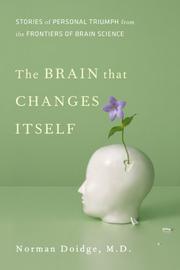
The canonical entry point to neuroplasticity for a general audience. Doidge's case studies (phantom limbs, stroke recovery, learning disorders) make the concept viscerally real and introduce key researchers and terms you will encounter in every later book.

Read second because Eagleman sharpens the vocabulary Doidge introduced — explaining cortical remapping, sensory substitution, and competitive plasticity with more precision, while remaining highly accessible. It corrects some of the more breathless claims in popular accounts.
Learning, Memory, and the Mechanisms Behind Them
BeginnerUnderstand how learning and memory are physically encoded in the brain — long-term potentiation, Hebbian learning, the hippocampus — and see how deliberate practice and skill acquisition exploit these mechanisms.
▸ Study plan for this stage
Pace: 6–8 weeks, ~40–50 pages/day. Start with "In Search of Memory" (3–4 weeks, 600+ pages), then move to "The Talent Code" (2–3 weeks, 300+ pages). Build in 1 week for review and integration.
- Long-term potentiation (LTP) and synaptic strengthening: how repeated stimulation physically changes neural connections, as demonstrated through Kandel's sea slug experiments
- Hebbian learning principle ('neurons that fire together wire together'): the cellular basis for how experience reshapes the brain
- The role of the hippocampus in consolidating short-term experiences into long-term memories
- Molecular cascades and protein synthesis: how learning triggers genetic expression and structural changes at the synapse
- Myelin and myelination: the insulation around axons that speeds signal transmission and underlies skill automaticity, as explained in Coyle's work
- Deep practice and the 'sweet spot': deliberately working at the edge of competence to trigger myelin growth and neural optimization
- Transfer of learning: how repeated, focused practice creates flexible neural circuits that apply across contexts
- The role of attention, motivation, and emotional significance in encoding memories and driving neuroplastic change
- What is long-term potentiation, and how did Kandel's sea slug experiments demonstrate its existence and molecular basis?
- Explain the Hebbian learning principle and give a concrete example of how it operates in your own skill acquisition.
- What is the hippocampus's role in memory consolidation, and why is it critical for converting short-term experiences into lasting memories?
- How does myelin formation support skill automaticity, and why does deep practice trigger myelination according to Coyle?
- What distinguishes 'deep practice' from ordinary repetition, and why does working in the 'sweet spot' of difficulty accelerate learning?
- How do the cellular mechanisms described in Kandel's work (LTP, protein synthesis) connect to the behavioral patterns of skill acquisition that Coyle documents?
- Map a skill you're currently learning (instrument, language, sport) to the neuroplastic mechanisms in both books: identify where you're triggering LTP, how myelin is being built, and whether you're practicing in the 'sweet spot.'
- Conduct a 'memory archaeology' exercise: recall a vivid childhood memory in detail, then research which brain structures (hippocampus, cortex, amygdala) were likely involved in encoding and consolidating it.
- Design a 10-day deep practice experiment: choose a specific micro-skill (e.g., a difficult piano passage, a tennis serve, a language grammar point), practice it deliberately at the edge of your ability, and journal how your performance and confidence change—connect observations to myelin growth and LTP.
- Create a visual diagram showing the journey from synaptic change (Kandel) to behavioral mastery (Coyle): include LTP, protein synthesis, myelin formation, and the role of feedback loops.
- Interview someone who has mastered a complex skill (musician, athlete, surgeon) and ask them to describe their learning process; map their narrative onto Hebbian principles, the sweet spot, and myelin-building practices.
- Write a 1–2 page reflection: explain how understanding LTP and myelin changes your approach to a skill you want to develop, and identify specific practices you'll adopt based on this knowledge.
Next up: This stage establishes the physical and cellular foundations of how the brain learns and adapts, setting the stage for exploring how environmental factors, stress, aging, and individual differences modulate these mechanisms—and how to optimize them across the lifespan.

Kandel's Nobel-winning memoir doubles as a masterclass in synaptic plasticity. Starting here grounds you in the actual cellular biology of memory (sea-slug to human) before tackling more applied books, and it is written to be understood without a science degree.

Focuses on myelin and deep practice as the biological substrate of skill acquisition — a perfect complement to Kandel's cellular story, now applied to real-world learning. Read after Kandel so the biology behind 'deep practice' already makes sense.
Recovery, Rehabilitation, and the Limits of Repair
IntermediateExamine how neuroplasticity operates after brain injury, stroke, and sensory loss — understanding both the remarkable capacity for recovery and the hard biological constraints that popular accounts often gloss over.
▸ Study plan for this stage
Pace: 6–7 weeks, ~40–50 pages/day. "A Man Without Words" (~200 pages) in weeks 1–2; "The Brain's Way of Healing" (~500+ pages) in weeks 3–7, with 1–2 review days per week.
- Critical periods and their plasticity: how Ildefonso's late language acquisition challenges the notion of fixed critical periods and demonstrates the brain's capacity to rewire even after developmental windows supposedly close
- The role of sensory deprivation in shaping neural architecture: how Ildefonso's deafness and lack of language created a unique neurological state that reveals how the brain adapts when entire sensory channels are unavailable
- Recovery mechanisms after brain injury: Doidge's case studies illustrate how the brain recruits alternative neural pathways, reorganizes functional maps, and uses neuroplasticity to restore lost abilities after stroke, spinal cord injury, and other trauma
- The limits of neuroplasticity: understanding what the brain cannot recover, why some injuries produce permanent deficits, and how biological constraints (age, severity, time windows) interact with plasticity potential
- The role of attention, intention, and focused practice in driving recovery: how deliberate, mindful engagement with rehabilitation—not passive therapy—activates the neuroplastic mechanisms Doidge documents
- Sensory substitution and cross-modal plasticity: how the brain can repurpose regions normally dedicated to one sense (e.g., visual cortex processing touch in blind individuals) to restore or compensate for lost function
- The difference between spontaneous recovery and learned non-use: why early intervention and active engagement matter, and how the brain can 'give up' on recovering a limb if not properly stimulated
- Neuroplasticity as a double-edged sword: how the same mechanisms that enable recovery can also entrench dysfunction, pain, or maladaptive patterns if rehabilitation is poorly designed
- How does Ildefonso's case in 'A Man Without Words' challenge the concept of critical periods in language development, and what does his eventual language acquisition reveal about adult neuroplasticity?
- What role did Ildefonso's sensory deprivation (deafness without language) play in shaping his neural development, and how did learning sign language reorganize his brain?
- In 'The Brain's Way of Healing,' what are the key mechanisms Doidge identifies that allow the brain to recover function after stroke or spinal cord injury, and how do they differ from conventional rehabilitation approaches?
- What does Doidge mean by 'learned non-use,' and why is active, intentional engagement more effective for recovery than passive physical therapy?
- Describe an example of cross-modal plasticity from Doidge's work: how can the brain repurpose sensory regions to compensate for lost function?
- What are the hard biological limits to neuroplasticity that both Schaller and Doidge acknowledge, and why is it important not to oversell the brain's capacity for recovery?
- Create a detailed timeline of Ildefonso's cognitive and linguistic development in 'A Man Without Words,' noting the specific moments when his brain appears to reorganize (e.g., first understanding of symbolic language). Reflect on what this reveals about critical periods.
- Map out one of Doidge's case studies (e.g., the stroke patient learning to walk, the woman with cerebellar damage) as a 'recovery pathway': identify the injury, the neuroplastic mechanism at work, the specific practices used, and the constraints encountered.
- Design a hypothetical rehabilitation protocol for a stroke patient based on Doidge's principles: what would you prioritize (attention, repetition, novelty, cross-modal input), and why? How would you avoid learned non-use?
- Compare Ildefonso's language learning process with one of Doidge's recovery cases: what similarities exist in how the brain reorganizes itself? What differences reflect the difference between learning and recovery?
- Identify 3–4 moments in 'A Man Without Words' where Schaller's teaching methods align with or diverge from the neuroplastic principles Doidge later describes. What does this suggest about intuitive versus evidence-based rehabilitation?
- Write a critical reflection: where does Doidge's optimism about neuroplasticity seem justified by evidence, and where might he be overstating the brain's capacity? Use specific examples from both books.
Next up: This stage grounds neuroplasticity in the concrete realities of injury, loss, and recovery—establishing both the brain's remarkable adaptive capacity and its genuine limits—preparing you to explore how these principles apply to learning, aging, and deliberate skill development in subsequent stages.

A close case study of language acquisition in a profoundly language-deprived adult, illuminating the concept of critical periods and the real — sometimes brutal — limits of plasticity when timing is missed.

Doidge's follow-up goes deeper into clinical rehabilitation — movement-based therapies, pain, Parkinson's — building directly on the first book's framework. Reading it here, after Kandel and Coyle, lets you evaluate the mechanisms he proposes rather than just accept the stories.
Where the Science Really Stands: Critique and Nuance
ExpertCritically evaluate popular neuroplasticity claims — brain training, mindfulness marketing, 'rewiring' metaphors — against the peer-reviewed evidence, and develop a scientifically literate framework for assessing future claims.
▸ Study plan for this stage
Pace: 5–6 weeks, ~25–30 pages/day. Start with Jarrett's myth-busting essays (2–3 weeks), then move to Merzenich's deeper mechanistic account (3–4 weeks). Build in 1–2 review days per week for synthesis.
- The distinction between neuroplasticity as a genuine biological phenomenon and the oversimplified marketing narratives that exploit it (Jarrett's central thesis)
- How brain training and cognitive games promise far more transfer than the evidence supports, and why the 'brain gym' metaphor misleads (Jarrett on brain training myths; Merzenich on specificity of learning)
- The actual mechanisms of experience-dependent plasticity: representational map reorganization, critical periods, and the role of attention and reward in driving change (Merzenich's core framework)
- Why 'rewiring' is a seductive but imprecise metaphor—the brain doesn't rewire like electrical circuits; it reorganizes through competitive dynamics and Hebbian learning (both authors)
- The evidence gap between laboratory demonstrations of plasticity and real-world claims about mindfulness, brain training, and learning supplements (Jarrett's critical lens)
- How individual differences in learning capacity, genetics, and age constrain plasticity—the myth of unlimited brain malleability (Jarrett and Merzenich on limits)
- The role of behavioral context, motivation, and metacognition in determining whether neural changes translate to functional improvement (Merzenich on learning principles)
- How to critically read neuroscience claims: distinguishing correlation from causation, understanding effect sizes, and recognizing when marketing outpaces evidence (meta-skill across both books)
- What are the main myths about brain training that Jarrett identifies, and what does the peer-reviewed evidence actually show about transfer of learning from brain training games?
- According to Merzenich, what are the key conditions necessary for experience-dependent plasticity to occur, and why do many commercial brain training programs fail to meet these conditions?
- How do Jarrett and Merzenich each explain why the 'rewiring' metaphor is misleading, and what more accurate language should we use to describe neural reorganization?
- What does Merzenich mean by 'representational map reorganization,' and how does this mechanism differ from the popular idea of 'rewiring' specific brain circuits?
- Jarrett critiques the mindfulness and neuroplasticity marketing boom—what specific claims does he debunk, and what evidence does he cite?
- According to both authors, what are the real constraints on neuroplasticity across the lifespan, and why is the idea of 'unlimited brain potential' scientifically unfounded?
- Read and annotate Jarrett's chapters on brain training and mindfulness myths; create a two-column table: 'Popular Claim' vs. 'What the Evidence Actually Shows,' citing specific studies Jarrett references.
- Work through Merzenich's explanation of representational maps and competitive dynamics (likely in early chapters); sketch or diagram how a sensory map reorganizes after experience, labeling key principles like Hebbian learning and attention-gating.
- Select 3–5 commercial brain training or 'neuroplasticity' products (Lumosity, Elevate, etc.) and critically evaluate their marketing claims against the evidence presented in both books; write a 1–2 page critique for each.
- Create a decision tree or flowchart for evaluating neuroscience claims in the media: What questions should you ask? What red flags indicate marketing hype? Ground each node in specific critiques from Jarrett.
- After finishing Merzenich, write a 500-word synthesis essay: 'How Merzenich's Mechanisms Explain Why Jarrett's Brain Training Myths Persist'—connect the neuroscience to the marketing problem.
- Conduct a 'myth audit' of your own learning habits: Do you use brain training apps, meditation apps, or other neuroplasticity-based tools? Evaluate them against Jarrett's and Merzenich's criteria; revise your approach based on what actually works.
Next up: This stage equips you with a critical filter and mechanistic understanding, preparing you to evaluate emerging neuroplasticity research and applications—whether in education, aging, or clinical rehabilitation—without falling prey to hype, and to recognize which interventions have genuine evidence behind them.

A systematic, evidence-based debunking of widespread neuromyths (left-brain/right-brain, 10% of the brain, brain training products). Read here so you can apply a skeptical lens to everything you absorbed in earlier stages.

Merzenich is one of the founding scientists of cortical remapping research — his voice carries genuine authority. Reading him last lets you weigh his optimistic but evidence-grounded claims about cognitive training against Jarrett's critique, arriving at a nuanced, well-informed position.
Discussion
Keep reading
Paths that share books, cover the same subject, or open a related topic.