Music Arranging: The Best Books, In Order
This curriculum takes an intermediate musician from solid harmonic understanding through the full craft of music arranging — covering voicings, orchestration for horns and strings, textural control, and ensemble scoring. Each stage builds directly on the last: first sharpening harmonic and voice-leading instincts, then applying them to specific instrumental families, and finally integrating everything into full ensemble writing and professional scoring practice.
Harmonic Foundation & Voicing
IntermediateMaster chord voicing principles, voice leading, and harmonic color as the essential raw material of any arrangement.
▸ Study plan for this stage
Pace: 4–5 weeks, ~25–30 pages/day, with 2–3 dedicated practice days per week for voicing exercises
- Chord voicing as the foundation of arranging—understanding how note selection and register create harmonic color and emotional impact
- Voice leading principles: smooth voice movement, voice independence, and avoiding parallel fifths/octaves while maintaining musicality
- Triadic and extended chord voicing techniques (shells, rootless voicings, spread voicings) and when to apply each
- Register and spacing: how vertical distance between voices affects blend, clarity, and the perceived weight of harmony
- Harmonic function and context: how voicing choices serve the song's style, tempo, and arrangement intent
- Practical application of voicing in real scores: analyzing Grove's examples to internalize professional arranging decisions
- What is the difference between a shell voicing and a rootless voicing, and when would you choose one over the other in an arrangement?
- How do voice leading principles (smooth motion, voice independence) improve an arrangement, and what common mistakes should you avoid?
- Explain how register and spacing affect the perceived color and blend of a chord voicing.
- Given a chord progression and a specific style (jazz, pop, classical), how would you voice the chords to match that style's conventions?
- What role does harmonic function play in determining voicing choices, and how does context (tempo, instrumentation, lyrical content) influence your decisions?
- Analyze a professional arrangement excerpt from Grove's book: identify the voicing technique used and explain why it works for that moment.
- Transcribe and analyze 5–8 chord voicings from professional arrangements (jazz, pop, film scores) to identify patterns and techniques Grove discusses
- Voice a simple chord progression (8–12 bars) in three different styles (jazz, pop, classical) using different voicing techniques; record or notate each version and compare
- Practice smooth voice leading: take a ii–V–I progression and voice it three ways, focusing on minimal voice movement and independence
- Create a 4–8 bar harmonic sketch for a given melody, experimenting with shell voicings, rootless voicings, and spread voicings; evaluate which best serves the melody
- Reharmonize a simple song (e.g., a folk tune or standard) using extended chords and sophisticated voicing; compare your result to a professional arrangement
- Transcribe the voicing choices in 2–3 complete arrangements from Grove's examples, then recreate them in a different key to internalize the technique
Next up: This stage equips you with the harmonic vocabulary and voicing mastery needed to move into orchestration and instrumentation, where you'll learn how to assign these voicings to specific instruments and sections to achieve the exact sonic palette your arrangement demands.
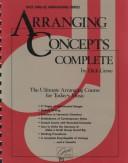
A comprehensive, systematic introduction to arranging fundamentals — chord construction, voicing types, and part-writing — that gives intermediate learners a rigorous shared vocabulary before moving into orchestration.
Writing for Horns
IntermediateUnderstand the ranges, timbres, blend characteristics, and idiomatic writing techniques for brass and woodwind sections.
▸ Study plan for this stage
Pace: 6–8 weeks, ~40–50 pages/day with focused study sessions on orchestration examples
- Horn range, transposition, and practical limitations (high F to low B♭) as defined in Adler's orchestration text
- Timbral characteristics across horn registers and their idiomatic use in ensemble contexts
- Blend and balance principles for brass sections, including horn-to-trumpet and horn-to-trombone relationships
- Harmonic function of horns in classical, romantic, and modern orchestral writing
- Practical voicing techniques for horn pairs and sections using Wright's score-based analysis
- Idiomatic horn writing: stopping, muting, natural vs. valved techniques, and their notational conventions
- Integration of horns with woodwind sections for color and textural support
- Orchestral reduction and transposition skills applied to real scores from both texts
- What are the practical ranges of the F horn and the B♭ horn, and how do these constraints shape orchestral writing decisions?
- How do horn timbres differ across registers, and what orchestral effects can be achieved by exploiting these differences?
- Describe three idiomatic techniques for horns (e.g., stopping, natural harmonics, muting) and explain when and why a composer would use each.
- How do horns function harmonically in a four-part brass section, and what voice-leading principles apply when writing for horns alongside trumpets and trombones?
- Using examples from Adler and Wright, explain how horns blend with woodwind sections and what textural roles they typically fill.
- What notational and performance considerations must you account for when writing stopped horn passages or using mutes?
- Transcribe and analyze 3–4 horn passages from orchestral scores cited in Adler's text; identify range, register, and timbral intent
- Write a 16–32 bar harmonic progression for four horns in F, focusing on smooth voice-leading and idiomatic ranges
- Arrange a simple melody for horn pair (two F horns) with a woodwind counterline; experiment with blend and balance
- Study 2–3 complete brass section voicings from scores analyzed in Wright's *Inside the Score*; transpose and adapt them for different orchestral contexts
- Compose an 8–16 bar passage using stopped horns and natural harmonics; notate precisely and explain performance implications
- Orchestrate a short piano excerpt (8–16 bars) for a small ensemble including horns, trumpets, and woodwinds, applying blend principles from both texts
- Create a reference chart mapping horn register to timbral quality and typical orchestral function, with annotated score excerpts from Adler and Wright
Next up: This stage equips you with the technical and timbral mastery of horns needed to orchestrate complex multi-sectional passages; the next stage will expand these skills to full orchestral writing, where you'll balance and blend all sections simultaneously.
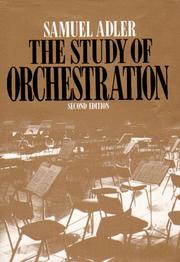
The definitive academic reference for wind and brass instruments — ranges, transpositions, articulations, and blend — providing the technical grounding needed before tackling idiomatic horn writing.

Analyzes landmark big-band scores by masters like Thad Jones and Bob Brookmeyer, revealing exactly how horn voicings, soli writing, and section blend are achieved in real arrangements.
Writing for Strings & Combined Sections
IntermediateLearn idiomatic string writing, string-horn integration, and how to create contrasting or blended textures across sections.
▸ Study plan for this stage
Pace: 4–5 weeks, ~25–30 pages/day, focusing on chapters on strings (Ch. 3–4) and woodwinds/brass integration (Ch. 5–6)
- Idiomatic string writing: range, tessitura, natural harmonics, and double-stops for each instrument (violin, viola, cello, bass)
- Bowing techniques and their expressive/textural implications (legato, staccato, pizzicato, col legno, tremolo)
- Voice-leading and spacing principles specific to string sections to avoid muddiness and maintain clarity
- Integration of horns with strings: balance, doubling strategies, and timbral blending
- Creating textural contrast: tutti vs. divisi strings, sustained backgrounds vs. rhythmic figures, and layering across sections
- Practical orchestration of combined sections: how to transition between string-dominated and mixed textures
- Harmonic density and the role of strings in supporting or leading harmonic progression
- What are the practical ranges and most idiomatic registers for first violin, second violin, viola, cello, and bass, and why do these matter for orchestration?
- How do different bowing techniques (legato, staccato, pizzicato, tremolo) affect the character and texture of string writing, and when should each be used?
- What are the principles of voice-leading in string sections to maintain clarity and avoid muddiness, particularly in dense harmonic writing?
- How can horns be effectively integrated with strings to create a unified sound, and what are common doubling and balance strategies?
- What are the key differences between writing for a divisi string section versus a unified section, and how does this choice affect texture and orchestration?
- How do you create textural contrast across a passage using strings and horns—moving from sustained backgrounds to rhythmic figures or vice versa?
- Transcribe a passage from a standard orchestral work (e.g., Brahms, Dvořák) that features idiomatic string writing; analyze the ranges, bowing marks, and voice-leading used
- Write a 16–32 bar string section (4-part: Vn1, Vn2, Va, Vc+Cb) in a given key and style, ensuring clear voice-leading and appropriate tessitura for each instrument
- Compose a passage where horns double or blend with strings; experiment with different doublings (unison, octave, harmony) and notate appropriate dynamics to balance the blend
- Create a short orchestration exercise (8–16 bars) that transitions from a sustained string texture to a divisi, rhythmic texture, demonstrating textural contrast
- Analyze 2–3 excerpts from Piston's examples or from standard repertoire showing string-horn integration; identify doubling patterns, voice-leading, and balance strategies
- Write a combined section passage (strings + horns + one woodwind) where strings carry the harmonic foundation and horns add color or rhythmic punctuation; notate dynamics and articulation carefully
Next up: Mastering idiomatic string and horn writing establishes the foundation for orchestrating larger combined sections (woodwinds, percussion, and full brass), where you'll apply these textural and timbral principles across a richer palette of instruments.

Piston's classic text covers string technique and cross-section blending in depth, giving the arranger a composer's perspective on how strings interact with winds and brass.
Texture, Color & Arrangement Architecture
ExpertDevelop conscious control of texture, density, register, and momentum — the macro-level tools that make an arrangement feel inevitable and alive.
▸ Study plan for this stage
Pace: 4–5 weeks, ~25–30 pages/day. Allocate 2–3 weeks to "Sounds and Scores" (Mancini's visual and conceptual framework), then 2 weeks to "The Complete Arranger" (Nestico's practical architecture principles). Build in 3–4 days for integration and full-score analysis.
- Orchestral texture as a dynamic tool: how density, spacing, and instrumental doubling create emotional weight and forward momentum
- Register mapping and vertical architecture: using high, mid, and low frequencies intentionally to shape clarity, blend, and dramatic impact
- Color and timbre as structural elements: how specific instrumental combinations and voicings become signatures that guide the listener through form
- Arrangement density curves: building and releasing tension through strategic use of silence, restraint, and layering across a phrase or section
- Mancini's principle of inevitability: how texture choices make the listener feel that each orchestration was the only possible choice
- Nestico's systematic approach to voice leading and section balance: maintaining coherence while managing multiple instrumental families
- Momentum and pacing through texture: using rhythmic density, articulation, and instrumental activity to propel or settle a passage
- Score economy: achieving maximum impact with minimal redundancy—knowing what to leave out
- How does Mancini use register separation and instrumental spacing to create clarity in a dense orchestration, and what does he say about the relationship between texture and emotional inevitability?
- What are Nestico's core principles for managing texture across different instrumental sections (brass, woodwinds, strings) without losing coherence or balance?
- How would you design a texture curve for a 32-bar song form, using density and register to build momentum through the B section and resolve in the final A?
- What is the difference between texture that serves the melody and texture that competes with it? How do Mancini and Nestico address this distinction?
- How do you use silence, space, and strategic doubling to control the listener's attention and create a sense of inevitability in an arrangement?
- What role does instrumental color play in defining sections and transitions in a large-form arrangement, according to Nestico's framework?
- Analyze three contrasting film cues from Mancini scores (e.g., 'Pink Panther,' 'Breakfast at Tiffany's,' 'The Days of Wine and Roses'). Map the texture curve, register usage, and instrumental combinations. Note where texture changes occur and why.
- Transcribe the orchestration of a 16- or 32-bar section from a Nestico big-band arrangement. Identify the texture strategy: which instruments carry the melody, which provide harmonic support, which add rhythmic momentum. Redraw the score with one texture layer removed—what is lost?
- Arrange a simple 32-bar AABA song form for a small ensemble (5–8 instruments). Create a deliberate texture curve: sparse A section, gradually building through B, then return to A with a single added color element. Write a one-paragraph justification for each texture choice using Mancini's language of inevitability.
- Study a Mancini score excerpt and a Nestico score excerpt side by side (same or similar harmonic content). Compare their register choices, doubling strategies, and use of silence. Write a short analysis of how each achieves clarity and momentum differently.
- Orchestrate a 12-bar blues for three different ensemble sizes (trio, small big band, full orchestra), keeping the melody and harmony constant. Observe how texture and density must shift with instrumentation. Reflect on what 'inevitability' means at each scale.
- Create a 'texture palette' document: list 8–10 specific instrumental combinations (e.g., 'alto sax + muted trumpet + vibraphone' or 'divided violas + cello + bass') and describe the emotional/textural character of each. Use these palettes to re-orchestrate a section of an existing arrangement, justifying each swap.
Next up: Mastery of texture, register, and architectural control equips you to tackle the next stage—likely focused on genre-specific idioms, stylistic authenticity, or advanced harmonic reharmonization—because you now understand the *why* behind orchestration choices, not just the *what*.
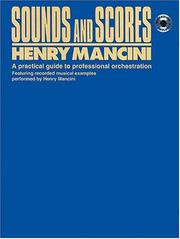
Mancini's annotated scores illuminate how texture, register, and instrumental color are shaped across an entire arrangement, making abstract concepts concrete through his own iconic work.

Nestico addresses textural variety, rhythmic density, and the overall arc of an arrangement with clarity and practicality, bridging the gap between section writing and full-ensemble design.
Full Ensemble Scoring & Professional Practice
ExpertIntegrate all prior skills into professional-level scoring for large ensembles, and understand how top arrangers approach a full score from concept to final page.
▸ Study plan for this stage
Pace: 8–10 weeks, ~40–50 pages/day with 2–3 days per week dedicated to full score analysis and arranging projects
- Large ensemble voicing principles: balancing density, clarity, and blend across 15+ instruments in jazz and symphonic contexts
- Professional score layout and notation standards: parts extraction, cue lines, rehearsal marks, and submission-ready formatting
- Orchestration for specific instrumental combinations: doubling strategies, range optimization, and color choices for different ensemble sizes
- Arranging workflow from concept to final score: thematic development, sectional architecture, and managing complexity across multiple pages
- Jazz ensemble scoring techniques: comping voicings, section writing for saxes/brass, and balancing soloist-friendly arrangements with ensemble cohesion
- Conductor-friendly score preparation: visual clarity, part independence, and practical considerations for live performance and recording
- Advanced harmonic and textural development: using orchestration as a compositional tool to evolve ideas across a full arrangement
- How do you voice a full jazz ensemble (saxes, trumpets, trombones, rhythm section) to maintain clarity while achieving a cohesive sound across a 32-bar form?
- What are the key differences in score layout and notation between a jazz big band arrangement and a symphonic orchestration, and why do those differences matter for conductors and musicians?
- Walk through the complete workflow for taking a lead sheet or melody and developing it into a professional full score: what decisions do you make at each stage?
- How do you extract individual instrumental parts from a full score in a way that is readable, playable, and includes all necessary cues and rehearsal information?
- Describe three specific orchestration techniques from Cacavas or Pullig that you can use to create textural variety and maintain listener interest over a long arrangement.
- What practical considerations must you account for when scoring for a large ensemble in a live performance context versus a studio recording?
- Analyze a complete arrangement from Pullig's book (or a professional jazz big band chart): map out the voicing strategy, sectional structure, and how the arranger manages texture and density across the form.
- Score a 32-bar jazz standard for a 15-piece big band (5 saxes, 4 trumpets, 4 trombones, rhythm section), including at least one solo section and one tutti ensemble passage with clear voicing and doubling.
- Extract clean, conductor-ready parts from a full score you've created, including proper cue lines, rehearsal marks, and dynamic/articulation consistency across all instruments.
- Arrange a short classical or film music theme for a mixed ensemble (strings, woodwinds, brass, percussion) using Cacavas's orchestration principles; focus on color and balance rather than density.
- Transcribe and analyze the full score of a professional large ensemble arrangement (jazz or orchestral); document the voicing choices, range usage, and textural decisions that make it effective.
- Create a detailed score preparation checklist based on Pullig and Cacavas, then apply it to one of your own arrangements to ensure professional-level formatting and clarity.
Next up: This stage equips you with the technical mastery and professional standards needed to move into specialized areas—whether that's film/TV orchestration, advanced jazz composition, or mentoring other arrangers—by establishing a complete, reproducible workflow from concept to performance-ready score.
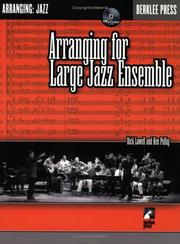
A modern, comprehensive capstone text covering full big-band and large ensemble scoring — form, shout choruses, soli, backgrounds, and score layout — synthesizing everything learned in prior stages.

Bridges concert band, studio, and commercial ensemble scoring, offering a broad professional perspective that rounds out the curriculum and prepares the arranger for real-world scoring assignments.
Discussion
Keep reading
Paths that share books, cover the same subject, or open a related topic.