Best Books to Learn Film Scoring (in Order)
This curriculum builds a rigorous, practice-oriented mastery of film scoring — starting from the craft of composing for picture, moving through the professional workflow of spotting and synchronization, and culminating in advanced orchestration and narrative storytelling through music. Because the learner starts at an intermediate level, foundational music theory is assumed; every stage instead deepens cinematic thinking, technical craft, and creative decision-making in service of story.
The Composer's Lens: Thinking in Film
IntermediateDevelop the mental framework for how music functions dramatically in film — understanding the relationship between image, emotion, and score before touching an instrument or DAW.
▸ Study plan for this stage
Pace: 4–5 weeks, ~25–30 pages/day (alternating between both books to build integrated understanding)
- Film music as a dramatic agent: how scores shape emotional and narrative meaning beyond what dialogue and image alone convey
- The relationship between diegetic and non-diegetic music and how each functions differently in storytelling
- Leitmotif and thematic development as tools for character psychology and narrative continuity
- Synchronization and temporal relationships: how music aligns with (or deliberately diverges from) image to create meaning
- The composer's role in the collaborative filmmaking process and how to read a director's intent from script and visual materials
- Harmonic, melodic, and orchestral language as emotional vocabulary—understanding how specific musical choices communicate feeling
- Spotting decisions: identifying where music should enter, exit, and transform within a scene
- The economics and aesthetics of underscoring: when music should be present versus absent, and why restraint is often more powerful
- How does non-diegetic music function differently from diegetic music in shaping a viewer's emotional experience, and can you identify examples from films you know?
- What is a leitmotif, and how might a composer use recurring musical themes to deepen character development or narrative meaning across a film?
- Describe the relationship between a composer and director: what information does a composer need to understand before writing a single note?
- How can a composer use harmonic language, orchestration, or melodic contour to communicate emotional states that the image alone might not fully convey?
- What is spotting, and why are spotting decisions (where music enters and exits) as important as the music itself?
- Analyze a scene from a film you know: where is music present, where is it absent, and how does that choice affect the dramatic impact?
- Watch a 5–10 minute scene from a film with the sound off, then with sound on. Write a paragraph on how the music changes your emotional interpretation of the same images.
- Select a film and create a spotting chart: mark every moment where music enters and exits, note whether it's diegetic or non-diegetic, and hypothesize why the composer made those choices.
- Identify a character-driven film and track one leitmotif throughout (if present). Document how the theme evolves musically and what that evolution suggests about the character's arc.
- Listen to the score of a film without watching it. Write down the emotional journey you perceive, then watch the film and compare—what did the music alone suggest that the image confirmed or contradicted?
- Read the opening scene of a screenplay (find one online), then listen to the opening cue from the film's score. Write a brief analysis of how the composer interpreted the scene's dramatic intent.
- Conduct a comparative listening exercise: find two scenes of similar dramatic content (e.g., two moments of romantic tension) from different films. Compare how different composers used harmony, tempo, and orchestration to communicate the same emotional state.
Next up: This stage equips you with the critical listening and analytical vocabulary needed to understand *why* music works in film, preparing you to move into the next stage where you'll learn the technical and practical craft of *how* to compose and orchestrate for media.

Establishes a rigorous analytical vocabulary for how music, sound, and image interact — essential for any composer who needs to think critically about why music works in a scene before writing a note.
A comprehensive, industry-standard overview of the entire film music process written by working professionals; reading it early orients the learner to the full workflow — from spotting sessions to final dub — that all later books assume.
Spotting, Sync, and the Professional Workflow
IntermediateUnderstand the practical craft of spotting a film, hitting picture, working with directors, and navigating the professional pipeline from spotting notes to final mix.
▸ Study plan for this stage
Pace: 4–5 weeks, ~25–30 pages/day, with 2–3 days per week dedicated to hands-on spotting exercises and director collaboration simulations
- Spotting sessions: how to read a film, identify cue points, and translate visual storytelling into musical moments
- Hitting picture: technical precision in timing, sync, and matching music to on-screen action and dialogue
- Director communication: translating creative vision into actionable musical direction and managing feedback loops
- The professional workflow: from spotting notes through composition, mock-ups, revisions, and final mix integration
- Temp tracks and temp love: understanding the role of temporary music and navigating director expectations
- Cue sheets and documentation: creating and maintaining accurate spotting notes, timings, and technical specifications
- Collaboration with sound design and dialogue: how scoring fits into the larger post-production mix hierarchy
- Practical constraints: budget, schedule, and technology limitations in real-world film scoring projects
- What are the key elements to identify during a spotting session, and how do you prioritize which moments need music?
- How do you ensure musical cues hit specific picture moments, and what tools and techniques help you achieve frame-accurate sync?
- What strategies help you communicate effectively with a director about musical choices, and how do you handle conflicting creative feedback?
- Walk through the complete workflow from spotting notes to final mix: what happens at each stage, and what deliverables are needed?
- How do you manage the challenge of temp tracks influencing director expectations, and what's your approach to replacing or reimagining temp music?
- What information must be included in spotting notes and cue sheets to ensure smooth handoff to orchestrators, musicians, and the mix stage?
- Conduct a mock spotting session: watch a 5–10 minute film scene (or use a provided clip), identify all potential music cue points, and document timing, emotional intent, and technical requirements in a spotting notes template
- Create a detailed cue sheet for a short film or scene, including cue names, timings (in feet+frames or timecode), duration, instrumentation notes, and any special technical requirements
- Compose or arrange a 30–60 second cue to picture: select a specific scene moment and create music that hits a precise visual beat, then verify sync accuracy using a DAW and video reference
- Simulate a director feedback session: record yourself explaining a musical choice to an imaginary director, then revise the cue based on hypothetical feedback (e.g., 'make it less romantic, more mysterious')
- Map out a complete post-production timeline for a short film: identify spotting date, composition deadline, mock-up review, revision rounds, orchestration/recording, and final mix, accounting for realistic turnaround times
- Analyze a published film score: identify how the composer handled temp track replacement, where music supports vs. steps back for dialogue/sound design, and how cues are timed to specific picture moments
Next up: Mastering the professional workflow and director communication in this stage equips you to move into the next level—advanced orchestration, recording, and mixing techniques—where you'll learn how to realize your spotting and sync decisions with live musicians and sophisticated production methods.
Covers the business and craft side of film scoring in depth — spotting sessions, temp tracks, working with directors, and delivering cues — giving the learner a realistic, professional picture of the composer's role.

Focuses specifically on the analytical and compositional techniques used by Hollywood's golden-age masters, with detailed score study that directly informs how to spot and compose cues that serve narrative moments.
Orchestration for Picture
IntermediateMaster the craft of orchestrating music specifically for film — understanding how timbre, texture, and ensemble color serve dramatic function rather than concert-hall aesthetics.
▸ Study plan for this stage
Pace: 6–8 weeks, ~40–50 pages/day (alternating between Adler and Piston; approximately 3 weeks per book with overlap for comparative study)
- Timbre as dramatic function: how instrument selection and color choices reinforce emotional intent and narrative moments in film rather than serving purely aesthetic concert purposes
- Orchestral texture and density in relation to picture: sparse vs. dense scoring, the use of silence, and how orchestration supports visual pacing and editing
- Instrument families and their cinematic roles: strings for emotion/continuity, woodwinds for character/nature, brass for power/conflict, percussion for rhythm/punctuation and emotional peaks
- Doubling, voicing, and blend techniques: practical methods for achieving clarity, warmth, or tension on screen—understanding when to double for support vs. when to isolate for dramatic effect
- Orchestration for different film genres and scenarios: underscoring dialogue, action sequences, intimate scenes, and transitions—adapting orchestral choices to serve the picture
- Score-to-picture synchronization through orchestration: how rhythmic placement, harmonic rhythm, and instrumental entrance/exit timing align with cuts, camera movement, and emotional beats
- Practical limitations and studio realities: writing for available ensemble sizes, budget constraints, and recording logistics that differ from concert-hall orchestration
- Comparative study of Adler's analytical approach vs. Piston's systematic foundation: integrating both theoretical rigor and practical application
- How does orchestral timbre function differently in film scoring compared to concert music, and what dramatic purposes does it serve?
- Describe three specific orchestration techniques you would use to underscore a tense dialogue scene versus an action sequence, and explain your choices.
- How would you orchestrate a moment of emotional vulnerability for a solo character on screen, and what instrumental choices would you make to avoid overwhelming the dialogue?
- Explain the relationship between orchestral texture (sparse to dense) and visual editing pace—how would you adjust your orchestration for a slow, contemplative scene versus a fast-cut montage?
- What are the key differences between doubling for blend and doubling for reinforcement, and when would each be appropriate in a film score?
- How do practical studio and budget constraints influence orchestration choices in film scoring, and how would you adapt Adler's and Piston's principles to real-world limitations?
- Orchestrate a 30–45 second underscore for a specific film scene (dialogue, action, or emotional moment) using Adler's timbre principles; record or notate it and compare your choices against an actual film score in the same genre
- Study 3–4 contrasting film scores (e.g., one intimate drama, one action film, one fantasy); analyze how each composer uses orchestral texture and density to match picture pacing and emotional beats
- Reorchestrate a single 8–16 bar harmonic progression three different ways—once sparse/minimal, once dense/full, once with unusual instrumental combinations—and evaluate how each version would serve different dramatic contexts
- Write a short orchestration guide for a fictional 5–minute film sequence you create or select, specifying instrument choices, doublings, and textural changes at key moments; justify each decision using concepts from Adler and Piston
- Transcribe and analyze the orchestration of a 1–2 minute cue from a professional film score, identifying doubling patterns, voice leading, and how timbre choices reinforce the picture
- Create a side-by-side comparison chart of how Adler and Piston address a specific orchestration challenge (e.g., achieving clarity in a dense texture, orchestrating for a solo voice); synthesize their approaches into your own practical method
Next up: This stage equips you with the foundational craft of orchestration for picture, preparing you to move into advanced topics such as leitmotif development, harmonic language for specific genres, and the integration of electronic/hybrid scoring techniques in contemporary film music.
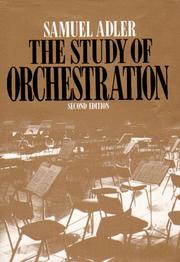
The definitive academic orchestration text; reading it at this stage gives the learner a thorough command of every instrument's capabilities and idiomatic writing before applying those tools to picture.

A complementary classic that emphasizes how instruments blend and balance within the full orchestra — critical knowledge for writing film cues that must compete with dialogue and sound effects without muddying the mix.
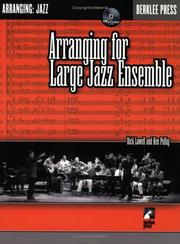
Expands the learner's orchestrational palette beyond the symphony orchestra into the hybrid jazz/pop/orchestral textures that dominate contemporary film and media scoring.
Music That Serves the Story
ExpertSynthesize compositional craft, dramatic instinct, and thematic development into a mature, story-driven compositional voice — understanding how great film scores function as invisible narrative architecture.
▸ Study plan for this stage
Pace: 4–5 weeks, ~25–30 pages/day. "Music and the Mind" (approx. 250 pages) in weeks 1–2, then "The Reel World" (approx. 300 pages) in weeks 3–5, with overlap for synthesis and project work in the final week.
- Music as a direct pathway to emotion and memory: how Storr's psychological framework explains why film music bypasses rational thought to affect audiences viscerally
- The composer's dual role as both craftsperson and dramatist: balancing technical mastery with intuitive storytelling instinct
- Thematic development as narrative architecture: using leitmotif, variation, and transformation to mirror character arcs and story progression
- The invisible score: understanding how effective film music serves the story by remaining psychologically 'transparent' while shaping emotional response
- Practical workflow and creative decision-making: Rona's real-world approach to temp tracks, spotting sessions, and iterative composition under deadline pressure
- Harmonic and orchestral language as character voice: how tonal choices, instrumentation, and harmonic language embody dramatic intent
- Silence and restraint as compositional tools: knowing when not to score, and how absence shapes narrative impact
- According to Storr, what is the relationship between music and the unconscious mind, and how does this explain music's power in film to evoke emotion without explicit narrative?
- How does Rona define the role of a film composer in the context of a production team, and what are the key decision points in a spotting session?
- What is a leitmotif, and how can it function as 'invisible narrative architecture' to track character development or thematic progression across a film?
- Describe the tension between serving the story and showcasing compositional craft. How do Storr and Rona each address this balance?
- What does Rona mean by the 'temp track trap,' and how can a composer maintain creative integrity while responding to temporary music in a director's cut?
- How might you use harmonic language, orchestration, or rhythmic motifs to underscore a character's internal conflict or transformation?
- After reading Storr's chapters on music and emotion, select a 3–5 minute scene from a film with score. Analyze how the music's harmonic movement, orchestration, and pacing align with the character's emotional state. Write a one-page reflection on what Storr's framework reveals about the composer's choices.
- Read Rona's spotting session guidelines. Watch a 10–15 minute sequence from a film (with score), then write out a detailed spotting notes document as if you were the composer: identify where music enters/exits, what emotional beats need support, and what dramatic function each cue serves.
- Compose a 30–60 second thematic idea (melody + basic harmony) for a fictional character. Then create 2–3 variations of that theme showing character growth, conflict, or transformation. Document your choices and how they mirror narrative intent.
- Identify a leitmotif from a major film score (e.g., *Star Wars*, *Inception*, *The Lord of the Rings*). Track its appearances across the film, noting how it transforms in harmony, orchestration, or context. Write a brief analysis of how these transformations parallel the story.
- Compose a 1–2 minute cue that deliberately uses silence and restraint. Alternate between 10–15 seconds of music and 5–10 seconds of silence. Reflect on how the silence shapes the listener's attention and emotional anticipation.
- Interview a working composer (or watch a masterclass/behind-the-scenes featurette). Ask or note: How do they balance their own creative vision with a director's temp track? How do they decide when a scene needs music vs. silence? Synthesize their answer with Rona's principles.
Next up: This stage anchors the reader in the psychological and practical foundations of story-driven composition; the next stage will likely deepen technical mastery in orchestration, harmonic language, and genre-specific scoring strategies, enabling the composer to execute their mature voice with precision and flexibility across diverse narrative contexts.
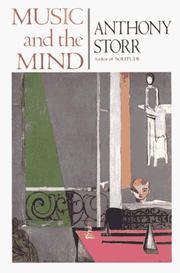
Explores the psychological and emotional mechanisms by which music affects human perception — giving the composer a deeper, evidence-based understanding of why certain musical choices move audiences in specific ways.
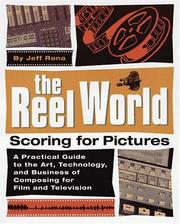
Written by a working film and media composer, this book bridges the gap between artistic intention and practical execution, with frank discussion of how to make compositional choices that genuinely serve a director's vision and story.
Discussion
Keep reading
Paths that share books, cover the same subject, or open a related topic.