Moral Psychology: The Best Books on Where Our Moral Judgments Come From, in Order
Moral psychology asks where moral judgments actually come from — not whether they are correct, which is moral philosophy's question. It is an empirical field and an unsettled one: its best-known frameworks are actively disputed inside it, and several of its most famous experiments are argued over on methodological grounds. This path starts with the popular books that made the field legible, moves through the evolutionary evidence, then puts the main disagreements side by side rather than picking a winner, and ends in the academic literature.
The Books That Made the Field Public
BeginnerLearn the two dominant models of moral cognition — moral foundations and dual-process — and the claim that some moral responses are present in infancy.
▸ Study plan for this stage
Pace: 5–6 weeks for about 1,190 pages of trade nonfiction: Haidt's The Righteous Mind (493 pages) over roughly two and a half weeks, Greene's Moral Tribes (422 pages) over two, Bloom's Just Babies (273 pages) in one. All three are written for general readers and none assumes psychology training. Read them
- Social intuitionism: Haidt's claim that moral judgment arrives first and reasoning is recruited afterwards to justify it
- Moral foundations theory as a proposal rather than a finding — its factor structure and cross-cultural generality are actively disputed inside psychology
- Greene's dual-process model: fast automatic responses versus slow controlled reasoning, and the utilitarian conclusion he draws from it
- The trolley-problem fMRI paradigm that Greene's account is built on, and how much weight it is carrying
- Bloom's developmental evidence: what preverbal infants appear to prefer, and what a looking-time result can and cannot show
- The difference between a descriptive claim about how people judge and a normative claim about how they should — Haidt and Greene handle this boundary very differently
- Why two authors working from the same intuition-versus-reasoning split reach opposite conclusions about utilitarianism
- State the social intuitionist model in three sentences. What evidence does Haidt offer for the 'elephant and rider' picture, and what would count against it?
- Where exactly does Greene agree with Haidt, and at what point does the argument diverge?
- Which of Haidt's six foundations does he treat as best supported, and what is the specific psychometric objection to the taxonomy?
- What behaviour do the infant studies in Just Babies actually measure, and what inferential step gets you from that behaviour to a moral preference?
- If Greene is right that deontological judgments track automatic emotional responses, does that make them wrong? What is he actually claiming?
- Take the moral-foundations taxonomy as Haidt lays it out and score a single newspaper opinion column against it, sentence by sentence. Note every sentence you cannot assign cleanly to one foundation — the residue is the empirical objection in miniature.
- Write out the footbridge and switch cases exactly as Greene states them, then write out your own immediate response to each before reading his explanation. Keep this note; you will test it against Edmonds in stage three.
- Pick one experiment from Just Babies and reconstruct its design on paper: what the infant saw, what was measured, what the control condition was. Then write the strongest alternative explanation of the result you can.
- Put Haidt's and Greene's accounts of the same phenomenon — disgust-driven moral judgment — side by side in two columns and mark where they make different predictions rather than merely different noises.
Next up: All three books need some claim about what is innate and where it came from, so the next stage goes to the primate and hunter-gatherer evidence those claims rest on.

The most influential popular book in the field and the best single entry point. Read it for the social-intuitionist argument that judgment comes first and reasoning follows; read the moral-foundations taxonomy as a proposal, since its factor structure and cross-cultural generality are contested within psychology.

The rival account, and the reason to read it second: Greene builds on the same intuition-versus-reasoning split but reaches a utilitarian conclusion Haidt rejects. His dual-process model comes out of the trolley-problem fMRI work, which the next stages give you grounds to question.
The developmental evidence — what infants appear to prefer before they can be taught anything. Placed here because both Haidt and Greene need some claim about what is innate, and Bloom shows you the actual experiments those claims rest on.
The Evolutionary Case
BeginnerUnderstand the argument that moral behaviour has a deep primate history, and where the evidence for that is strong and where it is inferential.
▸ Study plan for this stage
Pace: 5–6 weeks for about 1,220 pages, and the mix of registers matters here. De Waal's Good Natured (368 pages) and Boehm's Moral Origins (426 pages) are written for general readers; Primates and Philosophers (232 pages) is a lecture with formal philosophical replies printed alongside it; and Tomasello's
- The observational base: reconciliation, consolation and inequity aversion as documented behaviours in chimpanzees and capuchins
- Continuity versus veneer: whether primate behaviour is a precursor to morality or merely resembles it — the exact question the philosophers press de Waal on
- Boehm's inverted-dominance mechanism: hunter-gatherer bands suppressing would-be alphas, and conscience as the internalised result of that selection pressure
- Tomasello's shared-intentionality account, built on controlled experiments with children and apes rather than on field observation
- Why these are three different mechanisms, not three descriptions of one — de Waal, Boehm and Tomasello disagree about what evolved and when
- The limits of inference from the ethnographic present to the Pleistocene, which is where Boehm's argument is most exposed
- What counts as evidence in this field: field observation, controlled comparative experiment, and ethnographic reconstruction have very different strengths
- Name three specific behaviours de Waal documents and state, for each, what it would take to show it is or is not a moral precursor.
- What is the veneer theory, who in Primates and Philosophers defends a version of it, and what is de Waal's reply?
- Boehm's argument depends on a claim about hunter-gatherer social structure. What is the claim, and how does he support it?
- Where does Tomasello explicitly position himself against the simpler continuity story, and what experimental result is he relying on to do it?
- Which of these three accounts is most compatible with Haidt's foundations, and which with Greene's dual-process model?
- Read the philosophers' replies in Primates and Philosophers before de Waal's rejoinder, and write down which objection you think is strongest. Then read the rejoinder and see whether it addresses the one you picked.
- Build a three-column table — de Waal, Boehm, Tomasello — with rows for: what evolved, what the selection pressure was, and what evidence is offered. The disagreements become visible immediately and no single book states them.
- Take one capuchin fairness experiment as de Waal reports it and write out the design plainly, then check how Tomasello characterises the same class of result. They read the same data differently.
- Reconstruct Boehm's argument as a numbered chain of inferences from ethnographic observation to a claim about ancestral selection, and mark the step you find least secure.
- Return to your stage-one notes on Haidt's innateness claims and mark which of them any of these three books actually supports.
Next up: You now have both the popular models and the evolutionary evidence, which is exactly what is needed to follow the field's live internal arguments rather than watching from outside them.
The foundational primatology: reconciliation, consolation and fairness responses in chimpanzees and capuchins. Read it before the theoretical books so you have the observations in mind rather than the interpretations.

De Waal's argument with philosophers printed alongside their replies, which is unusually honest packaging. It is the clearest short statement of the disagreement over whether continuity with primates tells us anything about human morality.
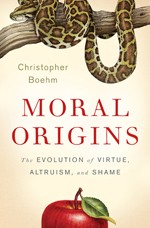
The anthropological version: Boehm argues that hunter-gatherer bands suppressed dominant individuals and that this selection pressure shaped conscience. A different mechanism from de Waal's, which is why it belongs after him.
The most careful of the evolutionary accounts, built on Tomasello's comparative experiments with children and apes rather than on field observation. Read it last in this stage — it explicitly positions itself against the simpler continuity story.
Where the Field Argues With Itself
IntermediateSee the live disputes stated properly: the limits of empathy, the ecological validity of the trolley literature, and what experiments can and cannot settle about ethics.
▸ Study plan for this stage
Pace: 4 weeks for about 815 pages. Bloom's Against Empathy (285 pages) and Edmonds's Would You Kill the Fat Man? (240 pages) read quickly. Appiah's Experiments in Ethics (288 pages) is the hardest book in the stage — it is a philosopher's lecture series and expects you to follow arguments about what empir
- Bloom's distinction between empathy as felt experience and compassion as concern, and why he thinks only one of them scales
- The ecological-validity objection: whether responses to bizarre hypotheticals predict anything about behaviour outside a questionnaire
- The trolley problem's actual history — Foot, Thomson and the philosophical purpose it was invented to serve, which was not psychological measurement
- The is–ought boundary as a working constraint: findings about how we judge do not by themselves settle how we ought to
- Situationism and the character debate, and Appiah's reasons for not dismissing virtue ethics on experimental grounds
- Why disputes here are genuinely unresolved rather than merely unsettled in popular accounts — no stage of this path names a winner
- Reading an author against himself: Bloom's contrarian book challenges the sentimentalist reading of the Haidt you read sympathetically in stage one
- What exactly is Bloom arguing against — empathy as a moral motive, as a decision procedure, or as a psychological capacity?
- State the ecological-validity objection to the trolley literature as precisely as you can, and say what evidence would answer it.
- What was the trolley problem originally for, and what changed when psychologists adopted it as an instrument?
- Appiah neither dismisses the science nor accepts that it settles ethics. What is his positive position?
- Greene's model rests almost entirely on the trolley paradigm. After Edmonds, how much of Moral Tribes still stands?
- Where do Bloom and Haidt actually disagree, given that both hold that intuition drives judgment?
- Retrieve the footbridge and switch responses you wrote down in stage one and read them against Edmonds's history. Ask specifically whether your answers would have been the same if the cases had been presented as real decisions rather than as puzzles.
- Take one policy question you have a settled view on and argue it once on Bloom's terms — compassion without empathy — and once on the sentimentalist terms Haidt's account suggests. Where the two diverge is the practical content of the dispute.
- Pick one experimental result from stage one and run Appiah's test on it: write the finding, then write the normative conclusion people draw from it, then write the premise that has to be smuggled in to get from one to the other.
- List the three disputes this stage covers and, for each, write one sentence on what result would settle it. If you cannot write one, say why not — several of these are not settleable by experiment.
Next up: Having seen the disagreements stated properly, you are ready for the primary theoretical literature where they are conducted in technical form.
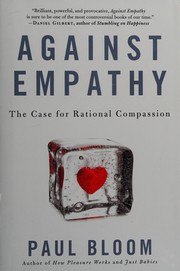
The deliberate contrarian move by an author you have already read sympathetically, which is why it is placed here rather than first. Bloom argues that empathy is a poor guide to moral decisions — a direct challenge to the sentimentalist reading of Haidt.

A history of the trolley problem that takes seriously the objection that responses to bizarre hypotheticals may not predict anything about real moral behaviour. Read it as the check on Greene, whose model is built almost entirely on this paradigm.

A philosopher asking what empirical results actually license. The most useful corrective in the path: it neither dismisses the science nor accepts that findings about how we judge settle how we should.
The Academic Literature
BeginnerMove from trade books to the primary theoretical work and be able to follow current journal debate.
▸ Study plan for this stage
Pace: 10–12 weeks for about 1,550 pages of academic work — this is a different kind of reading from the trade books above. Start with Tiberius's Moral Psychology (256 pages, a textbook, two weeks), then Hauser's Moral Minds (528 pages, three to four weeks), Prinz's The Emotional Construction of Morals (33
- The field's positions mapped against each other — Tiberius's textbook supplies the vocabulary the monographs assume without defining
- The linguistic analogy: a moral faculty with generative structure, in Hauser's informal statement and Mikhail's formal one
- Rawls's 'linguistic analogy' passage in A Theory of Justice as the actual origin of the research programme
- Moral constructivism: Prinz's case that moral concepts are emotion-laden and culturally variable rather than innately structured
- Nativism versus constructivism as the field's deepest live split, and what evidence each side takes as decisive
- How a computational model of moral judgment is specified — representations, operations, and what the model predicts that a verbal theory does not
- Reading heavily criticised positions as positions: Moral Minds is important and contested, and both facts matter
- What it takes to follow current journal debate: knowing which claims are settled, which are contested, and which are terminological
- How does Tiberius carve up the field, and which of her categories do the other three books resist?
- State the linguistic analogy precisely. What is supposed to be analogous to what — the acquisition problem, the competence–performance distinction, or the generative structure itself?
- What is Prinz's positive account of moral concepts, and what does he say about cross-cultural variation that Hauser cannot accommodate?
- Mikhail formalises what Hauser states informally. What does the formalisation buy, and what does it commit him to that Hauser avoids?
- Given the objections raised in stage three, which claims in these four books rest on the trolley paradigm and would move if that paradigm did?
- Where does the emotion-versus-computation dispute bottom out — is it empirical, or is it about what a theory of moral judgment is for?
- Read Hauser and Prinz consecutively rather than with a gap, then write a two-page statement of the disagreement in which each side would accept your characterisation of it. This is the fastest way to see what is genuinely at stake and it is why they are placed adjacent.
- Work through one of Mikhail's formal derivations of a moral judgment step by step, and check its output against your own intuition about the same case. Where the model and your intuition part company is the interesting result, not the boring one.
- Use Tiberius as an index: pick three positions she maps and find the passage in Hauser, Prinz or Mikhail where each is actually argued for. The textbook's summaries and the monographs' arguments are not the same object.
- Track the Rawls citation backwards — find the passage Mikhail is building on and read it in context, then judge whether the research programme is faithful to it.
- Take one recent journal article in moral psychology and mark every term it uses without definition. If Tiberius has given you all of them, you have finished the path.
Next up: This is the end of the path: with the textbook vocabulary and the four main theoretical positions in hand, the journal literature is directly readable without a further intermediary.

The textbook, and the right bridge out of popular science — it maps the field's positions against each other and supplies the vocabulary the monographs assume. Its catalogue record displays the title in capitals.
The strongest statement of the linguistic analogy — that we have a moral faculty structured like Chomskyan grammar. Read it as an important, heavily criticised position rather than a settled result.

The relativist counterweight to Hauser: Prinz argues moral concepts are emotion-laden and culturally constructed rather than innately structured. Reading these two consecutively is the fastest way to see what is genuinely at stake.

The most technical book here, working out the Rawlsian linguistic analogy formally. End on it: it demands everything the earlier stages supply, and the catalogue record drops the leading article from the title.
Discussion
Keep reading
Paths that share books, cover the same subject, or open a related topic.