Forensic Psychology: The Best Books on Psychology in the Justice System, in Order
Forensic psychology is the application of psychology to courts, prisons and investigations, and its public reputation rests almost entirely on the part of it with the weakest evidence base. This path is built to separate the strong claims from the weak ones. It starts with two overviews of what the field actually does, then takes psychopathy — the construct that has survived forty years of testing — before turning to offender profiling, where the popular accounts and the empirical literature disagree sharply and are read here back to back. The final stages cover the areas where psychological research has genuinely changed verdicts, and the contested biological work at the field's edge.
What the Field Claims to Do
IntermediateMap the real scope of forensic psychology — competency, risk assessment, testimony, corrections — and see how little of it resembles the television version.
▸ Study plan for this stage
Pace: 5–6 weeks, and the two books are of very different kinds despite the identical display title. Canter's Forensic Psychology is the Oxford Very Short Introduction — under 150 pages, written for a general reader, and readable in a few evenings. Wrightsman and Fulero's Forensic Psychology is an undergra
- The actual roles: competency to stand trial, criminal responsibility evaluation, risk assessment, child custody evaluation, jury consultation, police selection, correctional treatment
- The clinical–forensic distinction: the client is the court, not the person being assessed, which changes confidentiality and everything downstream
- Structured professional judgement versus unstructured clinical opinion versus actuarial instruments
- Expert testimony and admissibility standards, and why a psychologist's opinion is challenged on method rather than on conclusion
- Canter's deflation of the field's most famous claims, and his standing to make it as the psychologist who put profiling on an empirical footing in Britain
- The size mismatch between the field's public reputation and its actual caseload — profiling is a rounding error, competency evaluations are the volume
- That a Very Short Introduction and a textbook are not interchangeable sources: one gives you a position, the other gives you the field's own consensus account
- List the settings in which a forensic psychologist actually works, in order of how much of the profession's time each consumes. Where does profiling fall?
- Why does it matter that the court, rather than the person assessed, is the client — name three practical consequences.
- What is a competency evaluation assessing, and how does it differ from an insanity assessment?
- Which specific claims does Canter deflate, and what evidence does he give for each?
- Where does Wrightsman and Fulero's textbook treat something as settled that Canter treats as contested?
- Build a one-page map of the field from the textbook: every role, the legal question it answers, and the instrument or method used. Everything later on this path attaches to a cell in that map.
- Read Canter's chapters on profiling and on offender behaviour first, then the corresponding textbook chapter, and write down every point at which they disagree. Keep the list for stage three, which is that disagreement at book length.
- Take one famous television or film depiction and check it, item by item, against the map you built. Score how many of its claims correspond to something a forensic psychologist actually does.
- Write the job description of a forensic psychologist as it would appear in a real advertisement, using only the textbook. Then write it as a reader of popular accounts would imagine it. The gap is what this stage exists to establish.
Next up: With the real scope of the field in view, you can take up its single most replicated construct and see what a psychological measure looks like when it works.

Canter is the psychologist who put profiling on an empirical footing in Britain, and this short book is the best available correction to the popular picture: he surveys the whole field, deflates several of its most famous claims, and does it in under 150 pages. Catalogued here under the bare title Forensic Psychology; it is the Oxford Very Short Introduction, not a textbook.
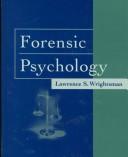
The standard undergraduate textbook, written with Solomon Fulero, covering the psychologist's actual roles in the legal system — evaluation, expert witness, jury research, police selection. Read it after Canter as the reference against which every later book on this path can be located. Two different books on this page display the title Forensic Psychology; this is the textbook, Canter's is the short introduction.
Psychopathy: the Construct That Held Up
IntermediateUnderstand the PCL-R checklist, what it predicts, and why it is the field's most replicated instrument and also its most misused.
▸ Study plan for this stage
Pace: 5–6 weeks, about ten days each. All three are trade books written for general readers rather than manuals — the PCL-R itself is a restricted instrument that requires training, and none of these books will teach you to score it. Without Conscience describes offences by the people Hare assessed, inclu
- The PCL-R's two-factor structure — interpersonal-affective traits and antisocial lifestyle — and why the distinction matters for what it predicts
- What the checklist actually predicts: violent recidivism, institutional behaviour, treatment response — with effect sizes, not certainties
- Psychopathy as a dimensional score rather than a diagnostic category, and the arbitrariness of any cut-off
- How the instrument is misused: as a diagnosis, as a moral verdict, and in sentencing and parole decisions it was not validated for
- Kiehl's paralimbic findings from mobile MRI in prison populations, and his own statement that a group-level imaging result cannot diagnose an individual
- The base-rate and sample problem: the construct was validated on incarcerated men, which is exactly what Snakes in Suits departs from
- That Hare is the instrument's author and therefore an interested party in every claim made for it — and that this is normal in a field where the developer is usually the best-informed critic
- What does a high PCL-R score predict, over what period, and with what accuracy? Give a number, not an adjective.
- Why does the two-factor structure matter — which factor carries the predictive weight, and for what outcome?
- What did Kiehl find, in how many subjects, and what is the honest inference from a group difference in imaging to an individual case?
- In what specific ways does Snakes in Suits leave the validation base of the instrument behind?
- If you were a parole board member, what would you be entitled to conclude from a PCL-R score, and what would you not?
- Write out the PCL-R's factor structure and, for each factor, note which of Hare's case examples in Without Conscience illustrate it. Some cases will illustrate one factor only, which is the finding.
- Take three claims from Snakes in Suits about workplace psychopathy and ask, for each, what sample would be needed to establish it. Then check what sample Babiak and Hare actually had.
- Read Kiehl's description of his imaging method and write down the sample size, the comparison group and the effect. Then write the sentence a journalist would produce from it, and mark the difference.
- Look up one real case in which PCL-R evidence was introduced at sentencing or parole, and write half a page on whether the use matched the instrument's validation. This is the misuse question in concrete form.
Next up: Having seen what a measure with forty years of replication looks like, you can turn to the part of the field with the weakest evidence and the loudest reputation.
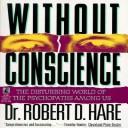
Hare built the Psychopathy Checklist, and this is his own account of the construct behind it. Start the stage here because almost every subsequent claim about psychopathy — in research, in parole hearings, in journalism — is downstream of this instrument, and it is worth meeting it from its author before meeting its critics.

Kiehl scanned hundreds of prisoners with a mobile MRI and reports consistent paralimbic differences in high scorers. Read directly after Hare: it is the strongest evidence that the checklist tracks something biological, and Kiehl is also clear that a group-level imaging finding cannot diagnose an individual.
Hare with Paul Babiak on psychopathy outside prison populations, in workplaces. Included as the stage's caution rather than its climax: this is where the construct is stretched furthest from the forensic samples it was validated on, and reading it here makes that stretch visible.
Profiling, and What the Evidence Says About It
IntermediateRead the founding profiling narratives and the empirical work that tested them, and be able to state what profiling has and has not been shown to do.
▸ Study plan for this stage
Pace: 7–8 weeks, and the order within the stage is the point. Mindhunter and Whoever Fights Monsters are memoirs by FBI agents about their own programme, written as narrative and each about ten days; both describe serial sexual homicide in detail, including offences against children, and both are particip
- The FBI Behavioral Science Unit's method: structured interviews with a small number of incarcerated offenders, from which typologies were induced
- The organised/disorganised dichotomy, what it was meant to do, and the replication failures it has met
- Sampling: roughly three dozen convicted, available and willing men, which is neither random nor representative of offenders at large
- Canter's statistical approach — behavioural consistency, the home-range and circle hypotheses, geographical profiling built from large case series
- Investigative psychology as an empirical programme distinct from clinical profiling
- Turvey's behavioural evidence analysis: reasoning from the physical evidence of the specific case rather than from actuarial types — a third position, itself contested
- The base-rate problem in profiling: a profile that fits many men narrows nothing
- That practitioners do not agree on what profiling is, which is a stronger criticism than any single failed study
- What did Douglas and Ressler actually do to produce the typologies, and what would the same interviews have shown if the offenders had lied?
- Which specific predictions does the organised/disorganised model make, and what happened when they were tested against case series?
- How does Canter's method differ operationally — what data does he start from, and what output does he produce?
- What is Turvey's objection to actuarial profiling, and what is the standard objection to Turvey?
- What, on the evidence in these four books, has profiling been shown to do — and what is the honest list of what it has not?
- Why are the memoirs so much more persuasive to read than the empirical work? Name the narrative devices doing that work.
- Take a single profile reproduced in Mindhunter and score it: how many of its statements are specific enough to exclude anyone, and how many would fit a large share of adult men? That count is the base-rate critique, done by hand.
- Read Douglas and Ressler on the same programme and mark every point where the two accounts differ on facts rather than emphasis. Two participants describing one enterprise is a natural experiment in memoir reliability.
- Reconstruct one of Canter's case analyses from Criminal Shadows: the data he had, the statistical relationship he used, and the inference he drew. Then write the same case as the BSU would have handled it.
- Apply Turvey's behavioural evidence analysis to a case described in one of the memoirs and write out the two competing analyses side by side. Where they diverge, say what evidence would decide between them.
- Write a one-page statement of what you would tell a senior investigating officer that profiling can contribute. Cite the specific evidence for each claim; the page will be shorter than you expect.
Next up: Having seen the field at its weakest, the next stage shows it at its strongest — two research programmes that changed legal procedure and can prove they did.

The FBI Behavioral Science Unit's own origin story, and the single most influential book on the public idea of forensic psychology. Read it first in this stage and read it as a memoir: Douglas is describing an investigative technique developed from interviews with about three dozen offenders, not a validated instrument.
Douglas's colleague and the man who did most of the original prison interviews, covering the same programme from a different seat. Reading the two accounts together shows how much of the organised/disorganised typology came from a small, non-random sample of talkative convicted men.

The rejoinder, and the reason this stage is ordered the way it is. Canter built profiles from statistical patterns across large case series rather than from interviews, and he is explicit that the FBI typology has repeatedly failed to replicate. This is the book that turns the previous two from evidence into data.
Turvey's textbook of behavioural evidence analysis, which argues for reasoning from the physical evidence of a specific case rather than from actuarial types. It is a third position, contested in its own right, and it closes the stage by showing that practitioners do not agree among themselves on what profiling even is.
Where Psychology Has Actually Changed Verdicts
IntermediateCover the two research programmes — eyewitness memory and interrogation — that have produced real, adopted changes in legal procedure.
▸ Study plan for this stage
Pace: 8–9 weeks, and the three books get progressively harder. Eyewitness Testimony is an academic monograph written accessibly and takes about a fortnight. The Psychology of Interrogations and Confessions is a dense clinical and legal handbook, closer to a professional reference than a book to be read st
- Memory as reconstructive: encoding, storage and retrieval as separate points at which information can be introduced
- The misinformation effect and post-event information — Loftus's central experimental finding and its paradigm
- The confidence–accuracy relationship, and why a certain witness is not a reliable one under the conditions that usually apply
- Estimator versus system variables, and why only the second can be changed by procedure — sequential lineups, double-blind administration, unbiased instructions
- Interrogative suggestibility and compliance, and the scales Gudjonsson developed to measure them
- The taxonomy of false confessions — voluntary, compliant, internalised — and the interrogation techniques associated with each
- Garrett's outcome data: what actually went wrong across 250 exonerations, and the dominance of mistaken identification and false confession in that list
- Contaminated confessions containing non-public case facts, which is Garrett's most damaging specific finding
- Describe the misinformation paradigm precisely enough that someone could run it. What is manipulated and what is measured?
- Under what conditions is eyewitness confidence actually informative, and what destroys that relationship?
- Which lineup reforms follow from the research, and which jurisdictions adopted them? What evidence exists that they worked?
- What is interrogative suggestibility, how is it measured, and what does a high score entitle a court to conclude?
- In Garrett's 250 cases, what were the leading causes of wrongful conviction, in order and by proportion?
- How did non-public case facts end up in confessions from innocent people, on Garrett's account?
- Take Garrett's causal breakdown of the 250 exonerations and match each leading cause to the research programme that studies it — Loftus for identification, Gudjonsson for confession. The two that have no matching research programme are the interesting residue.
- Read one full interrogation transcript in Gudjonsson and mark every question that supplies information rather than eliciting it. Then mark where the suspect first repeats a fact they were given.
- Design a lineup procedure from Loftus's system-variable findings — instructions, fillers, administrator, confidence statement — and compare it with the procedure actually used by a police force whose policy you can find published.
- Pick one exoneration case from Convicting the Innocent, then locate the eyewitness and confession research that explains what happened to it. Write the case up as an application of the two research programmes; this is the exercise the stage is built around.
- Write half a page on why this stage's research changed procedure when the profiling literature did not. The answer is about the form of the claim, not about the quality of the researchers.
Next up: You now know what strong forensic psychology looks like, which is the only position from which the biological claims at the field's edge can be judged rather than dismissed.

Loftus's demonstration that memory is reconstructive and that identification confidence is a poor guide to accuracy is the field's most consequential finding, and it changed lineup procedure in several jurisdictions. Read it before the interrogation literature: the same malleability underlies both.
The definitive treatment of false confessions, from the psychologist whose suggestibility scales are used in court. Dense and clinical, and the necessary counterweight to the profiling stage — this is what rigorous forensic psychology looks like when it is applied to a specific procedural question.

A law professor's systematic study of the first 250 DNA exonerations, showing what actually went wrong in each. It is here at the end of the stage because it supplies the outcome data: mistaken identification and false confession, exactly the two mechanisms Loftus and Gudjonsson describe, dominate the list. Barry Scheck's Actual Innocence covers the same territory as advocacy rather than analysis.
The Contested Edge
IntermediateEngage with the biological and actuarial claims about criminal behaviour, and be able to say precisely where each one overreaches.
▸ Study plan for this stage
Pace: 5–6 weeks. The Anatomy of Violence is popular science by a working researcher — accessible, argumentative, and the most contested book on the path; it takes about a fortnight and its final chapters propose screening applications that a great many of Raine's colleagues reject. The Psychology of Crimi
- Neurobiological correlates of antisocial behaviour: prefrontal structure and function, autonomic underarousal, and the size of the associations
- Correlation, causation and reverse causation in a literature where the outcome is a conviction rather than a behaviour
- The group-to-individual inference problem, which is the same objection you met in the psychopathy stage and the reason this stage comes last
- Screening proposals and their false-positive arithmetic: at any realistic base rate, most people flagged will not offend
- The Central Eight risk factors, and the fact that the strongest ones are not biological
- Risk-Need-Responsivity: assess risk, target criminogenic need, match the intervention to the person — and the evidence that this reduces reoffending
- Static versus dynamic risk factors, and why only the second gives you something to do
- The path's closing claim: the unglamorous actuarial model outperforms every intuitive method encountered earlier on this path
- What is the strongest single neurobiological finding Raine reports, and what is its effect size? How does that compare with the Central Eight?
- How would a screening programme built on Raine's proposals perform at a realistic base rate — how many false positives per true one?
- Which of the Central Eight are dynamic, and what intervention does each imply?
- What does the RNR evidence actually show about reduced reoffending, and how good are the underlying studies?
- Where does Raine himself concede the limits of his argument, and where does he not?
- Looking back across the whole path: rank profiling, the PCL-R, eyewitness research and RNR by strength of evidence, and defend the ranking.
- Do the false-positive arithmetic yourself: take Raine's strongest reported association, assume a realistic base rate for serious violence, and compute how many people a screening programme would flag for each offender it caught. That single calculation is the most efficient critique available.
- Build the Central Eight as a table from Andrews and Bonta with, for each, the effect size and whether it is static or dynamic. Then mark which of Raine's factors would appear on the same table and where they would rank.
- Design a correctional intervention for a specific offender profile using RNR principles, then write what a profiler, a psychopathy researcher and Raine would each recommend instead. Compare all four against the outcome evidence.
- Write the closing two-page assessment this path is built toward: for each stage, what forensic psychology has established, what it claims, and where the gap is largest. Cite specific books and name the authors who are participants in what they describe.
Next up: This closes the path: the field's real scope, its best-validated construct, its weakest famous technique, the two programmes that changed procedure, and the actuarial model that outperforms all the intuition.
Raine's case that violent behaviour has consistent neurobiological correlates, and his willingness to follow it toward screening proposals. Deliberately the most contested book on this path: read it after the exoneration literature, so you already have a working sense of what happens when a probabilistic claim is applied to an individual.
Andrews and Bonta's textbook, and the field's actual state of the art on prediction: the risk-need-responsivity model, built on meta-analysis of what does and does not predict reoffending. It closes the path by showing that the boring actuarial answer outperforms every intuitive one in this list.
Discussion
Keep reading
Paths that share books, cover the same subject, or open a related topic.