20th Century Boys Reading Order and Guide
Naoki Urasawa's 20th Century Boys is a single continuous thriller told across 22 volumes, so there is only one correct order — volume 1 to volume 22, then the two-volume coda 21st Century Boys. What a reading guide can actually help with is pacing: the series front-loads a slow, nostalgic mystery, detonates at the midpoint, then jumps fifteen years forward and effectively restarts with a new cast. These stages mark those hinges so you know what shape the book is about to change into, and where the famous stalls are.
Start Here: The Symbol
BeginnerMeet Kenji and the boyhood 'Book of Prophecy', and learn to read Urasawa's constant cuts between 1969 and the present.
▸ Study plan for this stage
Pace: About a week for five volumes. Each runs 200-220 pages but they are read pages, not prose pages — an unhurried volume takes 40 minutes to an hour, and most readers do two or three in an evening once volume 3 lands. One thing to settle before you open volume 1: this path follows Viz's original 22-vol
- The two clocks: Urasawa cuts between 1969-70 and 1997 onward with no captions, and the reader is expected to date a scene from haircuts, cars and shop fronts alone
- The symbol itself — an eye over a raised hand — as a plot device that works backwards: the mystery is not what it means but who else remembers inventing it
- The Book of Prophecy as a plotting engine. Once you know the childhood document lists disasters in order, every event becomes a checklist item and Urasawa can generate suspense without explaining anything
- Kenji as an anti-hero of the ordinary: a failed musician minding a convenience store and his sister's baby, which is why the series' scale feels absurd to him and to you
- Urasawa's face acting — he holds on reaction shots for whole pages, and the plot information is usually in the face rather than the dialogue
- The children's hideout in the grass field as the series' emotional origin, returned to dozens of times with different information each visit
- Unreliable memory as structure: the 1969 scenes are being remembered by adults, so they change as the rememberers learn things
- What exactly does Kenji recognise on the wall, and why does the series make you wait so long to learn what the childhood group actually agreed to?
- How does Urasawa signal a timeline switch without a caption, and can you name three of his visual cues by the end of volume 3?
- Why does the first death in volume 3 change the register of the whole book — what does the story become that it was not in volume 1?
- By the end of volume 5, what has the Book of Prophecy correctly predicted, and what does that force the surviving friends to believe about one of themselves?
- Why is it structurally necessary that the Friend is masked and publicly beloved rather than hidden?
- Keep a one-line-per-name list of the childhood gang from volume 1 — nickname, adult job, whether they were at the hideout. Urasawa reintroduces these people dozens of volumes later and expects you to remember them.
- Sketch the symbol from memory after volume 2. You will be spotting it in backgrounds for the next twenty volumes and it is drawn deliberately simply.
- After volume 5, write down the prophecy's events in the order you believe they occur. Keep the list — the fun of the middle of the series is watching your ordering be wrong.
- Read volume 3 in one sitting rather than across two nights. The tonal turn from nostalgia to thriller happens inside it and is much less effective interrupted.
Next up: You can now read Urasawa's timeline cuts without effort and you know what the prophecy promises, which is exactly the state the next stretch needs you in, because it stops teasing the predictions and starts executing them.

The only place to begin. A failed rock musician running a convenience store notices a symbol he and his friends invented as children turning up around a cult, and the whole series is built on that one recognition.

The childhood flashbacks start doing real plot work rather than just atmosphere. Read straight on from volume 1 — Urasawa withholds the sequence of 1969 deliberately and rearranges it as he goes.

The circle of old friends widens and the first deaths land. This is where the nostalgia curdles into a conspiracy thriller and the pace picks up permanently.

The Friend becomes a public figure rather than a rumour. Keep going: the identity question raised here is the engine of the next eighteen volumes.

The prophecy stops being a childish document and starts predicting events accurately. By the end of this volume you should be able to feel the countdown the title has been hiding.
Bloody New Year's Eve
IntermediateRead through the series' first climax — the end-of-century sequence the opening five volumes have been building toward.
▸ Study plan for this stage
Pace: Volumes 6 through 10, and the shortest calendar window in the path — read them across a long weekend if you can, because this is one continuous set-piece split across five spines. Be aware of a gap that is ours, not the series': our catalogue does not currently carry volumes 6 and 8 of this edition,
- The countdown structure — once a date is fixed in-story, Urasawa runs the two timelines toward it in parallel so the 1969 scenes start answering questions the 1999 scenes are asking
- The pivot from investigation to action: the friends stop trying to identify the Friend and start trying to stop an event, which changes who the series can afford to kill
- Volume 7's cross-cutting, where past and present are staged as the same scene on facing pages — Urasawa's most controlled sequence in the first half
- Consequence as world-building: volume 9 is largely about what the previous night did to the country, not about who did it, which is unusual for a thriller and sets up the entire second half
- The Friend's method — he does not hide his crimes, he pre-announces them and then takes credit for the rescue, which is why publicity rather than secrecy is his weapon
- Volume 10 as a deliberate false ending. It closes the first movement so cleanly that stopping feels legitimate, which is the trap the time skip springs
- What has the Friend actually achieved by the end of the sequence, and how is his position stronger afterward than before?
- In volume 7, what does the parallel staging of 1969 and the present reveal that neither timeline could have shown alone?
- Volume 9 spends its length on aftermath rather than on the perpetrator. What does that choice tell you about what kind of story this is going to be?
- Which members of the original group are still in play at the end of volume 10, and which of them does the series want you to suspect?
- Why does volume 10 read like an ending, and what would you lose by treating it as one?
- Before you start, note down your current best guess at the Friend's identity and your reasoning. Seal it. You will want the evidence of what you believed at this point.
- Read volumes 9 and 10 back to back without a night in between — they are one unit divided by a spine, and the momentum is the point.
- Go back to your prophecy list from the last stage and mark off what has now happened, in what order, and what was wrong. The gap between the list and the events is where the series hides its best twist.
- Resist every search engine. This series is spoiled catastrophically and permanently by a single stray image; the identity question is the only thing carrying you through the next eight volumes.
Next up: Volume 10 leaves the story at a point of apparent completion, which is precisely what makes the fifteen-year jump at the start of the next stage land — you have to lose the cast once before the second half can hand it back to you.
The group commits to acting on the prophecy instead of arguing about it. Pace matters here — read six through ten in as few sittings as you can manage.

Urasawa tightens the cross-cutting between timelines until the two halves of the story are running the same scene. Read in order; the flashbacks now answer questions asked two volumes earlier.
The countdown to the last night of the century becomes literal. The volume is mostly set-piece, and it is the payoff for the slow first act.

The consequences of that night begin to reshape the world of the story. Read it immediately after volume 8 — they are one unit split by a spine.

Closes the first movement and sets up the time skip. If you stop anywhere, stop here rather than mid-arc — but the second half is where the series earns its reputation.
Kanna's World
IntermediateAbsorb the fifteen-year jump and the new protagonist without losing the thread of the original cast.
▸ Study plan for this stage
Pace: Volumes 11 through 14, a week or so, but expect the slowest going of the whole series in the first fifty pages of volume 11 — new lead, new decade, new cast, and Urasawa explains none of it. That disorientation is engineered; do not go back and reread the earlier volumes to fix it. Two more catalogu
- The hard reset as a technique: Urasawa restarts the series with Kenji's niece Kanna in the lead, and the reader's confusion mirrors hers
- Three timelines rather than two — 1969, the turn of the century, and the present of the second half — with the earliest one still withholding material
- Kanna as Kenji's inversion: where he was a reluctant ordinary man, she is conspicuously extraordinary, and the series is aware that this makes her a different kind of protagonist
- A world rebuilt around the Friend, shown in volume 14 from inside the regime rather than from the street — the propaganda, the schooling, the official version of what happened
- Reintroduction as a game: characters you knew return altered and un-flagged, and spotting them is a skill the series trains and then tests
- Historical revision as the villain's real weapon — the second half is largely about who controls the account of the first half
- What has the Friend's regime told the public about the events of the previous stage, and how does the official story differ from what you watched happen?
- Why does Urasawa hand the series to Kanna rather than continuing with an existing adult character?
- In volume 14, what does seeing the regime from the inside change about how threatening it seems?
- Which characters from the first half do you recognise in the new world, and what tipped you off — a face, a mannerism, a piece of dialogue?
- What is still unresolved from 1969 at this point, and why has Urasawa held it back this long?
- When you finish volume 11, do not reread earlier volumes to orient yourself. Push to volume 14 first — the disorientation resolves from the front, not the back.
- Start a second character list for the post-skip cast and draw lines to the pre-skip names where you think you have identified someone. Leave the uncertain ones uncertain on the page.
- After volume 14, go back and reread only the 1969 flashback scenes in volume 1. They read completely differently with the regime's official history in your head, and this is the single best reread checkpoint in the series.
- Note every time the regime's version of an event contradicts what you saw. The list is the spine of the argument the ending eventually makes.
Next up: With the new cast placed and the regime seen from within, you are ready for the long middle stretch, which stops adding characters and spends itself entirely on reopening the one question the series has never closed.

The hard reset. Kenji's niece Kanna is now the lead and the world has been rebuilt around the Friend. Expect to feel disoriented for thirty pages — that is intended, not a lapse.
The new supporting cast is assembled and the surviving originals are placed. Read attentively: Urasawa reintroduces old faces under new names and jobs.
The second-generation resistance takes shape and the 1969 flashbacks return with new information. The two timelines are now three.

The Friend's regime is shown from the inside rather than from the street. A good checkpoint for re-reading the volume 1 flashbacks with what you now know.
The Friend's Empire
IntermediateFollow the long middle of the second half, where the identity mystery is repeatedly re-opened.
▸ Study plan for this stage
Pace: Volumes 15 through 18, and the stretch to schedule carefully — this is where readers stall. The plotting gets denser rather than faster, and volume 17 in particular hands out information at a rate that punishes reading it twenty pages at a time on a phone. Give it four evenings, one volume each, and
- Answer, then unanswer: volume 15 resolves the series' central question and then dismantles the resolution, which is the structural move the whole second half exists for
- The digression chapters — Urasawa hands a full chapter to a minor character's life, and several of these are the best writing in the series rather than filler
- Convergence plotting in volume 17: the scattered cast begins moving toward one another, and the density is the cost of that, not a lapse in pacing
- The last withheld 1969 material arriving in volume 18, which retroactively rewrites scenes you have read four or five times
- Complicity as a theme — the empire runs on ordinary people who found the new order convenient, and the digression chapters are the argument for that
- Urasawa's habit of making you love someone in fifteen pages specifically so that a plot event will cost something
- What answer does volume 15 give to the identity question, and what specifically undermines it?
- Pick one of the standalone character chapters in volume 16. What is it doing for the main plot, and would the series be worse without it?
- Why does volume 17 feel slow when it contains more incident than any volume before it?
- What does the 1969 material in volume 18 change about the hideout scenes you read in the first stage?
- By the end of this stage, what does the series suggest made the Friend possible — a person, or a set of ordinary conditions?
- Reread your sealed guess from the second stage now. Note what evidence you were weighting and what you ignored; the series is built to make you over-weight exactly that.
- After volume 16, name the minor character whose chapter you found strongest and write two sentences on why. It is the fastest way to articulate what Urasawa is actually good at.
- Keep a running list of every scene the series has now shown you three or more times. Compare the versions — the differences are the plot.
- If you stall in volume 17, switch reading mode: read it in two long sittings rather than four short ones. This volume is defeated by fragmentation, not by length.
Next up: Everything from here is resolution rather than complication, so once volume 18 has delivered the last of the 1969 material you can read the final act as a single continuous movement instead of as a puzzle.

The series' central question — who the Friend actually is — is answered and then unanswered. Read this stretch in order and resist looking anything up.

Side characters get full backstories here. Urasawa's habit of handing a chapter to a minor figure is at its strongest, and several of these chapters are the best in the series.

The endgame is announced and the scattered cast starts converging. The plotting gets denser rather than faster — this is the stretch readers most often stall in.

The last of the withheld 1969 material starts arriving. Push through: everything from here is resolution.
The Ending
IntermediateFinish the series and judge for yourself whether the ending justifies the build.
▸ Study plan for this stage
Pace: Volumes 19 through 22, best read as one long final act over two or three sittings rather than as four separate books — perhaps ten hours in total. A gap to state plainly: volume 20 of this edition is not currently in our catalogue, so the path page jumps from 19 to 21. That is our shelf, not the ser
- Convergence as payoff: volume 19 begins collecting a cast that has been dispersed for roughly ten volumes, and most of the remaining pleasure is recognition
- Volume 21 as the emotional peak — the childhood material and the present-day plot finally occupy the same scene rather than alternating
- The song as the series' actual centre. What Kenji wrote in a school corridor is the object the whole apocalypse has been circling, and the ending stands or falls on whether you accept that
- Urasawa's ending problem, which is worth naming rather than defending: he is a better generator of mysteries than of solutions, and this is the most argued-about part of his career
- Deliberate incompleteness — volume 22 resolves the plot while leaving one identity thread open, which is why a coda exists at all
- The retrospective test: whether the flashbacks you have been reading for 22 volumes were foreshadowing or misdirection is a judgement only available at the end
- Does the ending justify the build? Answer it in a sentence before you read anyone else's opinion, because this is the series' central critical argument.
- What is the significance of Kenji's song by the end, and when did you first suspect it mattered?
- Which flashback, in hindsight, was the most important piece of information Urasawa gave you, and how early did he give it?
- What is left open at the end of volume 22, and can you see why it needed a separate coda rather than another chapter?
- Having finished, which stage of the series do you think is strongest — and does that change how you would recommend it to someone else?
- Read volumes 19 through 22 with your character lists from the earlier stages open beside you. The convergence rewards recognition and punishes vagueness.
- After volume 22, reread the first twenty pages of volume 1. It is a different scene now, and this is the cleanest demonstration available of what a long-form mystery does to its own opening.
- Write down your verdict on the ending, then read the arguments online. You have earned the right to have the discussion, and only now can it not spoil you.
- If the open thread bothers you, get 21st Century Boys before that feeling fades. It is two volumes and it exists specifically for readers in your position.
Next up: This is the end of the path. The natural next move is not another series but a reread of the first five volumes with the ending in hand, which is where Urasawa's planting is most visible and most impressive.
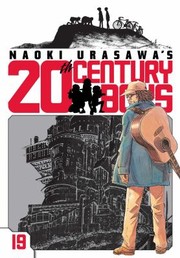
The convergence begins in earnest. Read nineteen through twenty-two as one long final act rather than as separate volumes.

The penultimate volume and the emotional peak. The childhood material and the present-day plot finally occupy the same scene.

The last volume of the main run. It resolves the plot but deliberately leaves one thread open, which is what the two-volume 21st Century Boys coda exists to close — read that next if you want the full ending.
Discussion
Keep reading
Paths that share books, cover the same subject, or open a related topic.