Start with All Hell Let Loose. It is 768 pages covering the entire Second World War, it was written late in his career rather than early, and every other book on this path becomes more useful once you hold the frame it builds.
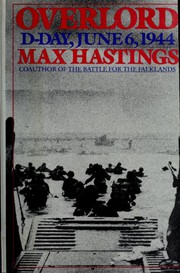
The obvious alternative is Overlord, because Normandy is the campaign everyone knows and it is the book that made his name in 1984. It is also a narrow study that assumes you know where the invasion sits in the war, and it contains the single most argued-over judgement of his career. Read the survey first and you can weigh that argument instead of absorbing it.
Before anything else, a buying warning. All Hell Let Loose was published in the United States as Inferno: The World Aflame, 1939-1945. Same book, different jacket. Check the subtitle before ordering what looks like a second title, because this is the most common way readers end up with two copies.
Pace it at 25 pages a day for a month. It is organised chronologically but reads as a mosaic of testimony rather than a campaign narrative, so it survives being put down and picked up better than most military history.
The western campaigns
Take Catastrophe 1914 first even though it is a different war — the reason is stylistic rather than chronological, since it is the clearest demonstration of his method applied to a subject where the standard story is well known. Then read Overlord and Armageddon back to back over about five weeks, because Armageddon begins almost exactly where Overlord stops and the pairing is intended.
Overlord is where to know the controversy. Hastings argues that Allied ground troops were, unit for unit, outfought by the Germans in Normandy and that Allied victory rested on materiel and air power. Historians have been contesting that reading for forty years, both the evidence and the framing, and it remains a live argument rather than a settled finding. Read it as a case being made.
The other wars
The longest stage on the path. Nemesis - The Battle for Japan 1944-45 wants three weeks, The Korean War two, and VIETNAM AN EPIC TRAGEDY 1945-1975 three or four — it is the biggest book here and the densest in testimony. Read them in this order, which is chronological and also the order in which his sympathies get harder to predict.
A second buying note: Nemesis - The Battle for Japan 1944-45 appeared in the United States as Retribution, with the same subtitle. And our catalogue stores the Vietnam book in shouting capitals with the subtitle run into the title; it is simply Vietnam: An Epic Tragedy.
The specialist studies
Bomber Command and Chastise consecutively, since the second is a short, pointed companion to the first — the dams raid read against the strategic campaign that surrounded it. Bomber Command was unsparing about the area-bombing policy and its architects when it appeared in 1979, and that judgement is still disputed by other historians of the campaign.
Then The Secret War, on intelligence across the whole conflict, and Abyss, on the Cuban missile crisis, in either order — though Abyss makes the better finish, since it is the one book here about a war that did not happen.
Where to stop
Four books is a full working knowledge: All Hell Let Loose, Catastrophe 1914, VIETNAM AN EPIC TRAGEDY 1945-1975 and Abyss. That gives you two world wars, one long American defeat and one avoided catastrophe, which is the arc his whole shelf traces. Other twentieth-century history routes are on the reading paths index.
Follow the full ordered path here: Max Hastings Reading Order: Where to Start.
Ready to learn something deeply?
Build a reading path — free