Literary Translation: The Best Books to Learn the Craft, in Order
This curriculum moves from foundational theory to hands-on craft and finally to deep practice, building a rigorous understanding of literary translation across fiction and poetry. Starting at the intermediate level, each stage assumes the vocabulary and conceptual tools built in the previous one, culminating in the ability to engage critically and creatively with translation as both art and scholarship.
Theory & Foundations
IntermediateEstablish a conceptual framework for literary translation: what it is, what it demands, and the key theoretical debates (equivalence, fidelity, foreignization vs. domestication) that shape every translation decision.
▸ Study plan for this stage
Pace: 8–10 weeks, ~40–50 pages/day with weekly reflection sessions
- Translator's invisibility and the illusion of transparency in translation
- Equivalence at multiple levels: word, phrase, meaning, and cultural context (Baker's framework)
- The foreignization vs. domestication spectrum and its ethical implications
- Fidelity as a contested concept: fidelity to what, and at what cost?
- The politics of translation: how power, ideology, and cultural dominance shape translation choices
- Practical craft decisions: handling idioms, cultural references, register, and untranslatable elements
- The translator's agency and responsibility in making visible/invisible choices
- Translation as interpretation, not mechanical transfer
- What does Venuti mean by 'invisibility,' and why does he argue it is both a professional norm and an ethical problem?
- How does Baker's concept of equivalence differ from traditional notions of fidelity, and what levels of equivalence does she identify?
- What is the foreignization vs. domestication debate, and what are the arguments for and against each approach?
- According to Biguenet and the other authors, what are the main practical challenges translators face when deciding between literal accuracy and readability?
- How do ideology, power, and cultural politics influence translation choices, and what responsibility do translators bear for these choices?
- Can a translation ever be truly 'faithful' to an original? What would that even mean?
- Read a short passage (1–2 pages) in translation alongside the original (if accessible). Annotate 5–10 specific translator choices and hypothesize why each was made; then compare your reasoning to any translator's note or introduction.
- Translate a short poem or paragraph (200–300 words) from a language you know into English, making deliberate choices about foreignization vs. domestication. Write a 1-page reflection on your decisions and the trade-offs you faced.
- Analyze a published translation's handling of one untranslatable element (idiom, cultural reference, wordplay, register). Propose 2–3 alternative translations and justify each using concepts from Venuti, Baker, and Biguenet.
- Create a 'translation decision matrix' for a short text: list 10 key words/phrases, identify what each means, what it evokes, and what equivalent(s) you would choose in English—then explain your reasoning using Baker's equivalence framework.
- Read two different translations of the same short work (e.g., a poem or fable). Compare them side-by-side, identifying where they diverge and whether each translator leans toward foreignization or domestication. Write a 2-page comparative analysis.
- Conduct a close reading of Venuti's or Baker's argument in one chapter, then find a real published translation that either exemplifies or contradicts their theory. Write a 1-page case study.
Next up: This stage equips you with the theoretical vocabulary and conceptual debates needed to evaluate and critique translation choices, preparing you to move into practice-focused stages where you will apply these frameworks to your own translation projects and develop specialized skills in specific genres or language pairs.
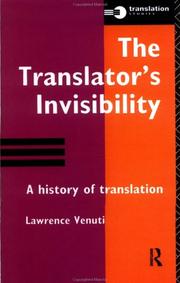
The essential starting point for translation theory — Venuti's argument about domestication vs. foreignization gives you the central vocabulary and ethical stakes of the field before you read anything else.
A systematic, accessible survey of linguistic and discourse frameworks for translation; reading it after Venuti grounds his cultural arguments in concrete analytical tools.
A bridge from pure theory to practice — leading translators reflect on their own processes, making abstract theoretical questions feel immediate and personal.
The Art of the Translator
IntermediateDevelop an intuition for the translator's creative and ethical choices — voice, loss, equivalence, and the relationship between translator and author — through the reflections of master practitioners.
▸ Study plan for this stage
Pace: 4–5 weeks, ~40–50 pages/day (approximately 250–300 pages total)
- Translation as creative act, not mechanical transfer: how translators make deliberate choices about meaning, tone, and cultural resonance rather than seeking word-for-word equivalence
- The problem of equivalence: why perfect equivalence between languages is impossible, and how translators navigate the gap between source and target languages
- Voice and authorial intent: how translators must balance fidelity to the author's voice with the demands and idioms of the target language
- The ethics of translation: the translator's responsibility to both author and reader, and the moral dimensions of choosing what to preserve, adapt, or sacrifice
- Loss and gain in translation: understanding what is inevitably lost in translation and what unexpected gains or new meanings can emerge
- The translator's invisibility paradox: how the best translations feel natural and transparent while requiring enormous visible labor and decision-making
- Cultural mediation: how translators serve as cultural interpreters, navigating differences in context, humor, idiom, and worldview between source and target cultures
- Practical translation strategies: specific techniques (domestication vs. foreignization, literal vs. free translation, etc.) and when each serves the text best
- What does Bellos argue about the relationship between translation and equivalence? Why does he suggest that perfect equivalence is neither possible nor desirable?
- How does Bellos characterize the translator's role in relation to the author? What ethical responsibilities does he identify for translators?
- Describe the concept of 'voice' in translation as Bellos presents it. How do translators navigate preserving an author's voice while making the text work in a new language?
- What examples does Bellos use to illustrate the problem of cultural difference in translation? How do translators handle idioms, humor, or culturally specific references?
- According to Bellos, what is 'lost' in translation, and what might be 'gained'? Can you give specific examples from the book?
- How does Bellos explain the paradox of the translator's invisibility? Why should readers care about translation choices even when they don't notice them?
- Select a short passage (1–2 paragraphs) from a translated work you're reading. Research the original language version if possible, and write a brief analysis of three translation choices the translator made—what did they prioritize, and what trade-offs did they accept?
- Attempt your own translation of a short poem or prose passage (100–150 words) from another language. Document your decision-making process: where did you choose literal accuracy vs. readability? Where did you lose something? What surprised you?
- Read two different English translations of the same passage from a classic work (e.g., different translations of Dante, Cervantes, or Dostoevsky). Compare them side-by-side and write a 300-word analysis of how each translator's choices reflect different philosophies of translation.
- Identify an idiom, cultural reference, or joke in a translated text that you suspect was challenging to translate. Research how different translators have handled it, or speculate on the choices involved. Write a brief reflection on what was at stake.
- Create a 'translation diary' as you read Bellos: after each chapter or section, jot down one key insight about translation and one real-world example (from your own reading or media consumption) that illustrates it.
- Interview a translator (in person, via email, or by finding a podcast/video interview). Ask them about a specific choice they made in a translation and how Bellos's ideas relate to their own practice. Summarize the conversation in 500 words.
Next up: By internalizing the translator's creative and ethical agency through Bellos's reflections, you'll be prepared to engage with the next stage's deeper exploration of how specific translation strategies shape literary meaning and how different languages and cultures demand fundamentally different approaches to the same text.
Witty and wide-ranging, this book deepens your understanding of what translation actually does to meaning; it should be read once you have the theoretical grounding to appreciate its arguments.
Translating Fiction: Craft in Depth
ExpertMaster the specific craft challenges of translating prose fiction — style, register, dialect, humor, and cultural untranslatability — through both practitioner essays and close comparative analysis.
▸ Study plan for this stage
Pace: 8–10 weeks, ~40–50 pages/day with close re-reading and annotation of examples
- The translator's dual fidelity: accuracy to source text versus fluency in target language, with neither absolute
- Style as a system of choices (syntax, rhythm, word frequency, register shifts) that must be reconstructed, not copied
- Dialect, voice, and register as untranslatable cultural markers requiring creative equivalence rather than literal transfer
- The ethics and aesthetics of visibility: when to make translation transparent versus when to foreground the translator's presence
- Humor, wordplay, and cultural allusions as sites of creative problem-solving where literal translation fails
- The translator's reading practice: how close attention to prose rhythm and stylistic patterns informs decision-making
- Comparative analysis as a method: studying multiple translations of the same passage to understand trade-offs and alternatives
- How does Tim Parks define 'style' in translation, and why is it more than just vocabulary and grammar?
- What does Nataly Kelly mean by the translator's 'invisibility,' and when should a translator become visible in their work?
- How would you approach translating a character's distinctive dialect or sociolect while maintaining readability in the target language?
- What are the key differences between translating humor versus translating emotional or philosophical prose, according to these texts?
- How do you balance fidelity to the source text's syntax and rhythm against the natural idioms and flow of the target language?
- What role does the translator's own reading practice and stylistic sensitivity play in making effective translation choices?
- Translate a 2–3 page passage of literary fiction (from a language you know) and write a 500-word reflection on three specific style choices you made and why—then compare your translation to an existing published translation of the same passage
- Create a 'style profile' of a prose passage: identify 5–7 distinctive stylistic features (sentence length, punctuation, repetition, register, rhythm) and explain how you would preserve or adapt each in translation
- Translate a passage containing dialect, slang, or sociolect; write a brief analysis of what you lost and what you gained, and propose 2–3 alternative approaches
- Identify a humorous or wordplay-heavy passage in a novel; attempt three different translations and evaluate which best preserves the humor, the meaning, and the style
- Conduct a comparative analysis: find two published translations of the same novel excerpt and annotate the differences in 10–15 sentences, noting where each translator prioritized different values (accuracy, fluency, style, cultural accessibility)
- Read a translator's preface or essay about their specific translation choices for a novel; write a 400-word response identifying one choice you agree with and one you would have made differently, with justification
Next up: This stage equips you with the craft vocabulary and analytical tools to diagnose and solve specific translation problems in fiction, preparing you to apply these principles to specialized genres (poetry, drama, children's literature) or to develop your own translation philosophy and practice in the next stage.

Grounds the craft discussion in vivid real-world examples of what is at stake when fiction crosses languages, making the abstract concrete before the harder analytical texts.

Parks performs close, rigorous analysis of how great novelists' styles have been rendered in English — an indispensable workshop in reading translations critically.
Translating Poetry: Theory & Practice
ExpertConfront the unique demands of poetry translation — sound, form, image, and the tension between semantic and aesthetic fidelity — and develop a principled approach to translating verse.
▸ Study plan for this stage
Pace: 8–10 weeks, ~40–50 pages/day, with 2–3 days per week dedicated to hands-on translation practice
- The fundamental tension between fidelity to source meaning and fidelity to poetic form, sound, and aesthetic effect
- How translation theory frameworks (equivalence, functionalism, descriptive approaches) apply differently to poetry versus prose
- The role of close reading and textual analysis in understanding what must be preserved or sacrificed in translation
- Sound, rhythm, meter, and phonetic texture as untranslatable yet essential dimensions of poetry
- The concept of the poem as a unified aesthetic object with interdependent layers (semantic, formal, sonic, imagistic)
- How cultural and historical context shapes both the source poem and translation choices
- The translator's need for a principled, conscious decision-making framework rather than ad-hoc solutions
- The ethics of visibility: when and how to signal translation choices, losses, and interpretive decisions to the reader
- What are the main theoretical frameworks for understanding translation, and how do they account for the unique challenges of poetry?
- Why is close reading of the source poem essential before translation begins, and what specific textual features should a translator analyze?
- What is lost and what is gained when a translator prioritizes semantic fidelity over formal or sonic fidelity, and vice versa?
- How do meter, rhyme, alliteration, and other sonic elements function in the source poem, and what are viable strategies for handling them in translation?
- What does it mean to treat the poem as an integrated aesthetic object, and how does this shape translation decisions?
- How can a translator develop and articulate a principled approach to poetry translation rather than making ad-hoc choices?
- Read and annotate a short poem (8–16 lines) from the source language, identifying all layers: semantic content, formal structure (meter, rhyme scheme), sonic texture, imagery, and cultural allusions. Write a 2–3 page analysis of what makes this poem 'work' as a unified object.
- Translate the same short poem three times using three different strategies: (1) prioritizing semantic accuracy, (2) prioritizing formal/sonic preservation, (3) prioritizing aesthetic effect in the target language. Compare the three versions and write a 1–2 page reflection on what each approach sacrifices and preserves.
- Select a published translation of a poem you've studied and reverse-engineer the translator's choices: identify moments where they deviated from literal meaning, explain why, and assess whether the deviation was justified by formal or aesthetic constraints.
- Translate a poem of moderate difficulty (20–40 lines) with a full apparatus: the source text, your translation, a detailed line-by-line commentary explaining your key decisions, and a brief statement of your overall translation philosophy for that poem.
- Conduct a comparative analysis of two published translations of the same poem (in the same language pair if possible), identifying where they diverge and why, then articulate which approach you find more defensible and on what grounds.
- Write a translator's preface (500–750 words) for a hypothetical collection of poems you've translated, explaining your approach to the specific challenges posed by the source poet's work and the target language.
Next up: This stage equips you with both theoretical grounding and practical decision-making tools for poetry translation, preparing you to apply these principles to sustained translation projects, specialized forms (dramatic verse, epic poetry), or language-specific challenges in the next stage.
An anthology of essential essays from Dryden to Benjamin to Nabokov; reading it now, with craft experience behind you, lets you engage these canonical arguments at full depth.

A landmark work presenting poems in their original languages with facing prose analyses — teaches you to inhabit a poem before attempting to translate it.

Lefevere's systematic taxonomy of poetic translation strategies is the most practical toolkit available for poetry translation, and rewards the full theoretical background built across this curriculum.
Discussion
Keep reading
Paths that share books, cover the same subject, or open a related topic.