Best Books on Learning to Fly and the Private Pilot Licence, in Reading Order
Learning to fly splits neatly into three things books can genuinely teach — how a wing behaves, what you must know for the written exam, and how pilots get killed — and one thing they cannot, which is the flying itself. This path is ordered to match a real training syllabus: feel and motivation first, then the ground-school knowledge, then the manuals that walk manoeuvre by manoeuvre alongside your instructor, then weather and accident analysis. It ends past the checkride, because the licence is a licence to keep learning and the statistics say the first two hundred hours are the dangerous ones.
Before you book the first lesson
BeginnerUnderstand what a wing actually does in terms of angle of attack rather than formulas, and get an honest sense of what a flying life involves
▸ Study plan for this stage
Pace: 3–4 weeks for ~780 pages. No prerequisites at all beyond arithmetic — Langewiesche deliberately uses no equations. Read Stick and Rudder slowly (~20 pages/day, it repays rereading the first four chapters) and Fate is the Hunter at whatever pace you like; it is a memoir, not a manual.
- Angle of attack is the only thing the wing cares about — Langewiesche's central point, and the reason a wing can stall at any airspeed and any attitude
- The elevator controls airspeed and the throttle controls altitude, not the intuitive reverse — Stick and Rudder's most useful and most counter-intuitive chapter
- Why the rudder is not a steering wheel: adverse yaw, coordinated turns, and the fact that the aeroplane is turned with the ailerons
- The stall-spin accident explained in terms of angle of attack rather than speed, which is why the classic base-to-final case kills experienced pilots
- Ground effect and the landing as a controlled approach to the stall, not as 'flying onto the runway'
- Gann's real subject: judgement, luck and the difference between a pilot who survived and a pilot who was good — the attitude toward risk that stage four makes statistical
- Why can an aircraft stall in a steep descent at high airspeed? Answer without using the word 'slow'.
- State Langewiesche's case for the elevator as the speed control, and explain what actually happens when a pilot tries to stretch a glide by pulling back.
- What does the rudder do in a turn, and why does the aircraft initially yaw the wrong way when you roll?
- How does Langewiesche describe the landing flare in terms of angle of attack, and why does that make a floated landing and a dropped landing the same mistake in opposite directions?
- In Fate is the Hunter, pick an incident Gann survived and say honestly how much of the outcome was skill and how much was luck. What is the lesson if the honest answer is 'mostly luck'?
- Write a 200-word explanation of angle of attack that a non-pilot friend would understand, using no formula and no reference to airspeed. If you reach for speed, reread Stick and Rudder chapter 1.
- Draw, by hand, the same wing at four angles of attack from cruise through the stall, marking the relative wind, the chord line and the separation point. Keep the sketch; it is the single diagram the whole path rests on.
- Take the base-to-final stall-spin scenario Langewiesche describes and write out the chain of events step by step, marking the point at which the accident was still recoverable.
- Read Gann's chapter on an accident that killed a colleague and write half a page on what he thinks made the difference. Return to this page after The Killing Zone in stage four and see whether the statistics agree with him.
- Before your first lesson, list ten things you expect the instructor to say. Afterwards, mark which ones Langewiesche had already explained — that ratio is the measure of what this stage bought you.
Next up: With the physics understood in the pilot's own vocabulary and a realistic view of the risk, the next stage covers the syllabus you must actually pass an exam on.
Written in 1944 and still the best explanation ever put on paper of how an aeroplane really flies — angle of attack, the elevator as the speed control, why the rudder is not a steering wheel. Read it before your first lesson and much of what your instructor says will already make sense.

An airline pilot's memoir of the era when flying regularly killed the people doing it, and the finest aviation writing there is. It is here for judgement rather than technique: it sets the attitude toward risk that the accident chapters later in this path will make concrete.
Ground school
BeginnerCover the full private pilot knowledge syllabus — aerodynamics, systems, instruments, performance, navigation, airspace, regulations and human factors — to written-exam standard
▸ Study plan for this stage
Pace: 3–4 months, ~15–20 pages/day across roughly 1,490 pages of overlapping material — this is the longest stage and the one people abandon. Prerequisite: comfortable arithmetic, percentages, ratios and basic trigonometry-by-picture (wind triangles); no calculus. Work the FAA Pilot's Handbook chapter by
- Airspace: the full alphabet from Class A to G with the entry, equipment and communication requirements for each — the topic that produces the most exam failures
- The four forces, load factor and the V-speeds, and how load factor rises with bank angle so that stall speed rises with it
- Aircraft systems: the carburetted or injected engine, magnetos, the electrical system, the pitot-static system and the gyroscopic instruments, plus the failure signature of each
- Performance charts and density altitude — reading takeoff, climb and landing distance from the actual chart in the POH rather than from a rule of thumb
- Weight and balance: computing moment and centre of gravity, and understanding why an aft CG is the dangerous one
- Navigation: pilotage, dead reckoning, the wind triangle, magnetic variation and deviation, and enough radio navigation to fly a VOR radial
- Regulations and human factors: currency versus proficiency, required inspections, hypoxia, spatial disorientation and the IMSAFE-style self-assessment
- Given an airport with a Class D surface area under a Class C shelf, state exactly what you need to enter each, and what changes when the tower closes.
- Compute how much the stall speed increases in a level 60-degree banked turn, and explain why from the load factor rather than by quoting the number.
- Your engine runs rough and the ammeter shows a discharge. Which system is which, and how do you distinguish a magneto problem from an alternator failure from the cockpit?
- Take a hot, high, humid day and work out the density altitude, then use the POH chart to say whether the runway you have is enough. Show both steps.
- Where does the centre of gravity move as you burn fuel in your training aircraft, and is that toward or away from the limit?
- Explain magnetic variation and deviation and say which one is corrected on the compass card in the aircraft.
- Work every end-of-chapter question set in The Complete Private Pilot, chapter by chapter, and keep a written list of every one you got wrong. That list — not the score — is your revision plan.
- Do three full weight-and-balance computations by hand for a real aircraft's POH: empty, at maximum gross, and one deliberately loaded outside the aft limit. Plot all three on the envelope chart.
- Plan a 150-nautical-mile cross-country on paper end to end: draw the course on a sectional, compute headings with the wind triangle, work the fuel burn, list the airspace you cross and note the alternates. Do it with an E6B or its electronic equivalent, not with an app that does it for you.
- Sanity-check one of your performance calculations by dimensional analysis and by order of magnitude — if the chart gives a takeoff roll of 4,000 feet for a trainer at sea level, you have read the wrong row.
- Sit two full practice written exams under time pressure, then look up every missed question in the FAA Pilot's Handbook rather than in an answer key. Looking up the reasoning is what makes it stick.
- Redraw the airspace diagram from the FAA handbook entirely from memory, with altitudes and requirements labelled, until you can do it without error.
Next up: The knowledge exam is a written test, not flying; the next stage links each item of that knowledge to a specific manoeuvre you will be asked to fly to a defined standard.

The official FAA reference and the source your written exam is drawn from, covering every knowledge area at reasonable depth and free to download. It is the textbook: unexciting, authoritative, and non-negotiable.

The same syllabus taught rather than merely stated, in the order a student actually meets it and with exam-style questions. Read it in parallel with the FAA handbook — one explains, the other is the authority.
The friendliest version of ground school, with jokes and cartoons carrying material that defeats people in drier books. Pick it up for any topic — airspace and weather theory especially — that has not clicked from the other two.
Flying the aeroplane
BeginnerKnow what each training manoeuvre is meant to demonstrate and what the standard is, and be able to talk on the radio without dread
▸ Study plan for this stage
Pace: Run this stage in parallel with actual flight training over 4–6 months, not as a block of reading. The habit that matters: read the relevant Kershner chapter and the matching Airplane Flying Handbook section the night before each lesson. Say Again, Please is 208 pages and should be finished in the f
- What each training manoeuvre is actually for — slow flight and stalls teach the feel near the critical angle of attack; ground reference manoeuvres teach wind correction; steep turns teach load factor and division of attention
- The landing decomposed: stabilised approach, the roundout, the flare and the hold-off, and the specific corrections for high, low, fast and slow
- Crosswind technique — the crab and the sideslip — and why the upwind wheel touches first
- The stall series (power-off, power-on, accelerated) and the recovery sequence, including why the first action is reducing angle of attack and not adding power
- Emergency flying by reference to instruments: the partial-panel scan and the 180-degree turn that Kershner includes for the pilot who blunders into cloud
- The ACS-style standards themselves — the altitude, heading and airspeed tolerances an examiner applies to each manoeuvre
- Radio phraseology as a fixed grammar: who you are, where you are, what you want — and the standard call structure for uncontrolled fields, towered fields and flight following
- For each of the four basic training manoeuvres, state in one sentence what skill it is designed to build. If the answer is 'to pass the checkride', reread Kershner's introduction to that chapter.
- Describe the correct stall recovery sequence in order, and explain why adding power first can make things worse.
- Explain the difference between the crab and the sideslip crosswind methods, and say which one you must be in at the moment of touchdown.
- You are high and fast on final. List the corrections in the order you would apply them, and state the point at which the right answer becomes a go-around.
- Write out, word for word, the radio calls for a full traffic pattern at an uncontrolled field, and then the initial call to a Class C approach control.
- Chair-fly each manoeuvre before the lesson: sit with your eyes closed, hands on imaginary controls, and narrate the entry, the picture over the nose, the control inputs and the recovery out loud. Kershner's chapter is the script.
- Build a one-page table of every private pilot manoeuvre against its published tolerance for altitude, heading, airspeed and bank, taken from the Airplane Flying Handbook. Carry it to the airfield.
- After each lesson, write three sentences in a notebook: what the manoeuvre was for, what went wrong, and the specific correction. Reread the previous entry before the next flight.
- Write out full radio scripts for five scenarios from Say Again, Please — including one where you must admit confusion and ask for a repeat — and read them aloud until they sound unforced.
- Draw the landing sequence as a side-on diagram with the aircraft attitude, power setting and control position at five points from the final approach fix to the hold-off, then check it against the Airplane Flying Handbook illustration.
- Practise the partial-panel 180-degree turn from Kershner's emergency-instrument chapter on the ground, narrating the scan pattern, so the sequence exists before you ever need it.
Next up: Once you can fly the aeroplane to standard, the thing most likely to kill you is no longer stick and rudder but the decision to launch — which is what the next stage is about.
The classic lesson-by-lesson companion to flight training — what stalls, slow flight, ground reference and the landing are for, and what good ones look like. Read the relevant chapter the night before each lesson; it is the single highest-value habit in this path.

The official manoeuvre reference, describing each procedure the way an examiner will expect to see it flown. Use it with Kershner: he explains the intent, this defines the standard.
Radio work from the first uncontrolled-field call to Class B clearances, which is the part of training that intimidates students most and is taught least. Read it early; nothing else on this list produces a bigger confidence gain per page.
Weather and staying alive
IntermediateMake real go/no-go decisions, understand the weather from a pilot's rather than a forecaster's point of view, and know the specific accident chains that kill low-time pilots
▸ Study plan for this stage
Pace: 2 months for roughly 850 pages. Read Buck first and slowly, since weather is the material that needs to be reread; then Craig's accident analysis; then Stowell. Assumes you have completed ground school — Buck presumes you already know what a front and a station model are, and builds decision-making
- Buck's central reframing: weather as a series of go, divert or turn-back decisions made in the cockpit, not as a forecast consumed on the ground
- What a front, a squall line, embedded thunderstorms and an icing layer look like from the pilot's seat, and the visual cues that precede each
- The unreliability of the forecast, and Buck's discipline of always having an out — an alternate, a turn-back, an altitude, a runway behind you
- Craig's core finding in The Killing Zone: the accident rate peaks roughly between fifty and three hundred and fifty hours, once confidence has outrun experience
- The named accident chains Craig identifies — VFR into instrument conditions, fuel exhaustion, continued flight into deteriorating weather, and get-there-itis
- Loss of control as the dominant fatal category, and Stowell's argument that stall and spin avoidance taught only in theory does not transfer
- The spin itself: entry requirements, the incipient versus developed phases, and the recovery sequence — and why the low-altitude spin is unrecoverable regardless of technique
- Buck insists on always having an out. Take a planned cross-country of your own and name the specific out at each leg — what and where, not 'I would turn around'.
- A forecast promises marginal VFR that will improve. What does Buck say about launching on an improving forecast, and what would you look for to confirm or refute it en route?
- Why does the accident rate peak after the licence rather than during training? Give Craig's explanation and say whether you find it convincing.
- Name the three most common accident chains in Craig's data and, for each, identify the earliest link where the chain was still easy to break.
- Explain why reducing angle of attack must precede every other action in a stall recovery, and what makes the incipient spin different from the developed one.
- For fourteen consecutive days, pull the actual forecast and the actual observations for your home field, write a go/no-go decision each morning before looking at how the day turned out, and score yourself. This is the exercise from Weather Flying that most repays doing.
- Take five accident summaries from The Killing Zone and, for each, write the chain of events as a numbered list and circle the link you believe you would personally be most likely to miss.
- Write your own personal minimums document — ceiling, visibility, crosswind, night, fuel reserve, passenger pressure — with a number for each and a rule for how it may be changed. Craig's data is the argument for why the rule must be written before you are standing at the aircraft.
- Draw the vertical cross-section of a warm front and a cold front, marking where you would expect ice, turbulence and reduced visibility, then check it against Buck's description of what each looks like from the cockpit.
- Read Stowell's spin chapter and write out the recovery sequence in order, then work out from your training aircraft's POH how much altitude a developed spin recovery would consume — and compare that with traffic pattern altitude.
Next up: With decision-making and the accident record understood, the last stage is about what to do with a licence that, as the statistics have just shown, is only the beginning of the training.
Weather taught as decision-making rather than meteorology — what a front looks like from the cockpit, when to turn around, how to read a forecast you cannot fully trust. Still the best book on the subject for a working pilot.

An analysis of the accident record showing that the hazard peaks between roughly fifty and three hundred and fifty hours, with the recurring causes named. Sobering and specific, and the most useful book here for a newly licenced pilot.
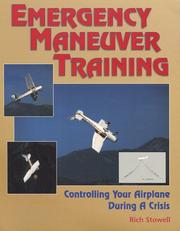
Stalls, spins, and the loss-of-control accidents that dominate the fatal statistics, argued alongside the case for actually training upset recovery. Read it after Craig: it is the practical answer to the biggest category in his data.
After the checkride
IntermediateKeep improving once nobody is signing your logbook — deeper aerodynamics, performance flying, and the path toward an instrument rating
▸ Study plan for this stage
Pace: 6–8 weeks for 296 pages, but this is a book to work rather than read — expect ~10 pages/day. Prerequisite: everything above. Kershner assumes the private pilot syllabus is behind you and introduces genuine aerodynamic reasoning, including simple algebra with lift and drag relationships and the use o
- Lift, induced and parasite drag as curves rather than as definitions — and why the total drag curve gives you the aircraft's best-glide and best-endurance speeds
- The region of reverse command and why the back side of the power curve is where slow-flight accidents happen
- Constant-speed propellers and turbocharging: what the manifold pressure and RPM controls actually do and the correct sequence for changing power
- Retractable gear and complex-aircraft systems, plus the checklist discipline that gear-up landings exist to enforce
- High-performance operations: cruise control, mixture leaning against exhaust gas temperature, and true versus indicated airspeed at altitude
- The groundwork for the instrument rating — the scan, attitude instrument flying, and why the transition is more about discipline than about new stick skill
- Proficiency as distinct from currency: the recurrent training that Craig's accident data in the previous stage implies you actually need
- Sketch the induced and parasite drag curves and derive from the diagram where best glide, best rate of climb and best endurance sit relative to each other.
- What is the region of reverse command, and why does adding power without lowering the nose fail to arrest a descent there?
- Explain what happens to manifold pressure and to RPM when you move each of the two levers on a constant-speed installation, and give the correct order for a power increase and a power reduction.
- Why does true airspeed exceed indicated airspeed at altitude, and what does that do to your ground speed, your fuel planning and your stall speed?
- Kershner writes for the newly licenced pilot. Which chapter is most directly aimed at the accident categories Craig identified, and why?
- Work the end-of-chapter problems in the aerodynamics chapters of The Advanced Pilot's Flight Manual with a calculator and show your working, then check every answer by dimensional analysis — if a drag figure comes out in the wrong units you have dropped a term.
- Reproduce one of Kershner's worked performance examples with different numbers: your own aircraft, a different weight and a different density altitude. Getting the same shape of answer is the test that you followed the method rather than the arithmetic.
- Plot the total drag curve for your training aircraft from the POH numbers and mark the published best-glide speed on it. If it does not fall near the minimum, work out which assumption you got wrong.
- Write a one-page personal proficiency plan naming the manoeuvres you will fly every ninety days and the two ratings or endorsements you intend to pursue next, with dates.
- Take one complex-aircraft system Kershner introduces — constant-speed propeller, retractable gear or turbocharging — and write the failure modes and the corresponding emergency action from memory, then check it against the chapter.
Next up: This is where the reading path ends and the flying continues: the natural next steps are the instrument rating and recurrent upset training, both of which Kershner sets up deliberately.
Kershner's sequel for licenced pilots: high-performance and complex aircraft, deeper aerodynamics, and the groundwork for the instrument rating. The natural next book, and the reason to end the path pointing forward rather than at the certificate.
Discussion
Keep reading
Paths that share books, cover the same subject, or open a related topic.