Flight training is one of the few subjects where reading in the wrong order costs real money. Ground school and flight lessons run in parallel, the aircraft is billed by the hour, and a student who arrives at a lesson not knowing the manoeuvre pays for the instructor to explain it in the air at several hundred dollars an hour instead of on the ground for free. The books that matter are the ones that get you ahead of the syllabus.
The other trap is duplication. Three of the books here are complete private-pilot ground-school textbooks covering the same material to the same standard. Buying all three is a common beginner mistake. Pick one, finish it, and spend the money you saved on fuel.
Books do not make you a pilot. A licence requires logged flight hours with a certificated instructor, a medical or its equivalent, a written knowledge test and a practical checkride, and none of that can be read for. Note too that the regulatory material below is written to the United States system; if you are training under the UK CAA, EASA or another authority, the airmanship transfers and the airspace, exams and paperwork do not.
Read these before your first lesson
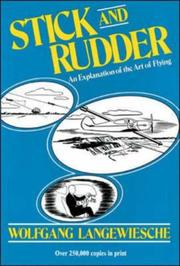
Stick and Rudder is still the first book to hand a prospective pilot, eighty years after publication. Wolfgang Langewiesche explains what the wing is actually doing and why angle of attack, not speed, is the thing that stalls an aeroplane, and he does it without a single equation. Its terminology is dated and it predates modern airspace and avionics completely, so read it for the aerodynamic intuition and nothing else.
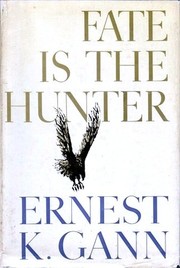
Fate is the Hunter is not instructional at all. Ernest K. Gann flew airliners in an era with far less automation and far more funerals, and the book is the best account there is of what judgement under uncertainty feels like from the left seat. Read it for the attitude.
Pick one ground-school text
Pilot's handbook of aeronautical knowledge is the free official reference and the backbone of the written exam. One honest caveat: the edition in our catalogue is the 2016 revision, which has since been superseded — download the current version from the FAA at no cost rather than buying an old print copy.
Then choose exactly one of the three syllabus books. The Complete Private Pilot (The Complete Pilot Series) is the efficient, exam-focused option. Rod Machado's Private Pilot Handbook covers the same ground with jokes and cartoons on almost every page, which readers either love or cannot tolerate. The student pilot's flight manual is the classic, built around William Kershner's own hand-drawn figures and closest in feel to a good instructor talking you through it.
They overlap almost completely. Choose by temperament, not by coverage.
The books tied to specific lessons
Airplane Flying Handbook is the other free official volume and the one to read manoeuvre by manoeuvre — read the chapter the night before you fly it.
Say Again, Please solves the problem nobody warns students about, which is that radio work terrifies more people than landing does. Bob Gardner scripts the actual exchanges.
Weather flying is Robert N. Buck on the one subject where a private licence leaves you most exposed. Weather kills more general-aviation pilots than mechanical failure, and this is the book that turns forecast products into decisions.
After the checkride
The killing zone is Paul A. Craig on the accident data showing that the risk to a private pilot peaks not during training but in the first few hundred hours afterward, once supervision stops. It is uncomfortable and it is the most useful book on this list.
Emergency maneuver training is Rich Stowell on stall and spin awareness, best read alongside actual upset training rather than instead of it. The Advanced Pilot's Flight Manual is Kershner again, picking up where the student manual stopped and pointing toward the instrument rating.
Follow the full path below and read them in that sequence.
Follow the full ordered path here: Learning to Fly: The Best Books for Student Pilots, in Order.