Air traffic control: an ordered reading path to the career
This curriculum takes a beginner from zero aviation knowledge through the full arc of an air traffic control career: first building general aviation literacy and airspace intuition, then diving into ATC-specific procedures and culture, and finally tackling the technical and exam-prep material needed to enter FAA training and certification. Each stage assumes the vocabulary and mental models built in the one before it, so reading in order is essential.
Aviation Foundations
BeginnerBuild core aviation vocabulary, understand how aircraft fly, how airspace is structured, and how pilots and controllers interact at a basic level — the essential mental model before touching ATC-specific material.
▸ Study plan for this stage
Pace: 8–10 weeks, ~25–30 pages/day. Start with "Stick and Rudder" (weeks 1–4, ~150 pages), then move to the FAA Handbook (weeks 5–10, ~400+ pages). Allocate 1–2 days per chapter for reflection and note-taking.
- The four forces of flight (lift, weight, thrust, drag) and how they interact in steady flight, climbs, and descents
- How control surfaces (ailerons, elevator, rudder) manipulate aircraft attitude and produce coordinated flight
- The relationship between angle of attack, airspeed, and stall — the core insight of 'Stick and Rudder'
- Airspace structure: classes A–E, controlled vs. uncontrolled airspace, and how altitude and location determine rules
- Basic radio phraseology and the pilot-controller communication loop: requests, clearances, and readbacks
- How weather (wind, visibility, icing, thunderstorms) affects aircraft performance and ATC operations
- Navigation fundamentals: VOR, NDB, GPS, and how pilots report position to controllers
- The regulatory framework: FARs, pilot certificates, and why ATC exists as a safety system
- Explain how lift is generated and why angle of attack (not airspeed alone) determines whether an aircraft stalls.
- What are the three axes of aircraft control, and which control surface affects each one?
- Describe the differences between Class B, Class C, and Class D airspace in terms of pilot qualifications, equipment, and controller services.
- What is the standard pilot-controller communication loop, and why is a readback critical?
- How do wind shear, microbursts, and density altitude affect aircraft performance, and why would a controller need to know this?
- What are the main navigation methods available to pilots, and how do they report their position to ATC?
- Draw the four forces of flight on a diagram and label how each changes during a climb, descent, and turn; explain the vector relationships.
- Simulate a coordinated turn: use a flight simulator (free options: X-Plane demo, MSFS, or Flightgear) to practice gentle turns while maintaining altitude and airspeed.
- Transcribe and annotate 5–10 real ATC audio clips (available on LiveATC.net or YouTube) — identify clearances, readbacks, and phraseology patterns.
- Create a reference card for airspace classes (A–E) with altitude limits, pilot qualifications, equipment requirements, and controller services for each.
- Plot a simple VFR flight plan on a sectional chart: identify airspace, navaids, and landmarks; write out the position reports you'd make to ATC.
- Write a 1–2 page reflection on how the concepts in 'Stick and Rudder' (especially angle of attack and stall) underpin why ATC separation and speed restrictions exist.
Next up: This stage establishes the mental model of how aircraft behave and how airspace is organized, enabling you to understand in the next stage why ATC procedures, separation standards, and communication protocols are designed the way they are.
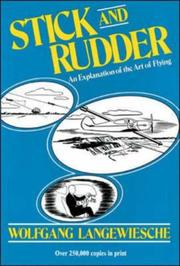
The classic primer on how aircraft actually fly; reading this first gives you the pilot's perspective that every controller must intuitively understand before managing traffic.

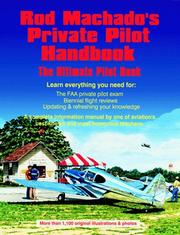
The FAA's own foundational text covers airspace classes, weather, charts, and regulations — the shared language of pilots and controllers — and is freely available and authoritative.
Inside the World of ATC
BeginnerGain a vivid, human understanding of what air traffic control actually looks and feels like as a career — the culture, the stress, the communication style, and the day-to-day reality of the job.
▸ Study plan for this stage
Pace: 4–5 weeks, ~40–50 pages/day (book is ~250 pages; allows time for reflection and note-taking)
- The human dimension of ATC: stress, fatigue, and decision-making under pressure
- Radio phraseology and communication protocols as the backbone of safety
- The controller's mental model: how they visualize and track aircraft in three-dimensional space
- Workload management and the cognitive limits of attention in high-traffic environments
- The culture and camaraderie within control towers and radar rooms
- Real-world constraints: weather, equipment limitations, and human factors that shape daily operations
- The relationship between pilots and controllers as a collaborative safety system
- What are the primary sources of stress and fatigue for air traffic controllers, and how do they manage these pressures during a shift?
- How do controllers maintain situational awareness when handling multiple aircraft simultaneously, and what mental techniques do they use?
- What is the significance of standardized radio phraseology, and how does it prevent miscommunication?
- Describe the culture and working environment inside a control tower or radar facility—what are the unwritten rules and dynamics?
- What real-world constraints (weather, equipment, human factors) most directly impact a controller's ability to do their job safely?
- How do controllers and pilots work together as a team, and what happens when communication breaks down?
- Keep a 'controller's log': as you read, note specific scenarios Davies describes and write a brief summary of the decision the controller made and why—reflect on what you would have done differently
- Record yourself reading aloud passages of radio dialogue from the book; listen back and identify the tone, pace, and clarity—notice how phraseology eliminates ambiguity
- Create a visual map or diagram of a control tower or radar room based on Davies's descriptions; label the positions, equipment, and communication flows
- Interview a pilot or aviation enthusiast (if available) about their experience communicating with ATC; compare their perspective to what Davies describes in the book
- Write a short narrative (500–750 words) from the point of view of a controller during a high-stress scenario described in the book—focus on their internal thoughts and sensory experience
- Sketch or annotate a simple airspace diagram showing how controllers mentally organize and separate aircraft based on Davies's explanations
Next up: This stage builds the human and cultural foundation needed to understand the systems, procedures, and technical frameworks that govern ATC—you now know *why* precision matters and *who* is relying on it, preparing you to dive into the operational rules and technical infrastructure in the next stage.
Written for pilots of large transport aircraft, this book gives controllers a deep appreciation of what airline crews are managing, sharpening the empathy and situational awareness that define great ATC.
Airspace, Procedures & ATC Operations
IntermediateMaster the procedural and regulatory framework of U.S. airspace — separation standards, phraseology, instrument procedures, and the specific duties of each ATC position.
▸ Study plan for this stage
Pace: 8–10 weeks, ~40–50 pages/day (mix of dense regulatory text and procedural content; expect slower pace for FAR/AIM sections)
- U.S. airspace classification (Class A–G) and the specific rules, altitude restrictions, and equipment requirements for each class
- Separation standards: vertical, horizontal, and radar separation minimums for different airspace and aircraft categories
- Standard instrument departure (SID) and standard terminal arrival route (STAR) procedures, including how to read and interpret them
- ATC phraseology and readback requirements: standard radio communications protocols and why precision matters
- Duties and responsibilities of each ATC position: tower controller, approach/departure controller, center controller, and ground controller
- Instrument approach procedures (IAPs): how to interpret approach charts, descent profiles, and missed approach segments
- Clearance delivery, coordination between facilities, and the flow of information in the NAS
- Weather minimums, visibility requirements, and how they affect operations across airspace classes
- What are the defining characteristics of Class B, C, and D airspace, and what equipment and clearances are required to operate in each?
- Explain the difference between vertical separation, horizontal separation, and radar separation minimums, and provide examples of when each is applied
- How do you interpret a standard instrument departure (SID) chart, and what information must a pilot extract before departure?
- What is the standard phraseology for a pilot readback of a clearance, and why is exact repetition critical in ATC operations?
- Describe the primary responsibilities of a tower controller, approach controller, and center controller, and how they coordinate with each other
- Walk through the steps of executing an instrument approach procedure: how do you use the approach chart to navigate from the initial approach fix to landing?
- Read and annotate 5–10 SID and STAR charts from a real airport (e.g., Atlanta, Dallas, Los Angeles); identify waypoints, altitude restrictions, and transition routes
- Study 10 instrument approach procedure (IAP) charts and practice interpreting descent profiles, missed approach procedures, and minimums for different aircraft categories
- Transcribe and analyze 3–5 real ATC audio recordings (available from LiveATC.net or YouTube); identify phraseology, clearances, and position-specific duties
- Create a comparison matrix of airspace classes (A–G) showing altitude limits, equipment requirements, clearance requirements, and weather minimums
- Simulate a clearance delivery scenario: write out a full departure clearance (including SID, altitude, heading, frequency) using proper ATC phraseology
- Conduct a mock coordination exercise: role-play a handoff between tower, approach, and center controllers using realistic callsigns and procedures
Next up: This stage establishes the procedural and regulatory foundation—airspace rules, separation standards, and position-specific duties—that enables the next stage to focus on advanced decision-making, conflict resolution, and real-world complexity in high-traffic environments.
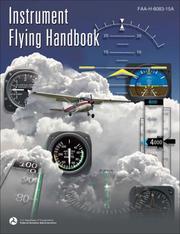
Covers IFR procedures, airways, approaches, and clearances from the pilot's side — knowledge that is indispensable for a controller issuing and managing instrument clearances.

Specifically written for aspiring FAA controllers, this book explains the hiring process, the AT-SAT exam, and core ATC concepts in a structured, exam-oriented format — the right book at this stage of preparation.

The official FAA guide to operating in U.S. airspace; reading it cover-to-cover at this stage cements phraseology, procedures, and airspace rules that will be tested in FAA training.
Advanced ATC & Situational Awareness
ExpertDevelop the higher-order thinking skills — safety analysis, human factors, and accident investigation — that separate a competent controller from an exceptional one, and that FAA Academy instructors expect candidates to already be building.
▸ Study plan for this stage
Pace: 8–10 weeks, ~40–50 pages/day (mix of dense technical analysis and narrative memoir)
- Cognitive systems engineering: how human cognition, technology, and organizational systems interact to create safety or failure
- Mental models and situation awareness: how controllers build and maintain accurate representations of airspace, and how gaps lead to accidents
- Human factors in complex socio-technical systems: fatigue, workload, communication breakdowns, and automation dependency as root causes rather than pilot/controller error
- Accident investigation methodology: tracing latent failures in design, training, and procedures that precede active failures
- The paradox of automation: how over-reliance on automated systems can degrade human vigilance and decision-making
- Resilience and adaptive capacity: how exceptional controllers and crews recover from degraded situations through flexibility and deep system knowledge
- Organizational and regulatory culture: how institutional pressures, cost-cutting, and normalization of deviance create accident preconditions
- According to Vicente, what is the difference between a 'sharp end' failure (pilot/controller error) and a 'blunt end' failure (design, training, organizational), and why do accident investigations often miss the latter?
- How does Gann's narrative of his own close calls and accidents illustrate the concept of mental models—what assumptions did he or his crews hold that either saved or endangered them?
- What does Vicente mean by 'cognitive systems engineering,' and how would you apply this lens to analyze a specific ATC incident (e.g., loss of separation, runway incursion)?
- In 'Fate is the Hunter,' how do Gann's descriptions of fatigue, crew coordination, and equipment limitations foreshadow modern ATC challenges like controller fatigue and automation complacency?
- How can an air traffic controller use the accident investigation principles from these books to conduct a personal 'safety audit' of their own decision-making and workload management?
- What organizational or systemic changes would Vicente and Gann's examples suggest are necessary to prevent the types of accidents they describe?
- Read and annotate 2–3 NTSB accident reports (e.g., Tenerife, Japan Airlines Flight 123, or a recent ATC-involved incident). For each, identify: sharp-end vs. blunt-end failures, latent organizational factors, and how better mental models or system design could have prevented it.
- Create a 'cognitive walkthrough' of a routine ATC task (e.g., vectoring an arrival in busy airspace). Map where your mental model could fail, where automation might mask a problem, and what recovery strategies exist.
- Write a 3–5 page reflection essay: 'One Accident I Almost Had.' Analyze a close call from your own experience (or a peer's, with permission) using Vicente's framework—what were the system factors, the human factors, and the organizational context?
- Conduct a peer discussion or small-group seminar on one chapter from each book. Assign roles: one person presents Vicente's theory, another connects it to Gann's narrative examples, a third identifies implications for modern ATC.
- Design a training scenario or briefing that explicitly teaches controllers how to recognize and recover from degraded mental models (e.g., loss of situational awareness, automation surprise). Use examples from both books.
- Interview an experienced controller or safety officer about a past incident or near-miss. Ask them to describe their mental model at the time, what they missed, and what they learned. Compare their account to Vicente's and Gann's frameworks.
Next up: This stage equips you with a systems-level, human-centered lens for understanding ATC safety—moving beyond rule-following to recognizing how complex systems fail—preparing you to engage with advanced operational decision-making, specialized domains (e.g., tower vs. approach), and leadership/mentoring roles in the next stage.

A landmark book on human factors in complex systems, directly applicable to ATC; it explains why well-designed procedures and situational awareness matter more than individual heroics.

A masterclass in aviation situational awareness told through gripping real-world stories; reading this last ties together everything — airmanship, judgment, and the weight of responsibility that controllers share with pilots.
Discussion
Keep reading
Paths that share books, cover the same subject, or open a related topic.