Learn German: methods that actually work
This curriculum takes a complete beginner from zero German to confident conversational fluency across four carefully sequenced stages. Each stage builds on the last: first establishing survival grammar and pronunciation, then tackling the notorious German case system and verb structures, then accelerating vocabulary and real-world immersion, and finally refining fluency through authentic reading and advanced grammar mastery.
Foundations: Survival German & First Grammar
BeginnerUnderstand how German sentences are built, master basic pronunciation, and handle everyday situations with confidence. Get comfortable with gender, plurals, and present-tense verbs.
▸ Study plan for this stage
Pace: 10–12 weeks total. Weeks 1–5: Read "German: An Essential Grammar" by Donaldson — focus on one grammatical chapter per sitting, ~15–20 pages/day, 4–5 days/week. Use it as a reference spine throughout. Weeks 6–12: Work through "Deutsch, na klar!" by Di Donato — one chapter per week (~2–3 sessions/week
- German noun gender (der/die/das) and how to learn it with every new noun
- Nominative, accusative, and dative cases — how they change articles and pronouns
- Present-tense verb conjugation for regular (weak) and the most common irregular (strong) verbs, including sein, haben, and werden
- German sentence word order: verb-second (V2) rule, time-manner-place, and inversion after adverbs
- Plural noun formation — the main patterns and why memorization by noun is essential
- Pronunciation fundamentals: umlauts (ä, ö, ü), the ich-Laut vs. ach-Laut, vowel length, and the glottal stop
- Everyday survival vocabulary and phrases from Deutsch na klar! — greetings, numbers, days, food, directions, and classroom language
- Negation with 'nicht' and 'kein' and how to choose between them
- What is the gender and plural form of at least 50 high-frequency nouns introduced in Deutsch, na klar!, and how do you know which definite article to use in the nominative vs. accusative case?
- How does verb conjugation change across all persons (ich, du, er/sie/es, wir, ihr, sie/Sie) for a regular verb like 'wohnen' and an irregular verb like 'fahren'?
- When do you use 'nicht' versus 'kein' to negate a sentence, and where does the negation word appear in the sentence?
- What is the V2 (verb-second) rule, and how does it cause subject-verb inversion when a sentence begins with a time expression or adverb?
- How do you pronounce the German umlauts and the two ch-sounds (ich-Laut and ach-Laut), and what minimal pairs help you distinguish them?
- Using the survival phrases and vocabulary from Deutsch, na klar!, how would you introduce yourself, ask for directions, order food, and tell the time in German?
- Noun-gender flashcard drill: For every new noun encountered in Deutsch, na klar!, write a flashcard with the article, noun, and plural form (e.g., der Tisch / die Tische). Review 20 cards daily using spaced repetition.
- Case transformation tables: Take 10 sentences from Donaldson's grammar examples and rewrite them, swapping the subject and object roles — observe how articles change between nominative and accusative, then add a dative element.
- Conjugation speed drills: Write out the full present-tense conjugation of 5 new verbs per week (mixing regular and irregular). Time yourself; aim to complete one verb's full paradigm in under 60 seconds from memory.
- Dialogue shadowing: Record yourself reading the dialogues from Deutsch, na klar! aloud, then compare your pronunciation to any available audio. Focus specifically on umlaut vowels and the ch-sounds identified in Donaldson.
- Sentence scramble: Take 10 German sentences from either book, cut them into individual words, shuffle them, and reconstruct them correctly — paying attention to V2 word order and the position of negation words.
- Survival scenario role-play: Using vocabulary chapters from Deutsch, na klar!, write and then speak a short script (8–10 lines) for a real-life scenario — e.g., checking into a hotel, ordering at a café, or asking for directions — incorporating at least one negation, one irregular verb, and correct article agreement.
Next up: By mastering present-tense verb conjugation, the three core cases, and everyday vocabulary through these two books, the reader has the grammatical scaffolding and practical confidence needed to tackle past-tense narration, modal verbs, and more complex sentence structures in the next stage.

A clear, concise reference grammar written specifically for English speakers — read it cover-to-cover at this stage to get a honest map of the whole language before bad habits form.
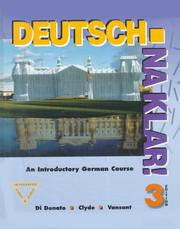
The most widely adopted university-level beginner textbook; it integrates speaking, reading, and writing with cultural context, giving structured practice to everything Donaldson describes.
The Hard Parts: Cases, Verbs & Real Grammar
BeginnerConquer the four German cases (nominative, accusative, dative, genitive), master modal verbs, separable verbs, and the past tenses — the grammar points that trip up virtually every English speaker.
▸ Study plan for this stage
Pace: 10–12 weeks total. Weeks 1–7: Hammer's German Grammar and Usage — read 15–20 pages/day, focusing on the case system (chapters on nominative, accusative, dative, genitive), verb conjugation, modal verbs, separable verbs, and past tenses (Perfekt & Präteritum). Flag every example sentence and re-read
- The four German cases (nominative, accusative, dative, genitive) and the grammatical role each one signals — subject, direct object, indirect object, possession
- Case-driven article changes: der/die/das/ein/eine shifting forms across all four cases for masculine, feminine, neuter, and plural nouns, as systematically laid out in Hammer's
- Adjective endings (strong, weak, and mixed declension) and how they depend on both the case and the preceding determiner — one of the trickiest tables in Hammer's
- The six modal verbs (können, müssen, dürfen, sollen, wollen, mögen) — their irregular present-tense conjugations, their meanings, and how they pair with a bare infinitive at the end of the clause
- Separable and inseparable verb prefixes: how separable prefixes split off to clause-final position in main clauses but stay attached in subordinate clauses and infinitive constructions
- The two main past tenses — conversational Perfekt (haben/sein + past participle) vs. narrative Präteritum — including strong/irregular past-participle and Präteritum stem forms
- Verb-second (V2) word order in main clauses and verb-final order in subordinate clauses, and how these interact with cases and separable verbs
- Using Hammer's as a reference grammar alongside Practice Makes Perfect as a drill engine: how to cross-reference a rule explanation with targeted exercises on the same point
- Can you decline the definite and indefinite articles for a masculine, feminine, neuter, and plural noun across all four cases — and explain which case is triggered in a given sentence?
- Given a sentence with a modal verb, can you correctly place the modal and the dependent infinitive, and convert the sentence from present to Perfekt tense?
- Can you identify whether a verb prefix is separable or inseparable, and correctly position it in a main clause, a subordinate clause, and a Perfekt construction?
- What is the difference between using haben and sein as the Perfekt auxiliary, and can you correctly choose between them for a set of mixed verbs?
- Can you write the same event in both Perfekt and Präteritum and explain when a German speaker would naturally choose one over the other?
- Can you apply the correct weak, strong, or mixed adjective ending to an adjective inside a noun phrase, given its case, gender, and determiner?
- Case drilling with Hammer's tables: copy out the full declension tables for definite articles, indefinite articles, and personal pronouns from Hammer's, then cover them and reconstruct them from memory daily for two weeks — check accuracy against the book each time
- Sentence transformation sets: take 20 simple sentences and manually shift the direct object into an indirect object position (and vice versa), rewriting the articles and any adjective endings to match — use Hammer's relevant chapters as your answer key
- Modal verb substitution: write 10 base sentences with a regular verb, then rewrite each sentence six times — once with each modal verb — paying attention to meaning shift and infinitive placement; cross-check word order rules in Hammer's
- Separable verb journal: using the separable/inseparable verb lists in Hammer's, write one original sentence per verb in (a) a main clause, (b) a subordinate clause with 'weil', and (c) the Perfekt tense — this forces all three structural patterns in one pass
- Tense conversion drills from Practice Makes Perfect: complete all Perfekt and Präteritum exercises in the book, then go back and convert every Perfekt answer to Präteritum and vice versa — the book's answer key lets you self-check both passes
- Error log notebook: every time Practice Makes Perfect marks an answer wrong, write the incorrect form, the correct form, and the specific rule from Hammer's that governs it — review the log at the start of every study session
Next up: Mastering cases, modal verbs, separable verbs, and past tenses in these two books gives you the grammatical skeleton you need to tackle more complex sentence architecture — subordinate clauses, relative clauses, the subjunctive, and extended noun phrases — which form the core challenge of the intermediate stage ahead.
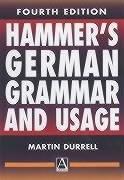
The definitive, most thorough German grammar reference in English — work through the case and verb chapters systematically now that you have beginner context; it will answer every 'but why?' question.

Pairs perfectly with Hammer's as a pure exercise book — hundreds of drills on exactly the case endings, adjective agreement, and verb conjugations that need to become automatic.
Vocabulary & Immersion: Building a Living Language
IntermediateExpand vocabulary to 3,000–5,000 words using proven memory techniques, develop an ear for natural spoken German, and start consuming authentic German content independently.
▸ Study plan for this stage
Pace: 10–14 weeks total. Week 1–3: Read "Fluent Forever" cover to cover (~20–25 pages/day), focusing on the memory-system chapters. Week 4–8: Work through "The Everything Learning German Book" (~15–20 pages/day), pausing to complete all exercises in each chapter before moving on. Week 9–14: Use "Complete
- Spaced Repetition Systems (SRS): Using the Anki-style flashcard method described in 'Fluent Forever' to move words into long-term memory through optimally timed review intervals
- Minimal Pairs & Pronunciation First: Wyner's principle (from 'Fluent Forever') of locking in German sounds before vocabulary so that new words are stored with accurate phonetic anchors
- Picture-Word Association & No-Translation Cards: Building monolingual, image-based flashcards (as prescribed in 'Fluent Forever') to think directly in German rather than translating from English
- Core Grammar Scaffolding via 'The Everything Learning German Book': Internalizing German case system (Nominative, Accusative, Dative, Genitive), noun genders, and verb conjugation patterns as the grammatical skeleton on which new vocabulary hangs
- Thematic Vocabulary Expansion: Using the topic-organized chapters of 'The Everything Learning German Book' (travel, food, family, work, etc.) to cluster words into meaningful semantic networks rather than isolated lists
- Authentic Dialogue & Real-World Register: Leveraging the dialogues and audio content in 'Complete German (Teach Yourself)' to hear how vocabulary and grammar actually sound in connected, natural speech
- Active Listening & Shadowing: Using the audio component of 'Complete German (Teach Yourself)' to practice shadowing — repeating utterances in real time to train rhythm, intonation, and fluency
- Independent Comprehensible Input: Transitioning from structured textbook content to self-selected authentic German media (podcasts, news, TV) as the primary vocabulary-growth engine by the end of the stage
- After reading 'Fluent Forever', can you explain why Wyner argues you should learn pronunciation before vocabulary, and how would you apply this specifically to German's vowel-umlaut sounds (ä, ö, ü)?
- What is the difference between a translation-based flashcard and a picture/definition-based card as described in 'Fluent Forever', and why does the latter produce stronger long-term retention?
- Using the case-system chapters of 'The Everything Learning German Book', can you correctly decline a definite article and an adjective across all four German cases for a masculine, feminine, and neuter noun?
- From 'The Everything Learning German Book', what are the key differences between separable and inseparable verbs in German, and can you construct two original sentences demonstrating each type?
- After working through 'Complete German (Teach Yourself)', can you listen to one of the book's dialogues without reading along and summarize the main points — demonstrating that your ear has caught up with your reading ability?
- How would you design a one-week SRS review schedule (drawing on 'Fluent Forever' principles) to consolidate 200 new words encountered while reading 'The Everything Learning German Book' and 'Complete German (Teach Yourself)'?
- Build Your Pronunciation Deck (Week 1–2): Following 'Fluent Forever' Chapter 3, create a 50-card Anki deck targeting German minimal pairs (e.g., bieten vs. bitten, Höhle vs. Hölle). Record yourself, compare to native audio, and iterate until your ear reliably distinguishes each pair.
- Thematic Picture-Word Cards (Ongoing, Weeks 3–10): For every thematic chapter in 'The Everything Learning German Book' (food, travel, family, etc.), create 15–20 monolingual Anki cards using a German image + German definition or example sentence — no English allowed, per 'Fluent Forever' methodology. Target: 300–500 new cards total.
- Case-Declension Drill Tables (Weeks 4–8): After each grammar chapter in 'The Everything Learning German Book', hand-write full declension tables for 10 nouns (mix of genders) using all four cases. Then write 2 original sentences per noun using a different case each time to force active recall in context.
- Shadow a Dialogue Daily (Weeks 9–14): Each day, select one dialogue track from 'Complete German (Teach Yourself)', listen once without the book, then listen again while reading, then cover the text and shadow the audio in real time — matching speed, rhythm, and intonation. Record yourself on Day 1 and Day 5 of each unit and compare.
- Weekly Authentic Media Log (All 14 Weeks): Spend 20–30 minutes per day on self-chosen German content (e.g., 'Slow German' podcast, Deutsche Welle 'Langsam gesprochene Nachrichten', or a German YouTube channel). Keep a running vocabulary journal: write down 5 unknown words per session, look them up in German (not English), and add them to your Anki deck.
- End-of-Stage Vocabulary Audit: At Week 14, export your full Anki deck and count mature cards (cards with an interval > 21 days). Cross-reference with the word-frequency lists recommended in 'Fluent Forever' to verify you have solid coverage of the top 1,000 most frequent German words, then identify the next 500-word gap to target in the following stage.
Next up: By the end of this stage the reader has a robust 3,000–5,000-word SRS-backed vocabulary, reliable German pronunciation, and the habit of consuming authentic content daily — providing the fluency foundation needed to tackle advanced grammar, complex reading texts, and productive writing in the next stage.

Wyner's spaced-repetition and image-based method is language-agnostic but transformative for German vocabulary acquisition — read this now so your study time compounds efficiently.

Bridges the gap between textbook grammar and real conversational German, covering idioms, colloquial phrases, and listening strategies that pure grammar books skip.

A dialogue-heavy, audio-integrated course that forces you to process German at natural speed — reading it at this stage trains your ear and consolidates intermediate grammar in realistic contexts.
Conversational Fluency & Advanced Mastery
ExpertSpeak and write with nuance, understand native speakers at full speed, handle complex grammar (subjunctive, passive, extended attributes), and read authentic German prose independently.
▸ Study plan for this stage
Pace: 10–14 weeks total. Week 1–3: Read "Curious Case of the Misplaced Modifier" (~20–25 pages/day, paired with grammar drills). Weeks 4–14: Read "Der Vorleser" (~8–12 pages/day in German, re-reading dense passages; dedicate 3 sessions/week to active listening and speaking practice alongside the text).
- Modifier placement and ambiguity: understanding how dangling and misplaced modifiers (in both English and German) distort meaning — essential for producing precise German sentences
- Konjunktiv II (subjunctive mood): expressing hypotheticals, wishes, polite requests, and reported speech as modeled throughout Schlink's narrative voice in Der Vorleser
- Passivkonstruktionen (passive voice): recognizing and producing both Vorgangspassiv (werden + Partizip II) and Zustandspassiv (sein + Partizip II) as they appear in Schlink's legal and historical passages
- Erweiterte Attributkonstruktionen (extended participial attributes): decoding the complex pre-noun modifier clusters that characterize authentic German prose in Der Vorleser
- Narrative register and tone: analyzing how Schlink shifts between Michael's adolescent voice and his reflective adult voice — and replicating register shifts in your own writing
- Authentic listening comprehension at native speed: training your ear to Schlink's audiobook or German radio/podcast material without relying on transcripts
- Vocabulary in context — moral, legal, and historical lexicon: acquiring the thematic vocabulary of guilt, memory, justice, and post-war Germany that saturates Der Vorleser
- Self-correction through structural awareness: using the modifier-clarity principles from Trenga to audit and revise your own German writing for logical and grammatical precision
- After reading Trenga, can you identify a dangling or misplaced modifier in a German sentence you have written and rewrite it so the intended meaning is unambiguous?
- How does Schlink use Konjunktiv II in Der Vorleser to convey Michael's guilt, regret, and moral uncertainty — and can you produce three original sentences in the same construction?
- What is the difference between a Vorgangspassiv and a Zustandspassiv, and where does each appear in the legal/trial sections of Der Vorleser?
- Can you unpack an extended participial attribute (erweitertes Attribut) from a sentence in Der Vorleser, identify every element, and rewrite it as a relative clause?
- How does Schlink's prose style — sentence length, word order, register — differ from everyday spoken German, and what strategies did you use to bridge that gap while reading?
- What moral questions does Der Vorleser raise about collective guilt and individual responsibility, and can you discuss them in German using nuanced vocabulary drawn directly from the novel?
- Modifier audit journal: Each day after reading Trenga, write 5 German sentences on any topic, then deliberately introduce a misplaced or dangling modifier into two of them. Swap with a study partner (or use a tutor) to identify and correct the errors — training both production and detection.
- Konjunktiv II shadow-writing: Choose one page of Der Vorleser where Michael reflects on the past. Rewrite every indicative verb in Konjunktiv II and read the passage aloud, noticing how the emotional weight shifts. Record yourself and compare to the original.
- Passive-voice excavation: Go through chapters 6–9 of Der Vorleser (the trial scenes) and highlight every passive construction. Classify each as Vorgangs- or Zustandspassiv, then convert each to an active sentence — note which conversions feel unnatural and why.
- Extended-attribute deconstruction: Select 10 sentences from Der Vorleser containing extended participial attributes. Parse each one on paper: bracket the entire attribute, label the participle, identify all adverbs/adjectives modifying it, then rewrite as a relative clause. Compare both versions for style and clarity.
- Speed-listening sprint: Obtain the German audiobook of Der Vorleser (read by Schlink himself). Listen to one chapter at native speed without the text, jot down key words and the gist, then read the same chapter. Track how your comprehension gap narrows week over week.
- Thematic essay in German: After finishing Der Vorleser, write a 400–600 word essay in German on the question 'Kann Unwissenheit Schuld mindern?' (Can ignorance reduce guilt?). Apply Trenga's modifier-clarity principles to your draft, revise for passive/subjunctive usage, and read it aloud to check for natural flow.
Next up: Mastering the structural precision from Trenga and the authentic literary immersion of Schlink's Der Vorleser equips the reader with the grammatical confidence and cultural-historical vocabulary needed to engage independently with any native German text, debate, or professional context at the C1–C2 level.
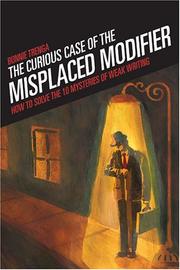
Sharpens your structural awareness of how clauses and modifiers work — invaluable for mastering German's complex subordinate clause word order and extended participial phrases.

Written in clean, accessible literary German, this celebrated novel is the canonical first authentic German book for advanced learners — reading it proves and cements true fluency.
Discussion
Keep reading
Paths that share books, cover the same subject, or open a related topic.