The Best Books to Learn Hungarian
Hungarian is one of the most structurally unique languages in Europe, so the path begins with structured coursebook exposure to build core vocabulary and basic grammar intuition, then moves into dedicated grammar study and graded reading to consolidate and deepen mastery. Each stage builds directly on the last: you must have survival phrases and basic sentence patterns before grammar rules become meaningful, and you must have solid grammar before authentic or literary texts become accessible.
First Steps: Survival Hungarian
BeginnerBuild a working vocabulary of ~500–800 words, learn basic sentence structure, greetings, numbers, and everyday phrases, and get comfortable with the sound system and alphabet.
▸ Study plan for this stage
Pace: 4–5 weeks, ~20–25 pages/day, with 2–3 review days per week
- Hungarian alphabet, pronunciation, and vowel harmony rules
- Present tense conjugation of regular and common irregular verbs (van, lesz, megy)
- Nominative, accusative, and dative case endings and their functions
- Basic sentence structure: SVO word order and postpositional phrases
- Essential vocabulary: greetings, numbers 0–100, days/months, family, food, and daily activities
- Definite vs. indefinite conjugation and object agreement
- Common postpositions (ben, -ből, -hoz, -nál) and their meanings
- Imperative forms and polite request structures
- How does Hungarian vowel harmony work, and why does it affect word endings?
- What is the difference between definite and indefinite conjugation, and when do you use each?
- How do you form the present tense of regular verbs, and what are the conjugation patterns for van and lesz?
- What are the main cases in Hungarian (nominative, accusative, dative), and how do their endings change?
- How do postpositions work in Hungarian, and what are the most common ones?
- Can you introduce yourself, ask basic questions, and order food using survival phrases?
- What is the word order in Hungarian sentences, and how do postpositions differ from English prepositions?
- Pronunciation drills: Record yourself reading dialogues from Colloquial Hungarian aloud and compare to audio materials; focus on stress patterns and vowel harmony
- Conjugation tables: Create flashcards for present-tense verb conjugations (regular, van, lesz, megy) and drill daily until automatic
- Case-ending practice: Complete fill-in-the-blank exercises converting nominative nouns to accusative and dative forms using examples from both books
- Vocabulary sprints: Learn 20–30 words per day (greetings, numbers, food, family) using spaced repetition; test yourself every 3 days
- Dialogue memorization: Memorize 3–4 survival dialogues (ordering food, introducing yourself, asking directions) from Colloquial Hungarian and perform them aloud
- Sentence construction: Write 10–15 simple sentences daily using new vocabulary and grammar patterns (e.g., 'I am Hungarian,' 'Where is the station?')
- Postposition mapping: Create a reference sheet showing common postpositions with example sentences, then use them in 5 original sentences
- Mini-conversations: Practice 2–3 minute exchanges with a language partner or tutor covering greetings, numbers, and basic questions from the dialogues
Next up: This stage equips you with the foundational phonetics, core grammar structures, and survival vocabulary needed to move into the next stage, where you'll expand to more complex sentence patterns, additional cases, and contextual usage in real-world scenarios.

The most widely used English-language beginner course for Hungarian; it introduces pronunciation, the Latin-based alphabet, and essential grammar in digestible dialogue-based units. Start here to get your first real foothold in the language.
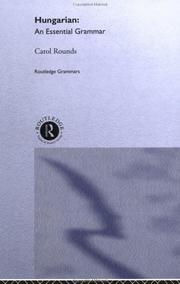
A compact reference grammar by the same author, ideal to read alongside the Colloquial course to clarify rules as they arise. Reading it early prevents fossilized errors and gives you a reliable reference to return to throughout your studies.
Building Blocks: Core Grammar & Structure
BeginnerUnderstand Hungarian's agglutinative system — vowel harmony, case endings, verb conjugation, and postpositions — well enough to construct original sentences and read simple texts.
▸ Study plan for this stage
Pace: 4–5 weeks, ~25–30 pages/day. Start with Törkenczy's verb and grammar essentials (2 weeks), then move to Pontifex's Hungarian grammar guide (2–3 weeks). Dedicate 1 week for review and integration exercises.
- Agglutinative morphology: how Hungarian builds words by stacking suffixes to encode grammatical information
- Vowel harmony rules: front vs. back vowel agreement and how suffixes change based on the stem's vowel quality
- Case system: nominative, accusative, dative, locative, and other cases as suffixes that mark grammatical relationships
- Verb conjugation: definite vs. indefinite conjugation, tense formation, and how verbs agree with subjects
- Postpositions: Hungarian's use of postpositions (rather than prepositions) and their case requirements
- Sentence construction: how to combine nouns, verbs, and postpositions with correct case and harmony to form grammatically sound sentences
- Reading comprehension of simple texts: applying grammar rules to decode meaning in authentic Hungarian passages
- What is vowel harmony in Hungarian, and how do you determine whether a suffix should use front or back vowels?
- Explain the difference between definite and indefinite verb conjugation in Hungarian. When would you use each?
- How does the Hungarian case system work, and what are at least three cases and their primary functions?
- What are postpositions, and how do they differ from English prepositions? Provide examples from Pontifex's material.
- Take a simple English sentence and construct its Hungarian equivalent using correct case endings, verb conjugation, and vowel harmony.
- How does the agglutinative structure of Hungarian allow a single word to convey information that English requires multiple words to express?
- Vowel harmony drills: Sort 20 Hungarian words by vowel type (front/back/neutral) and practice adding common suffixes while maintaining harmony.
- Verb conjugation tables: Complete conjugation charts for 5–6 high-frequency verbs (e.g., van, megy, eszik) in present, past, and conditional tenses using Törkenczy's paradigms.
- Case ending practice: Take 10 base nouns and add all major case endings (nominative, accusative, dative, locative, instrumental) while maintaining vowel harmony.
- Sentence building: Construct 15–20 original sentences of increasing complexity, starting with SVO patterns and progressing to sentences with postpositions and multiple cases.
- Text deconstruction: Select 3–4 simple Hungarian texts from Pontifex; break down each word into root + suffixes, identify cases and verb forms, and translate.
- Postposition practice: Write 10 sentences using different postpositions (e.g., mellett, alatt, között) with correct case agreement, then translate to English.
Next up: This stage equips you with the grammatical scaffolding needed to move into practical communication—you'll now be ready to expand vocabulary, engage with authentic texts, and practice conversation with confidence in how Hungarian structures meaning.
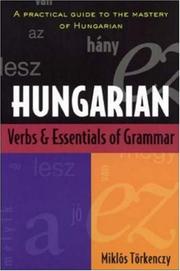
This focused guide tackles the two hardest pillars of Hungarian — the definite/indefinite conjugation system and the full case system — with clear tables and examples. It bridges the gap between a tourist phrasebook and real grammatical competence.
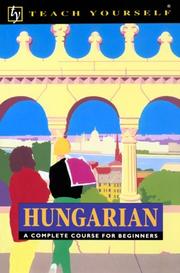
A thorough self-study course that revisits beginner material at a higher level and pushes into intermediate territory, covering topics like conditional mood, verbal prefixes, and complex noun phrases. Reading it after Colloquial Hungarian reinforces and expands what you know.
Consolidation: Graded Reading & Vocabulary Growth
IntermediateTransition from studying the language to actually using it — reading connected Hungarian prose, expanding vocabulary to 2,000+ words, and internalizing grammar through real context.
▸ Study plan for this stage
Pace: 8–10 weeks, ~25–30 pages/day (including audio and exercises), with 2–3 review days per week
- Reading connected Hungarian prose at intermediate level to transition from isolated grammar drills to authentic language use
- Expanding active and passive vocabulary from ~1,200 to 2,000+ words through graded, contextual reading
- Internalizing grammar patterns (cases, verb conjugations, word order) through repeated exposure in real sentences rather than explicit rules
- Building reading fluency and comprehension speed by engaging with longer passages and varied topics
- Recognizing and using common collocations and idiomatic expressions in Hungarian
- Developing confidence in understanding Hungarian without translating every word
- Connecting written forms to audio pronunciation to reinforce listening–reading integration
- Can you read a 200–300 word Hungarian passage and identify the main idea without looking up every unfamiliar word?
- What strategies do you use to infer the meaning of new vocabulary from context?
- How has your understanding of Hungarian grammar (cases, conjugations, word order) deepened through reading real prose rather than isolated sentences?
- Can you recognize and use at least 50 new idiomatic expressions or collocations from your reading?
- How has your reading speed improved, and what does fluent reading feel like compared to when you started this stage?
- Can you listen to the audio and follow along with the text, catching most words without stopping?
- Read 2–3 passages per day from 'Beginner's Hungarian with Online Audio,' then listen to the audio without looking at the text and note how much you understood
- Create a personal vocabulary journal: record 10–15 new words daily from your reading, with context sentences and your own example sentences
- After each reading section, write a 100–150 word summary in Hungarian using only the vocabulary and structures you've encountered so far
- Identify and collect 5–10 idiomatic expressions or collocations per week; use each one in a new sentence within 24 hours
- Read the same passage twice (with 3–5 days between readings) and time yourself to measure fluency gains
- Listen to audio passages at normal speed and transcribe 2–3 sentences per day, then compare your transcription to the text
- Create flashcards for high-frequency words and phrases from the book; review daily using spaced repetition
- Retell a short story or passage from the book to a language partner or recording device in your own words
Next up: Mastering graded, contextual reading in 'Beginner's Hungarian with Online Audio' equips you with a solid vocabulary base (2,000+ words), fluency with intermediate grammar patterns, and the confidence to tackle authentic, ungraded Hungarian texts—preparing you to move into the next stage where you'll engage with real-world materials (news, literature, podcasts) without scaffolding.

Provides a set of carefully graded dialogues and short reading passages written specifically for learners, with vocabulary glosses. It serves as a bridge between textbook exercises and authentic texts.
Going Deeper: Authentic Texts & Fluency
ExpertRead authentic Hungarian literature and journalism with a dictionary, understand complex grammar in the wild, and develop a feel for natural Hungarian style and register.
▸ Study plan for this stage
Pace: 8–10 weeks, ~40–50 pages/day with close reading and annotation
- Recognizing and parsing complex Hungarian sentence structures in literary prose, including nested subordinate clauses and stylistic inversions found in Kosztolányi's work
- Understanding register shifts and narrative voice: how Kosztolányi moves between Anna's inner thoughts, dialogue, and omniscient commentary to reveal character and social critique
- Mastering vocabulary in context from authentic literature—psychological terms, period-specific language, and colloquialisms that don't appear in textbooks
- Identifying cultural and historical subtexts: the social position of domestic servants in early 20th-century Hungary and how the novel critiques class and gender
- Recognizing stylistic devices unique to Hungarian: diminutives, verbal prefixes, and particle usage that convey tone and emotional nuance in Anna Édes
- Developing reading fluency by moving beyond word-by-word translation toward grasping meaning from larger syntactic units and narrative rhythm
- What are the major turning points in Anna's relationship with the Vilar family, and how does Kosztolányi's prose style shift to reflect her emotional state at each moment?
- How does Kosztolányi use dialogue and interior monologue to expose the gap between what characters say and what they think or feel?
- What role does the domestic setting play in the novel, and how does the author use physical descriptions to comment on class and social hierarchy?
- Identify three instances of complex Hungarian grammar (e.g., conditional constructions, participial phrases, or subjunctive mood) and explain how they contribute to meaning or tone in context.
- How does the novel's ending reflect or subvert the reader's expectations built up through the narrative, and what does this reveal about Kosztolányi's view of his characters?
- What historical or cultural references in Anna Édes would a contemporary Hungarian reader recognize, and how do they deepen the novel's social critique?
- Close-read one chapter per week, annotating 5–10 sentences that contain complex grammar or stylistic features; write a brief analysis (in English or Hungarian) of how each sentence works syntactically and what effect it creates
- Keep a running vocabulary journal organized by theme (emotions, domestic work, class relations, time/change) with 15–20 words per week from the novel; use each word in a sentence of your own
- Record yourself reading aloud a passage of 1–2 pages per week, then listen back to identify where your pacing, intonation, or understanding broke down; compare your reading to an audiobook version if available
- Write character sketches (1–2 pages each) for Anna, Mrs. Vilar, and Mr. Vilar after finishing key sections, using direct quotes from the text to support your interpretations of their motivations and contradictions
- Translate a challenging paragraph (100–150 words) from the novel into English, then compare your translation to published English versions; discuss where your choices differed and why
- Create a timeline of events in Anna Édes with annotations about how Kosztolányi's narrative structure (flashbacks, foreshadowing, shifts in perspective) shapes the reader's understanding of causality and character development
Next up: This stage equips you to read Hungarian literature independently with a dictionary, recognize how grammar and style work together to create meaning, and understand the cultural and historical layers embedded in authentic texts—preparing you to tackle more challenging or stylistically experimental works and to engage with Hungarian journalism, essays, and contemporary fiction in the next stage.
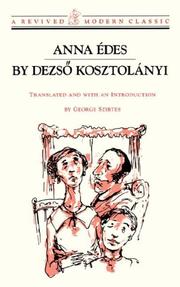
One of the most celebrated and stylistically clear Hungarian novels of the 20th century; Kosztolányi's prose is precise and relatively accessible compared to other canonical authors, making it the ideal first authentic literary read.
Discussion
Keep reading
Paths that share books, cover the same subject, or open a related topic.