Urdu is two rewards in one. As a spoken language it overlaps heavily with Hindi, so conversation comes relatively quickly, but its written form uses the flowing Nastaliq script and opens onto a magnificent tradition of poetry and prose. That split shapes the ideal order: get the script and spoken basics down, add a proper grammar, then move deliberately toward reading real literary Urdu, which is where the language truly shines.
Start with script and speech, build the grammar, then climb into readings and the great poets.
Script and spoken basics
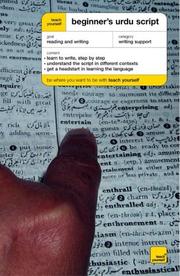
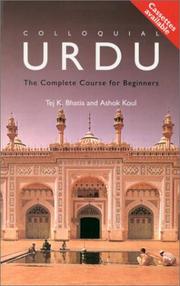
Begin with Teach Yourself Beginner's Urdu Script, Richard Delacy's focused introduction to reading and writing Nastaliq, because the script is the gate to everything written. Pair it with Colloquial Urdu, Tej K. Bhatia's conversation course, which builds spoken fluency and listening in parallel. For the shared grammar of the region, A Door into Hindi, Afroz Taj's course, is a valuable companion since spoken Urdu and Hindi are so close.
Building the grammar
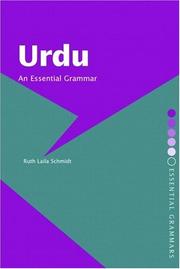
As you advance, ground yourself in structure. Urdu, an essential grammar, Ruth Laila Schmidt's clear reference, lays out the grammar cleanly, and Complete Urdu, David Matthews' full self-study course, integrates script, grammar, and vocabulary into one progression toward independence.
Reading Urdu literature
The reason many learners take up Urdu is its literature, and this is where the path pays off. Urdu Readings, C. M. Naim's graded reader, is the bridge from textbook to real texts, designed to build literary reading step by step. For context, A history of Urdu literature, Muhammad Sadiq's survey, maps the tradition you are entering.
Then the masterpieces. Kulliyat-e-Faiz, the collected poems of Faiz Ahmad Faiz, gives you one of the twentieth century's greatest poets, and Angaaray, Sajjad Zaheer's landmark and once-banned short story collection, shows Urdu prose at its most daring.
Books build the foundation, but Urdu's sounds and its sung poetry reward listening and speaking practice alongside study. Read the courses in order, then move into the literature, and follow the full path to keep the sequence straight.
Follow the full reading path →
Ready to learn something deeply?
Build a reading path — free