The Best Books to Learn Romanian
This curriculum takes a complete beginner from zero Romanian to confident conversational ability by combining structured courses, grammar references, and graded reading. Each stage builds directly on the last: you first gain survival phrases and pronunciation, then solidify grammar and vocabulary, and finally develop fluency through authentic and graded reading material.
First Steps: Survival Romanian
BeginnerAcquire basic pronunciation, essential phrases, and enough grammar intuition to handle everyday situations like greetings, numbers, shopping, and directions.
▸ Study plan for this stage
Pace: 6–8 weeks, ~20–25 pages/day (alternating between both books; ~2 weeks per book, with overlap for reinforcement)
- Romanian pronunciation system: vowels, consonants, stress patterns, and common sound combinations (from Teach Yourself Romanian)
- Essential survival phrases: greetings, polite expressions, introductions, and common courtesies (both books)
- Present tense conjugation of regular and irregular verbs (a fi, a avea, a merge) and basic verb agreement (Teach Yourself Romanian foundation, reinforced in Colloquial Romanian)
- Noun gender (masculine, feminine, neuter) and definite/indefinite articles in singular and plural forms (Teach Yourself Romanian)
- Numbers 0–100 and telling time, dates, and basic quantity expressions (both books)
- Practical vocabulary clusters: shopping, food, directions, accommodation, and basic social interactions (Colloquial Romanian emphasis)
- Word order and basic sentence structure in statements, questions, and negations (Teach Yourself Romanian)
- Listening comprehension and conversational rhythm through dialogues and audio materials (both books)
- How do you pronounce Romanian vowels and consonants correctly, and where does stress typically fall in Romanian words?
- What are the key differences between definite and indefinite articles in Romanian, and how do they change with gender and number?
- How do you conjugate the verbs a fi (to be), a avea (to have), and a merge (to go) in the present tense, and when do you use each?
- Can you introduce yourself, ask for directions, order food, and ask prices in Romanian using appropriate phrases and grammar?
- What is the role of gender in Romanian nouns, and how does it affect adjectives and articles?
- How do you form questions and negations in Romanian, and what is the typical word order?
- Pronunciation drills: Record yourself reading aloud from Teach Yourself Romanian's pronunciation guide and dialogues; compare with the audio materials to refine accent and intonation.
- Dialogue memorization: Memorize 5–8 key dialogues from Colloquial Romanian (greetings, shopping, directions) and practice them aloud daily until fluent.
- Verb conjugation tables: Create handwritten conjugation charts for a fi, a avea, a merge, and 10 additional regular verbs from Teach Yourself Romanian; practice conjugating them in context sentences.
- Article and gender matching: Complete 20–30 exercises matching nouns to correct definite/indefinite articles and adjectives based on gender and number from both books.
- Number and time practice: Write out numbers 0–100 in Romanian, tell time in 15-minute intervals, and create 10 sentences using numbers and dates from Colloquial Romanian contexts.
- Vocabulary clustering: Create flashcards for 3–4 vocabulary sets (shopping, food, directions, accommodation) with 15–20 words each; use spaced repetition daily.
- Role-play scenarios: Conduct 10-minute conversations with a language partner or mirror, using survival phrases from Colloquial Romanian (ordering food, asking directions, introducing yourself).
- Listening comprehension: Listen to the audio dialogues from both books 2–3 times per day, first without subtitles, then with transcripts; identify key phrases and grammar patterns.
Next up: This stage establishes the phonetic foundation, core verb conjugations, and essential vocabulary needed to move into the next stage, where you'll expand to more complex grammar (past tenses, conditional forms), longer narratives, and authentic cultural materials.

The most widely used English-language self-study course for Romanian, written by a leading Romanian-studies scholar. It introduces pronunciation, script, and core grammar through dialogues and exercises — the ideal first book to open.

A complementary beginner course that reinforces the same foundations with different dialogues and cultural notes, filling gaps left by Deletant and cementing early vocabulary before moving to grammar study.
Grammar Foundations
BeginnerUnderstand Romanian's core grammatical structures — noun cases, verb conjugations, pronouns, and agreement — well enough to construct correct sentences independently.
▸ Study plan for this stage
Pace: 4–5 weeks, ~20–25 pages/day with daily grammar drills
- The five Romanian noun cases (nominative, accusative, genitive, dative, locative) and their forms for masculine, feminine, and neuter nouns
- Definite and indefinite articles and how they change across cases and genders
- Present, past, and future tense conjugations for regular and common irregular verbs
- Personal pronouns (subject, object, reflexive) and their case variations
- Gender and number agreement between nouns, adjectives, and articles
- Basic word order patterns and how cases signal grammatical relationships in sentences
- Common prepositions and which cases they govern
- Reflexive verbs and their conjugation patterns
- How do Romanian noun cases change the form of a noun, and what grammatical role does each case signal?
- Can you conjugate a regular verb across present, past, and future tenses, and explain the pattern?
- How do definite and indefinite articles change based on gender, number, and case?
- What are the personal pronouns in Romanian, and how do they change depending on whether they are subjects, direct objects, or indirect objects?
- How do adjectives agree with nouns in gender, number, and case?
- Which prepositions govern which cases, and can you use them correctly in sample sentences?
- Complete case declension tables for 10 nouns across all five cases and both genders
- Conjugate 15 regular and 5 irregular verbs across present, past, and future tenses
- Rewrite sentences changing the case of key nouns and adjusting articles and adjectives accordingly
- Translate 20 English sentences into Romanian, focusing on correct case usage and verb conjugation
- Create 15 original sentences using different prepositions and verify the correct case follows each one
- Identify the case, gender, and number of every noun and adjective in 5 provided Romanian paragraphs
- Practice pronoun substitution: replace nouns with appropriate personal pronouns in different cases
- Write short dialogues (5–7 exchanges) using a mix of tenses and demonstrating case agreement
Next up: Mastery of these foundational structures enables you to move into sentence construction and discourse patterns, where you'll apply cases and conjugations to build complex sentences and understand how Romanian expresses nuanced meaning through grammatical relationships.

A concise, learner-focused reference grammar that explains Romanian's case system, verb tenses, and sentence structure in plain English. Read it cover-to-cover after the first course to consolidate what you've absorbed intuitively.
Reading Authentic Romanian
IntermediateRead real Romanian prose fluently, absorb idiomatic language, and develop an ear for natural rhythm and style by engaging with accessible literary texts.
▸ Study plan for this stage
Pace: 8–10 weeks, ~20–25 pages/day (alternating between both texts; ~60–80 pages total per week)
- Narrative voice and autobiographical storytelling: recognizing how Creangă uses first-person reflection to create intimacy and humor in 'Amintiri din copilărie'
- Idiomatic and colloquial Romanian: absorbing everyday expressions, proverbs, and folk language embedded in Creangă's rural prose
- Modernist literary techniques: understanding Eliade's symbolic layering, mythological allusions, and non-linear narrative structure in 'Maitreyi nunta în cer'
- Stylistic contrast: comparing Creangă's accessible, anecdotal realism with Eliade's philosophical and experimental prose
- Cultural and historical context: recognizing 19th-century rural Romanian life in Creangă and Eliade's engagement with Eastern philosophy and modernism
- Rhythm and musicality: developing sensitivity to sentence structure, pacing, and the 'sound' of authentic Romanian prose
- Thematic depth: identifying recurring motifs (memory, childhood, spirituality, transformation) across both texts
- How does Creangă use humor and self-deprecation in 'Amintiri din copilărie' to make his childhood memories both entertaining and emotionally resonant?
- What role do folk expressions, proverbs, and colloquial language play in grounding 'Amintiri din copilărie' in authentic rural Romanian culture?
- How does Eliade's narrative structure in 'Maitreyi nunta în cer' differ from conventional storytelling, and what effect does this have on the reader's experience?
- What symbolic and mythological layers does Eliade weave into 'Maitreyi nunta în cer,' and how do they relate to themes of spirituality and transformation?
- How would you characterize the stylistic differences between Creangă's accessible realism and Eliade's modernist, philosophical approach?
- What does each author reveal about the relationship between memory, identity, and cultural belonging?
- Close-read 3–4 key passages from 'Amintiri din copilărie' (e.g., the schoolmaster scene, family anecdotes) and annotate idiomatic expressions, noting their English equivalents and cultural significance
- Compile a personal glossary of 20–30 colloquial and folk expressions from Creangă, then use each in a sentence of your own to internalize their usage
- Write a 1–2 page personal anecdote in Romanian (inspired by Creangă's style) that captures a childhood memory using first-person reflection and humor
- Create a visual map or outline of 'Maitreyi nunta în cer' identifying symbolic elements, mythological references, and narrative shifts; explain how they interconnect
- Rewrite a scene from 'Maitreyi nunta în cer' in straightforward, linear prose, then reflect on how Eliade's original structure deepens meaning
- Record yourself reading aloud 2–3 passages from each text (one from Creangă, one from Eliade); listen back and note differences in rhythm, pacing, and emotional tone
- Compare and contrast two parallel themes (e.g., memory, spirituality, or transformation) across both texts in a 2–3 page analytical essay
Next up: This stage equips you with fluency in authentic Romanian prose across two distinct stylistic registers—realist and modernist—preparing you to tackle more challenging contemporary or experimental Romanian literature with confidence in both comprehension and cultural literacy.
Creangă's beloved 19th-century memoir of childhood is written in a warm, colloquial style full of humor and folk idiom — widely considered the most enjoyable first authentic literary read for Romanian learners.
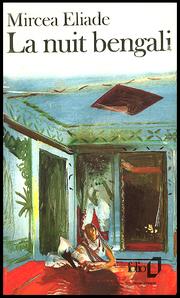
A short, gripping 20th-century novel with clear, modern prose. It consolidates reading stamina and exposes learners to contemporary literary Romanian vocabulary before tackling more complex authors.
Conversational Fluency & Advanced Consolidation
ExpertAchieve conversational fluency by mastering nuanced grammar, idiomatic expression, and the ability to discuss abstract topics naturally in Romanian.
▸ Study plan for this stage
Pace: 8–10 weeks, ~40–50 pages/day with active annotation; 2–3 focused study sessions per week on grammar and idioms extracted from the text
- Narrative past tenses (imperfect, perfect, pluperfect) as used in literary prose—recognizing and producing nuanced temporal relationships in Moromeții's multi-generational storytelling
- Idiomatic expressions and colloquial Romanian embedded in rural dialogue—understanding figurative language, proverbs, and peasant speech patterns authentic to the novel's setting
- Subjunctive and conditional moods for expressing hypothetical, abstract, and philosophical ideas—essential for discussing the novel's themes of fate, morality, and social change
- Discourse markers and connectives (dar, totuși, în schimb, deci) that structure complex arguments and literary analysis
- Vocabulary stratification: literary, archaic, and dialectal terms specific to early 20th-century rural Romania, plus abstract terminology for discussing themes
- Stylistic register shifts—recognizing when Preda employs formal narration versus peasant vernacular, and deploying appropriate register in spoken and written analysis
- Syntactic complexity: embedded clauses, participial constructions, and inversion patterns typical of Romanian literary prose
- How does Marin Preda use the imperfect and perfect tenses to establish the cyclical nature of peasant life in Moromeții, and what is the emotional or philosophical effect of this temporal structure?
- Identify and explain 5–7 idiomatic expressions or proverbs from the novel; what do they reveal about the worldview and values of the Moromete family and their community?
- Discuss the role of the subjunctive and conditional moods in scenes where characters contemplate change, loss, or moral dilemmas—how does Preda use these moods to express uncertainty or desire?
- What archaic or dialectal vocabulary does Preda employ, and how does it contribute to the authenticity and temporal setting of the narrative?
- Analyze a complex passage from Moromeții that uses embedded clauses or participial constructions; explain the grammatical structure and its stylistic purpose.
- How would you explain the central conflict or theme of Moromeții to a native Romanian speaker using subjunctive and conditional constructions to discuss abstract ideas about tradition, progress, and family?
- Close-read 3–4 key passages (e.g., opening scenes, family conflicts, moments of reflection) and annotate all subjunctive/conditional clauses, idiomatic expressions, and narrative tense shifts; write a 200-word analysis of how grammar serves meaning in each passage
- Create a personal 'Moromeții Idiom & Proverb Lexicon': extract 20–30 idiomatic expressions or proverbs from the novel, note their context, provide English equivalents, and use each in a new sentence about a personal experience or abstract idea
- Rewrite 2–3 scenes from Moromeții in modern, colloquial Romanian (contemporary register); then compare your version to Preda's original, identifying what stylistic and grammatical choices create the novel's literary tone
- Conduct a tense-mapping exercise: select a 5–10 page chapter and chart every verb's tense (imperfect, perfect, pluperfect, present, etc.); write a brief note on why Preda chose each tense and what effect it creates
- Write a 400–500 word literary analysis of a major theme in Moromeții (e.g., the tension between tradition and modernization, family bonds, mortality) using subjunctive and conditional constructions to discuss abstract ideas; have a native speaker or tutor review for register and grammatical accuracy
- Prepare and deliver a 10–15 minute spoken presentation in Romanian summarizing Moromeții's plot and themes; practice using discourse markers (dar, totuși, în schimb, deci) to structure your argument and employ subjunctive/conditional moods when discussing hypothetical or philosophical points
Next up: Mastery of Moromeții's literary language, idiomatic density, and complex grammar equips you to engage with more contemporary or stylistically experimental Romanian literature, and to participate in nuanced cultural and intellectual discussions with native speakers at native-level fluency.

Considered one of the greatest Romanian novels, its rich rural dialogue and complex characters expose the learner to the full range of colloquial and literary Romanian — the capstone read that signals genuine advanced competence.
Discussion
Keep reading
Paths that share books, cover the same subject, or open a related topic.