Learn Portuguese: a step-by-step reading list for Brazilian and European Portuguese
This four-stage curriculum takes a complete beginner from zero Portuguese to confident, nuanced reading and listening in both Brazilian and European varieties. Each stage builds on the last: you first internalize sounds and core grammar, then expand vocabulary through graded input, then tackle authentic prose, and finally refine your understanding of the cultural and dialectal split between Brazil and Portugal.
Foundations: Sound, Script & Core Grammar
BeginnerUnderstand how Portuguese sounds, how its spelling system works, and master essential grammar (nouns, verbs, pronouns, basic sentence structure) in both Brazilian and European variants.
▸ Study plan for this stage
Pace: 8–10 weeks, ~40–50 pages/day (mix of grammar reference, dialogues, and exercises)
- Portuguese phonetics and pronunciation rules: vowels, consonants, stress patterns, and nasal sounds unique to Portuguese
- Spelling conventions and diacritical marks (accents, tildes, cedillas) in both Brazilian and European Portuguese
- Noun gender (masculine/feminine) and number (singular/plural) agreement patterns
- Present-tense verb conjugation across regular (-ar, -er, -ir) and common irregular verbs (ser, estar, ter, ir)
- Personal pronouns (subject, object, reflexive) and their placement in sentences
- Basic sentence structure: SVO word order, negation, and question formation
- Essential verb tenses: present indicative, preterite, and imperfect for narrative contexts
- Differences between Brazilian Portuguese (BP) and European Portuguese (EP) in pronunciation, vocabulary, and grammar
- How do you pronounce Portuguese vowels, nasal sounds, and consonant clusters, and what are the key differences between Brazilian and European pronunciation?
- What are the rules for noun gender agreement, and how do you form plurals in Portuguese?
- How do you conjugate regular -ar, -er, and -ir verbs in the present tense, and what are the main irregular verbs you must memorize?
- What are the differences between ser and estar, and when do you use each one?
- How do you form negatives, questions, and basic imperative sentences in Portuguese?
- What are the major spelling and grammatical differences between Brazilian Portuguese and European Portuguese?
- Phonetics drills: Record yourself pronouncing Portuguese vowels, nasal sounds (ã, õ), and consonant clusters; compare with native speaker audio from Ponto de encontro
- Spelling practice: Write out 50 common Portuguese words, marking stress, accents, and tildes; identify patterns in Brazilian vs. European variants
- Verb conjugation tables: Create and fill in conjugation charts for 15 regular and 10 irregular verbs (ser, estar, ter, ir, fazer, dar, vir, poder, dever, querer) in present, preterite, and imperfect
- Gender and number agreement: Take 30 nouns from the textbooks and practice forming singular/plural and masculine/feminine pairs with articles and adjectives
- Dialogue transcription and analysis: Transcribe 5–6 dialogues from Ponto de encontro, identify verb tenses, pronouns, and sentence structures; note BP vs. EP differences
- Sentence construction: Build 40 simple sentences using the core grammar patterns (SVO, negation, questions) with vocabulary from the three books
Next up: Mastery of Portuguese sound, spelling, and foundational grammar equips you to move into conversational fluency and contextual language use, where you'll apply these structures to real-world dialogues, reading comprehension, and interactive communication.

A concise, authoritative reference grammar covering both European and Brazilian Portuguese. Start here to get a clear map of the language's structure before diving into any coursebook.

A widely-used beginner coursebook (Teach Yourself series) with integrated pronunciation guidance, dialogues, and exercises — ideal for building the first 1,000 words and basic conversational patterns.

A university-level textbook explicitly designed to teach both Brazilian and European Portuguese side by side, making the dialectal differences visible from day one.
Building Blocks: Vocabulary & Graded Reading
BeginnerExpand active vocabulary to ~2,000 words, develop reading fluency through graded texts, and begin internalizing common sentence patterns through high-frequency input.
▸ Study plan for this stage
Pace: 8–10 weeks, ~40–50 pages/day (alternating between Short Stories and Fluent Forever sections), with 3–4 days/week dedicated to story reading and 2–3 days to method application
- High-frequency vocabulary clusters: recognizing and retaining the ~2,000 most common Portuguese words through repeated exposure in context
- Graded narrative comprehension: following plot, character, and dialogue in simplified stories without translation, building reading stamina
- Sentence pattern internalization: identifying recurring grammatical structures (present tense, simple past, common verbs) through pattern recognition in stories
- Memory palace and spaced repetition techniques: applying Wyner's methods to anchor new vocabulary through multisensory association and strategic review
- Phonetic awareness and pronunciation: connecting written Portuguese to sound through Wyner's emphasis on listening and speaking alongside reading
- Contextual inference: deducing word meaning from narrative context rather than relying on glossaries, building reading independence
- Active vocabulary production: moving from passive recognition in stories to using new words in speaking and writing exercises
- Can you summarize the plot of at least 3 stories from Short Stories in Brazilian Portuguese for Beginners in Portuguese, using only vocabulary you've encountered?
- What are the 10–15 most frequent verbs you've encountered across the stories, and can you conjugate them in present and simple past tense?
- How would you apply Wyner's memory palace technique to a set of 20 new vocabulary words from the stories you've read?
- Can you identify and explain 5 recurring sentence patterns (e.g., 'Ele/Ela + verb + object') from the stories and create your own sentences using them?
- What pronunciation challenges have you encountered in Portuguese, and how have Wyner's listening and speaking strategies helped you address them?
- Can you read a new, unseen graded story at a similar level and understand the main ideas without consulting a dictionary?
- Daily story reading: Complete 1–2 short stories from Richards' collection per week (3–4 sessions), reading aloud to reinforce pronunciation and rhythm
- Vocabulary clustering: After each story, extract 15–20 new words, group them by theme (e.g., family, actions, emotions), and create a visual mind map or flashcard set
- Memory palace construction: Following Wyner's method, build a mental palace for 50–100 high-frequency words, placing them in familiar rooms and revisiting weekly
- Sentence pattern journal: Keep a notebook of recurring grammatical patterns found in stories (subject + verb + object, past tense markers, etc.) with 3–5 example sentences from the text for each
- Shadowing and retelling: After reading a story, listen to an audio version (if available) while following the text, then retell the story aloud in your own words
- Spaced repetition review: Use Wyner's spacing principle—review vocabulary on days 1, 3, 7, 14, and 30 after first encounter—with flashcards or a spaced repetition app
- Contextual inference practice: Read passages with 5–10 deliberately unfamiliar words and write down your guesses for meaning based on context before checking a glossary
- Writing exercises: Compose 3–5 simple sentences per week using new vocabulary and sentence patterns from the stories (e.g., 'O menino correu para a escola' based on story content)
Next up: By mastering ~2,000 high-frequency words and internalizing core sentence patterns through graded stories and Wyner's memory techniques, you'll have the vocabulary depth and pattern recognition needed to transition to authentic, unsimplified Portuguese texts and begin engaging with more complex grammar and nuanced expression.

Eight compelling graded short stories written at A1–A2 level with vocabulary glossaries; the narrative format makes new words stick far better than word lists alone.

A proven method book explaining how to use spaced-repetition flashcards and pronunciation training — read it here to supercharge vocabulary retention as your word count grows.
Going Deeper: Intermediate Grammar & Authentic Input
IntermediateMaster the subjunctive, compound tenses, and complex sentence structures; begin reading authentic simplified prose and understanding real spoken Portuguese.
▸ Study plan for this stage
Pace: 8–10 weeks, ~25–30 pages/day (with 2–3 days/week for grammar review and exercises)
- The subjunctive mood in Portuguese: formation and use in dependent clauses, wishes, doubts, and emotional expressions as encountered in Coelho's narrative voice
- Compound tenses (pretérito perfeito composto, mais-que-perfeito) and their narrative functions in storytelling, particularly in O Alquimista's reflective passages
- Complex sentence structures with subordinate clauses (temporal, causal, conditional) that appear throughout the novel's philosophical dialogue
- Vocabulary expansion through thematic reading: spiritual/philosophical terms, journey/quest language, and character-driven dialogue in O Alquimista
- Authentic Portuguese prose style: understanding Coelho's use of repetition, metaphor, and simple-yet-profound sentence construction
- Listening comprehension strategies for understanding real spoken Portuguese through audiobook excerpts and interviews related to the text
- How does Paulo Coelho use the subjunctive mood to express the protagonist's dreams, doubts, and spiritual yearning throughout O Alquimista?
- What is the difference between pretérito perfeito and pretérito perfeito composto, and how does Coelho employ each to structure his narrative timeline?
- Identify and explain three complex sentences from O Alquimista that use subordinate clauses; what grammatical structures connect them?
- What are the key vocabulary clusters in O Alquimista (e.g., journey, destiny, treasure, signs) and how do they recur to build thematic meaning?
- How does Coelho's writing style—his use of repetition and simple syntax—make the novel accessible while conveying complex philosophical ideas?
- After listening to an audiobook excerpt or interview, what specific subjunctive forms and compound tenses did you identify, and what was their function?
- Daily reading: Complete 25–30 pages of O Alquimista per day, annotating subjunctive verbs and compound tenses in the margins; keep a running list of new vocabulary organized by theme (e.g., 'destiny,' 'journey,' 'signs')
- Grammar focus sessions (2–3x/week): Select 5–10 sentences from that week's reading containing subjunctive or compound tenses; rewrite them in different tenses or moods to understand their function and effect
- Dialogue analysis: Extract 3–4 key conversations from O Alquimista (e.g., between Santiago and the Alchemist) and underline all subjunctive forms; discuss why Coelho chose subjunctive for these exchanges
- Listening practice: Listen to 10–15 minute audiobook excerpts (2x/week) while following the text; pause to identify subjunctive and compound tenses by ear, then verify in the book
- Creative writing: Write 2–3 short paragraphs (150–200 words each) in Portuguese imitating Coelho's style—use at least 3 subjunctive clauses and 2 compound tenses to describe a personal goal or journey
- Vocabulary synthesis: Create a visual mind-map or digital flashcard deck of 80–100 thematic words from O Alquimista (organized by chapter or theme); quiz yourself weekly and use 10 new words in written or spoken sentences
Next up: This stage equips you with the grammatical tools and authentic vocabulary to handle longer, more complex literary texts and real-world Portuguese media, preparing you to tackle advanced novels with denser philosophical or historical content and to engage confidently with native-speaker materials.

Written in clear, simple Brazilian Portuguese with a limited vocabulary, this beloved novel is the classic 'first real book' milestone for Portuguese learners worldwide.
Mastery: Authentic Literature & Dialectal Depth
ExpertRead unadapted literary prose from both Brazil and Portugal with confidence, appreciate stylistic and cultural differences between the two standards, and develop a lasting independent reading practice.
▸ Study plan for this stage
Pace: 8–10 weeks, ~40–50 pages/day (with close reading and annotation of poetic/stylistic elements)
- Pessoa's heteronymic poetry and modernist fragmentation in *Mensagem*: navigating multiple voices and philosophical layers
- Portuguese standard (European) phonetics, grammar, and vocabulary as exemplified in Pessoa's archaic and symbolic language
- Brazilian standard (Carioca dialect) in Amado's prose: colloquialisms, rhythm, and cultural idiom in *Gabriela, Cravo e Canela*
- Literary analysis of symbolism, metaphor, and cultural allusion in both texts
- Stylistic code-switching between Portugal's intellectual modernism and Brazil's sensory realism
- Building sustained independent reading habits with unadapted, culturally dense texts
- How does Pessoa use heteronymic voices in *Mensagem* to explore Portuguese identity and historical consciousness, and what linguistic markers distinguish each voice?
- What are the key phonetic and grammatical differences between the European Portuguese in *Mensagem* and the Brazilian Portuguese in *Gabriela, Cravo e Canela*, and how do these reflect cultural contexts?
- How does Amado's narrative voice and dialogue capture the sensuality, humor, and social dynamics of Bahian life, and what colloquialisms are essential to understanding the novel's tone?
- What major symbols and mythological/historical references appear in *Mensagem*, and how do they construct meaning about Portuguese national identity?
- How do the two books represent contrasting literary traditions—modernist introspection vs. realist social observation—and what does this reveal about Portuguese and Brazilian literature?
- What strategies can you employ to sustain independent reading of challenging literary texts, and how has your confidence grown across both books?
- Close-read 3–4 poems from *Mensagem* (e.g., 'Padrão' or 'Nevoeiro'), annotate symbols and allusions, then write a 500-word analysis of how Pessoa uses language to construct meaning
- Create a comparative glossary of 30–40 European Portuguese vs. Brazilian Portuguese terms/expressions found in both texts, with example sentences from each book
- Record yourself reading aloud 2–3 passages from *Gabriela* (dialogue-heavy scenes) and listen back to identify rhythm, intonation, and colloquial features; compare with a native speaker's recording if available
- Write a character study of Gabriela or Nacib that traces how Amado's prose style reveals psychology through sensory detail and dialect
- Analyze one major symbol from *Mensagem* (e.g., the sea, the cross, the mist) across multiple poems and write a 1000-word essay on its evolution and significance
- Conduct a stylistic comparison: select parallel scenes of emotional intensity from both books (e.g., a moment of longing in *Mensagem* and a moment of passion in *Gabriela*) and examine how each author's language choices create different effects
- Rewrite a scene from *Gabriela* in European Portuguese (or vice versa), noting which words, structures, and idioms must change and why
- Join or start a Portuguese literature discussion group (online or in-person) and lead a 20-minute presentation on either Pessoa's modernism or Amado's social realism
Next up: This stage establishes you as an independent reader of authentic Portuguese-language literature across both major standards and literary traditions, positioning you to pursue specialized reading (literary criticism, poetry collections, regional authors) or to engage with contemporary Portuguese and Brazilian media, journalism, and cultural discourse at an advanced level.

The only Portuguese-language book published in Pessoa's lifetime is a cornerstone of European Portuguese literature; wrestling with its dense symbolism marks true advanced reading ability.
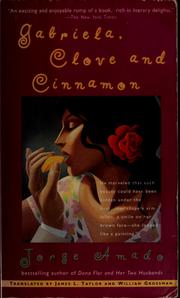
A rich, warmly human Brazilian novel full of regional idiom, colloquial dialogue, and cultural depth — the ideal counterpart to Pessoa for experiencing Brazilian Portuguese at its most vivid.
Discussion
Keep reading
Paths that share books, cover the same subject, or open a related topic.