Learn Italian: the best books to read in order, from basics to fluency
This four-stage curriculum takes a complete beginner from zero Italian to confident reading and conversation by pairing structured grammar study with verb drilling, graded reading practice, and proven self-study methodology. Each stage builds directly on the last — you master the rules before you drill them, drill them before you read freely, and read freely before you refine your style and fluency.
Foundations: First Words & Core Grammar
BeginnerUnderstand how Italian works — its sounds, basic sentence structure, gender/number agreement, and the most essential everyday phrases — so every later study session has a solid framework to hang new knowledge on.
▸ Study plan for this stage
Pace: 4–5 weeks, ~20–25 pages/day, focusing on Units 1–6 of "Teach Yourself Complete Italian"
- Italian phonetics and pronunciation: vowel sounds, consonant clusters, stress patterns, and the rhythm of spoken Italian
- Present tense of regular -are, -ere, and -ire verbs, and essential irregular verbs (essere, avere, andare)
- Noun gender (masculine/feminine) and number (singular/plural) agreement with articles and adjectives
- Basic sentence structure: subject-verb-object word order and how to form simple questions and negations
- Essential everyday vocabulary: greetings, introductions, numbers, days/months, telling time, and common courtesies
- Subject pronouns (io, tu, lui/lei, noi, voi, loro) and their role in verb conjugation
- Definite and indefinite articles (il, lo, la, i, gli, le, un, uno, una) and when to use each
- Agreement rules: how adjectives, articles, and nouns must align in gender and number
- How do you pronounce Italian vowels and consonants, and what are the stress patterns in common words?
- Can you conjugate regular -are, -ere, and -ire verbs in the present tense, and do you know the present-tense forms of essere, avere, and andare?
- How do you form a simple negative sentence and a yes/no question in Italian?
- What is noun gender in Italian, and how do articles and adjectives change to agree with masculine/feminine and singular/plural nouns?
- Can you introduce yourself, ask someone's name, tell the time, and use numbers in everyday contexts?
- What are the subject pronouns in Italian, and when can you omit them in a sentence?
- Pronunciation drills: Record yourself reading aloud passages from Units 1–2, focusing on vowel clarity and word stress; compare with the book's audio or online native-speaker models
- Verb conjugation tables: Create flashcards for all regular verb patterns (-are, -ere, -ire) and the irregular verbs (essere, avere, andare); practice conjugating 10 new verbs daily
- Gender and agreement practice: Take 20 nouns from the book, write them with their definite article and one adjective, then convert each to plural—e.g., 'il ragazzo simpatico' → 'i ragazzi simpatici'
- Dialogue reconstruction: After each unit, rewrite or role-play the dialogues from the book without looking at the text; focus on using correct verb forms and article agreement
- Sentence building: Write 5 simple sentences daily using the week's new vocabulary and verbs (e.g., 'Io sono Marco. Tu sei inglese. Lei va a Roma.')
- Time-telling and number exercises: Practice telling time and reading out numbers, dates, and phone numbers aloud; use real-world contexts (train schedules, menus, addresses from the book)
Next up: By mastering these foundational sounds, verb patterns, and agreement rules, you'll have the grammatical scaffolding and vocabulary base needed to tackle more complex tenses, modal verbs, and authentic conversational scenarios in the next stage.
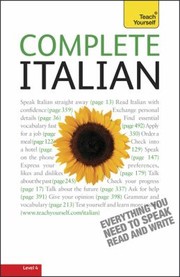
This Teach Yourself classic combines concise grammar explanations with dialogues and audio, making it the ideal companion to a pure grammar reference for building your first real phrases and listening ear.
Verb Mastery & Pattern Drilling
BeginnerInternalize Italian verb conjugations — regular and the most common irregular verbs — across present, past, and future tenses so that forming sentences becomes automatic rather than effortful.
▸ Study plan for this stage
Pace: 6–8 weeks, ~40–50 pages/day (alternating between verb reference drills and grammar practice)
- Regular verb conjugation patterns (-are, -ere, -ire) across present, past (passato prossimo, imperfetto), and future tenses
- High-frequency irregular verbs (essere, avere, andare, fare, venire, potere, volere, dovere) and their conjugation rules
- Auxiliary verb usage: essere vs. avere in compound tenses and when to apply each
- Verb mood and aspect: indicative mood conjugations as the foundation for sentence construction
- Reflexive verbs and their conjugation patterns with reflexive pronouns
- Verb stem changes and spelling adjustments in conjugation (e.g., -care/-gare verbs, -cere/-gere verbs)
- Pattern recognition: using 501 Italian Verbs as a reference to identify conjugation families and apply them productively
- Automatic recall: moving from conscious rule application to fluent, automatic verb formation in speech and writing
- Can you conjugate a regular -are, -ere, and -ire verb across present, passato prossimo, imperfetto, and future tenses without consulting a reference?
- What is the difference between essere and avere as auxiliary verbs, and which verbs require each one in compound tenses?
- How do you conjugate the ten most common irregular verbs (essere, avere, andare, fare, venire, potere, volere, dovere, dire, stare) in present and past tenses?
- When and why do spelling adjustments occur in verbs like cercare, pagare, leggere, and cominciare, and how do you apply them?
- How do reflexive verbs differ in conjugation from non-reflexive verbs, and where do reflexive pronouns appear in different tenses?
- Given a new regular verb you've never seen before, can you confidently conjugate it across multiple tenses using pattern recognition?
- Daily conjugation drills: Select 5 verbs from 501 Italian Verbs (mix regular and irregular) and conjugate each across present, passato prossimo, imperfetto, and future tenses; repeat daily with rotating verb sets
- Flashcard system: Create digital or physical flashcards with infinitive on one side and all conjugations on the other; review 20–30 cards daily using spaced repetition
- Tense conversion exercises: Take sentences from Practice Makes Perfect Complete Italian Grammar and rewrite them in different tenses (e.g., present → past → future) to internalize tense shifts
- Irregular verb family mapping: Group the 20 most common irregular verbs by conjugation pattern (e.g., verbs with -ng- stems like venire/tenere); study families together to recognize patterns
- Reflexive verb practice: Complete all reflexive verb exercises in Practice Makes Perfect Complete Italian Grammar, then create 10 original sentences using different reflexive verbs in different tenses
- Speed drills: Set a timer and conjugate 10 random verbs in a target tense (e.g., 'all present tense') in 2–3 minutes; track improvement weekly
- Sentence construction: Write 20–30 short sentences (5–8 words each) using verbs in different tenses, focusing on accuracy and automaticity rather than complexity
Next up: Mastering verb conjugation as automatic, muscle-memory-level knowledge enables you to shift focus in the next stage from *how* verbs are formed to *how* they function in complex sentences—building toward fluent conversation and writing where verb choice and tense selection happen naturally rather than consciously.
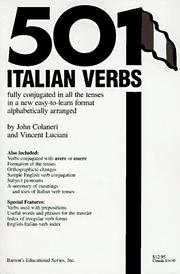
The definitive verb-conjugation reference for Italian learners; placed here so you can drill systematically now that you understand the grammar framework from Stage 1.

Hundreds of targeted exercises reinforce every grammar and verb pattern you have studied, bridging the gap between knowing a rule and using it automatically in writing and speech.
Graded Reading & Vocabulary Growth
IntermediateTransition from controlled exercises to real Italian text by reading stories written for learners, expanding vocabulary naturally in context, and building the reading stamina needed for authentic material.
▸ Study plan for this stage
Pace: 8–10 weeks, ~20–30 pages/day (approximately 2–3 short stories per week)
- Recognizing and inferring word meaning from context clues and surrounding narrative
- Building active vocabulary through repeated exposure to high-frequency words across multiple stories
- Understanding narrative structure and plot progression in simplified Italian prose
- Identifying and using common past tense forms (passato prossimo and imperfetto) in authentic story contexts
- Developing reading fluency by reducing reliance on translations and building confidence with longer passages
- Recognizing cultural references and idiomatic expressions embedded in learner-friendly stories
- Maintaining comprehension momentum across full short stories without stopping for every unknown word
- Can you summarize the main plot and character motivations of a story you've read without referring back to the text?
- When you encounter an unfamiliar word in context, can you make an educated guess about its meaning before looking it up?
- Can you identify the difference between passato prossimo and imperfetto usage in a story and explain why each tense was chosen?
- What are 5–10 new vocabulary words you've learned across the stories, and can you use them in original sentences?
- Can you read a full short story (8–12 pages) with minimal dictionary use and still understand the main events?
- How do the stories in both books reflect Italian culture, values, or everyday situations, and what did you learn about Italian life?
- Read one complete story from 'Short Stories in Italian for Beginners' without pausing to look up words; afterward, write a 5–7 sentence summary in Italian of what happened
- Create a personal vocabulary journal: for each story, list 10 new words, their meanings, and one example sentence using each word from the text
- Retell a story aloud in Italian (3–5 minutes) to a language partner or recording device, focusing on past tense accuracy and narrative flow
- Identify all instances of passato prossimo and imperfetto in one story; write out the infinitive form and explain why each tense was used
- Read a story from 'Italian Short Stories for Beginners' and create a character map or timeline showing key events and character relationships
- Write a short dialogue (8–10 exchanges) between two characters from different stories, using vocabulary and structures you've encountered
- Read the same story twice (one week apart); on the second reading, note how much faster and more naturally you understand it without dictionary help
- Choose a story and write 3–4 comprehension questions for a study partner, then answer theirs to check mutual understanding
Next up: By completing this stage, you will have built sufficient reading stamina, vocabulary depth, and comfort with narrative Italian to transition to authentic, unabridged Italian texts—novels, news articles, or essays written for native speakers—where you'll apply these skills to real-world language without the scaffolding of simplified prose.

Eight compelling graded stories use high-frequency vocabulary and a gradual difficulty ramp, making this the perfect first 'real reading' experience after grammar and verb study.

A second set of graded stories with comprehension questions and vocabulary glossaries; reading a second graded-reader collection at this stage solidifies new words through repeated, varied exposure.
Fluency & Self-Study Refinement
IntermediateDevelop a sustainable, self-directed study system that integrates speaking, listening, and reading of authentic Italian, and refine your grammar to handle complex real-world communication with confidence.
▸ Study plan for this stage
Pace: 6–8 weeks, ~20–25 pages/day, with 2–3 days per week dedicated to implementing the techniques rather than just reading
- Spaced repetition and active recall as the foundation for long-term retention of Italian vocabulary and grammar
- The primacy of comprehensible input: consuming authentic Italian media (podcasts, films, books) at your level to build fluency naturally
- Pronunciation and phonetic awareness as essential to both speaking and listening comprehension; using tools like Anki with audio to train your ear
- The importance of personal motivation and emotional connection: linking Italian learning to your own interests, goals, and life context
- Building a self-directed study system using digital tools (Anki, language apps, media) that fits your schedule and learning style
- Grammar refinement through pattern recognition in real-world contexts rather than isolated rule memorization
- Overcoming the intermediate plateau by deliberately practicing speaking and writing with native speakers or tutors
- How does spaced repetition improve long-term retention of Italian vocabulary, and what tools can you use to implement it effectively?
- What is comprehensible input, and why is it more effective for developing fluency than traditional grammar-focused study?
- How can you use your personal interests and emotional connections to accelerate your Italian learning?
- What is the relationship between pronunciation practice and listening comprehension, and how can you integrate both into your daily routine?
- How do you design a sustainable, self-directed study system that balances input (reading, listening) with output (speaking, writing)?
- What strategies can you use to break through the intermediate plateau and move toward advanced fluency?
- Create a personalized Anki deck of 50–100 Italian words and phrases tied to your interests (hobbies, work, passions), with audio pronunciation included; review daily using spaced repetition
- Select one Italian podcast, audiobook, or film at your intermediate level; consume 15–20 minutes daily and keep a listening journal noting new words, phrases, and comprehension improvements
- Record yourself speaking Italian for 5 minutes daily on a topic of interest (your day, a hobby, a goal); listen back and identify pronunciation and grammar patterns to refine
- Find a language exchange partner or tutor for one 30-minute conversation session per week in Italian; prepare a list of topics beforehand and record the session to review later
- Design your personal Italian learning system: map out your weekly schedule, choose your primary input sources (podcasts, books, films), select your spaced repetition tool, and identify accountability checkpoints
- Read one short Italian news article, blog post, or story per week at your level; annotate new vocabulary and grammar structures, then reread it 3–4 days later to reinforce retention
Next up: By establishing a sustainable, self-directed system grounded in spaced repetition, comprehensible input, and personal motivation, you will have the habits and tools necessary to move into advanced fluency, where you can tackle more complex authentic materials, develop specialized vocabulary, and engage in nuanced cultural and intellectual discussions in Italian.

Teaches a science-backed self-study method — spaced repetition, pronunciation-first learning, and immersive vocabulary acquisition — that supercharges independent Italian study at this stage when you have enough language to apply it fully.
Discussion
Keep reading
Paths that share books, cover the same subject, or open a related topic.