Learn Hindi: an ordered reading list from Devanagari script to conversation
This curriculum takes a complete beginner from zero Hindi to confident everyday reading and speaking across four carefully sequenced stages. It begins with mastering the Devanagari script — the essential gateway to all written Hindi — then builds core grammar, expands vocabulary and listening intuition, and finally develops real-world reading fluency through graded and authentic texts.
Cracking the Script: Devanagari Foundations
BeginnerRead and write every Devanagari letter, vowel sign, and conjunct consonant accurately and without hesitation — the non-negotiable first step before any grammar or vocabulary study.
▸ Study plan for this stage
Pace: 4–5 weeks, ~15–20 pages/day (alternating between both books; ~2 weeks on Teach Yourself Hindi script chapters, then ~2–3 weeks on Hindi Script Hacking for reinforcement and mastery)
- The Devanagari script structure: 13 vowels (स्वर), 33 consonants (व्यंजन), and how they combine systematically
- Vowel signs (मात्रा) and how they modify consonant sounds without changing the consonant letter itself
- Consonant clusters and conjunct consonants (संयुक्त व्यंजन): recognizing and writing half-forms and ligatures
- Proper stroke order and writing mechanics for accurate, legible Devanagari handwriting
- Diacritical marks (अनुस्वार, विसर्ग, चंद्रबिंदु) and their phonetic impact
- Transliteration systems (IAST/Roman) and how they map to Devanagari for cross-referencing
- Rapid visual recognition: distinguishing similar-looking letters (e.g., छ vs. ख, ड vs. ढ) at a glance
- Practical reading fluency: moving from letter-by-letter decoding to word-level recognition
- Can you write all 13 vowels and 33 consonants of Devanagari from memory, with correct stroke order and proportions?
- How do vowel signs (मात्रा) change the pronunciation of a consonant, and can you apply them accurately to any consonant?
- What are conjunct consonants, and can you identify and write at least 15 common conjuncts (e.g., क्ष, त्र, ज्ञ) without reference?
- Can you read a short paragraph of unseen Hindi text (10–15 words) aloud with correct pronunciation and appropriate pausing?
- What is the difference between अनुस्वार, विसर्ग, and चंद्रबिंदु, and how do they affect pronunciation?
- Given a Hindi word in Devanagari, can you transliterate it to IAST Roman script accurately, and vice versa?
- Daily handwriting practice: Write each of the 13 vowels and 33 consonants 5 times each, focusing on stroke order and consistency. Use Teach Yourself Hindi's script section as your model.
- Vowel sign drills: Take 10 random consonants daily and write them with each of the 13 vowel signs (e.g., क, का, कि, की, कु, कू, कृ, के, कै, को, कौ, कं, कः). Repeat for 2 weeks.
- Conjunct consonant flashcards: Create 20–30 flashcards of common conjuncts from Hindi Script Hacking (क्ष, त्र, ज्ञ, श्र, ष्ठ, etc.). Drill daily until you can recognize and write each in under 3 seconds.
- Transcription exercises: Copy short Hindi sentences (3–5 words) from Teach Yourself Hindi's script chapters by hand, then read them aloud to check pronunciation.
- Reverse transliteration: Take 10 IAST Roman words daily and convert them to Devanagari script without looking at the original. Verify against the book.
- Timed reading drills: Use Hindi Script Hacking's word lists and practice reading 20–30 words aloud in 2 minutes, gradually increasing speed and accuracy over 3 weeks.
Next up: Mastery of Devanagari script removes the decoding bottleneck, allowing you to shift focus entirely to grammar patterns and vocabulary building in the next stage without the cognitive load of simultaneous script recognition.

Snell's course opens with a thorough, learner-friendly Devanagari introduction that teaches the script systematically alongside its sounds, giving beginners an immediate phonetic anchor before any grammar is introduced.

A dedicated script-only workbook that drills Devanagari recognition and handwriting through spaced repetition and minimal-pair exercises — ideal as a focused companion right after Snell's introduction to cement what was learned.
Core Grammar & Survival Phrases
BeginnerUnderstand Hindi sentence structure (postpositions, verb agreement, tenses) and produce simple, grammatically correct spoken and written sentences for everyday situations.
▸ Study plan for this stage
Pace: 4–5 weeks, ~25–30 pages/day, with 2–3 days per week dedicated to grammar drills and speaking practice
- Hindi noun and pronoun declension: gender, number, and case (nominative, oblique, locative) and how they affect word endings
- Postpositions (ne, ko, se, mein, par, tak) and their role in marking grammatical relationships instead of word order
- Verb conjugation: present, past, and future tenses with subject-verb agreement based on gender and number
- Sentence structure: the basic SOV (Subject-Object-Verb) word order and how postpositions modify it
- Transitive vs. intransitive verbs and how they determine case marking of objects and subjects
- Imperative and conditional forms for giving commands and expressing hypotheticals in everyday speech
- Common survival phrases embedded within grammatical patterns: greetings, requests, questions, and responses
- How do postpositions like 'ne', 'ko', and 'se' change the grammatical function of nouns, and why is this critical to Hindi sentence structure?
- Explain the difference between nominative and oblique cases in Hindi nouns and pronouns, and provide examples of how each is used in sentences.
- How does subject-verb agreement work in Hindi with respect to gender and number, and how does it differ from English?
- What is the basic word order of Hindi sentences, and how do postpositions allow flexibility within this structure?
- Distinguish between transitive and intransitive verbs in Hindi and explain how this distinction affects case marking in sentences.
- How do you form and use the imperative mood in Hindi for polite requests versus direct commands?
- Decline 20 common Hindi nouns (e.g., लड़का, घर, किताब, आदमी) through all cases (nominative, oblique, locative) in both singular and plural forms.
- Write 30 simple sentences (5–8 words each) using different postpositions (ne, ko, se, mein, par, tak) and identify the grammatical function each postposition marks.
- Conjugate 15 high-frequency verbs (e.g., करना, जाना, आना, देना, लेना, बोलना) in present, past, and future tenses with at least 3 different subjects to practice subject-verb agreement.
- Create 25 survival-phrase sentences for everyday situations (ordering food, asking directions, introducing yourself, making requests) and parse the grammar of each.
- Identify and correct 20 sentences with intentional grammatical errors (wrong case marking, verb agreement, postposition usage) to develop error recognition.
- Record yourself speaking 15 short dialogues (greetings, simple questions and answers, requests) and review for correct postposition use and verb conjugation.
Next up: Mastery of Hindi grammar and survival phrases equips you with the structural foundation and practical vocabulary needed to move into conversational fluency, where you'll apply these patterns to longer dialogues, idiomatic expressions, and real-world listening comprehension.

A concise but rigorous reference grammar to read alongside the course — it clarifies the logic behind postpositions, aspect, and honorifics that learners often find confusing, reinforcing Snell's practical lessons with linguistic depth.
Vocabulary Expansion & Listening Intuition
IntermediateBuild a working vocabulary of 1,500–2,000 words, internalize common collocations, and develop an ear for natural Hindi rhythm and register.
▸ Study plan for this stage
Pace: 6–8 weeks, ~40–50 pages/day from "Colloquial Hindi" + 20–30 minutes daily dictionary work
- Thematic vocabulary clusters (food, family, daily routines, commerce, emotions) as taught in Colloquial Hindi dialogues
- Collocation patterns and word partnerships (e.g., verb + object combinations, adjective + noun pairings) specific to natural Hindi speech
- Register and formality levels: distinguishing between formal, colloquial, and intimate Hindi registers
- Phonetic rhythm and stress patterns in Hindi utterances to internalize natural pronunciation and cadence
- Dictionary lookup strategies using Chaturvedi's practical dictionary to identify word roots, grammatical forms, and usage contexts
- Contextual meaning inference: using sentence structure and surrounding words to deduce unfamiliar vocabulary
- Listening comprehension through dialogue repetition and mimicry of conversational patterns from Colloquial Hindi
- Can you identify and use 50+ common collocations (verb-noun, adjective-noun pairs) from Colloquial Hindi in natural sentences?
- How do you distinguish between formal (आप) and informal (तुम/तू) registers, and when is each appropriate in real conversations?
- Given an unfamiliar Hindi word, can you use Chaturvedi's dictionary to find its root form, grammatical variants, and usage example?
- Can you listen to a short Hindi dialogue and identify the main vocabulary items, register, and emotional tone?
- What are the key phonetic features (stress, vowel length, consonant clusters) that mark natural Hindi rhythm, and can you reproduce them?
- Can you explain the semantic relationships between 10+ word families (e.g., करना, कर, किया, करेंगे) and use them in context?
- Daily vocabulary journal: Extract 10–15 new words from each Colloquial Hindi dialogue, record them with context sentences, and review using spaced repetition (Anki or similar).
- Collocation mapping: Create a visual mind map for 5 thematic clusters (e.g., 'eating') showing verbs, nouns, adjectives, and common phrases (e.g., खाना खाना, स्वादिष्ट खाना, खाना बनाना).
- Dictionary deep-dive: For 5 words per week, use Chaturvedi's dictionary to trace the root form, list all grammatical variants (past, future, imperative), and write 3 example sentences.
- Dialogue shadowing: Select 3–4 dialogues from Colloquial Hindi per week; listen and repeat aloud, focusing on intonation, stress, and natural rhythm until you can reproduce it fluently.
- Register role-play: Write and perform (or record) two versions of the same conversation—one formal (आप) and one informal (तुम)—using vocabulary from Colloquial Hindi.
- Listening and transcription: Listen to a 2–3 minute Hindi audio clip (from dialogues or supplementary material); transcribe key words and phrases, then cross-reference with Chaturvedi's dictionary.
- Word family trees: For 10 high-frequency verbs (करना, जाना, आना, देना, लेना, etc.), create a chart showing all tense/mood forms and use each in a sentence.
Next up: Mastery of 1,500–2,000 active vocabulary items and intuitive grasp of Hindi register and rhythm equips you to move into the next stage—reading authentic short texts, news articles, and literature—where you'll encounter these words in real-world contexts and begin building reading fluency and cultural comprehension.
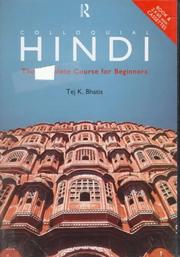
Bhatia's course emphasizes spoken, colloquial registers that formal grammars underplay — dialogues, idiomatic expressions, and cultural notes that bridge the gap between textbook Hindi and real conversation.
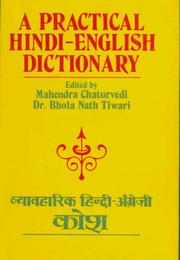
The most widely used learner's Hindi dictionary; reading through thematic word lists and looking up words encountered in Bhatia's dialogues actively builds vocabulary and reinforces Devanagari reading speed.
Reading Fluency & Authentic Texts
IntermediateRead unsimplified Hindi prose — short stories, news, and literature — with growing independence, consolidating all prior grammar and vocabulary in authentic contexts.
▸ Study plan for this stage
Pace: 6–8 weeks, ~20–25 pages/day of active reading with annotation and comprehension work
- Reading unsimplified Hindi prose with minimal dictionary dependence through contextual inference and morphological analysis
- Recognizing and interpreting authentic narrative structures, literary devices, and cultural references in Hindi short stories
- Consolidating intermediate grammar (complex verb forms, subjunctive moods, passive constructions) within flowing prose contexts
- Building active vocabulary from authentic texts through spaced repetition and thematic word families
- Developing reading stamina and confidence to engage with real Hindi literature without translation support
- Understanding how Hindi prose style differs from formal written Hindi and spoken registers
- What strategies can you use to infer the meaning of unfamiliar words in context without immediately consulting a dictionary?
- How do the short stories in the Intermediate Hindi Reader employ narrative perspective, dialogue, and descriptive language to convey meaning?
- Can you identify and explain the function of key intermediate grammar structures (e.g., subjunctive, conditional, passive voice) as they appear in authentic prose passages?
- What cultural, historical, or social themes emerge across the stories, and how are they reflected in the author's word choice and sentence construction?
- How has your reading speed and comprehension confidence changed from the beginning to the end of this stage?
- Can you read a previously unseen Hindi short story or news passage and extract main ideas and supporting details with 70%+ accuracy?
- Daily close reading: Select 2–3 paragraphs from the Intermediate Hindi Reader each day; read aloud, annotate unfamiliar words and grammar structures, then write a 3–4 sentence summary in Hindi without looking back at the text
- Vocabulary mapping: Create thematic word clusters (e.g., emotions, family relationships, actions) from each story; use these to build active recall and recognize word families in new contexts
- Grammar spotting: As you read, mark and categorize instances of subjunctive, conditional, passive, and other intermediate structures; write example sentences using each structure from the text
- Retelling practice: After completing each story, retell it orally in Hindi (5–10 minutes) to a language partner or recording, focusing on narrative flow and natural phrasing
- Comparative analysis: Choose two stories from the reader and write a 1–2 page comparison (in English or Hindi) of their themes, character development, and narrative techniques
- Timed reading drills: Once per week, read a new passage (300–400 words) from the Intermediate Hindi Reader under timed conditions (8–10 minutes), then answer comprehension questions without re-reading
- Writing extension: After each story, write a short creative response (diary entry, letter, alternative ending) in Hindi, incorporating vocabulary and grammar from that story
Next up: This stage transforms you from a grammar-focused learner into a confident reader of authentic Hindi literature, equipping you to move into advanced reading and literary analysis where you will engage with longer novels, poetry, and specialized texts while developing critical interpretation skills.
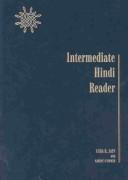
Jain's graded reader bridges the gap between textbook exercises and real literature with annotated passages of increasing difficulty, making it the ideal first step into authentic Hindi reading.
Discussion
Keep reading
Paths that share books, cover the same subject, or open a related topic.