Langston Hughes Reading Order: Where to Start
Hughes wrote poetry for forty years, but he also wrote novels, short stories, two volumes of memoir and a weekly newspaper column, and reading only the poems gives a thin picture of him. This order starts with the two Harlem Renaissance collections that made his reputation at twenty-four, moves through the fiction, then the Simple columns and the memoirs, and finishes with the mature book-length poem sequences — which are his hardest and best work and are much clearer once you know the life and the ear behind them.
Start Here: The Blues Poems
BeginnerHear Hughes doing the thing nobody had done before — writing blues and jazz rhythms straight into American poetry.
▸ Study plan for this stage
Pace: 2 weeks, and deliberately slow — these are two short books (The Weary Blues 109 pages, Fine Clothes to the Jew 89) that a fast reader could finish in two evenings and get almost nothing from. Ten to fifteen poems a sitting is plenty. Read every one aloud, at least twice: once to get the sense, once
- These are POETRY collections, the only two in the first half of this path — the fiction, the columns and the memoirs come later, and it is worth knowing at the outset that Hughes worked in all four forms
- The blues stanza is the technical innovation: a line, that line repeated with a small variation, then a third line that answers. Hughes took it out of the music and set it on the page as literary poetry, which nobody had done
- Read aloud, the repeated line is not filler — it is a singer holding the note while deciding what to say next. The variation between the first and second line is where nearly all the feeling sits
- The Weary Blues came out in 1926 when Hughes was twenty-four and holds The Negro Speaks of Rivers, written at eighteen on a train crossing the Mississippi, which is a completely different register from the blues poems and shows the range was there from the start
- Fine Clothes to the Jew is written almost entirely in working-class voices — porters, prostitutes, gamblers, elevator boys — and the Black press attacked it hard in 1927 for putting the wrong sort of people in a book. Hughes thought it his best early work and never took the attack back
- The title of the second book is an idiom of the period about pawning your clothes; readers regularly mistake it for something else, and the confusion is worth resolving before you open it
- The context is not incidental: Hughes was writing under Jim Crow — legally enforced segregation across the American South and widespread de facto segregation elsewhere — and he wrote directly about it rather than around it. The plainness of the diction is a choice made against a literary establishme
- The plainness is technique, not simplicity. A Hughes poem gets its effect from a line break or one shifted word, and it goes past you at speed if you are reading with your eyes only
- Say the title poem of The Weary Blues aloud. Where does the poem stop being the speaker's voice and become the singer's, and how does Hughes mark the change without announcing it?
- Take one twelve-bar blues poem and write out how the second line differs from the first. What does the change do that a straight repetition would not?
- The Negro Speaks of Rivers sounds nothing like the blues poems beside it. What tradition is it working in instead, and why might a twenty-four-year-old put both in one book?
- Which poems in Fine Clothes to the Jew do you think drew the 1927 attacks, and what exactly were the critics afraid a white reader would take from them?
- Hughes almost never comments on his speakers. Pick a poem where you can feel a judgement anyway and locate what carries it — word choice, line length, the ending, or where the poem stops.
- Read ten poems aloud, then find a recording of a 1920s country blues singer and read the same ten again. The second pass will change your line breaks, which is the point.
- Copy out three poems by hand. At this length the layout is compositional, and typing or scanning hides that the white space is doing work.
- Keep a running list of the occupations Hughes gives his speakers across both books. By the end of Fine Clothes to the Jew it reads as a deliberate census of who was not being written about.
- Pick your favourite poem from each book and put it aside. You will want them again at the last stage, when Hughes is doing the same thing at book length.
Next up: With the ear trained on the short poems, the fiction shows what happens when Hughes gives the same voices three hundred pages instead of twelve lines.
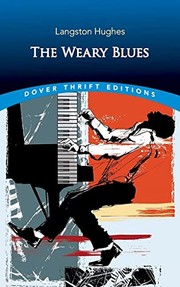
The 1926 debut, containing The Negro Speaks of Rivers and the title poem. The only sensible place to start: it is where the blues stanza enters literary poetry, and it is short enough to read in an evening.

The follow-up, written entirely in working-class voices and savaged by the Black press at the time for showing the wrong sort of people. Read it second — Hughes considered it his best early book, and the controversy is part of the story.
The Fiction
BeginnerRead Hughes as a novelist and short-story writer, and see the same material handled at length.
▸ Study plan for this stage
Pace: 4 weeks. Not Without Laughter is a 309-page novel and moves easily — two weeks at 25 pages a day. The Ways of White Folks is 248 pages of short stories and should be rationed to two or three a sitting; read straight through they blur, and each one is built to land as a single blow. Laughing to Keep
- This stage is PROSE — one novel and two short-story collections. Nothing here is poetry, and the sentence rhythms are noticeably flatter than the poems on purpose
- Not Without Laughter follows a boy in a small Kansas town, close to Hughes's own Lawrence childhood, among a grandmother, a mother and an aunt who flatly disagree about how to survive being Black in America — the argument between those three women is the actual plot
- The novel is conventional in form and warm in tone, which makes it the gentlest full-length entry to Hughes; do not mistake the warmth for a lack of anger
- The Ways of White Folks is the anger. Fourteen stories about white patronage and what it costs to accept it, several drawn from Hughes's own break with the wealthy benefactor who supported him and then cut him off
- The recurring situation is a white character who believes themselves generous and a Black character who can see the transaction clearly; Hughes gives the white characters their self-image intact and lets the story dismantle it without editorial
- Read the two books back to back and the pairing is the education — the same world, first from inside a family and then from across a class and colour line
- Laughing to Keep from Crying (1952) is looser and more varied in setting, and its interest is chiefly in showing how the fiction relaxed across twenty years
- Hughes wrote fiction partly because it paid, and the professional pressure is visible in the plotting — which is a fact about the career, not a defect to apologise for
- Name the position each of the three women in Not Without Laughter takes on how to live under segregation. Does the novel side with one, and where can you point to the evidence?
- In The Ways of White Folks, pick a story and identify the exact sentence where the white character's self-image becomes untenable. How much does Hughes have to say to get it there?
- The patronage stories draw on Hughes's own severed relationship with a benefactor. What does the fiction get to say that the memoir later will not?
- Sandy in Not Without Laughter is a child throughout. What can a child narrator see in that town that an adult one could not?
- Compare a paragraph of the novel with a page of the poems. What has Hughes given up in prose, and what does the extra length buy him?
- Read The Ways of White Folks two stories at a time and write one line after each on what the white character believed they were doing. The list is the book's argument in miniature.
- Mark every passage in Not Without Laughter about money — wages, rent, what things cost. Segregation reaches the family through the household budget more often than through any confrontation.
- After finishing both, go back to three poems from stage one and find the story that gives the same speaker a whole life. The overlap is dense and deliberate.
- Note which stories in The Ways of White Folks you would not want to teach or hand to a friend, and be specific about why. That discomfort is the reaction the book was engineered for.
Next up: The fiction shows Hughes at his angriest; the Simple columns show him being funny about exactly the same material, for a Black readership, every week for twenty years.
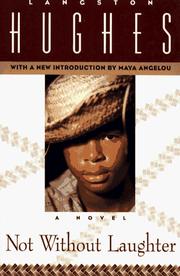
His first novel: a boy growing up in a small Kansas town among women who disagree about how to survive being Black in America. Warm, conventional in form, and the easiest full-length introduction to his concerns.
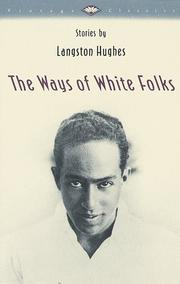
Fourteen stories about white patronage and its humiliations, several of them drawn from his own break with a wealthy benefactor. Much harder and angrier than the novel, and best read immediately after it.
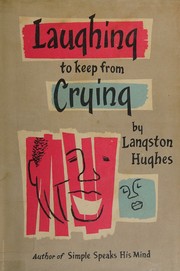
The second story collection, wider in setting and more varied in tone. Optional if you are short of time, but it shows how his fiction loosened over twenty years.
Simple
IntermediateMeet Jesse B. Semple, the Harlem barfly Hughes invented for a newspaper column and wrote for over twenty years.
▸ Study plan for this stage
Pace: 3 weeks. These are newspaper columns collected into books (Simple Speaks His Mind 231 pages, The Best of Simple 245), and they were written to be read one at a time with a week in between. Reading twenty in a sitting flattens the joke. Four or five an evening is right, and the whole stage rewards be
- This is JOURNALISM turned into fiction — a weekly column Hughes wrote for the Chicago Defender, a Black newspaper, and later gathered into books. It is not a novel and has no arc
- The format is fixed and never varies: an educated, slightly pompous narrator buys drinks in a Harlem bar for Jesse B. Semple, called Simple, who then out-argues him. The narrator is a version of Hughes and he loses almost every week
- The joke is that Simple is right. The narrator has the vocabulary and the reasonableness; Simple has the experience, and Hughes puts the truth in the mouth of the man the narrator condescends to
- Simple Speaks His Mind (1950) is the first collection and the funniest single volume — read it first and read it whole
- The Best of Simple (1961) is Hughes's own selection across the entire run of columns, so it reaches later and covers more ground; take it second and only if the character has caught you
- These columns were written for Black readers first, at a time when almost nothing else Hughes published was, and the difference in what he assumes his audience already knows is audible on every page
- Simple was by a distance the most popular thing Hughes ever wrote — more read in his lifetime than any of the poetry — which is a fact worth holding against the way he is anthologised now
- The politics arrive by joke rather than by argument, and they are not softer for it; Simple says things in a bar that a poem could not have got printed
- Describe the narrator in your own words. What is Hughes doing by making the educated man the straight man of his own column?
- Find a column where Simple wins the argument outright. What kind of evidence does he use, and why can the narrator not answer it?
- The columns ran weekly for two decades. What changes across The Best of Simple that the first volume alone would not show you — in Simple, in the narrator, or in the country?
- These pieces were written for a Black newspaper readership. Point to a passage that assumes knowledge a white reader in 1950 would not have had.
- Compare a Simple column with a story from The Ways of White Folks on the same subject. Which does more, and does the difference come from the form or the audience?
- Read three columns aloud in two voices with someone else. They were written by ear and the timing only shows up when the lines are split between two people.
- Pick five columns and write down the argument each one makes in a single plain sentence, stripped of the joke. Seeing them bare is a fast way to notice how much politics the humour is carrying.
- Track the recurring cast — Joyce, Zarita, the landlady, the cousin — and note that Hughes gets serial characterisation out of a form that never repeats a plot.
- Read the last column in each collection and ask why Hughes chose to end there. In a form with no arc, the ordering of a collection is the only structural choice available.
Next up: Simple is Hughes's public voice at its most relaxed; the memoirs are the private account of the life that produced it.
The first collection of the Simple columns, in which an educated narrator buys drinks for a man who out-argues him every week. The single funniest thing Hughes wrote, and popular in a way his poetry never was.
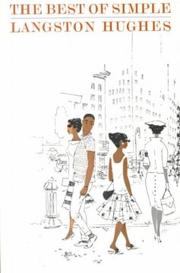
Hughes's own selection across the whole run of columns. Read it after the first volume if Simple has caught you; it is the most efficient way to take in twenty years of the character.
The Life
IntermediateRead the two memoirs and place the poems in a career that ran from Mexico to the Soviet Union to the Spanish Civil War.
▸ Study plan for this stage
Pace: 5 weeks. These are the two longest books in the path — The Big Sea 335 pages, I Wonder as I Wander 405 — and both are MEMOIR, so they read faster than their length suggests. Two weeks and three weeks respectively at 25 pages a day. Read them in order; the second opens where the first closes and assu
- The Big Sea (1940) covers the Kansas childhood, a father in Mexico Hughes could not stand, a year at Columbia, a ship's crew to West Africa, a spell in Paris, and then Harlem in the 1920s
- Its Harlem chapters are the best first-hand account of the Harlem Renaissance in existence, written in 1940 while most of the participants were still alive — which shapes what Hughes will and will not say about them
- The scene where he throws his books overboard off the coast of Africa is the hinge of the book, and it is worth deciding whether you believe it happened as told
- I Wonder as I Wander (1956) is the 1930s: Haiti, a year in the Soviet Union and Soviet Central Asia, Japan, and reporting from the Spanish Civil War for a Black newspaper
- Those travels explain the political turn in the later poems, and read in sequence they make the last collection in this path a consequence rather than a surprise
- Both memoirs are extremely reticent. Hughes tells you everywhere he went and almost nothing about his interior life or his relationships, and the omissions are as deliberate as anything he chose to include
- He was writing under Jim Crow and, by the time of the second memoir, under the anti-communist pressure of the McCarthy period; he was called before a Senate subcommittee in 1953, which is part of the context for what a 1956 memoir about the Soviet Union does and does not admit
- Reading the memoirs after the poems and fiction means you meet the anecdotes already knowing which ones became work, and the recognition is the pleasure of this stage
- Why does Hughes throw the books into the sea, and what does the gesture claim about the kind of writer he intends to be?
- What does The Big Sea say about the patrons of the Harlem Renaissance, and what does it plainly decline to say? Compare with what The Ways of White Folks was willing to put in fiction.
- Hughes spent a year in the Soviet Union. What does I Wonder as I Wander notice, and what does a memoir published in 1956 have a strong incentive to leave out?
- Across roughly 740 pages you learn very little about Hughes's private life. Is that reticence, self-protection, or a position about what a public writer owes a reader?
- Which poem or story from earlier in this path can you now trace to a specific incident in the memoirs, and does knowing the source make it better or smaller?
- Keep a two-column list as you read: place on the left, work it produced on the right. By the end of the second memoir it doubles as a map of the poems.
- Mark the passages about the wealthy patron in The Big Sea, then reread the relevant story in The Ways of White Folks. The distance between the two accounts is the most instructive thing in this stage.
- Note the dates of writing — 1940 and 1956 — and spend twenty minutes on what was happening in American politics at each. Both memoirs are written to be safe as well as true.
- Write one paragraph on what the memoirs never mention. Being able to state the silence precisely is worth more than another chapter of summary.
Next up: With the ear from stage one and the life from here, the book-length poem sequences stop looking difficult and start looking like the summation they are.
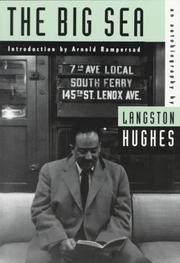
The first memoir: Kansas childhood, Columbia, a ship's crew to West Africa, then Harlem in the twenties. The best account we have of the Harlem Renaissance from inside it, written while the participants were still alive.
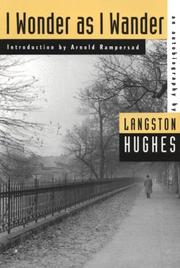
The second memoir, covering the thirties — Haiti, Central Asia, Japan, and reporting the Spanish Civil War. Read it after The Big Sea; together they explain the political turn in the later poems.
The Mature Poetry
IntermediateReach the book-length sequences where Hughes stops writing individual poems and starts composing whole collections like music.
▸ Study plan for this stage
Pace: 4 weeks, and slower per page than anything else in this path. Three short books of POETRY — Shakespeare in Harlem 124 pages, Montage of a Dream Deferred 75, The Panther and the Lash 122 — but Montage must be read whole, in order, in one or two sittings, the way you would listen to a record. Give Sha
- Shakespeare in Harlem (1942) presents itself as light verse — blues, ballads, Depression-era songs — and is considerably sharper than its own framing admits; take the self-deprecation as a tactic
- Montage of a Dream Deferred (1951) is the masterpiece and the reason for the whole path: a single book-length poem in bebop form, built from short pieces that interrupt, answer and cut across each other the way solos trade in a small jazz group
- It contains Harlem, the poem asking what happens to a dream deferred, which is anthologised constantly on its own. Meeting it in position, roughly two-thirds through a sequence that has been building the question for fifty pages, is a genuinely different experience
- Montage is not a collection and cannot be read out of order. Individual pieces are fragments; the poem is the arrangement, and this is exactly why it belongs at the end of a path rather than in an anthology
- The bebop analogy is structural, not decorative — abrupt tempo changes, a phrase from one poem picked up and distorted three poems later, no resolution where you expect one
- The Panther and the Lash (1967) came out just after Hughes died and answers the civil rights movement and Black Power directly. It is his angriest book and the plainest
- It also answers The Weary Blues across forty-one years: the same devices, the patience gone. Read with the 1926 poems in mind, the last book is an argument with his own younger voice
- Hughes was criticised late in life by younger Black writers for being insufficiently militant, and this last collection is in part his reply — knowing that makes it read as a position rather than a mood
- Read Montage straight through, then find Harlem inside it. What has the sequence done to that poem that reading it alone in an anthology cannot?
- Where does Montage change tempo? Mark two or three places and say what the shift is doing — a break in a solo, a new voice, an interruption from the street.
- Shakespeare in Harlem calls itself light verse. Find the poem in it that most obviously is not, and ask why Hughes wanted the disguise in 1942.
- Put a poem from The Panther and the Lash beside one from The Weary Blues on a related subject. What has changed in the technique, and what has been abandoned on purpose?
- Hughes was accused by younger writers of being too moderate. On the evidence of this last book, what is his answer, and is it a defence or a concession?
- Read Montage of a Dream Deferred aloud end to end in one sitting, no notes. Then read it a second time a few days later with a pencil. The first pass is for the shape, the second for the parts, and doing them in the other order wrecks the first.
- Take the poems you set aside in stage one and put them beside their late counterparts. Forty years of one writer's ear is legible in an afternoon this way.
- Listen to any bebop small-group recording from the late 1940s, then reread twenty pages of Montage. The structural claim stops being a metaphor.
- Write out, in one sentence, what Montage says happens to a deferred dream. The book supplies several incompatible answers, and pinning down which one it ends on is the last real work in this path.
Next up: That is Hughes whole — the blues poems, the fiction, the columns, the life and the late sequences — and from here you can read anyone in the Harlem Renaissance, or anyone who came after him, knowing exactly what they were reading.

Blues and ballads from the Depression years, deliberately offered as light verse and much sharper than it admits. The bridge between the early collections and the late sequences.
His masterpiece: one book-length bebop poem about Harlem, containing Harlem, the What happens to a dream deferred poem. It has to be read whole and in order, which is exactly why it belongs late in this path rather than in an anthology.
The last collection, published just after his death in 1967, responding to the civil rights movement and Black Power. The end of the story that The Weary Blues began forty years earlier, and it should be read that way.
Discussion
Keep reading
Paths that share books, cover the same subject, or open a related topic.