Start with an honest statement: books do not make you fast. Seat time does, ideally with a coach and data, at a club that will corner-marshal and scrutineer for you. What books do well is give you a vocabulary for what the kart is doing and a theory to test at the next session, so that your practice laps become experiments instead of repetition. That is worth a great deal, but it is not a substitute for track time or for a licensed race school.
The second honest statement is that the karting-specific book market is thin. The genuinely useful literature is racecraft and vehicle dynamics written for cars, and most of it transfers directly — the traction budget, the physics of a corner, weight transfer under braking — with one large exception noted below. This path is ordered from car control, through the fundamentals of speed, into cornering geometry, and finally into chassis theory.
Car control before racecraft
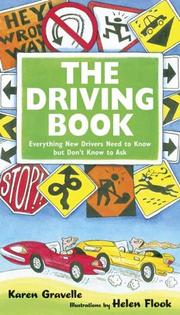
The Driving Book by Karen Gravelle is a beginner's road-driving guide aimed at new drivers, covering vehicle control, hazard awareness, and the habits that keep you out of trouble. If you already drive competently, skip it. If you are a young or new driver coming to karting first, it is a sensible half-hour on the basics of steering, braking, and looking where you want to go — the same fundamentals that get refined everywhere else on this list.
The core racecraft text
Ultimate speed secrets by Ross Bentley is the book to actually study. Bentley is a professional driver coach, and he covers the whole of driving fast as a learnable skill set: vision and where to look, threshold and trail braking, the traction budget and how you spend it, how to give useful feedback, mental preparation, and the deliberate-practice framework for improving between sessions. Read it once for the whole picture, then re-read a chapter at a time between race weekends and work on one thing.
Then the geometry of the corner
The Perfect Corner by Paradigm Shift Driver Development is the natural next book, because it goes narrow and deep where Bentley goes broad. It builds the theory of the racing line from first principles — why the geometric line is usually wrong, how corner-exit priority determines where you place the apex, how corner sequences change the compromise — with diagrams and worked reasoning rather than assertion. It answers questions that Bentley raises and does not fully settle, which is why it belongs after rather than before.
Understand the machine
How to make your car handle by Fred Puhn is the vehicle dynamics primer: weight transfer, roll centres, tyre slip angles, spring and damper behaviour, understeer and oversteer as consequences rather than mysteries. Here is the exception to note honestly — a kart has no suspension and no differential, and it corners by flexing its frame to lift an inside rear wheel. So Puhn's specific setup advice does not port over. What ports over is the way of thinking: load, grip, and balance as quantities you adjust deliberately. Read it for the mental model, then apply that model to kart-specific variables — axle stiffness, seat position, tyre pressures, camber and caster.
Four books, plus a helmet and a lot of laps. Follow the reading order and every session gives you something specific to test, and browse more sport paths when you want the next one.
Follow the full ordered path here: Karting and Racecraft: The Best Books to Read First.
Ready to learn something deeply?
Build a reading path — free