Darts has a small literature, and there is a reason for it. The physical technique is simple enough to describe in a paragraph — a stable stance, a repeatable elbow-hinge throw, a consistent release point — and no book will fix your grip the way a thousand throws at double 16 will. What books can do is explain where the game came from and, more usefully, what happens to a practiced throw when a match is on the line.
So the reading order here is short and deliberately unbalanced: one book about darts, three about the mind that has to deliver under pressure. If you are looking for a technical manual, practice time is the better investment.
The game itself
Start with Darts by Patrick Chaplin. Chaplin is the game's serious historian, and this is the account of how a pub pastime became a televised professional sport — the brewery-sponsored leagues, the 1908 court case that established darts as a game of skill rather than chance, the boom of the 1970s and 1980s, and the split that produced the modern professional circuit. It gives context to everything about the game's culture that looks odd from outside.
Read it for the history rather than for instruction. Chaplin will not teach you to throw, but he will tell you why the oche sits where it does and why the scoring is arranged so strangely on the board.
Then the part that actually costs you legs
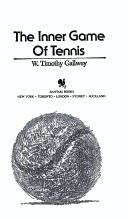
The Inner Game of Tennis by Timothy Gallwey is on this path for a specific reason: it is the clearest book ever written about the interference between conscious instruction and a learned motor skill. Gallwey's distinction between the self that narrates and the self that performs describes exactly what happens when you stand on a double for the third time and start thinking about your elbow. Substitute darts for tennis throughout and almost none of it needs translating.
Bounce by Matthew Syed, a former international table tennis player, argues that elite performance comes from purposeful practice and opportunity rather than innate gift, and it explicitly examines choking — the mechanism by which a skill you own completely deserts you in front of an audience. Syed's version of the deliberate-practice research has been challenged since publication, and the strong form of the ten-thousand-hours claim does not hold up; read it for the practice-design ideas and the choking chapters rather than as settled science.
Finish with The Champion's Mind by Jim Afremow, a sports psychologist's practical manual: pre-performance routines, goal setting, self-talk and recovery from a bad leg. It is the most directly applicable of the three, and it works best after Gallwey and Syed have given you the underlying model. Build a routine from it that you can run identically at your local league and in a final.
None of this substitutes for structured practice or, if performance anxiety is genuinely affecting you, for talking to a professional. Books sharpen a routine; they do not replace repetition.
What the reading should change is how you practice rather than how much. Most club players throw at treble 20 for an hour and call it training, which rehearses the shot they are already best at. The books above all push in the same direction: practice the situations that decide legs — doubles under a scoreboard, the setup shot that leaves a double you like, and the recovery throw after a bad first dart. Track it, because scored practice with a target is the only kind that transfers to a match.
For other precision-and-nerve sports, the ultimate frisbee hub sits nearby in the same cluster.
Four books, read in order, and your practice will be better aimed than your first hundred throws were.
Follow the full ordered path here: Darts Books Worth Reading, in Order.