Kazuo Ishiguro Reading Order: Where to Start
This curriculum guides you through Kazuo Ishiguro's fiction from his most accessible works to his most complex, then situates him in the Nobel Prize literary tradition. Each stage builds emotional and stylistic familiarity with his hallmark themes — memory, self-deception, regret, and dignity — so that by the final stage you can fully appreciate why the Nobel Committee called him a writer "who, in novels of great emotional force, has uncovered the abyss beneath our illusory sense of connection with the world."
First Steps: The Essential Ishiguro
BeginnerExperience Ishiguro's signature voice — the unreliable, quietly self-deceiving narrator — in his two most celebrated and approachable novels, building the core intuitions needed for everything that follows.
▸ Study plan for this stage
Pace: 6–8 weeks total: Weeks 1–3 for The Remains of the Day (~25–30 pages/day), a 2–3 day reflection pause between books, then Weeks 4–6 for Never Let Me Go (~25 pages/day), with Week 7–8 reserved for comparative review and exercises.
- The Unreliable Narrator: How Stevens in The Remains of the Day and Kathy in Never Let Me Go both narrate in ways that systematically obscure their own pain, desire, and self-knowledge — requiring the reader to read 'between the lines'
- Repression and Self-Deception: Stevens's obsessive devotion to 'dignity' and 'professionalism' as a shield against confronting his wasted emotional life; Kathy's calm, measured tone as a way of not fully reckoning with her fate as a clone
- The Retrospective Narrative Voice: Both novels are told entirely in first-person retrospect — the narrator is looking back — which creates dramatic irony as the reader sees what the narrator cannot or will not admit
- Dignity, Duty, and Complicity: Stevens's concept of 'dignity' as a butler mirrors Kathy and Tommy's quiet acceptance of their 'completion' — both sets of characters serve systems that exploit them without fully questioning those systems
- Delayed and Withheld Emotion (the 'Ishiguro Reveal'): Ishiguro structures both novels so that emotional truth arrives late and obliquely — a technique sometimes called the 'slow-burn devastation' — rather than through direct confession
- The Pastoral and the Uncanny: The English countryside in The Remains of the Day and the rural isolation of Hailsham in Never Let Me Go both create a deceptively gentle, nostalgic surface that conceals darker realities
- Loss, Regret, and the Unlived Life: Both Stevens and Kathy mourn — implicitly — lives they never fully inhabited: Stevens his love for Miss Kenton, Kathy her doomed relationship with Tommy and her stolen future
- Social Systems and Individual Complicity: Lord Darlington's Nazi sympathies (and Stevens's enabling of them) parallel the clone program in Never Let Me Go — both novels ask how ordinary people participate in morally bankrupt systems
- In The Remains of the Day, what does Stevens mean by 'dignity,' and how does his pursuit of it function as both his defining virtue and his greatest self-deception? Point to at least two specific scenes.
- At what moments in The Remains of the Day does the reader understand something about Stevens's feelings for Miss Kenton that Stevens himself refuses to articulate? How does Ishiguro signal this gap?
- In Never Let Me Go, why does Kathy narrate her extraordinary circumstances — being a clone raised for organ donation — in such an ordinary, understated tone? What effect does this create for the reader?
- How does the concept of 'deferral' (the possibility of postponing completion) function in Never Let Me Go, and what does the characters' response to it reveal about their conditioning and acceptance?
- Both Stevens and Kathy are, in different ways, complicit in systems that harm them. What similarities and differences do you see in how each character relates to the institution that shapes their life (Darlington Hall vs. Hailsham/the donor program)?
- After finishing both novels, how would you define Ishiguro's narrative style to someone who has never read him? Use specific examples from both books to support your description.
- 'Translation' Journal: As you read each chapter, keep a two-column journal — in the left column, write what the narrator explicitly says; in the right column, write what you think they actually feel or mean. This trains the core skill of reading an Ishiguro narrator against the grain.
- Annotate the Gaps: With a pencil or digital highlighter, mark every moment in The Remains of the Day where Stevens changes the subject, retreats into professional abstraction, or qualifies an emotion away. At the end of the novel, review your marks — what pattern emerges?
- The Miss Kenton Letter Exercise: After finishing The Remains of the Day, write a one-page letter from Miss Kenton to Stevens that says what she might have said if she had spoken freely. Then write Stevens's honest reply — the one he could never bring himself to give.
- Rewrite a Scene in Direct Voice: Choose one scene from Never Let Me Go where Kathy's narration feels most controlled and detached (e.g., any scene involving Tommy's 'completions' or the deferral conversation with Madame). Rewrite it in 300–400 words as if Kathy allowed herself to express her emotions directly. Compare the two versions — what is lost and gained?
- Comparative Character Map: Draw a simple diagram linking Stevens ↔ Miss Kenton and Kathy ↔ Tommy. For each relationship, note: (a) what the character wants but cannot say, (b) the moment the opportunity is lost, and (c) how the narrator describes that moment. Look for structural parallels between the two novels.
- Socratic Discussion or Written Reflection — 'Is Acceptance Dignity or Defeat?': Write 400–500 words (or discuss with a reading partner) arguing either that Stevens's and Kathy's acceptance of their fates is a form of quiet dignity, or that it represents a tragic failure of self-assertion. Use evidence from both novels, and try to hold both interpretations simultaneously — as Ishiguro himself seems
Next up: Mastering the unreliable retrospective voice and the theme of complicity in these two novels gives you the interpretive toolkit — and the emotional attunement — needed to tackle Ishiguro's more formally experimental and tonally varied works in subsequent stages.

The perfect entry point: a Booker Prize-winning masterpiece about an English butler whose repressed regrets emerge slowly through a road trip. Its measured, controlled prose and unreliable narrator are the clearest introduction to Ishiguro's entire worldview.

Read second, this dystopian novel deepens the themes of memory and fate with a more emotionally raw narrator. Its quiet devastation will feel earned after The Remains of the Day has trained you to read between Ishiguro's lines.
The Early Voice: Where It All Began
BeginnerTrace Ishiguro's origins — his Japanese-British identity, his early style, and the seeds of his major themes — by reading his first two novels in the order he wrote them.
▸ Study plan for this stage
Pace: 4–5 weeks total: Week 1–2 — read A Pale View of Hills (~30–35 pages/day, ~180 pages); Week 3–4 — read An Artist of the Floating World (~30–35 pages/day, ~220 pages); Week 5 — review, reflect, and complete exercises. Reading sessions of 30–45 minutes daily are ideal for absorbing Ishiguro's slow-burn
- Unreliable narration: both Etsuko (A Pale View of Hills) and Ono (An Artist of the Floating World) are narrators whose self-accounts are subtly distorted by guilt, self-deception, and selective memory
- Displacement and dual identity: Ishiguro's own Japanese-British background surfaces in characters caught between two cultures, two eras, and two selves
- Post-war guilt and moral complicity: Ono's collaboration with wartime nationalist ideology mirrors Japan's collective reckoning with its imperial past
- Indirect grief and trauma: Etsuko's circuitous narration about her daughter Keiko's suicide is a masterclass in how trauma resists direct expression
- The 'floating world' as metaphor: the title concept — drawn from the Japanese ukiyo — frames the transience of pleasure, art, and ideology, and the danger of clinging to a vanishing world
- Narrative evasion and the 'Ishiguro gap': what characters refuse to say, or cannot say, is as meaningful as what they do say — silence and ellipsis are structural devices
- Nostalgia as self-protection: both narrators romanticize or revise the past not out of sentimentality but as a psychological defense against shame
- Seeds of major themes: the two novels establish the template — memory, regret, dignity, and self-deception — that will define all of Ishiguro's later work
- In A Pale View of Hills, what is the relationship between Etsuko's memories of Sachiko and Mariko, and her own unspoken feelings about her daughter Keiko? What does the narrative displacement reveal about Etsuko's guilt?
- How does Masuji Ono in An Artist of the Floating World gradually reveal — through his own self-justifications — that his wartime role was more damaging than he initially admits? What textual clues signal his unreliability?
- Both novels are set in post-war Japan yet narrated from a temporal distance. How does this double remove (past Japan, narrated later) shape the reader's access to 'truth' in each story?
- What does the concept of the 'floating world' mean within An Artist of the Floating World, and how does Ono's relationship to it evolve from pride to something more ambivalent by the novel's end?
- How do Ishiguro's two narrators use politeness, deflection, and understatement to avoid confronting their own culpability? Identify at least two specific scenes from each novel.
- In what ways do A Pale View of Hills and An Artist of the Floating World together establish Ishiguro's signature style and thematic preoccupations, and what distinguishes them from each other in tone and setting?
- Unreliable narrator log: As you read each novel, keep a running list of moments where the narrator's account seems inconsistent, evasive, or contradicted by other details. After finishing both books, write a one-page summary of what you believe each narrator is hiding and why.
- Parallel passage analysis: Find one scene in A Pale View of Hills and one in An Artist of the Floating World where a character changes the subject or deflects a direct question. Write a short paragraph (150–200 words) for each explaining what the evasion reveals about that character's inner state.
- Rewrite exercise: Choose a key scene narrated by Etsuko or Ono and rewrite it in 200–300 words from the perspective of another character present in the scene (e.g., Mariko, or Ono's daughter Setsuko). How does the 'truth' of the scene shift?
- Thematic map: Draw or diagram the connections between the two novels — shared themes, contrasting settings, similar character types, and parallel plot structures. Annotate each connection with a brief quote or page reference from the text.
- Cultural context mini-research: Spend 30–60 minutes reading about post-war Japan (the American occupation, the Nagasaki aftermath, Japanese nationalism in the 1930s–40s). Write 3–5 bullet points on how this context deepens your reading of each novel.
- Comparative reflection journal: After finishing both novels, write a 300–400 word journal entry answering: 'Which narrator do I find more sympathetic, Etsuko or Ono, and does sympathy change my judgment of their moral failures?' Use specific scenes to support your answer.
Next up: Mastering Ishiguro's unreliable narration and the grammar of memory in these two Japanese-set novels gives you the essential interpretive toolkit — reading silence, tracking self-deception, and feeling the weight of the unsaid — that you will need to fully appreciate the expanded emotional and political canvas of his later, internationally set masterworks.
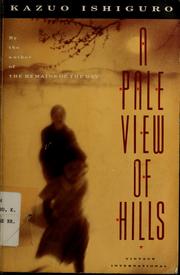
Ishiguro's debut novel, set in post-war Nagasaki and England, introduces his themes of memory, loss, and guilt in their earliest, most fragile form. Reading it now lets you see how far he had already developed his voice from the start.
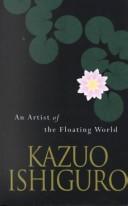
His second novel, about a Japanese painter reckoning with his wartime complicity, is a direct bridge between the debut and The Remains of the Day — the unreliable narrator grows more sophisticated here, and the moral stakes become clearer.
Expanding the Range: Genre, Dream, and Music
IntermediateDiscover how Ishiguro experiments with genre and form — surrealism, fairy tale, and the fragmented self — while keeping his emotional core intact.
▸ Study plan for this stage
Pace: 8–10 weeks total: spend 5–6 weeks on The Unconsoled (~25–30 pages/day, given its density and dreamlike disorientation) and 3–4 weeks on The Buried Giant (~20–25 pages/day, allowing time to absorb its allegorical weight and elegiac pace).
- Dream Logic and Unreliable Space: In The Unconsoled, physical geography is unstable and irrational — rooms expand, journeys collapse time, and the protagonist arrives in places without explanation. Recognizing this as intentional dream architecture, not error, is essential.
- The Fragmented Self and Repressed Identity: Ryder in The Unconsoled gradually reveals connections to other characters (Boris, Sophie, Gustav) that suggest they are projections or extensions of his own unacknowledged past and emotional failures.
- Genre Hybridization: The Unconsoled fuses Kafkaesque absurdism with social comedy and psychological horror; The Buried Giant blends Arthurian legend, fantasy quest narrative, and quiet domestic realism. Neither book is 'purely' one genre.
- Collective Memory and Forgetting: The Buried Giant introduces the 'mist' — a supernatural amnesia blanketing post-Arthurian Britain — as a metaphor for how communities and couples suppress traumatic or shameful histories to maintain peace.
- The Ethics of Memory: Both books ask whether forgetting can be merciful. The Buried Giant forces the reader to weigh the cost of remembering (war, grief, guilt) against the cost of forgetting (loss of identity, unacknowledged atrocity).
- Ishiguro's Emotional Core Across Forms: Despite radical formal experimentation, both novels center on the same Ishiguro preoccupations — love, duty, self-deception, and the quiet devastation of time passing — showing that his themes transcend any single genre.
- The Quest as Emotional Journey: Axl and Beatrice's physical quest to find their son in The Buried Giant mirrors an interior journey toward confronting what their marriage has buried, recasting the fantasy genre's outward adventure as inward reckoning.
- Narrative Deferral and Withholding: Both novels systematically delay revelation — Ryder never fully grasps his situation; Axl and Beatrice approach their forgotten past only obliquely. This deferral is itself a thematic statement about how humans avoid painful truths.
- In The Unconsoled, how does Ishiguro use the instability of physical space to reflect Ryder's psychological state, and can you identify three specific scenes where geography behaves 'impossibly'?
- What is the significance of the relationships between Ryder, Sophie, Boris, and Gustav — do they function as realistic characters, and if not, what alternative reading do they invite?
- In The Buried Giant, what does the mist represent on both the personal level (Axl and Beatrice's marriage) and the collective/political level (post-Arthurian Britain), and how does Ishiguro keep both registers active simultaneously?
- How does The Buried Giant use the conventions of Arthurian and fantasy quest literature, and in what ways does it subvert or quietly undermine those conventions?
- Both novels end without full resolution or catharsis. How does Ishiguro use ambiguous or muted endings in each book, and what emotional effect does this create compared to a conventional genre conclusion?
- Across both books, what is Ishiguro's implicit argument about the relationship between memory, identity, and love — and do the two novels reach the same conclusion or different ones?
- Dream Cartography: While reading The Unconsoled, keep a running map or log of every spatial impossibility — rooms that shouldn't connect, journeys that skip time, locations that shift. At the end, write a one-page reflection on what this map reveals about Ryder's inner life.
- Character Web Analysis: Draw a relationship diagram for The Unconsoled placing Ryder at the center. For each major character (Sophie, Boris, Gustav, Brodsky), write one sentence arguing how they might represent a facet of Ryder's own repressed self or past. Revise the diagram after finishing the novel.
- Genre Autopsy: For each book, list 5 conventions of its apparent genre (dream/absurdist fiction for The Unconsoled; Arthurian/fantasy quest for The Buried Giant). Then note, for each convention, whether Ishiguro fulfills, subverts, or ignores it. Write a short paragraph on what this pattern reveals about his use of genre as a vehicle rather than a destination.
- The Mist as Metaphor Essay: Write a 400–600 word close-reading essay on a single passage in The Buried Giant where the mist is described or discussed. Unpack how the language works on both the literal (supernatural) and figurative (psychological/political) levels simultaneously.
- Comparative Endings: Write a side-by-side comparison (one page) of the final scenes of The Unconsoled and The Buried Giant. What is left unresolved in each? What emotion does each ending produce, and how does withholding resolution serve Ishiguro's thematic purposes?
- Personal Memory Reflection: Both novels ask whether forgetting can be a kindness. Write a short personal or philosophical response (half a page) to this question, using at least one specific moment from each book as evidence for your position.
Next up: By grappling with Ishiguro's most formally adventurous works, the reader has now seen that his emotional and thematic concerns — self-deception, memory, love, and loss — are robust enough to survive radical changes in genre and form, which prepares them to return to his more realist register and examine how those same concerns operate with subtler, more compressed craft.

His most experimental and divisive novel, structured like a waking dream, follows a pianist in a nameless European city. It rewards readers who now understand his obsessions, revealing how far he can push unreliable narration into pure psychological landscape.
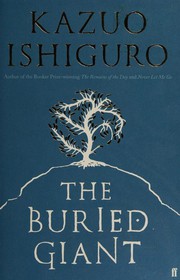
A late-career Arthurian fable about collective and personal forgetting, this novel shows Ishiguro working in myth and allegory. It synthesizes everything — memory, loss, self-deception — into a haunting meditation on whether societies can survive remembering the truth.
Nobel Context: The Tradition He Belongs To
IntermediatePlace Ishiguro within the broader literary tradition of memory, interiority, and the 20th-century novel by reading two canonical predecessors the Nobel Committee and critics consistently link to his work.
▸ Study plan for this stage
Pace: 5–6 weeks total: Week 1–2 — Read The Stranger and The Plague via the Coles Notes edition (~45–60 pages/day of notes + close reading of key passages); Week 3–4 — Read Stoner (~30–35 pages/day, savoring the prose); Week 5–6 — Review, compare, and complete exercises.
- Absurdism and emotional detachment: Meursault in The Stranger models a narrator who reports experience without conventional interiority, raising the question of what 'unreliable' or 'flat' affect reveals versus conceals — a direct ancestor of Ishiguro's Stevens and Kathy H.
- Collective suffering and narrative distance: The Plague shifts Camus's lens from the individual to the community, showing how an impersonal, chronicle-like narrator can carry enormous moral weight — a technique Ishiguro adapts in Never Let Me Go.
- Quiet catastrophe and the unlived life: Stoner's William Stoner endures decades of thwarted ambition, a loveless marriage, and professional humiliation with stoic understatement; his life is the template for Ishiguro's 'wasted life' theme.
- Memory as retrospective self-justification: Both Camus's narrators and Stoner reconstruct the past in ways that subtly distort or soften it — the reader must read against the grain of the narration, exactly as with Ishiguro.
- Prose restraint as moral stance: Williams's plain, almost affectless sentences mirror the emotional suppression of his subject; Camus's spare style does the same — both demonstrate that style IS meaning, not merely decoration.
- The Nobel tradition of humanist witness: The Nobel Committee prizes authors who illuminate the human condition under pressure — Camus (1957) and the critical canonization of Williams place both writers in a lineage of moral seriousness that Ishiguro (2017) explicitly continues.
- Interiority vs. exteriority: Camus often keeps us outside his characters' inner lives; Williams grants us deep but muted access to Stoner's — together they map the full spectrum of narrative distance that Ishiguro navigates.
- Institutional life as existential trap: The university in Stoner and the plague-quarantined city in The Plague both function as closed systems that define and limit their characters — a structural device Ishiguro reuses with Hailsham, Darlington Hall, and the care-home circuit.
- How does Meursault's emotional detachment in The Stranger compare to the chronicle narrator's detachment in The Plague, and which mode is closer to the narrative voice Ishiguro employs in his novels?
- In Stoner, William Stoner repeatedly fails to act decisively at crucial moments in his career and personal life. What narrative techniques does Williams use to make the reader feel the weight of these missed opportunities — and how does this relate to Ishiguro's treatment of regret?
- Both Camus (via the Coles Notes framework) and Williams have been described as writers of 'quiet catastrophe.' What makes a catastrophe 'quiet,' and what is gained — or lost — by understatement compared to dramatic rendering?
- The Coles Notes edition frames Camus within existentialist and absurdist philosophy. How does understanding Camus's philosophical context change your reading of his narrative technique, and does Ishiguro require a similar philosophical frame to be fully understood?
- Stoner's prose style has been called 'transparent' or 'invisible.' Do you agree? Find three passages where Williams's sentence-level choices are doing significant emotional work beneath the surface — then attempt the same analysis on a passage from The Stranger.
- How do institutional settings (the university in Stoner; the quarantined city in The Plague) shape what characters can know, feel, and say about themselves? What does this suggest about why Ishiguro so often places his narrators inside closed or total institutions?
- Parallel passage journal: After finishing each book, select one scene of emotional climax (e.g., Stoner's deathbed chapter; Meursault's confrontation with the chaplain). Write a one-page close reading of how the prose style manages — or suppresses — emotion. Then write a paragraph connecting it to a specific Ishiguro passage you already know or have read about.
- The unreliable affect test: Re-read the opening two pages of The Stranger and the opening two pages of Stoner back-to-back. List every place where the narrator's reported emotion seems misaligned with what the situation 'should' feel like. This trains the exact reading skill needed for Ishiguro's first-person narrators.
- Philosophical context card: Using the Coles Notes on Camus, create a one-page 'concept card' for each of the following terms as Camus uses them: absurdity, revolt, indifference, solidarity. Then write one sentence for each card predicting how Ishiguro might agree, disagree, or complicate the concept.
- Rewrite exercise — add interiority: Choose a scene from The Stranger where Meursault reports an event flatly. Rewrite the same scene in the style of Stoner — granting the character rich but restrained inner access. Reflect: what is gained and what is lost? This sharpens your sense of the spectrum of narrative distance.
- Timeline of the unlived life: For Stoner, create a simple two-column timeline — left column: what Stoner does; right column: what Stoner might have done (the road not taken). Annotate each fork with the narrative technique Williams uses to signal the loss. This exercise directly prepares you for analyzing Ishiguro's structure of regret.
- Comparative thesis draft: Write a 300-word argumentative paragraph answering: 'In what single most important way does reading Stoner and The Stranger/The Plague prepare a reader to understand Ishiguro's literary project?' Treat this as a thesis you will refine throughout the rest of the curriculum.
Next up: By internalizing how Camus and Williams use restraint, institutional setting, and retrospective narration to explore the unlived life, the reader now has a comparative framework — a set of literary 'tuning forks' — that will make Ishiguro's own techniques in his novels immediately recognizable and analytically discussable in the next stage.
Camus's existentialist classic, also a Nobel laureate's signature work, illuminates the detached, unreliable first-person narrator that Ishiguro inherits and transforms. Reading it here sharpens your sense of what Ishiguro shares with — and departs from — the European literary tradition.
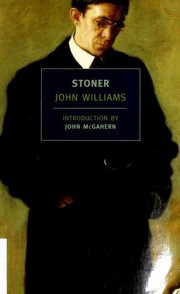
Williams's quiet novel about a man who lives a life of quiet resignation and missed emotional connection is the closest thematic cousin to The Remains of the Day in world literature, and reading it deepens your understanding of why Ishiguro's restraint is so powerful.
Critical Mastery: Understanding the Nobel Achievement
ExpertRead Ishiguro's most recent Nobel-era novel and a key critical study to fully articulate his place in world literature and the ideas the Swedish Academy recognized.
▸ Study plan for this stage
Pace: 6–8 weeks total: Weeks 1–4 cover "Klara and the Sun" (~300 pages, ~20–25 pages/day with dedicated annotation time); Weeks 5–8 cover "Conversations with Kazuo Ishiguro" (~250 pages, ~15–20 pages/day, reading thematically by interview cluster rather than straight through).
- Artificial consciousness and the 'Oblation' — Klara's solar theology as a lens for examining faith, sacrifice, and what it means to be human
- The unreliable/limited narrator refined: how Klara's non-human perspective creates irony, pathos, and epistemological gaps the reader must fill
- Post-humanism and the soul question: Ishiguro's sustained interrogation of whether personhood is biological, relational, or constructed
- Dignity and disposability — the AF (Artificial Friend) as a figure for all of Ishiguro's marginalized, forgotten, or 'used-up' characters across his career
- Ishiguro's authorial self-theorization: in 'Conversations,' how he articulates his own themes of memory, loss, self-deception, and cultural displacement across decades of interviews
- The Nobel Prize citation ('who, in novels of great emotional force, has uncovered the abyss beneath our illusory sense of connection with the world') as a critical framework for reading both books
- World literature and cultural hybridity: Ishiguro's repeated insistence in interviews on writing beyond national tradition and toward a universal emotional register
- The evolution of Ishiguro's craft: tracing his conscious stylistic and thematic decisions — from sparse prose to speculative settings — as revealed in 'Conversations'
- How does Klara's solar faith function as both a plot mechanism and a philosophical argument about belief, and what does Ishiguro ultimately suggest about the limits of devotion?
- In what ways does Klara embody the same pattern of loyal, self-effacing service seen in Stevens (The Remains of the Day) and Kathy (Never Let Me Go), and what does the recurrence of this pattern reveal about Ishiguro's central moral preoccupation?
- Based on 'Conversations with Kazuo Ishiguro,' how does Ishiguro himself describe the relationship between his Japanese heritage, his British upbringing, and his identity as a 'writer without a country' — and how does that self-description illuminate Klara and the Sun?
- What specific formal and stylistic choices in 'Klara and the Sun' — point of view, sentence rhythm, withheld information — does Ishiguro discuss in 'Conversations,' and how do his stated intentions match or complicate your reading experience?
- How does the Swedish Academy's Nobel citation hold up against 'Klara and the Sun'? Where in the novel is 'the abyss beneath our illusory sense of connection' most visible?
- How has Ishiguro's thinking about memory, self-deception, and loss — as tracked across multiple interviews in 'Conversations' — evolved or remained consistent from his early career to his Nobel-era work?
- Close-reading annotation sprint: Select three scenes in 'Klara and the Sun' where Klara misreads or fails to understand a human interaction. Write a one-paragraph analysis of each, explaining what the gap between Klara's interpretation and the reader's reveals about Ishiguro's technique of the limited narrator.
- Interview-to-novel mapping: After each major interview cluster in 'Conversations with Kazuo Ishiguro,' pause and write a half-page note identifying one claim Ishiguro makes about his own work and finding a specific passage in 'Klara and the Sun' that either confirms or complicates it.
- Nobel citation essay: Write a 600–800 word argumentative essay using only 'Klara and the Sun' as your primary text, making the case for — or critically interrogating — the Swedish Academy's citation language. Quote the novel directly.
- Character lineage chart: Create a comparative table mapping Klara alongside at least two other Ishiguro protagonists you have studied (e.g., Stevens, Kathy). Columns should include: narrative role, relationship to memory, form of self-deception, and final emotional state. Use 'Conversations' to find Ishiguro's own commentary on these characters.
- Socratic seminar preparation: Draft five discussion questions of your own — rooted in specific pages of both books — that you would pose to a reading group. Each question should be genuinely open-ended and require evidence from the text to answer.
- Synthesis position paper: Write a 1,000-word critical statement articulating Ishiguro's place in world literature, drawing on both 'Klara and the Sun' (as primary literary evidence) and 'Conversations with Kazuo Ishiguro' (as authorial and critical context). This paper should be polished enough to serve as a personal capstone for the entire curriculum.
Next up: Completing this stage equips the reader with both a close literary reading of Ishiguro's most recent major work and a direct line to his own critical voice, providing the analytical vocabulary and authorial framework needed to engage confidently with secondary scholarship, comparative world-literature studies, or independent original research in any subsequent stage.

His first novel after winning the 2017 Nobel Prize, narrated by an Artificial Friend observing humanity from the outside. It is the culmination of his career-long project: what does it mean to love, to be conscious, to face obsolescence — and it hits hardest after reading his full arc.
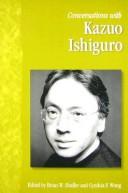
A collection of in-depth interviews spanning Ishiguro's career, this is the most direct way to hear him explain his own intentions, influences, and Nobel recognition in his own words — the ideal capstone for a reader who has now experienced his full body of work.
Discussion
Keep reading
Paths that share books, cover the same subject, or open a related topic.