Karl Ove Knausgaard Reading Order: Where to Start
Knausgaard's reputation rests on My Struggle, six volumes of autobiographical novel that are best read in publication order rather than the order the life happened in — the sequence deliberately jumps around, and Book One sets the terms for everything after it. Read the six, then the seasons quartet written for his unborn daughter, which is the same attention applied to objects instead of memory. The early novel and the late Morning Star books bracket the project on either side and are worth saving for when you know what he is reacting against.
Where to Start: The First Two Volumes
BeginnerMeet the method — exhaustive present-tense recall interrupted by essayistic digression — and decide within two volumes whether the whole thing is for you.
▸ Study plan for this stage
Pace: Two to three weeks. My Struggle Book One runs somewhere around 430 pages depending on edition and divides naturally in half — an essay-and-childhood first part, then the long aftermath of the father's death. Thirty pages a night is comfortable; the prose is fast even when the material is heavy. Read
- The method: exhaustive present-tense recall of ordinary action — a cigarette, a kitchen, a drive — interrupted without warning by several pages of essay on death, art or time, then returning to the cigarette. Learning to accept the switch rather than wait it out is the whole skill
- The book opens with an essay on what happens to a body and on how thoroughly the dead are moved out of sight, and then spends four hundred pages testing that essay against one actual corpse. The structure is an argument, not a preamble
- Book One is the most self-contained volume in the sequence and genuinely works as a standalone novel. If you stop after it you will not have missed a cliffhanger — this is the correct place to decide whether the project is for you
- The father is the sequence's fixed point: terrifying in the first half, dead and squalid in the second, and reinterpreted in every later volume. Everything the series does later is a return to this man
- The teenage New Year's Eve section — the search for somewhere to leave the beer — is the best demonstration of Knausgaard's central bet: that total attention to a trivial evening produces more feeling than a dramatic one would
- Nothing here is stylish. The sentences are plain to the point of flatness and the effect is volume rather than beauty, which is why the books are long by necessity and not by indulgence
- The title translates the Norwegian for my struggle, and its collision with the other book of that name is deliberate and is not addressed until the final volume. It is not a provocation the early volumes cash in
- The English sequence is largely the work of one translator, Don Bartlett, which is why the voice stays uniform across thousands of pages — an unusual and underrated part of why the series reads as one continuous thing
- What does the opening essay claim about the dead, and where in the second half does the novel confirm it and where does it fail to?
- How does the writing of the father change between the childhood sections and the sections after his death?
- The New Year's Eve episode is trivial by any summary. Why does it work, and what would be lost if it were half the length?
- Where does an essayistic digression arrive at the worst possible moment? What does that timing do to your reading?
- This is called a novel and is transparently autobiography. What does the fiction label buy Knausgaard, and what does it cost the people in it?
- Having finished, do you want to read on? Give a reason based on what the book does rather than on how much of it you enjoyed.
- Time yourself over fifty pages. Almost everyone reads Knausgaard faster than they expect, and knowing your real rate is what makes the rest of the sequence plannable rather than daunting.
- Mark where each essayistic passage begins and ends, then count the pages. Seeing the actual proportion of essay to narrative dismantles the common complaint that the digressions take over.
- Write 400 words of total recall about one ordinary hour from your own adolescence, with no interpretation. Doing it once demonstrates how much labour is behind the apparent artlessness.
- Note every time Knausgaard is ashamed. Shame is the sequence's true engine and having the list from Book One makes the later volumes legible.
- Decide now whether you are continuing, and if so put the next stage in a calendar. The sequence is defeated by drift much more often than by difficulty.
Next up: With the father established and the method accepted, the remaining volumes can be read for what they add to a portrait you already hold rather than as four more books about a stranger.
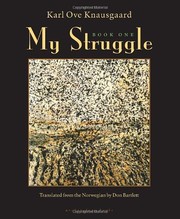
Start here, always. His father's death and the cleaning of a filthy house, framed by an essay on mortality. It is the most self-contained volume and works as a standalone novel if you go no further.
The Rest of My Struggle
IntermediateFinish the sequence in publication order and see the design — childhood, adolescence, apprenticeship, and the reckoning with what publishing it cost.
▸ Study plan for this stage
Pace: Three to four months, and the volumes are wildly unequal, so plan them individually rather than as a block. Book Three is 427 pages and the easiest reading in the whole series. Book Four is 485 and the funniest. Book Five is 624 and the most repetitive — this is where people stall. Book Six is 1,156
- Book Three is childhood on the island of Tromøya under a father who has become a source of pure fear, and it is the purest sensory writing Knausgaard has done — food, weather, forests, the exact social physics of a boys' gang
- The volumes are published in an order the life does not follow, and the jumps are structural. Book Three's childhood explains the man in Book One, and reading it third rather than first is what makes it land as revelation instead of exposition
- Book Four is eighteen years old, alone in a fishing village in northern Norway, teaching children barely younger than himself and drinking catastrophically. It is embarrassing on purpose, and the sexual humiliation it centres on is the sequence's clearest test of how far the confessional method goes
- Book Five is fourteen years in Bergen failing to become a writer, and its length is doing something: the repetition of ambition, drink, shame and false starts is the experience of that decade, not a failure of editing. Knowing this in advance is the difference between finishing it and abandoning the
- Book Six is not Book One and should not be approached as more of the same. It divides into the fallout of publication — the family's fury, a relative's legal threats, the effect on his marriage — and a self-contained essay of roughly four hundred pages
- That essay reads Hitler's youth and Mein Kampf against Knausgaard's own life, and works through the difference between I and we — the point at which a self dissolves into a collective. Whether it earns its place is the most legitimate argument the series generates
- The essay can be read as a separate book. Put the novel down where it begins, read the essay across a fortnight as its own project, then return. Skimming it is also a defensible choice and better than quitting the volume
- Book Six's last section is the hardest thing in the sequence emotionally — his wife's breakdown, written by the person whose book helped cause it — and it is where the whole six-volume ethical problem finally comes due, in a famous last line that closes the project by renouncing it
- How is the father in Book Three different from the father in Book One, and which portrait does the sequence ultimately stand behind?
- Book Four is written to embarrass its author. What is the difference between confession that costs the writer something and confession that costs someone else something — and which does Book Four do?
- Book Five is repetitive by design. Where does the design succeed and where does it just become long? Point to specific stretches.
- In Book Six, what is the family's actual objection, and does the book answer it or simply record it?
- State the argument of the long essay in five sentences. Then say whether it needed four hundred pages.
- The final line renounces authorship. Given that Knausgaard has published a great deal since, what do you now think that sentence meant?
- Schedule Book Six separately, in a calendar, as though it were two books — because it is. Deciding in advance where you will pause is what gets readers through the volume.
- Keep a one-line note per volume recording what it adds to the portrait of the father. Six entries make the sequence's real design visible.
- In Book Five, when you stall, skip ahead thirty pages and see what you missed. Almost always the answer is nothing, and the permission to do this is what saves the volume for most readers.
- Read the last twenty pages of Book Six on the same day as the first twenty pages of Book One. The sequence is circular and the pairing shows how carefully.
- Write 500 words on whether the books were fair to the people in them. The series demands this of every reader and refuses to settle it, so having your own answer is part of finishing it.
Next up: Having watched the method consume the author's own life and everyone in it, you are positioned to see what happens when the same attention is turned onto objects that cannot be hurt by it.

Childhood on the island of Tromøya, under a father who has become terrifying. The purest sensory writing in the series and much shorter than the others.
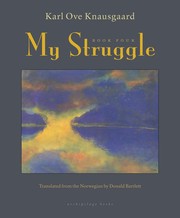
Eighteen years old, teaching in a village in northern Norway, drinking catastrophically. The funniest and most embarrassing volume — read it straight after Book Three, which sets up the escape.

Fourteen years in Bergen failing to become a writer. It is the volume that explains the ambition behind the whole project, and it needs the earlier books to feel like anything other than frustration.
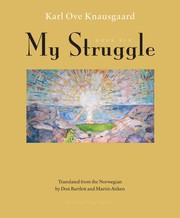
The consequences: the family's reaction to publication, plus a 400-page essay on Hitler and the word we. The hardest volume by a distance, and unreadable except at the end, which is exactly where it belongs.
The Seasons Quartet
IntermediateSee the same attention turned outward — short pieces on ordinary things, written as letters to a child not yet born.
▸ Study plan for this stage
Pace: Five to six weeks and by far the gentlest stage. Autumn is 224 pages, Winter 254, Spring 182 and Summer 401. The first two and the last are composed of two- and three-page entries and are designed to be read a few at a time — three entries a night is right, and reading fifty pages in a sitting flatt
- The quartet is written as letters to a daughter who has not yet been born, explaining the world she is arriving into one object at a time — apples, wasps, chewing gum, plastic bags, the labia, the sun
- This is the My Struggle method with the autobiography subtracted: the same exhaustive attention, applied to things instead of memories, which is the cleanest available proof that the attention rather than the confession was always the technique
- The entries fail interestingly and often. Some are luminous, some are banal, and Knausgaard keeps both — the unevenness is the form, and reading for the hit rate rather than expecting consistency is the correct approach
- The four books are one book split four ways, and the arrival of the daughter is its plot. Read out of order they are a miscellany; read in order they have a narrative
- Spring breaks the form entirely: a single sustained account of one day, and behind it the crisis of the previous year — his wife's psychiatric emergency and what it did to a household with small children in it
- Spring is the strongest of the four and it depends completely on the two before it. The shock is the arrival of unstructured reality in a form that had been holding it off with short essays about vegetables
- Summer closes the cycle by mixing the short entries with a diary and a wartime story about a woman and a German soldier — the introduction of invented material at the end of a project built on refusing it
- The books are illustrated, and the artwork is chosen as part of the design rather than as decoration; whatever edition you read, do not skip the images
- Pick three entries you thought were excellent and three you thought were empty. What distinguishes them structurally, not by subject?
- Who is the addressee, and what does writing to an unborn child let Knausgaard say that a normal essay could not?
- What is the effect of Spring's break in form? Would it work as a standalone book?
- Spring writes about his wife's crisis in a project addressed to their child. What is the ethical position of that, and how does it compare with what Book Six did?
- Why introduce a fictional wartime narrative in Summer, at the end of a decade of refusing fiction?
- After the quartet, how would you define Knausgaard's actual subject? It is no longer his life.
- Read one entry a day for a week before deciding whether you like the form. The books are built for that rhythm and give a false impression when consumed quickly.
- Write your own two-page entry on an object within arm's reach, addressed to someone who has never seen it. This is the most directly imitable thing in the entire path and it teaches the constraint immediately.
- Keep a tally of hits and misses across Autumn. Knowing the actual ratio protects you from both the enthusiasts and the detractors.
- Read Spring in a single sitting with the phone away. It is short and it was built for one continuous read.
- Go back to a random essayistic digression in My Struggle Book One and compare it to a Seasons entry. Five years and a change of subject apart, the paragraph construction is identical, which tells you what has and has not changed.
Next up: You have now seen the attention work with and without the life attached, which is exactly what you need to judge the novel he wrote before the project and the one he wrote after it.

The first of the four, and a good palate cleanser after Book Six: two-page essays on apples, wasps, chewing gum. It shows the method works without the autobiography attached.

The second quarter of the year, continuing the letters as the birth approaches. Read in season order — the quartet is one book split four ways and the arrival of the daughter is its plot.

The break in the form: a single sustained narrative about one day, and about a crisis in the family. The strongest of the four and dependent on the two before it for its shock.

The close of the cycle, mixing the short entries with a diary and a wartime story. Read last, as the resolution the other three are building toward.
Before and After the Project
IntermediateBracket My Struggle with the ambitious early novel it reacted against and the late fiction that abandons autobiography entirely.
▸ Study plan for this stage
Pace: Two to three months for the pair, and this stage is genuinely optional. A Time for Everything is 514 pages and is the most demanding prose in the path — dense, biblical in register, and slow by design; three or four weeks at 25 pages a day. Morning Star is 688 pages but reads at thriller speed once
- A Time for Everything is the ambitious pre-My Struggle novel: a sixteenth-century scholar's treatise on the natural history of angels, into which are folded full-length retellings of Cain and Abel, Noah, and the flood, set in a landscape that is recognisably Nordic rather than Levantine
- It is the opposite of everything Knausgaard became known for — mythic, constructed, elaborately written, with no autobiography anywhere near it. Knowing that this is what he did first reframes the entire confessional turn
- The Cain and Abel section is a full domestic novel with the biblical outcome waiting at the end of it, and it is the best writing in the book
- The final section drops into a first-person present on a bare island, and its self-harm and gulls are the first appearance of the voice that became My Struggle. The seam between the two careers is visible on the page
- Knausgaard has described the sense of failure around this novel as what pushed him toward writing without invention, so the book is best read as the thing My Struggle was a reaction against rather than as an early effort
- Morning Star is the return to invention: a new star appears over western Norway, and nine narrators — a priest, a journalist, an academic, a nurse and others — pass through two days in which nothing quite explains itself
- The nine-narrator structure lets Knausgaard write the ordinary domestic surface he is best at while something enormous is happening offstage, which is a genuinely new solution to the problem the earlier work kept posing
- The novel refuses to resolve, and the essay on death that closes it is the key: the star is a device for asking what happens if the boundary the first pages of My Struggle described stops holding. It also opens a longer sequence, so read it knowing the lack of an ending is information rather than a
- Why set the angels in a Nordic landscape? What does the relocation do to the biblical material?
- What is the treatise-writer's actual thesis about angels, and how does the novel's structure argue it?
- Where in A Time for Everything can you hear the voice of My Struggle beginning? Point to the passage.
- In Morning Star, what do the nine narrators have in common, and what does the star do to each of their ordinary days?
- Compare the domestic scenes in Morning Star with those in My Struggle. What has the invention changed, and what has it left completely untouched?
- Across the whole path — six autobiographical volumes, four seasonal books and two novels — what is Knausgaard consistently writing about? Answer in one sentence and defend it from all three modes.
- Read the Cain and Abel section of A Time for Everything on its own first. It stands alone, it is the strongest part, and it will tell you within a hundred pages whether the rest is for you.
- Set the closing island section of A Time for Everything beside the opening of My Struggle Book One. This is the single most revealing juxtaposition available in the whole body of work.
- In Morning Star, keep a one-line note per narrator: who they are, what they want, what they see. Nine voices is one or two more than most readers can hold without help.
- Write a paragraph on why a writer who spent 3,500 pages refusing to invent would return to the supernatural. Then check it against the essay that closes Morning Star.
- Reread the opening essay of Book One last of all. It asks what happens to the dead, Morning Star asks what happens if they do not stay dead, and reading the two in the same week is the closest thing this path has to a conclusion.
Next up: That is the whole arc — the invented novel, the six-volume renunciation of invention, the objects, and the return — and you can now say what Knausgaard was actually attempting rather than repeating the one sentence everyone knows about him.

The pre-My Struggle novel: a fictional scholar's treatise on angels, retelling Cain and Abel and Noah as Nordic history. Wildly unlike everything else, and the book whose failure to satisfy him produced the autobiographical turn.
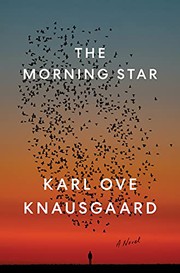
The first of the late novels: a new star appears over Norway and nine narrators respond. Read it last — it is the answer to the question of what he does once the material of his own life is used up.
Discussion
Keep reading
Paths that share books, cover the same subject, or open a related topic.