My Struggle Reading Order and Reading Guide
My Struggle is Karl Ove Knausgaard's six-volume autobiographical novel, roughly 3,600 pages written over three years and published in English between 2012 and 2018. It is not a series of separate books that happen to share a narrator: the volumes double back, re-tell the same scenes from new angles, and the last one detonates the project from inside. Read them in numbered order. The stages below group them by what each demands of you, and are honest about the two places where readers stall.
Start Here: The Two That Convert People
IntermediateFind out whether Knausgaard's method works on you — obsessive present-tense detail with no plot to reward you — using the two volumes most readers name as the best.
▸ Study plan for this stage
Pace: 3–4 weeks for My Struggle: Book One, around 430 pages. It is not a difficult book sentence by sentence, but it is relentless — long unbroken stretches with no chapter breaks to rest on — so 25–30 pages a day beats trying to sprint. Read the first fifty pages and then the section where he and his bro
- The method: obsessive present-tense detail, at the same intensity whether the subject is a father's death or making coffee, with no plot to reward you for continuing
- It is published as a novel and is autobiographical throughout, which is the tension the whole project runs on — Knausgaard uses real names and real events
- Book One is built from two long movements: an adolescence, and the aftermath of his father's death in a house filled with bottles and filth
- The cleaning sequence is the famous test case — dozens of pages of scrubbing that either grips you completely or does not, and readers divide there rather than anywhere else
- Time is handled unevenly on purpose: a single afternoon may take sixty pages while a decade passes in a paragraph
- Shame is the engine. Almost every scene is organised around humiliation, anticipated or remembered
- Knausgaard's family objected publicly to being written about — his uncle disputed the account of the house and threatened legal action before publication, and relatives spoke against the book in the Norwegian press. That objection is part of the work's history and a reader is entitled to weigh it
- What does the flat, unselective detail do that a selective account would not? Point to a passage where it works and one where it does not.
- How is the father constructed in Book One — through incident, through fear, or through the narrator's later interpretation?
- Where does the book move from memoir into something that has clearly been shaped as fiction?
- What is the effect of writing about living relatives under their own names, and who bears the cost?
- After the cleaning sequence, can you say why you want to continue? A specific answer here is the best predictor of finishing.
- Time yourself over fifty pages. Knausgaard's pace is unusually consistent, and knowing your own rate makes planning the remaining volumes realistic.
- Mark the longest single scene in Book One and count its pages. Then note what it covers in real time. The ratio is the form.
- Write one paragraph in the same mode about an ordinary hour of your own week. It is the fastest way to feel what the method costs to produce.
- Read what Knausgaard's relatives said publicly about the book, then decide what you think about the project before going further. It is a legitimate reason to stop.
Next up: If the method has taken hold, the next three volumes go backwards and fill in the life before Book One, where the same father appears at three different ages.
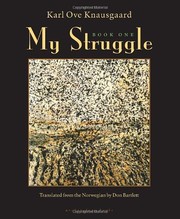
Adolescence, and then his father's death and the ruined house he and his brother clean. Start here and nowhere else; if the forty pages of scrubbing do not grip you, the remaining five volumes will not either.
Childhood and Youth
IntermediateRead the three volumes that go back and fill in the life before Book One, and notice how differently the same father appears at each age.
▸ Study plan for this stage
Pace: 8–10 weeks for Books Three, Four and Five — 427, 485 and 624 pages. They demand very different things: Book Three is the most self-contained and can be read quickly, Book Four is the lightest, Book Five is long and is the one most likely to take a month on its own. Roughly 25 pages a day across the
- Book Three is a boyhood on the island of Tromøya in the 1970s, told almost entirely at a child's eye level, with adult interpretation withheld
- It is the most self-contained volume in the sequence and the one to hand to someone who bounced off Book One
- Book Four is eighteen years old, teaching in a northern fishing village, drinking catastrophically; it is the funniest and the slightest of the six
- Book Five covers fourteen years in Bergen learning to write and failing at it, and it is the secret best volume for anyone who has ever tried to make something
- Book Five sets up the ending of Book One directly, which is why reading the sequence in numbered order matters even though the chronology loops
- The father is the connective tissue: terrifying in Book Three, absent and diminishing in Book Four, and collapsing in Book Five — the same man at three distances
- The volumes vary enormously in what they ask of a reader, and it is normal to love one and find the next a slog
- How does Book Three restrict itself to a child's understanding, and where does the adult narrator break through?
- What does Book Four gain from being comic, and what does the comedy conceal?
- In Book Five, what is Knausgaard actually learning about writing across fourteen years of failure?
- How does the father change across the three volumes, and how much of the change is in him rather than in the person observing him?
- Which of the three would you drop if the sequence had to be five volumes, and what would be lost?
- Keep one page of notes per volume listing what is new and what is retold. The doubling back is the structure and it is easy to miss.
- Compare a description of the father in Book Three with one in Book Five, side by side.
- In Book Five, list every rejection and every piece of writing advice he receives. It reads as a working education by accumulation.
- After Book Four, write down your reading pace and decide honestly whether you intend to finish. Book Six is the largest single commitment in the sequence.
Next up: The last volume turns on the project itself — what publishing the earlier books did to the people in them — and it is the hardest of the six.

A boyhood on Tromoya in the 1970s, told almost entirely at a child's eye level. The most self-contained volume and the one to hand to someone who bounced off Book One.
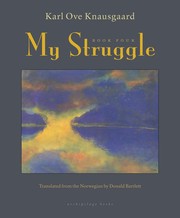
Eighteen years old, teaching in a northern fishing village, drinking catastrophically. The most comic volume, and the slightest; read it as a breather between three and five.

Fourteen years in Bergen learning to write and failing. The secret best volume for anyone who has ever tried to make something, and the direct set-up for the ending of Book One.
The Hard One
IntermediateFinish with the volume that turns on the project itself — the fallout from publishing the earlier books, and a 400-page essay wedged into the middle of it.
▸ Study plan for this stage
Pace: 2–3 months for My Struggle: Book Six, roughly 1,150 pages — longer than Books Three and Four combined. It is three distinct things bolted together: the fallout from publishing Book One, a long central essay, and a final movement about his wife's breakdown. Plan around the essay. Many readers stop th
- The volume opens with the real-world consequences of publication: relatives' anger, legal threats, and journalists arriving at the door of a book that is still being written
- Wedged into the middle is an essay of roughly 400 pages on Hitler's early life, Mein Kampf, Paul Celan and the meaning of the word my in the title — and it is where most readers abandon the series
- The essay is not a digression by accident: Knausgaard is testing what it means to write from the first person about a life, and choosing the most compromised possible example to do it with
- Whether the essay earns its length is the central critical argument about the whole project, and reasonable readers land on both sides
- The final movement returns to his wife's mental health and the household, and is the most exposed writing in the sequence — it also raises the sharpest question about who consented to being written about
- His family's public objections, present since Book One, come home here: the book documents the damage the book caused
- The title's provocation is finally addressed directly rather than left as a shock, which retroactively changes the first five volumes
- Does the Hitler essay belong in this book? Make the strongest case for and against before deciding.
- What does Knausgaard conclude about the first-person pronoun, and does the essay need 400 pages to arrive there?
- How does the volume handle the harm caused by the earlier volumes — as confession, as defence, or as further material?
- Was it right to publish the final movement about his wife? What would have been lost by withholding it?
- Having finished, what is the six-volume project actually about? Answer without using the word honesty.
- Read the first fifty and the last fifty pages of the essay before deciding whether to read the middle. That is the fairest test of it.
- List everyone who is materially harmed by the existence of these books, according to the books themselves.
- Write down your verdict on the project in one paragraph, then compare it with what you wrote after Book One's cleaning sequence.
- Reread the final page of Book One immediately after finishing Book Six. The sequence is built to make that possible.
- Note which single volume you would recommend to someone who will only ever read one, and why the answer is rarely Book Six.
Next up: That completes the sequence; readers who want the same autobiographical exposure at a fraction of the length should go next to Edward St Aubyn's Patrick Melrose novels.
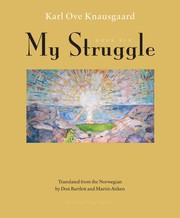
His family's reaction to Book One, his wife's breakdown, and a long central essay on Hitler, Celan and the word my in the title. Be warned that the essay is where most readers abandon the series; it is legitimate to skim it and return, but the final hundred pages are the point of all six volumes.
Discussion
Keep reading
Paths that share books, cover the same subject, or open a related topic.