Junichiro Tanizaki Reading Order: Where to Start
Tanizaki spent fifty years writing about desire as a form of submission — men ruined, willingly, by women, by nostalgia, by their own aesthetics. Start with the short, warm books that show his humour before his cruelty, then read the two masterworks (the great family novel and the essay that explains his whole sensibility), then the run of obsessive erotic novels that made his name, and finish with the historical experiments and the memoir.
Start Here
BeginnerMeet Tanizaki at his most approachable and see the East-versus-West tension that runs through everything he wrote.
▸ Study plan for this stage
Pace: 2 weeks for about 320 pages. Some Prefer Nettles (146pp) in a week — it is short but slow, and rushing it flattens the ending into nothing happening. A Cat, a Man, and Two Women (172pp) in a few evenings; the title novella is only about half the volume and reads quickly.
- Tanizaki's lifelong argument is between Westernised modern Japan and an older Kansai one, and in Some Prefer Nettles it is literally staged — a Tokyo marriage dissolving while the husband is drawn to his father-in-law's Osaka puppet theatre and the young mistress trained to serve him
- He left Tokyo for the Kansai region after the 1923 earthquake destroyed it, and the change of allegiance in the fiction dates from there
- Endings arrive without resolution: Some Prefer Nettles stops before the divorce it has been about for 140 pages, and that is the technique, not an omission
- Desire in Tanizaki runs downward — the men want to be governed, humiliated or absorbed, and the women are instruments rather than psychologies
- The comic register is real. A Cat, a Man, and Two Women is a farce in which the cat is the most fully realised character, and readers who arrive expecting only decadence miss half of him
- Both of these are translations from the mid-century Anglo-American Tanizaki project — Some Prefer Nettles is Edward Seidensticker's — so the English you are reading is a period style of its own
- What is Kaname actually attracted to in Ohisa, and is it her at all?
- The puppet theatre scenes stop the plot dead. What are they for, and what does Tanizaki want you to have watched before the book ends?
- Where does Some Prefer Nettles stop, and what would a conventional novel have added after that line?
- In A Cat, a Man, and Two Women, who is being satirised — Shozo, the two wives, or the reader's assumption that a man's affections are the important ones?
- How does Tanizaki make a cat the emotional centre of a book about a divorce without ever making the cat cute?
- Read the last two pages of Some Prefer Nettles twice, then write down what you assume happens next and why the book declines to say
- List everything in Some Prefer Nettles coded as Western and everything coded as old Japan. The list is the novel's structure
- Time yourself on the Bunraku chapter. If you found it boring, note exactly what you wanted instead — that reflex is the thing this path will retrain
- Read A Cat, a Man, and Two Women in one sitting and note where you laughed. You will want that record when the later books stop being funny
Next up: You now have his two poles — the modern marriage and the old Kansai world — which is exactly what the great family novel and the aesthetic essay set out to reconcile.
A couple postponing their divorce while the husband drifts toward his father-in-law's old-Japan world of puppet theatre and docile women. The best first Tanizaki: short, calm on the surface, and the clearest statement of his lifelong argument with modernity.
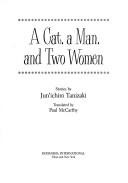
A divorced couple fight over custody of a cat. Read second because it shows the comic register most readers do not expect from him, and it makes the later obsessives funnier and stranger.
The Two Masterworks
BeginnerRead the novel usually called his greatest, alongside the essay that supplies the aesthetic key to all his fiction.
▸ Study plan for this stage
Pace: 6–8 weeks, almost all of it Makioka. Read In Praise of Shadows first: it is roughly sixty pages and takes an evening. Then The Makioka Sisters at 25–35 pages a day over six weeks. Do not try to speed it up — the book's whole method is accumulation, and a compressed read produces the complaint that n
- In Praise of Shadows argues that Japanese beauty depends on dimness — lacquer under candlelight, gold leaf in a dark alcove, unpolished surfaces — and that electric light destroyed it. Sixty pages that retroactively explain the lighting of every room in the novels
- The essay is genuinely idiosyncratic and partly a provocation, including its famous digression on toilets; read it as an aesthetic manifesto rather than as scholarship
- The Makioka Sisters follows four sisters of a declining Osaka merchant house through the late 1930s, and its plot engine is the repeated failure to marry off the third sister, Yukiko
- Its events are seasonal rather than dramatic — the annual cherry-blossom viewing, the firefly hunt, the flood — and a failed marriage interview carries the weight another novel would give to a death
- Wartime censors halted its serialisation as insufficiently patriotic, which is the clearest evidence of what the book is doing: recording a private world while the state demands a public one
- Taeko, the youngest sister, is the only one living a modern life, and the novel's judgement of her is the closest it comes to taking a side
- More than one English version of In Praise of Shadows is in circulation, so check your edition before comparing quotations with anyone else
- After the essay, what do you notice about interiors in the fiction that you did not notice in stage one?
- Why does Yukiko's marriage take four hundred pages, and what would be lost if she married in the first hundred?
- The novel almost never mentions the war directly. Where does it get in anyway, and what does its near-absence tell you?
- Is Sachiko the narrator's proxy? Track whose point of view the book keeps returning to and ask why
- What is Tanizaki's actual verdict on Taeko, and does the novel earn it?
- Does In Praise of Shadows describe an aesthetic Tanizaki believed in, or one he was already mourning as impossible?
- Keep a one-line note per chapter of The Makioka Sisters. At 500-plus pages of miai, illnesses and outings, this is the difference between the book being serene and being a blur
- Draw the family: four sisters, two households, the branch and the main house. The inheritance logic drives decisions the novel never explains
- After the flood chapter, stop and ask why Tanizaki gave the book its only piece of genuine action there — and to whom
- Reread one interior description from Makioka against a paragraph of In Praise of Shadows and note what the essay licensed
- Note every marriage candidate and the stated reason for rejection. The pattern is the family's real subject
Next up: With the aesthetic explained and the family novel behind you, you can read the erotic novels as what they are — the same sensibility with the decorum removed.

Four sisters of a declining Osaka merchant family across the years before the war, told through flower-viewings and failed marriage negotiations. Long and unhurried, which is why it comes after the short books — but it is the summit of his work.
The famous essay on lacquerware, gold leaf, dim rooms and why electric light ruined Japanese beauty. Sixty pages that retrospectively explain the lighting, the interiors and the erotics of every novel here.
The Obsessives
IntermediateFollow Tanizaki's central subject — a man who arranges his own humiliation — across four decades of increasingly ruthless novels.
▸ Study plan for this stage
Pace: 6–7 weeks for about 880 pages, in publication order: Naomi (264pp, 2 weeks), Quicksand (240pp, 2 weeks), The Key (202pp, 1 week — it reads fast), Diary of a Mad Old Man (177pp, 1 week). Leave a few days between The Key and Diary; they are the same idea forty years apart and the gap makes the change
- The recurring plot is a man who arranges his own subjugation and then narrates it — Tanizaki's men are not victims of these women so much as their architects
- Naomi (1924) is the origin: a salaryman adopts a fifteen-year-old cafe girl, remakes her as a Westernised ideal, and is destroyed by the success of the project. It set off a real fad in 1920s Japan for the modern girl it describes
- Quicksand is told as a widow's confession to a listener we never hear, so every fact reaches you through a narrator managing her own reputation
- The Key is two diaries — a husband's and a wife's — each written to be secretly read by the other, which makes every entry an act rather than a record. It was controversial enough on publication to be publicly argued over
- Diary of a Mad Old Man is the endpoint: a dying man trades his estate for a glimpse of his daughter-in-law's feet, and the novel ends in medical notes and a footprint stone. Desire outliving the body, stated literally
- The foot fetish is not a joke or a symbol — it recurs from the earliest stories to the last novel and Tanizaki is entirely unembarrassed about it
- These novels are funnier than their reputations. The tone is ironic comedy about self-deception, not erotica, and reading them as titillation makes them baffling
- In Naomi, at what point does Joji stop being in control, and is there any evidence he ever was?
- Quicksand withholds the interlocutor entirely. What is Sonoko concealing from him, and where do you catch her at it?
- In The Key, which diary is more dishonest — and how would you prove it from the text?
- The Key's husband knows his wife reads his diary and writes accordingly. Is there any entry in either diary that is not performed?
- Diary of a Mad Old Man is narrated by someone dying. What does that do to the comedy that the earlier three do not have available?
- Across four decades, what actually changes in Tanizaki's treatment of this material — the technique, the morality, or only the age of the man?
- Read The Key by alternating diaries in the order given rather than reading one narrator straight through. The interleaving is the design
- For each novel write one line: what the man gives up, and what he gets. Lined up, the four make an argument
- Mark the moments in Naomi where the narrator asks the reader's sympathy, and decide each time whether Tanizaki is granting it
- Track the medical detail in Diary of a Mad Old Man — blood pressure, injections, hands. The clinical register is doing something the erotic register cannot
- Pick the single cruellest scene across the four and ask who the novel thinks is being cruel
Next up: With the central obsession understood in its four main variations, the remaining books show where the material came from and what else he could do with it.

A salaryman adopts and grooms a teenage cafe girl into his ideal Westernised woman, and she takes him apart. The 1924 scandal novel where the pattern begins; read it first in this stage because everything after refines it.
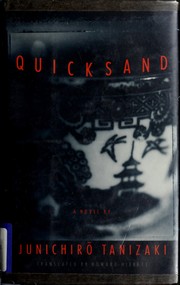
A married woman's confession of an affair with another woman that spirals into a four-way pact. The most tangled of the obsession novels, and the one that adds jealousy as a shared pleasure rather than an obstacle.
Two diaries, husband and wife, each written to be secretly read by the other. The formal experiment that turns the obsession into a machine — best read once you already know the shape it is refining.
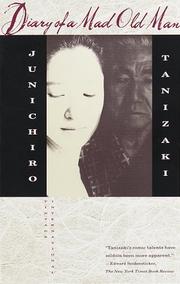
A dying man bargains away his estate for glimpses of his daughter-in-law's feet. The last novel and the logical end point of the sequence: desire outliving the body entirely.
The Deeper Cuts
IntermediateFill in the historical fiction, the short stories and the memoir that complete the picture of his career.
▸ Study plan for this stage
Pace: 5–6 weeks for around 740 pages. Seven Japanese Tales (298pp) over 2–3 weeks, one or two stories a sitting. The Secret History of the Lord of Musashi and Arrowroot (199pp) in a week — two separate short works in one volume. Childhood Years (244pp) over 2 weeks; it is a memoir and can be read in piece
- Seven Japanese Tales is the standard English gathering of his shorter fiction and contains 'A Portrait of Shunkin', in which a servant blinds himself so as to see his blind mistress only as she was — the purest statement of everything in stage three, in forty pages
- The Secret History of the Lord of Musashi is a mock-scholarly chronicle, complete with invented sources, about a warlord whose sexual formation dates from watching women clean severed heads. The pastiche apparatus is the joke and the alibi at once
- Arrowroot is his classicising mode: a narrator researching a historical play drifts into a search for a dead mother, and the two searches never quite separate
- Tanizaki spent much of his career inside classical Japanese literature — he translated The Tale of Genji into modern Japanese more than once — and the historical fictions are that reading turned into invention
- Childhood Years describes the Tokyo of the 1890s, the merchant Nihonbashi world his family lost, and the schooling that formed him; the earthquake and the war erased that city entirely
- Reading the memoir last converts a lot of the fiction from invention into recovery — the lost mother, the lost city and the servant-mistress hierarchy all turn out to be memories
- The volumes here gather work from every decade, so this stage is also where you see how consistent he was: the 1910s stories and the 1960s novel want the same thing
- 'A Portrait of Shunkin' is told through an unreliable documentary frame. What does the frame let Tanizaki avoid saying outright?
- Why does The Secret History of the Lord of Musashi need its fake scholarly sources? What would the same story lose told straight?
- In Arrowroot, at what point does the research stop being the subject, and does the narrator notice?
- Which of the seven tales would you have placed in stage three, and what does that tell you about how arbitrary the novel-versus-story division is for him?
- After Childhood Years, which fictional obsessions look autobiographical and which look genuinely invented?
- Having read the whole path, is Tanizaki a moralist about desire, a comedian of it, or an aesthete indifferent to the question?
- Read 'A Portrait of Shunkin' immediately after finishing Diary of a Mad Old Man and write two sentences on what the forty years did not change
- In Musashi, list the invented citations and ask what each one is being used to make plausible
- While reading Childhood Years, mark every detail that reappears in a novel you have already read; keep the list, it will be longer than you expect
- Rank the eleven books on this path by how much they need the reader to trust the narrator. The ranking is close to Tanizaki's own chronology
- Pick the one book here you would hand to someone who says Japanese literature is austere — and be able to defend the choice
Next up: That is Tanizaki whole: the comedy, the family novel, the aesthetic, the obsessions and the lost city they all come out of — and the obvious next step is his contemporaries, Kawabata for the restraint he never wanted and Mishima for the theatre he made possible.
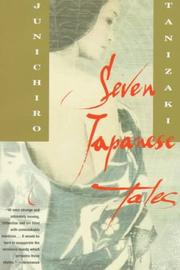
The standard English gathering of his shorter fiction, including 'A Portrait of Shunkin' — a blind musician and the apprentice who blinds himself for her. Start the tail of the path here; several of these are as good as the novels.
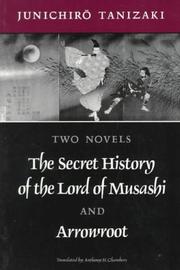
A mock-scholarly chronicle of a warlord aroused by severed heads. His pastiche-historical mode, which is easier to enjoy once the modern novels have taught you what he is actually writing about.

The memoir of an old Tokyo that the earthquake and the war erased. A fitting close: the lost world his fiction keeps circling, described plainly for once.
Discussion
Keep reading
Paths that share books, cover the same subject, or open a related topic.